Story code: ST-001836
Part 4: The Price of Grace
The heavy brass bell above the door didn’t chime when Marcus pushed it open; the doorframe had warped so badly from the morning’s foundation tremors that it scraped agonizingly against the floor tiles. He stepped into the quiet gloom of the bakery, locking the deadbolt behind him with a dull, final click.
His left cheekbone throbbed in time with his heartbeat, the skin tight and hot where Pastor Preston’s heavy gold signet ring had connected before hotel security had finally untangled them. His apron was stiff with dried sweat, plaster dust, and spilled hotel coffee, but his hands-for the first time in weeks-were completely steady.
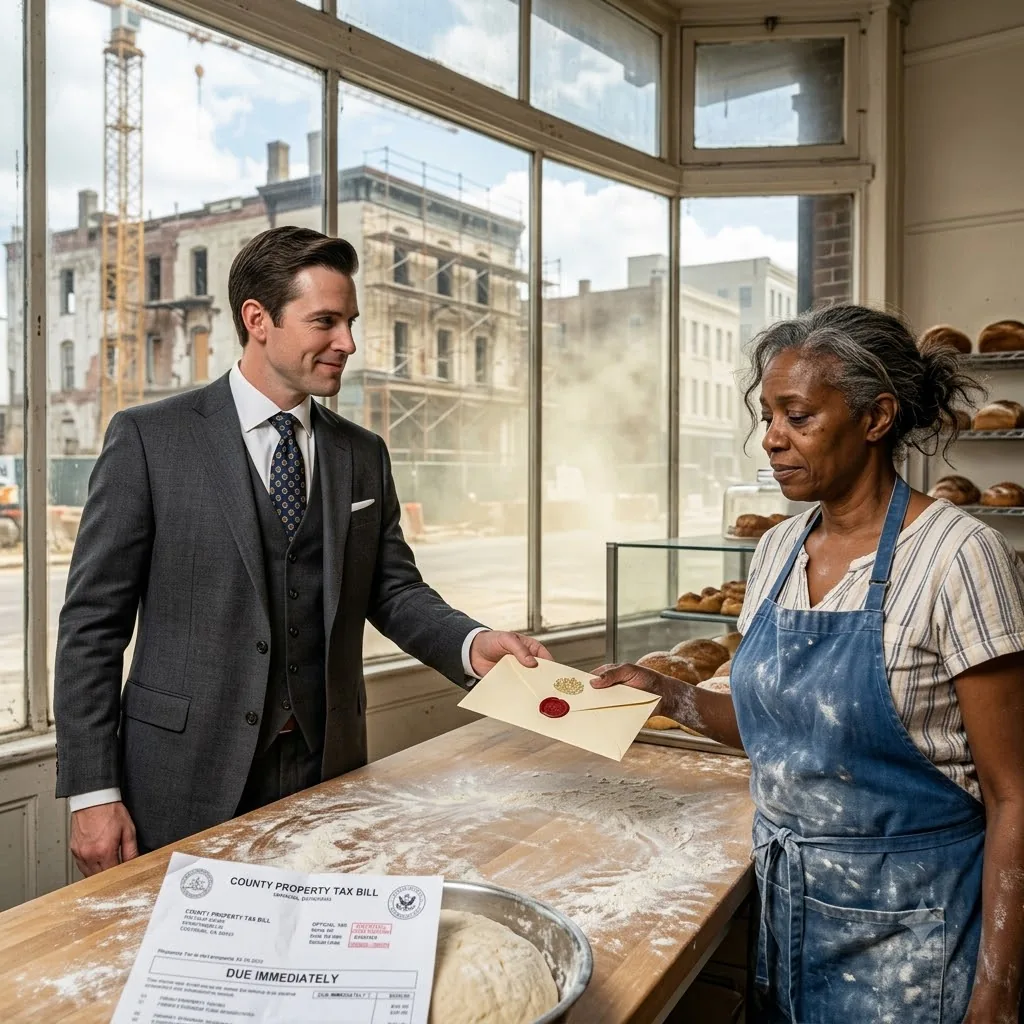
The county tax bill still sat on the glass pastry case exactly where he had left it, an unexploded bomb that had finally finished ticking. Next to it lay the crumpled, torn remains of the Sanctuary Initiative’s Covenant of Purity. He had kept it clutched in his fist all the way through the police statements and the chaotic media scrum in the hotel lobby.
Marcus walked slowly behind the counter. Outside, the deafening roar of the excavator was absent. Through the front window, he could see a bright orange stop-work notice plastered across the heavy machine’s windshield-a frantic, immediate attempt by the city council to distance themselves from the explosive cell phone footage currently dominating the local news networks. The silence in the bakery was profound, almost heavy.
But the silence didn’t pay the county assessor.
He picked up the heavy stock paper of the tax reassessment. The numbers hadn’t changed. The deadline was tomorrow at noon. The exposure of Preston’s extortion ring might eventually lead to federal indictments, zoning reforms, and a massive scandal for the local government, but none of that would happen by Friday. Bureaucracy moved like a glacier, and the foreclosure machinery was already locked in. Even if the reassessment was eventually proven fraudulent months from now, the bank had already denied his loan, his cash reserves were completely empty, and the church’s wealthy congregation was already organizing a massive, vindictive boycott of his business online.
The bakery was dead.
Marcus set the bill down and smoothed out the creases. A strange, weightless clarity washed over him. The crushing pressure in his chest, the suffocating desperation that had driven him to the absolute brink of signing his soul away, had simply evaporated.
He walked past the stone deck ovens and the commercial mixers to the supply closet, pulling out a heavy push broom and a metal dustpan. The violent tremor from the excavator’s final strike that morning had fractured the structural brickwork along the eastern wall. Plaster dust coated the stainless steel prep tables in a thick, white shroud, and one of the small transom windows near the ceiling had shattered completely under the shifting pressure, showering the floor with jagged, glittering shards.
Marcus began to sweep. The stiff bristles made a rhythmic, scratching sound against the linoleum, gathering the broken glass and pulverized drywall into small, manageable piles. He swept slowly, methodically, moving through the space his family had occupied for three generations. He remembered the smell of his grandfather’s cinnamon rolls, the unbearable heat of the kitchen in late August, the generations of neighbors who had leaned against the front counter for morning coffee.
He swept the glass from beneath the pastry case. He swept it from the corners of the maple proofing boxes. Every scrape of the broom was a quiet acknowledgment of the end. He was going to lose the building. The county would seize it, the equipment would be auctioned off for pennies on the dollar, and he would have to start over from absolute zero, likely working a graveyard shift in some corporate, fluorescent-lit commissary kitchen across town.
He crouched down, sweeping a pile of glass into the metal dustpan. Amidst the shards and white dust lay a tarnished brass picture frame. The glass face was completely smashed. It was the frame that had held his grandfather’s first dollar, hanging on the eastern wall since 1974. The tremor had thrown it to the floor, the dollar bill itself long gone, swept away or lost in the rubble.
Marcus picked up the battered frame. He carefully brushed the remaining splinters of glass from its edges, his thumb tracing the worn, oxidized metal. He stood up, walking over to the cracked, ruined plaster of the eastern wall. A single, bent nail still protruded from the masonry.
He didn’t try to fix the nail or patch the plaster. He simply hung the empty brass frame back on the wall.
It hung slightly crooked, framing a jagged fissure of exposed, raw brick. Marcus stepped back, wiping his dusty hands on his apron.
He had no money, no property, and no future in this neighborhood. The church had successfully stripped him of his inheritance, using the sheer weight of their wealth and political influence to run him into the ground. But as he looked at the empty frame, and then down at the torn contract on the counter, he knew they had failed to take the only thing they actually wanted. They wanted him to kneel. They wanted his complicity in their manufactured grace.
Instead, he was walking out with his spine straight.
Marcus took off his apron, folded it neatly, and laid it on the clean stainless steel prep table. He didn’t look back as he walked toward the front door, the remaining glass crunching softly beneath his heavy boots, stepping out into the fading light of a completely uncertain, entirely free afternoon.