Story code: ST-001871
Part 3: The Padlock
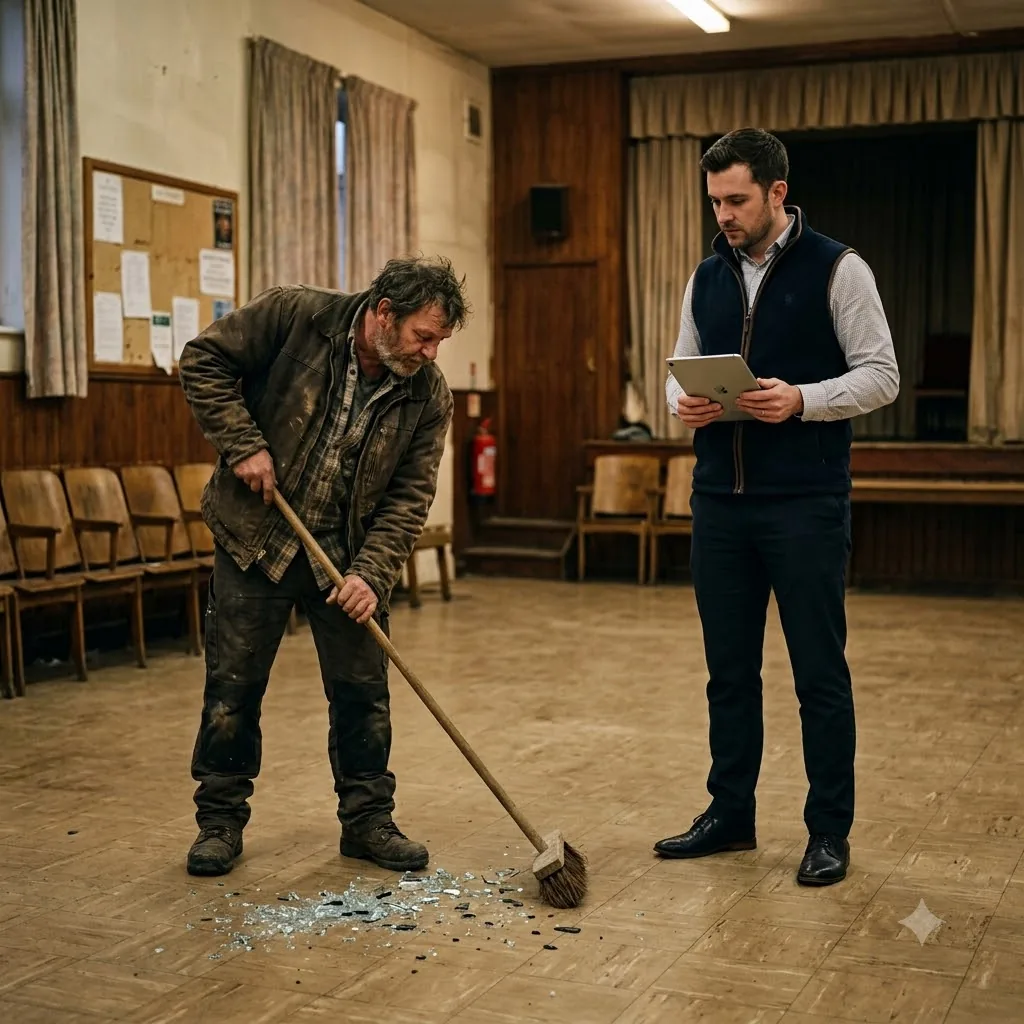
I stared at the small electronic signature pad hovering over the pile of shattered safety glass. The glowing screen offered a single digital line for my name.
The glossy brochure in my left hand suddenly felt incredibly heavy. I looked down at the photograph of the board of directors again. The man in the center. Julian Croft. The architect of our town’s collapse. The corporate photographer had lit him from below to make him look like a titan of industry. Fifteen years ago, Croft was famous for his severe, double-breasted Italian wool suits, his jet-black hair slicked back with expensive product, and a gold Rolex that caught the harsh glare of the factory floor lights during his rare, terrifying walk-throughs.
I looked back up at the researcher standing in front of me.
He was dressed in a pristine slate-gray fleece vest over a sustainable-bamboo polo shirt. He wore expensive, scuff-free hiking boots that had never touched actual mud. His hair was thinning, cropped close to his skull and faded to a soft silver. A neatly trimmed salt-and-pepper beard hid his jawline, and wire-rimmed glasses softened his features. He looked exactly like a coastal urban planner, a Silicon Valley therapist, or a holistic wellness guru.
But the architecture of the face underneath that trendy, empathetic camouflage was exactly the same.
I looked at the sharp, patrician ridge of his nose. I looked at the slight, arrogant asymmetry of his lower lip. But mostly, I looked at his eyes. Flat. Dead. Calculating the exact monetary value of everything they touched.
“You’re not doing ground-level observation for Julian Croft,” I said. My voice was dangerously quiet, barely louder than the hum of the failing refrigerator behind the VFW bar.
The researcher blinked. The tight, bloodless smile wavered for a fraction of a second. “Sir, I am the primary field coordinator for-”
“You’re him,” I said, stepping forward. My steel-toed boot ground a large shard of window glass into a fine white powder against the linoleum. “You’re Julian Croft.”
He stopped holding the signature pad out over the debris. He slowly pulled his arm back, reeling in the white cable, and clutched his iPad to his chest like a shield. He didn’t confirm it. He didn’t deny it. But his shoulders instantly squared, shedding the slouching, non-threatening posture of a social worker. The soothing, therapeutic softness vanished from his jaw. The billionaire had come down to play anthropologist in the ruins he created, and his cover was blown.
“Your perception of this situation is severely clouded by historic grievances,” he said, his voice dropping the fake empathy entirely. It was colder now. Harder. The voice of a CEO addressing a hostile boardroom.
I dropped the heavy wooden broom I had been leaning on. It hit the floor with a loud clatter, rolling over the shattered glass. I reached my right hand deep into the oversized pocket of my heavy canvas work coat.
Croft flinched. He took a quick, panicked step backward, his expensive boots slipping slightly on the bloody floor. He thought I was reaching for a gun. He had spent the last hour lecturing me about the systemic violence of this community, and now he was terrified he was finally going to face it.
My fingers closed around cold, pitted iron. I didn’t carry it as a weapon. I carried it as an anchor. A physical reminder of the day the world stopped making sense, keeping me grounded every time I felt like letting go.
I pulled my hand out of my pocket.
It was a massive, industrial-grade padlock. The hardened steel shackle was as thick as a man’s thumb, severed cleanly on one side by heavy-duty bolt cutters. The solid brass body was heavily oxidized, stained green and dark brown with fifteen years of rust, neglect, and the sweat from my palms.
“Do you recognize this?” I asked, holding the heavy iron up in the harsh fluorescent light of the hall.
Croft stared at it, his chest rising and falling rapidly as he realized I wasn’t holding a Smith & Wesson. “If you attempt to threaten me with a piece of scrap metal, I will have you arrested for aggravated assault. The police in this municipality are entirely dependent on the property taxes my new development will generate.”
“I cut this off the main loading dock gate of the corrugated box plant on a Tuesday afternoon,” I said, ignoring his threat. “Three hours after you locked out three hundred men. We just wanted to get our personal tools out of our lockers. You had already called the state troopers to barricade the access road.”
Croft tightened his grip on his tablet. “Those tools were on company property. They were classified as corporate assets during the bankruptcy liquidation.”
I didn’t yell. I didn’t swing the lock at his head. I just brought my right hand down in a swift, brutal vertical arc.
I slammed the rusted brass padlock directly into the center of his expensive iPad screen.
The impact sounded like a gunshot echoing through the empty hall. The sleek, tempered glass shattered instantly, a brilliant spiderweb of deep white fractures exploding outward from the heavy iron. The digital compliance waiver flickered, glitched into a kaleidoscope of broken pixels, and died.
Croft shrieked-a high, sharp, completely undignified sound that had absolutely nothing to do with holistic healing or urban renewal. He dropped the ruined tablet as if it burned him. It hit the linoleum flat, mixing its high-tech splinters with the broken safety glass and dried blood from our vandalized window.
“You want trauma metrics?” I asked, stepping right up to the edge of his pristine boots, forcing him to look at me. “Let’s chart them. Month one: Tommy Henderson shoots himself in the cab of his pickup truck because his pension evaporated overnight and he couldn’t pay for his wife’s insulin. Month three: The grocery store on Main Street boards up its windows because nobody has a paycheck to buy meat.”
Croft stared at his destroyed thousand-dollar tablet on the floor. His hands were shaking. Not with fear anymore. With absolute, unvarnished rage.
“Year two,” I continued, my voice grinding like the glass under my soles. “The meth cooks move into the abandoned foreclosures you created. Our kids start finding dirty needles in the playground sandboxes. Year five: The county cuts the fire department budget in half because the tax base is entirely gone. The old elementary school burns to the ground while the volunteer trucks wait for parts.”
I pointed toward the shattered display case near the entryway.
“Year ten: Half the men in those deployment photos on the wall are dead from stress, cheap liquor, or despair. And now, year fifteen, you come back here. You put on a little tech-bro costume, you pretend to be a researcher, and you try to buy the graveyard you dug for pennies on the dollar.”
Croft looked up from the floor.
The clinical detachment was dead. The soothing, octave-dropped voice of the field observer was completely gone. His face was flushed a deep, ugly, mottled red. The veins bulged aggressively against the collar of his sustainable-bamboo shirt.
“You’re goddamn right I did!” Croft screamed, his voice echoing violently off the peeling walls and water-stained ceiling. Spit flew from his lips, landing on the shoulder of my coat. “I gutted that factory because it was a bloated, inefficient dinosaur! You and your union leeches were bleeding capital! You were making obsolete garbage and demanding a king’s ransom just for showing up to tighten bolts!”
He kicked at the broken tablet on the floor, his heavy boot scattering the electronic glass into the bloodstains.
“I liquidated your miserable little lives to build an empire!” he roared, pointing a trembling, manicured finger inches from my face. “And you know what? I won! I made forty million dollars stripping your corpse, and now I’m back to pave over the bones! I don’t need your signature! I own the mayor! I own the council! I will bulldoze this pathetic shrine to your failures, and I will pour a parking lot over your miserable memories!”
He stood there amidst the wreckage, his chest heaving, his face contorted in absolute, screaming contempt. The empathetic researcher was gone forever.