Story code: ST-001871
Part 1: The Observer’s Brochure
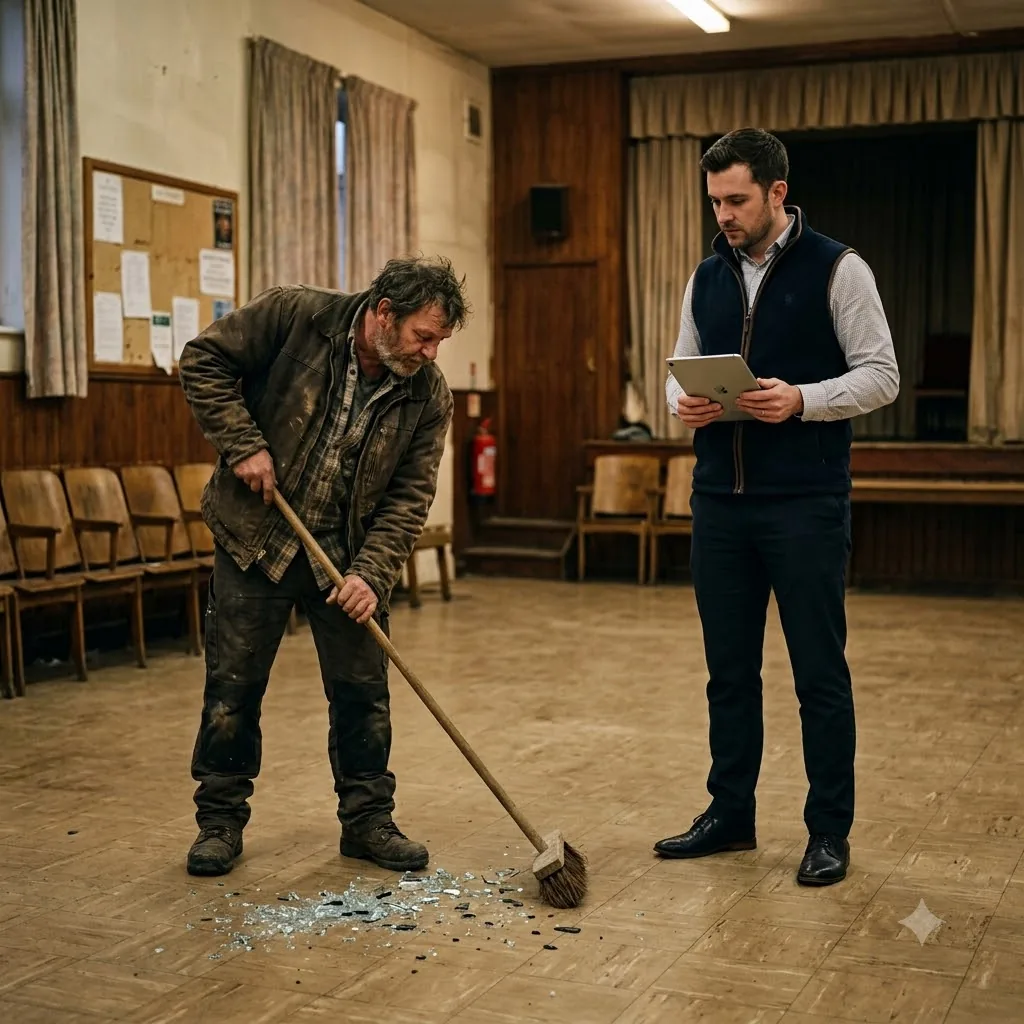
I pushed the wide bristle broom across the VFW hall linoleum, separating the heavy chunks of shattered safety glass from the flakes of dried brown blood. A guy in a pristine slate-gray fleece vest stood near the overturned folding tables, tapping a white stylus against an iPad screen. He kept his expensive hiking boots carefully angled away from the debris field. He did not offer to grab a second broom or help right the tables. He told me he needed to understand the raw trauma of the community’s localized violence.
I dumped the first dustpan load into a thick black plastic trash bag. The sound of clinking glass echoed up to the water-stained drop ceiling, loud enough to make the guy flinch.
The man shifted his weight and tapped his screen again. He requested that I describe the precise emotional state I experienced upon discovering the break-in this morning. He wanted to know if I felt a systemic failure in our local law enforcement or if I attributed the vandalism to deeper socioeconomic decay. I leaned on the broom handle and looked at the smear of copper-smelling residue near the entryway. Whoever threw the cinderblock had cut themselves badly climbing through the jagged aluminum frame, then bled all over the linoleum and the display case holding faded deployment photos from Desert Storm. I told the man I just felt like getting the floor clean before the senior citizen bingo group arrived at noon.
He nodded slowly, treating my answer like a fascinating piece of raw data. He murmured a comment to himself about coping mechanisms and avoidance behavior while making a rapid series of notes on his tablet.
I went back to sweeping. The metal dustpan was getting heavy, pulling at my shoulder joint with every scoop. We had spent three weekends raising the money for that reinforced front window through a series of fish fries and raffle tickets. We had installed it ourselves to save on contractor fees. Now all that effort was scattered in thousands of jagged pieces across the main hall, mixed with the dirt from the street and the blood of the vandal. I focused on the mechanical motion of gathering the mess, sweeping in tight, controlled arcs to keep the microscopic glass dust from spreading into the corners.
The guy in the fleece vest followed me at a safe distance, his soft footsteps almost silent compared to the harsh grinding of glass under my steel-toed boots. He told me to quantify the sense of violation on a scale of one to ten. He explained that his organization was charting the resilience index of post-industrial towns experiencing severe infrastructure collapse. He said our town was a perfect statistical model for his current data set. I ignored him and scraped a stubborn, bloody chunk of glass out of a grout line with the reinforced edge of my boot.
He did not take the hint to leave me alone. He circled around the overturned chairs to stand directly in front of the door frame I needed to sweep next. He instructed me to look at him and process the reality of the situation. He said the community was clearly crying out for targeted intervention and structured healing pathways. His voice had that flat, soothing tone of someone who had never had to clean up a stranger’s bodily fluids or patch a broken window with plywood in the freezing rain. He told me that repressing the anger of this violation would only lead to a cycle of reciprocal violence.
I swept a pile of sharp debris right up to the edge of his immaculate leather boots. He finally took a step back, looking down at the glass near his toes with a flash of genuine distaste. I told him the social workers from the county usually wore cheap state ID badges on lanyards and at least offered to help stack the scattered chairs. I told him he was standing directly in the way of my dustpan.
He offered a tight, practiced smile that did not reach his eyes. He explained he was not a county employee. He tapped his iPad cover and said he was part of an independent assessment initiative doing ground-level observation for a holistic renewal project. He reached into the inner breast pocket of his expensive fleece vest. He pulled out a thick, glossy pamphlet printed on heavy-stock paper.
The cover featured a high-resolution drone shot of our main street. The photo had been digitally saturated to look even more bleak, gray, and desperate than it actually was on its worst days in mid-winter. The bold white text across the top promised a comprehensive urban reclamation strategy for forgotten communities. He extended his hand, holding the pristine brochure out to me over the pile of shattered, blood-stained glass.
He told me I should read it thoroughly to understand the bright, managed future his organization had planned for our neighborhood.
I dropped the heavy wooden broom. It clattered loudly against the bare linoleum. I reached across the debris pile and took the heavy pamphlet from his manicured fingers. The paper felt slick and expensive, totally out of place in the damp, stale air of the VFW hall. I flipped the booklet over to look at the back cover. The glossy page displayed a full-page portrait of the initiative’s board of directors, all standing in front of a sleek corporate office building.
I recognized the man standing in the dead center of the photograph instantly.
My thumb pressed hard against the glossy image of his smiling face, covering his expensive suit. I looked up from the expensive brochure to the researcher in the fleece vest, watching his smug expression falter as I took a single step forward into his personal space.
I pushed the wide bristle broom across the VFW hall linoleum, separating the heavy chunks of shattered safety glass from the flakes of dried brown blood. A guy in a pristine slate-gray fleece vest stood near the overturned folding tables, tapping a white stylus against an iPad screen. He kept his expensive hiking boots carefully angled away from the debris field. He did not offer to grab a second broom or help right the tables. He told me he needed to understand the raw trauma of the community’s localized violence.
I dumped the first dustpan load into a thick black plastic trash bag. The sound of clinking glass echoed up to the water-stained drop ceiling, loud enough to make the guy flinch.
The man shifted his weight and tapped his screen again. He requested that I describe the precise emotional state I experienced upon discovering the break-in this morning. He wanted to know if I felt a systemic failure in our local law enforcement or if I attributed the vandalism to deeper socioeconomic decay. I leaned on the broom handle and looked at the smear of copper-smelling residue near the entryway. Whoever threw the cinderblock had cut themselves badly climbing through the jagged aluminum frame, then bled all over the linoleum and the display case holding faded deployment photos from Desert Storm. I told the man I just felt like getting the floor clean before the senior citizen bingo group arrived at noon.
He nodded slowly, treating my answer like a fascinating piece of raw data. He murmured a comment to himself about coping mechanisms and avoidance behavior while making a rapid series of notes on his tablet.
I went back to sweeping. The metal dustpan was getting heavy, pulling at my shoulder joint with every scoop. We had spent three weekends raising the money for that reinforced front window through a series of fish fries and raffle tickets. We had installed it ourselves to save on contractor fees. Now all that effort was scattered in thousands of jagged pieces across the main hall, mixed with the dirt from the street and the blood of the vandal. I focused on the mechanical motion of gathering the mess, sweeping in tight, controlled arcs to keep the microscopic glass dust from spreading into the corners.
The guy in the fleece vest followed me at a safe distance, his soft footsteps almost silent compared to the harsh grinding of glass under my steel-toed boots. He told me to quantify the sense of violation on a scale of one to ten. He explained that his organization was charting the resilience index of post-industrial towns experiencing severe infrastructure collapse. He said our town was a perfect statistical model for his current data set. I ignored him and scraped a stubborn, bloody chunk of glass out of a grout line with the reinforced edge of my boot.
He did not take the hint to leave me alone. He circled around the overturned chairs to stand directly in front of the door frame I needed to sweep next. He instructed me to look at him and process the reality of the situation. He said the community was clearly crying out for targeted intervention and structured healing pathways. His voice had that flat, soothing tone of someone who had never had to clean up a stranger’s bodily fluids or patch a broken window with plywood in the freezing rain. He told me that repressing the anger of this violation would only lead to a cycle of reciprocal violence.
I swept a pile of sharp debris right up to the edge of his immaculate leather boots. He finally took a step back, looking down at the glass near his toes with a flash of genuine distaste. I told him the social workers from the county usually wore cheap state ID badges on lanyards and at least offered to help stack the scattered chairs. I told him he was standing directly in the way of my dustpan.
He offered a tight, practiced smile that did not reach his eyes. He explained he was not a county employee. He tapped his iPad cover and said he was part of an independent assessment initiative doing ground-level observation for a holistic renewal project. He reached into the inner breast pocket of his expensive fleece vest. He pulled out a thick, glossy pamphlet printed on heavy-stock paper.
The cover featured a high-resolution drone shot of our main street. The photo had been digitally saturated to look even more bleak, gray, and desperate than it actually was on its worst days in mid-winter. The bold white text across the top promised a comprehensive urban reclamation strategy for forgotten communities. He extended his hand, holding the pristine brochure out to me over the pile of shattered, blood-stained glass.
He told me I should read it thoroughly to understand the bright, managed future his organization had planned for our neighborhood.
I dropped the heavy wooden broom. It clattered loudly against the bare linoleum. I reached across the debris pile and took the heavy pamphlet from his manicured fingers. The paper felt slick and expensive, totally out of place in the damp, stale air of the VFW hall. I flipped the booklet over to look at the back cover. The glossy page displayed a full-page portrait of the initiative’s board of directors, all standing in front of a sleek corporate office building.
I recognized the man standing in the dead center of the photograph instantly.
My thumb pressed hard against the glossy image of his smiling face, covering his expensive suit. I looked up from the expensive brochure to the researcher in the fleece vest, watching his smug expression falter as I took a single step forward into his personal space.