Story code: ST-001887
Part 1: The Pristine Neighborhood
Eleanor slammed the enter key, firing off her third complaint of the week to the city council planning committee. The screen of her laptop reflected in the gleaming marble of her kitchen island, displaying the architectural renderings she had just torn apart paragraph by paragraph. The proposed mid-rise development was a monstrosity of cheap glass and prefabricated steel, an absolute insult to the historic district she had spent seven years fighting to protect. Oakmont Avenue was a bastion of intact Victorian homes, complete with original stained glass and wrought-iron fencing. She would chain herself to her own century-old sycamore tree before she let them build a high-density complex at the end of her street.
She closed the laptop and walked to the bay window, expecting to feel the usual swell of pride at her pristine front lawn. Instead, her eyes locked onto the empty patch of disturbed mulch near her mailbox. The wooden stakes were gone. Someone had stolen her progressive yard sign in the middle of the night. It was an appalling violation of her property, especially since she had paid thirty dollars to a local grassroots organization for that specific sign. The irony of being robbed of a sign advocating for kindness and community was not lost on her, and it set a bitter tone for her morning routine. She grabbed her cashmere scarf and her leather tote, deciding she needed her morning espresso from her favorite local cafe earlier than usual to calm her nerves.
The autumn air was sharp, biting at her cheeks as she marched down the cracked brick sidewalks. She mentally drafted a neighborhood watch alert as she walked, planning to warn her neighbors about the petty theft happening right under their noses. If people were brazen enough to steal a yard sign, they might be bold enough to steal patio furniture or copper downspouts next. She passed the row of immaculately restored Queen Anne homes, nodding to the landscapers already busy trimming the boxwood hedges. The neighborhood was flawless, a perfectly preserved slice of history, and it required constant vigilance to keep it that way. Eleanor prided herself on being the tip of the spear in that fight.
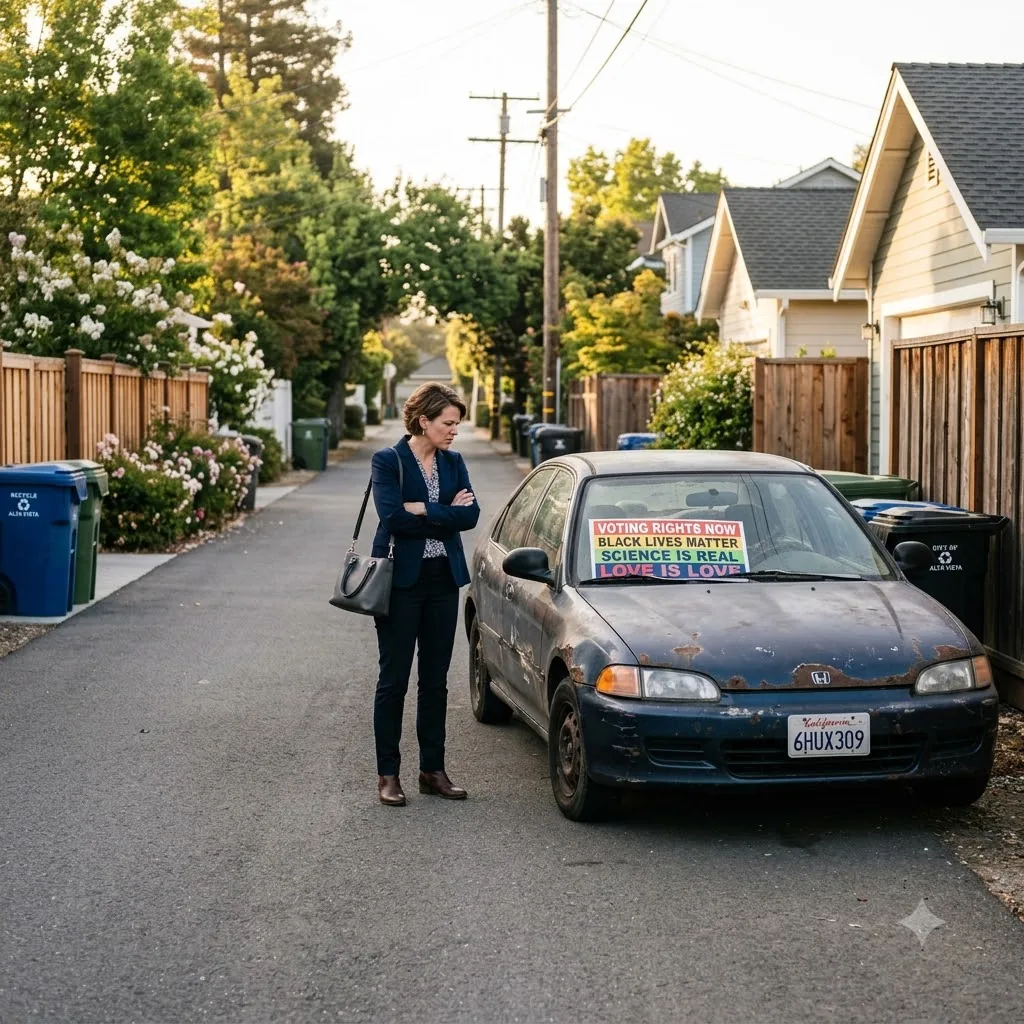
To save time, she turned down the cobblestone alleyway behind the commercial strip. It was a shortcut she rarely took, as it was usually cluttered with delivery trucks and overflowing recycling bins from the restaurants on Main Street. Today, the narrow lane was eerily quiet, save for the hum of a distant ventilation unit. As she navigated around a puddle of stagnant water, her gaze caught on a large, rusted shape tucked into the deep shadow of an ivy-choked brick wall. It was a late-nineties sedan, sitting low on its suspension, its faded blue paint peeling in large, sunburned flakes. The vehicle was parked illegally, half-blocking the rear exit of a boutique bakery.
Eleanor pulled her phone from her pocket, ready to dial parking enforcement. Vehicles like this did not belong in the historic district. They brought down property values and invited trouble. But as she lifted her phone to capture the license plate, a flash of color in the windshield stopped her cold. Wedged behind the glass, acting as a crude sunshade against the glaring morning light, was a large rectangular piece of corrugated plastic. The bold, multicolored typography was unmistakable. It was her yard sign. She could even see the small crease in the top left corner where she had accidentally bent it while hammering it into the frozen ground last November.
A hot spike of indignation flared in her chest. The sheer audacity of the thief was staggering. Not only had they stolen her property, but they had parked the evidence less than three blocks from her house, using it to keep the sun out of their derelict vehicle. She pocketed her phone and marched straight toward the sedan, her leather boots clicking sharply against the cobblestones. She was not going to wait for the police over a stolen piece of plastic. She was going to take her property back.
She reached the front bumper, her reflection warping in the rusted chrome. The passenger side window was cracked open a fraction of an inch, emitting a faint, sour smell of damp wool and stale coffee. Eleanor stepped up to the door and reached for the door handle, fully prepared to yank it open and demand her sign back from whoever had the nerve to commit a crime in her neighborhood. Before her fingers made contact with the metal, she peered past the edge of the plastic sign into the shadowed interior. The backseat was folded down, creating a flat surface extending into the trunk. A massive mound of sleeping bags and thrift-store blankets shifted. A pale hand emerged from beneath the frayed edges of a quilt, blindly grasping for a cheap plastic alarm clock resting on the center console.
Eleanor slammed the enter key, firing off her third complaint of the week to the city council planning committee. The screen of her laptop reflected in the gleaming marble of her kitchen island, displaying the architectural renderings she had just torn apart paragraph by paragraph. The proposed mid-rise development was a monstrosity of cheap glass and prefabricated steel, an absolute insult to the historic district she had spent seven years fighting to protect. Oakmont Avenue was a bastion of intact Victorian homes, complete with original stained glass and wrought-iron fencing. She would chain herself to her own century-old sycamore tree before she let them build a high-density complex at the end of her street.
She closed the laptop and walked to the bay window, expecting to feel the usual swell of pride at her pristine front lawn. Instead, her eyes locked onto the empty patch of disturbed mulch near her mailbox. The wooden stakes were gone. Someone had stolen her progressive yard sign in the middle of the night. It was an appalling violation of her property, especially since she had paid thirty dollars to a local grassroots organization for that specific sign. The irony of being robbed of a sign advocating for kindness and community was not lost on her, and it set a bitter tone for her morning routine. She grabbed her cashmere scarf and her leather tote, deciding she needed her morning espresso from her favorite local cafe earlier than usual to calm her nerves.
The autumn air was sharp, biting at her cheeks as she marched down the cracked brick sidewalks. She mentally drafted a neighborhood watch alert as she walked, planning to warn her neighbors about the petty theft happening right under their noses. If people were brazen enough to steal a yard sign, they might be bold enough to steal patio furniture or copper downspouts next. She passed the row of immaculately restored Queen Anne homes, nodding to the landscapers already busy trimming the boxwood hedges. The neighborhood was flawless, a perfectly preserved slice of history, and it required constant vigilance to keep it that way. Eleanor prided herself on being the tip of the spear in that fight.
To save time, she turned down the cobblestone alleyway behind the commercial strip. It was a shortcut she rarely took, as it was usually cluttered with delivery trucks and overflowing recycling bins from the restaurants on Main Street. Today, the narrow lane was eerily quiet, save for the hum of a distant ventilation unit. As she navigated around a puddle of stagnant water, her gaze caught on a large, rusted shape tucked into the deep shadow of an ivy-choked brick wall. It was a late-nineties sedan, sitting low on its suspension, its faded blue paint peeling in large, sunburned flakes. The vehicle was parked illegally, half-blocking the rear exit of a boutique bakery.
Eleanor pulled her phone from her pocket, ready to dial parking enforcement. Vehicles like this did not belong in the historic district. They brought down property values and invited trouble. But as she lifted her phone to capture the license plate, a flash of color in the windshield stopped her cold. Wedged behind the glass, acting as a crude sunshade against the glaring morning light, was a large rectangular piece of corrugated plastic. The bold, multicolored typography was unmistakable. It was her yard sign. She could even see the small crease in the top left corner where she had accidentally bent it while hammering it into the frozen ground last November.
A hot spike of indignation flared in her chest. The sheer audacity of the thief was staggering. Not only had they stolen her property, but they had parked the evidence less than three blocks from her house, using it to keep the sun out of their derelict vehicle. She pocketed her phone and marched straight toward the sedan, her leather boots clicking sharply against the cobblestones. She was not going to wait for the police over a stolen piece of plastic. She was going to take her property back.
She reached the front bumper, her reflection warping in the rusted chrome. The passenger side window was cracked open a fraction of an inch, emitting a faint, sour smell of damp wool and stale coffee. Eleanor stepped up to the door and reached for the door handle, fully prepared to yank it open and demand her sign back from whoever had the nerve to commit a crime in her neighborhood. Before her fingers made contact with the metal, she peered past the edge of the plastic sign into the shadowed interior. The backseat was folded down, creating a flat surface extending into the trunk. A massive mound of sleeping bags and thrift-store blankets shifted. A pale hand emerged from beneath the frayed edges of a quilt, blindly grasping for a cheap plastic alarm clock resting on the center console.