Story code: ST-001887
Part 4: The Empty Lot
The rumble of the diesel engine rattled the delicate ceramic espresso cups stacked on top of the machine. The sound vibrated through the floorboards of Heritage Roasters, heavy and final.
Chloe didn’t look at Marcus. She didn’t look at the staring patrons. Her shaking hands reached behind her neck, fumbling blindly until she unfastened the knot of her canvas apron. She pulled it over her head and let it drop onto the espresso-stained marble, right next to the empty portafilter.
“Chloe? What are you doing?” Marcus asked, his voice sharp with confusion, the manila folder slipping in his grip. “You can’t just walk off the bar.”
Chloe ignored him. She sprinted for the heavy wooden door leading to the back office and the alley beyond, bursting through it with a desperate, heavy shove. The door swung wildly on its hinges, offering a fleeting glimpse of the grey morning light before swinging shut.
Silence rushed back into the cafe, broken only by the soft jazz and the hissing steam wand.
Eleanor stood rooted to the spot. The crumpled hundred-dollar bill still lay across the toe of her leather boot like a brightly colored accusation. She could feel the weight of the florist’s stare burning into the side of her neck. The two business owners by the condiment station exchanged a low, loaded whisper. Eleanor had spent years cultivating her reputation in this room as the fierce, principled defender of Oakmont Avenue. In less than two minutes, Chloe had stripped it away, exposing the ugly, jagged underside of her advocacy.
Mechanically, Eleanor bent down. Her knees popped quietly in the silent room. She picked up the discarded bill, her fingers brushing the damp leather of her boot, and shoved it deep into her coat pocket. She didn’t look at Marcus. She didn’t look at her peers. She turned on her heel and walked out the front door, the brass bell chiming its cheerful, oblivious goodbye.
The crisp autumn air hit her face, but it offered no relief. Eleanor walked fast, her boots clicking a frantic rhythm against the cracked brick sidewalk. She didn’t take the shortcut through the cobblestone alley. She couldn’t. Instead, she took the long way around the block, sticking to the main thoroughfare.
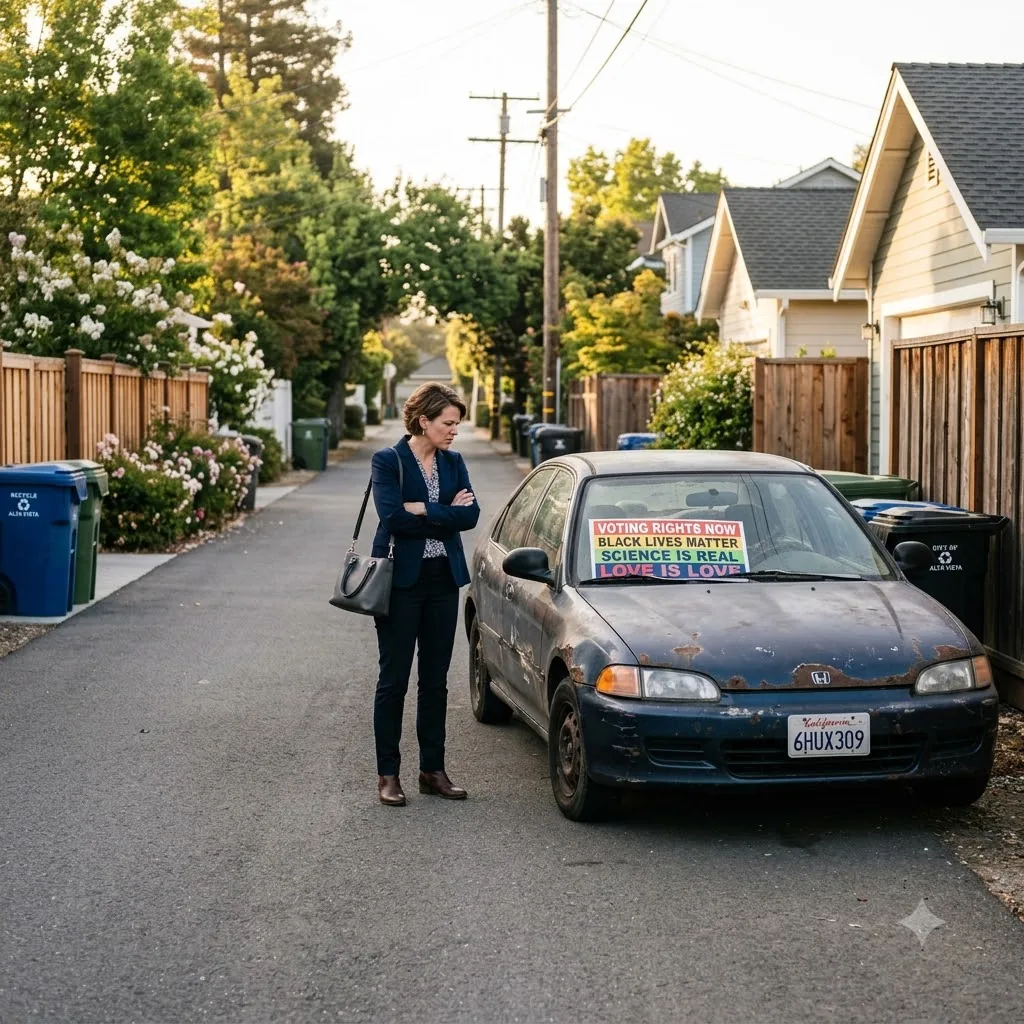
Despite her distance, the sounds chased her. Halfway down the street, she heard the unmistakable, high-pitched whine of heavy hydraulics engaging. Then came the harsh clatter of metal chains dragging across cobblestone. She squeezed her eyes shut for a fraction of a second, imagining the rusted blue sedan being hoisted into the air. She thought of the thrift-store blankets, the damp wool, the cheap plastic alarm clock. Chloe’s entire life, suspended by a hook, hauled away to an impound lot she would never be able to afford.
Eleanor reached Oakmont Avenue. The Victorian homes stood in their proud, immaculate rows, guarded by wrought-iron fences and manicured boxwood hedges. It was the flawless slice of history she had fought so relentlessly to protect. Usually, walking down this street filled her with a profound sense of stewardship and pride. Today, the pristine facades felt impenetrable. They looked like fortresses, explicitly designed to keep the rest of the world out.
She unlocked the heavy oak door of her own house and stepped into the foyer. The silence of the large, empty house was immediate and oppressive. There was no hissing steam wand, no friendly banter, no life. Just the ticking of the grandfather clock in the hallway and the hum of the climate control system.
Eleanor didn’t take off her coat. She walked slowly through the gleaming kitchen, past the marble island where her laptop still sat, dark and asleep. She walked into the front parlor and stood before the large bay window.
Her eyes bypassed her own perfect lawn, moving straight to the end of the street.
There it was. The empty lot.
It was a wide, undeveloped expanse of overgrown grass and chain-link fencing. Just yesterday, she had looked at that lot and seen a battlefield where she had emerged victorious. She had spent late nights writing emails, organizing petitions, and rallying the neighborhood to block the proposed mid-rise. She had cited parking congestion, historical integrity, and neighborhood character to kill the project. She had saved the skyline.
Now, staring at the empty space, the victory curdled in her stomach.
If the building had gone up, there would have been forty units of affordable housing on that lot. Forty units specifically designated for the people who poured her espresso, who trimmed the neighborhood hedges, who scrubbed the floors of the boutiques on Main Street.
Eleanor raised her hand and rested her fingertips against the cold glass of the window. Her other hand drifted to the lapel of her cashmere coat, her thumb tracing the embossed letters of the brass *Save Our Skyline* pin.
She had won. The skyline was safe. The neighborhood remained an exclusive, untouched museum of affluence. But as she stood in her massive, silent house, she finally understood the true cost of her preservation. She had meticulously engineered a beautiful, pristine community where the very people who served her could not afford to survive. And tomorrow morning, when she walked to Heritage Roasters for her coffee, Chloe would not be there.