Story code: ST-001889
Part 1: The Severance
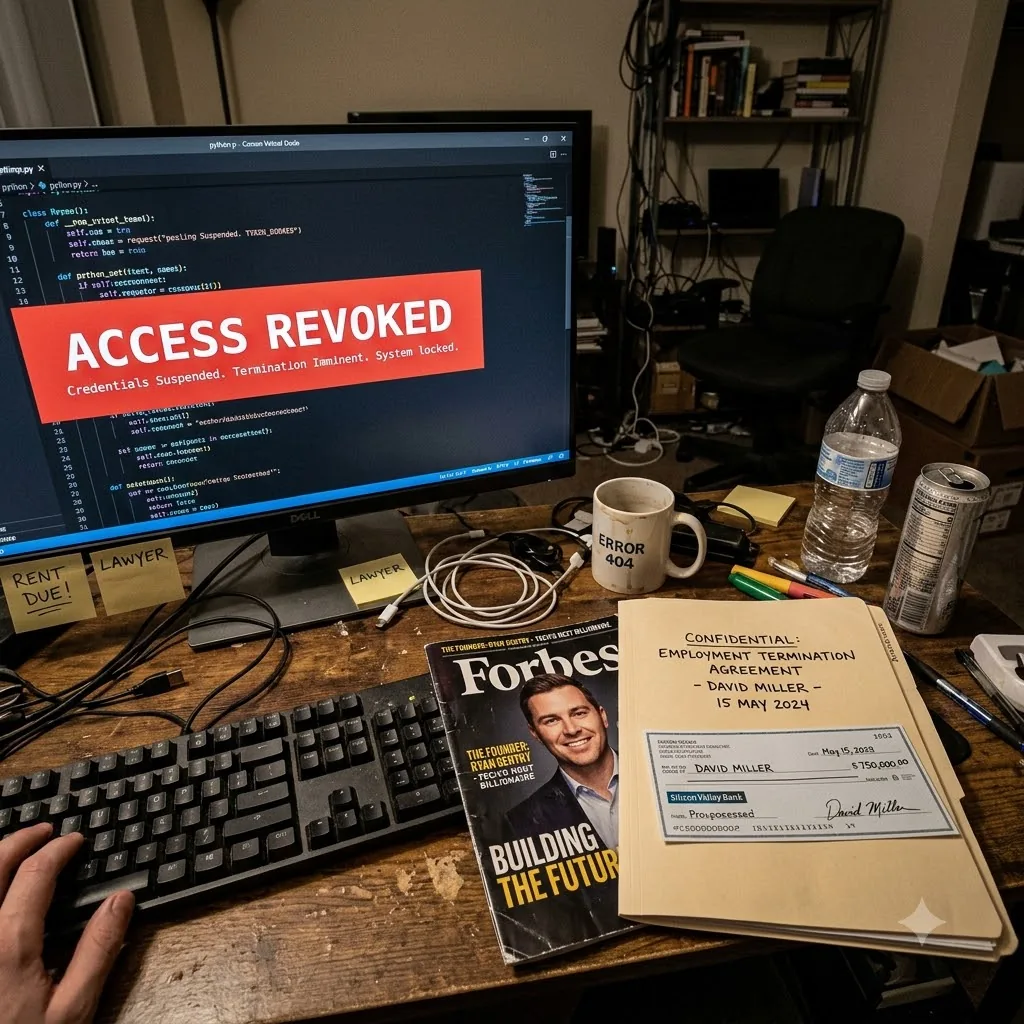
The red text on my terminal blinked with the dull, arrogant rhythm of a digital guillotine. Access Revoked. I tapped the Enter key three more times, watching the AWS console I had built from the ground up spit the same fatal error back into my dark apartment. Ten minutes ago, I was deep in the Aura backend, patching a vulnerability that Julian’s shiny new front-end team had introduced. Now, I did not exist. I tried the secondary master keys. Burned. I tried the backup SSH tunnels routed through the old legacy servers we used in Julian’s garage three years ago. Severed. They had not just locked me out. They had scrubbed my digital fingerprints from the architecture entirely.
Julian was on the cover of Forbes this month, hailed as the boy-genius of Silicon Valley. He wore a black turtleneck and stared thoughtfully into the middle distance, credited as the sole architect of the revolutionary neural-compression algorithm that was about to take Aura public. I was the ghost. I wrote every line of that compression engine while he pitched venture capitalists. My equity was a handshake and a string of Slack messages that were currently vanishing from the servers as part of a sudden, sweeping data retention policy update. I could literally watch the directories disappearing on my local sync client.
A sharp, heavy knock at my apartment door rattled the cheap drywall. I froze, my hand hovering over the keyboard. It was late, well past midnight on a Tuesday. The knocking came again, louder, insistent.
I dragged myself up from the glowing monitors and opened the door just enough to look out. A man in a crisp charcoal suit stood in the dim hallway. He held a thick manila envelope. He did not ask for my name. He simply thrust the envelope into my chest, turned on his heel, and walked toward the stairwell without a single word. The heavy paper felt warm, almost radioactive, against my palms.
I locked the deadbolt and carried the package back to the glow of my dead terminal. Inside was a single, flawlessly typed legal document. Separation and Non-Disclosure Agreement. The title was a lie. As I read the dense legalese, the trap snapped shut around my throat. It was not a severance package. It was a confession. The document explicitly named me as a rogue contractor who had bypassed security protocols, framing my unauthorized access as the source of a massive, impending data breach that the SEC was supposedly investigating. They were hanging the federal charges entirely on me to keep Julian clean for the IPO.
Clipped to the back of the confession was a cashier’s check. I stared at the numbers printed on the heavy watermarked paper. Two hundred and fourteen thousand, six hundred and twelve dollars. The exact, down-to-the-penny amount of my mother’s outstanding medical debt at St. Jude’s. Julian had always claimed we were family. He had paid close enough attention to know exactly what number would paralyze me. Sign the paper, save her house, take the felony. Fight it, lose everything, and go to prison anyway with no money for a defense.
My phone buzzed on the desk. A text from an unknown number lit up the lock screen. We noticed some unauthorized access attempts on the mainframe. Security is handling it. Best to take the deal and rest up.
I threw the phone onto the couch. My chest tightened until I could barely draw breath. The sheer scale of the betrayal was suffocating. I paced the length of my tiny living room, stepping over empty energy drink cans and coiled Ethernet cables. Julian’s legal team, a massive corporate firm in a glass tower downtown, had executed this with military precision. They waited until the exact moment the final version of the code was compiled and pushed to production. They waited until I was exhausted, isolated, and completely dependent on the upcoming payout.
I looked back at my monitors. The black screens reflected my pale, exhausted face. Without my admin logs, without the version control history, without the thousands of internal emails proving I designed the core logic, I was just a crazy guy in a messy apartment claiming he built a billion-dollar company. The lawyers had all the servers. They had all the money. They had my entire digital life locked in a vault I could no longer see.
I picked up the heavy legal document again. The signature line at the bottom seemed to taunt me, flanked by little yellow sticky notes that said Sign Here in an aggressively cheerful font. The ink on the cashier’s check gleamed under my desk lamp. If I did nothing, they would send the authorities the fabricated logs showing my rogue activity. If I signed it, I gave them the rope to hang me with.
I needed leverage. I needed a ghost in the machine they had failed to exorcise. I sat back down at my desk, pushed the bribe to the edge of the mousepad, and reached under my desk to trace the thick bundle of wires leading to my secondary tower. My fingers brushed against the small, unassuming thumb drive taped to the underside of the desk frame, right as a heavy, synchronized pounding started at my front door, accompanied by the distinct sound of a crowbar sliding into the doorjamb.
The red text on my terminal blinked with the dull, arrogant rhythm of a digital guillotine. Access Revoked. I tapped the Enter key three more times, watching the AWS console I had built from the ground up spit the same fatal error back into my dark apartment. Ten minutes ago, I was deep in the Aura backend, patching a vulnerability that Julian’s shiny new front-end team had introduced. Now, I did not exist. I tried the secondary master keys. Burned. I tried the backup SSH tunnels routed through the old legacy servers we used in Julian’s garage three years ago. Severed. They had not just locked me out. They had scrubbed my digital fingerprints from the architecture entirely.
Julian was on the cover of Forbes this month, hailed as the boy-genius of Silicon Valley. He wore a black turtleneck and stared thoughtfully into the middle distance, credited as the sole architect of the revolutionary neural-compression algorithm that was about to take Aura public. I was the ghost. I wrote every line of that compression engine while he pitched venture capitalists. My equity was a handshake and a string of Slack messages that were currently vanishing from the servers as part of a sudden, sweeping data retention policy update. I could literally watch the directories disappearing on my local sync client.
A sharp, heavy knock at my apartment door rattled the cheap drywall. I froze, my hand hovering over the keyboard. It was late, well past midnight on a Tuesday. The knocking came again, louder, insistent.
I dragged myself up from the glowing monitors and opened the door just enough to look out. A man in a crisp charcoal suit stood in the dim hallway. He held a thick manila envelope. He did not ask for my name. He simply thrust the envelope into my chest, turned on his heel, and walked toward the stairwell without a single word. The heavy paper felt warm, almost radioactive, against my palms.
I locked the deadbolt and carried the package back to the glow of my dead terminal. Inside was a single, flawlessly typed legal document. Separation and Non-Disclosure Agreement. The title was a lie. As I read the dense legalese, the trap snapped shut around my throat. It was not a severance package. It was a confession. The document explicitly named me as a rogue contractor who had bypassed security protocols, framing my unauthorized access as the source of a massive, impending data breach that the SEC was supposedly investigating. They were hanging the federal charges entirely on me to keep Julian clean for the IPO.
Clipped to the back of the confession was a cashier’s check. I stared at the numbers printed on the heavy watermarked paper. Two hundred and fourteen thousand, six hundred and twelve dollars. The exact, down-to-the-penny amount of my mother’s outstanding medical debt at St. Jude’s. Julian had always claimed we were family. He had paid close enough attention to know exactly what number would paralyze me. Sign the paper, save her house, take the felony. Fight it, lose everything, and go to prison anyway with no money for a defense.
My phone buzzed on the desk. A text from an unknown number lit up the lock screen. We noticed some unauthorized access attempts on the mainframe. Security is handling it. Best to take the deal and rest up.
I threw the phone onto the couch. My chest tightened until I could barely draw breath. The sheer scale of the betrayal was suffocating. I paced the length of my tiny living room, stepping over empty energy drink cans and coiled Ethernet cables. Julian’s legal team, a massive corporate firm in a glass tower downtown, had executed this with military precision. They waited until the exact moment the final version of the code was compiled and pushed to production. They waited until I was exhausted, isolated, and completely dependent on the upcoming payout.
I looked back at my monitors. The black screens reflected my pale, exhausted face. Without my admin logs, without the version control history, without the thousands of internal emails proving I designed the core logic, I was just a crazy guy in a messy apartment claiming he built a billion-dollar company. The lawyers had all the servers. They had all the money. They had my entire digital life locked in a vault I could no longer see.
I picked up the heavy legal document again. The signature line at the bottom seemed to taunt me, flanked by little yellow sticky notes that said Sign Here in an aggressively cheerful font. The ink on the cashier’s check gleamed under my desk lamp. If I did nothing, they would send the authorities the fabricated logs showing my rogue activity. If I signed it, I gave them the rope to hang me with.
I needed leverage. I needed a ghost in the machine they had failed to exorcise. I sat back down at my desk, pushed the bribe to the edge of the mousepad, and reached under my desk to trace the thick bundle of wires leading to my secondary tower. My fingers brushed against the small, unassuming thumb drive taped to the underside of the desk frame, right as a heavy, synchronized pounding started at my front door, accompanied by the distinct sound of a crowbar sliding into the doorjamb.