Story code: ST-000332
Part 1: The Smile for the Cameras
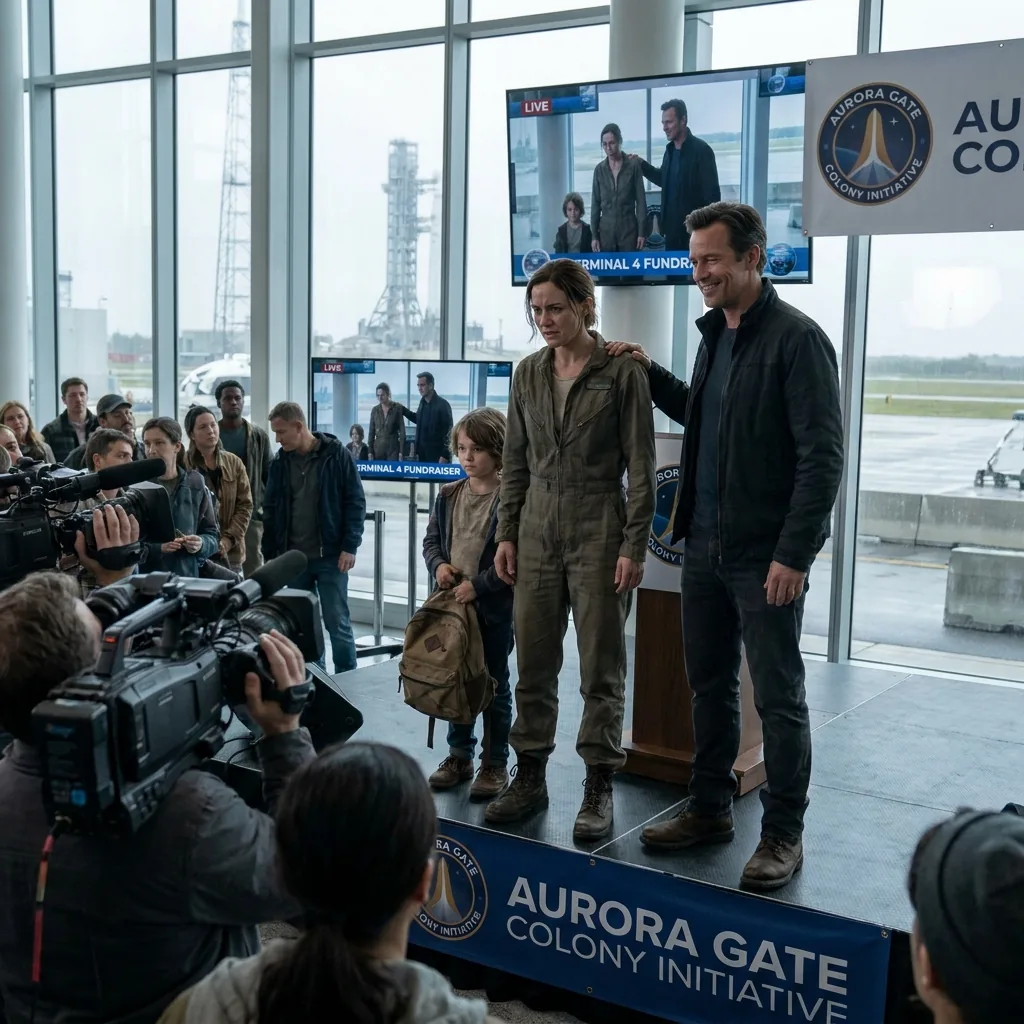
Grant Mercer smiled into three cameras at once, slid his hand onto Mara’s shoulder like he was blessing her, and told the crowd at Terminal 4 Aurora Gate that his family was “boarding together toward humanity’s future” while Mara stood half a step behind him with a printed boarding pass in a clear sleeve she was not allowed to hold up herself. Leah Mercer was carrying a stock check clipboard past the fundraiser stage built into the public concourse when Diane took the pass from Mara’s hand, tucked it into her slim folio, and repositioned Owen in front of the step-and-repeat backdrop like he was the child everyone had come to see.
The terminal kept moving around the show. A toddler cried near the gate windows. Someone at the coffee kiosk argued about oat milk. A livestream producer in a headset counted down with two fingers raised, and the red camera light came on again over Grant’s shoulder.
Leah paused at the edge of the sponsor rope because she knew this routine by sight. Big donor family. Big speech. Staff told to keep the walkway clear and the ordinary passengers flowing around the polished center of the room. But she also knew boarding habits, and this family was standing wrong for people who were actually about to leave Earth.
People ready to board kept a hand on their credential without being told. They checked pockets, adjusted bags, asked where the scanners opened. Mara did that once, fingers touching the empty space near her lanyard pocket after Diane had taken the clear sleeve away. Owen did not check anything. He just kept his chin up, waved when the producer pointed, and stayed near Grant’s elbow in a new mission jacket with the zipper still stiff.
“This initiative is about family,” Grant said into the microphone. “About sacrifice, trust, and bringing your children into something larger than yourselves.”
He said it with that launch-day lapel pin catching the light. He said it while his hand stayed on Owen’s back. Mara got brought forward only when a donor with a champagne flute wanted the whole family in one frame. Then Diane touched Mara’s arm, moved her three inches closer, and lowered her voice without lowering her smile.
“Shoulders open, honey. Look at Grant.”
Mara did. She stood where placed. Her formal launch clothes were neat except for a line of creasing at one side, the kind Leah usually saw on people who had been sitting too long and called up too suddenly.
The fundraiser host asked for one more family moment before the boarding segment. Grant opened both arms and said, “Come here, sweetheart,” to Mara loud enough for the microphones. When Mara stepped in, he kissed the top of her head. The crowd gave the soft public sound people gave when they wanted to be seen approving something.
Leah might have kept walking if Grant had not dropped his voice the instant the host turned away to reset for another donor thank-you.
He pivoted behind the step-and-repeat, close to the family holding lane beside the boarding scanners, where the microphones did not follow as cleanly. Leah was crossing the concessions corridor opening above the ceremony perimeter when his voice carried up the hard terminal surfaces.
“Keep her settled until we’re through the donor walk and the stream sign-off,” he said.
Leah stopped.
Diane answered too low for every word to carry, but Leah caught, “I know,” and then, “not here.”
Grant’s voice came back sharper than it had been onstage. “She can cry later. I need her smiling now.”
Leah looked down through the gap between the pillar and the sponsor banner. Mara was facing the gate glass. From that distance Leah could only see the angle of her jaw and the stillness in her shoulders. Diane snapped the folio shut. Grant rolled his face back into its camera version before he stepped into sight again.
“Sorry,” he said to the returning host, with a warm little laugh. “Family logistics.”
The livestream crew laughed with him.
Leah did not.
She had worked enough terminal events to know the difference between normal launch stress and a script being forced to stay standing. The mismatch kept showing itself in small places. Grant introduced Owen by name twice and Mara once. Donors asked Owen about training modules. Mara got asked how proud she was. When a press assistant offered commemorative boarding photos, Diane produced Owen’s lanyard credential immediately but kept Mara’s printed pass inside the folio.
That was what snagged in Leah’s mind. In this terminal, active boarding credentials were shown, scanned, rechecked, and never hidden this close to gate transition unless something about them was inconvenient.
A few minutes later, the host announced that the Mercer family would move toward the boarding lane after one final sponsor shot. Grant put his hand at Owen’s back and guided him toward the opening beside the scanners. Mara followed a step later, not guided, just folding into the line because there was nowhere else to stand.
Then Diane caught Mara lightly by the wrist, murmured something, and moved her to the side nearest the press riser instead of into the family lane.
Mara glanced once at the folio, once at the scanner, and said something short that Leah could not hear.
Diane’s answer was clear enough.
“Not yet. Smile first.”
Leah looked from Owen’s visible credential to the folio holding Mara’s pass, and for the first time the fundraiser line about boarding together sounded less like a promise than a timing trick. If Mara was truly part of the manifest they were selling to the cameras, why was the only paper pass in the family being hidden until after the smiles were done?
Grant Mercer smiled into three cameras at once, slid his hand onto Mara’s shoulder like he was blessing her, and told the crowd at Terminal 4 Aurora Gate that his family was “boarding together toward humanity’s future” while Mara stood half a step behind him with a printed boarding pass in a clear sleeve she was not allowed to hold up herself. Leah Mercer was carrying a stock check clipboard past the fundraiser stage built into the public concourse when Diane took the pass from Mara’s hand, tucked it into her slim folio, and repositioned Owen in front of the step-and-repeat backdrop like he was the child everyone had come to see.
The terminal kept moving around the show. A toddler cried near the gate windows. Someone at the coffee kiosk argued about oat milk. A livestream producer in a headset counted down with two fingers raised, and the red camera light came on again over Grant’s shoulder.
Leah paused at the edge of the sponsor rope because she knew this routine by sight. Big donor family. Big speech. Staff told to keep the walkway clear and the ordinary passengers flowing around the polished center of the room. But she also knew boarding habits, and this family was standing wrong for people who were actually about to leave Earth.
People ready to board kept a hand on their credential without being told. They checked pockets, adjusted bags, asked where the scanners opened. Mara did that once, fingers touching the empty space near her lanyard pocket after Diane had taken the clear sleeve away. Owen did not check anything. He just kept his chin up, waved when the producer pointed, and stayed near Grant’s elbow in a new mission jacket with the zipper still stiff.
“This initiative is about family,” Grant said into the microphone. “About sacrifice, trust, and bringing your children into something larger than yourselves.”
He said it with that launch-day lapel pin catching the light. He said it while his hand stayed on Owen’s back. Mara got brought forward only when a donor with a champagne flute wanted the whole family in one frame. Then Diane touched Mara’s arm, moved her three inches closer, and lowered her voice without lowering her smile.
“Shoulders open, honey. Look at Grant.”
Mara did. She stood where placed. Her formal launch clothes were neat except for a line of creasing at one side, the kind Leah usually saw on people who had been sitting too long and called up too suddenly.
The fundraiser host asked for one more family moment before the boarding segment. Grant opened both arms and said, “Come here, sweetheart,” to Mara loud enough for the microphones. When Mara stepped in, he kissed the top of her head. The crowd gave the soft public sound people gave when they wanted to be seen approving something.
Leah might have kept walking if Grant had not dropped his voice the instant the host turned away to reset for another donor thank-you.
He pivoted behind the step-and-repeat, close to the family holding lane beside the boarding scanners, where the microphones did not follow as cleanly. Leah was crossing the concessions corridor opening above the ceremony perimeter when his voice carried up the hard terminal surfaces.
“Keep her settled until we’re through the donor walk and the stream sign-off,” he said.
Leah stopped.
Diane answered too low for every word to carry, but Leah caught, “I know,” and then, “not here.”
Grant’s voice came back sharper than it had been onstage. “She can cry later. I need her smiling now.”
Leah looked down through the gap between the pillar and the sponsor banner. Mara was facing the gate glass. From that distance Leah could only see the angle of her jaw and the stillness in her shoulders. Diane snapped the folio shut. Grant rolled his face back into its camera version before he stepped into sight again.
“Sorry,” he said to the returning host, with a warm little laugh. “Family logistics.”
The livestream crew laughed with him.
Leah did not.
She had worked enough terminal events to know the difference between normal launch stress and a script being forced to stay standing. The mismatch kept showing itself in small places. Grant introduced Owen by name twice and Mara once. Donors asked Owen about training modules. Mara got asked how proud she was. When a press assistant offered commemorative boarding photos, Diane produced Owen’s lanyard credential immediately but kept Mara’s printed pass inside the folio.
That was what snagged in Leah’s mind. In this terminal, active boarding credentials were shown, scanned, rechecked, and never hidden this close to gate transition unless something about them was inconvenient.
A few minutes later, the host announced that the Mercer family would move toward the boarding lane after one final sponsor shot. Grant put his hand at Owen’s back and guided him toward the opening beside the scanners. Mara followed a step later, not guided, just folding into the line because there was nowhere else to stand.
Then Diane caught Mara lightly by the wrist, murmured something, and moved her to the side nearest the press riser instead of into the family lane.
Mara glanced once at the folio, once at the scanner, and said something short that Leah could not hear.
Diane’s answer was clear enough.
“Not yet. Smile first.”
Leah looked from Owen’s visible credential to the folio holding Mara’s pass, and for the first time the fundraiser line about boarding together sounded less like a promise than a timing trick. If Mara was truly part of the manifest they were selling to the cameras, why was the only paper pass in the family being hidden until after the smiles were done?