Story code: ST-000527
Part 1: He Called My Care a Cage
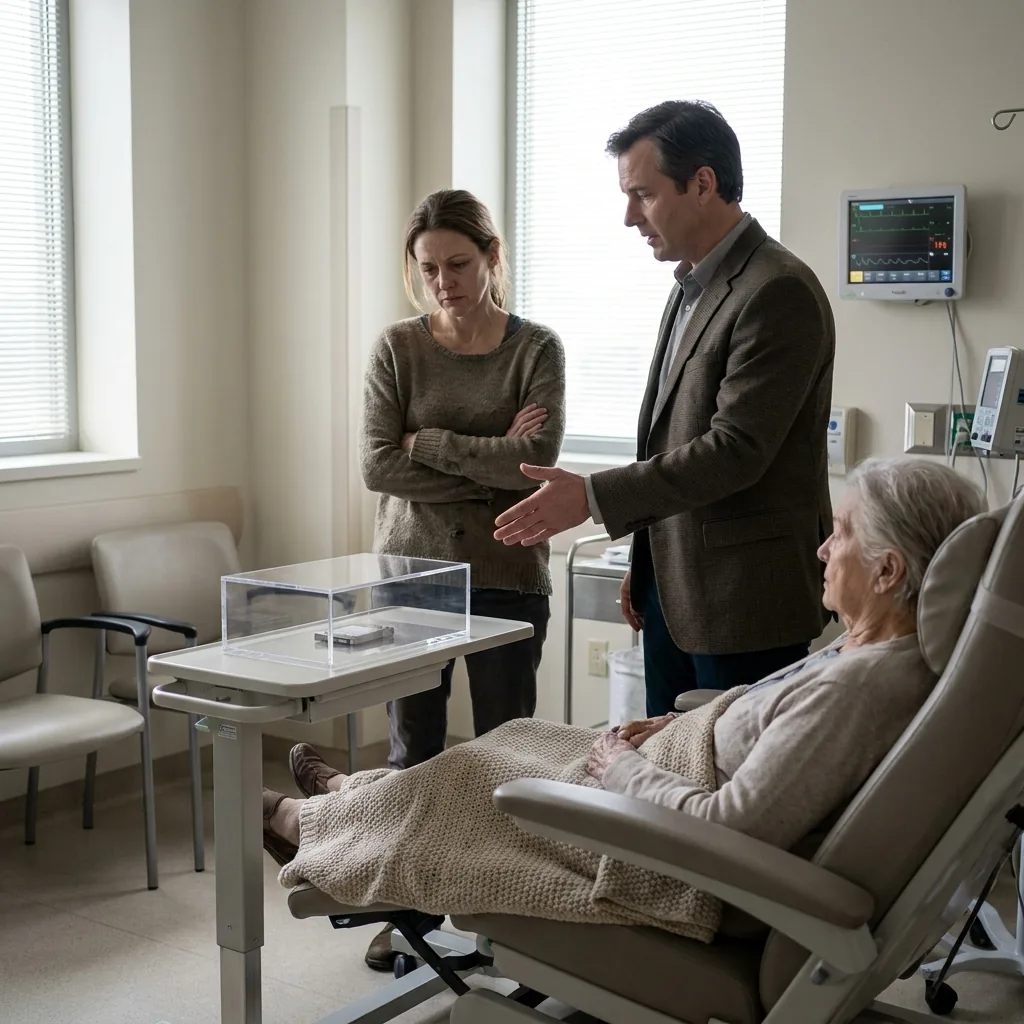
My brother stood in the family support suite at Halcyon Upload Clinic, pointed at the clear case holding my mother’s consciousness drive, and said I was killing her by insisting she stay human one more week. I was still tucking my mother’s cardigan around the monitoring leads on her intake chair when Dr. Soren Vale nodded like Trevor had said something brave, and in less than a minute the room had turned my daily care into evidence that I wanted control instead of her comfort. The worst part was that Mom was right there, reaching for my hand while they talked about her like I was the emergency. I had gotten her there forty minutes early because early is the only way she does anything now without getting confused. I had her med list updated in my binder, her water cup capped, her extra pads in the side pocket, and the little packet of crackers she can handle when her stomach turns. The intake corridor outside the glass wall hummed with carts and soft shoe squeaks. Every few seconds another door whispered open and shut. Nadia Chen, the care coordinator, had clipped leads to Mom’s wrist and collarbone and asked me the practical questions in a flat, fast voice. “When was her last full night of sleep?” “Not full,” I said. “Four hours broken. She was up at one-twenty and three-oh-five. Restless after the second diuretic.” “What time was the diuretic?” “Eight a.m. I moved it earlier three days ago because the old slot kept making her dizzy after lunch.” Nadia’s fingers moved over her wrist tablet. She did not look impressed. She just kept going. “Any swallowing issues today?” “A little with dry food. She did better with yogurt.” Mom looked at me and gave the tiniest nod, like she was confirming I was still in the room. Trevor arrived after all of that in a clean jacket that still held its fold lines. He kissed the air near Mom’s temple, set a polished coffee on the side counter, and said, “Sorry, parking was chaos.” Then he noticed the drive case on the consultation table and straightened like the thing had entered the room just for him. The case was clear and cool-looking, with a silver seal around the edge and a blue strip pulsing under the foam insert. It was smaller than a lunch box and somehow managed to take up more attention than my mother. Dr. Vale came in behind Trevor, smooth as if he had already heard the ending of the conversation. He shook Trevor’s hand, gave me a sympathetic half-smile, and took the chair angled toward both of us like a moderator on a panel. “We’re here to support a compassionate transition,” he said. “No one wants Evelyn to suffer through avoidable decline.” I said, “We’re here for evaluation. That’s what I agreed to.” Trevor leaned back. “You agreed because I pushed for it.” “No,” I said. “I agreed because Mom asked questions last month and I said we could get real answers.” Dr. Vale folded his hands. “Sometimes the person providing the most hands-on care has the hardest time separating love from possession.” He said it gently. That made it worse. I looked at him, then at Trevor, because I honestly thought one of them might hear how insane that sounded in a room where I was the one who had gotten Mom dressed, toileted, medicated, and through traffic. “What exactly is possessive about making sure she’s not overloaded?” I asked. Trevor let out a breath through his nose. “Mara, come on. You keep delaying every hard decision until there’s another crisis. At some point keeping her in this state becomes about you.” Mom shifted in the chair and touched the edge of my sleeve. “Too many people,” she said quietly. I moved closer and lowered my voice. “I know. One thing at a time.” Dr. Vale watched that and used it like I had handed him a tool. “There,” he said softly to Nadia, not to me. “That’s the dynamic families struggle to recognize. Total mediation. The patient’s future filtered through one caregiver’s fear.” I said, “Her future is not a sales object.” Trevor’s head snapped toward me. “No one is selling anything. We’re trying to stop her suffering.” “Then answer one basic question,” I said. “What time does she usually need the bathroom at night?” He blinked once. “That’s not the point.” “It is if you’re talking about what her body can handle.” Dr. Vale jumped in before Trevor had to. “Night routines are exactly the kind of detail that can trap a family in maintenance thinking instead of liberation thinking.” Nadia looked up from her tablet then. Not much. Just enough to show she had heard him. Trevor stepped toward the drive case and rested two fingers on the plastic lid. “Mom deserves better than being kept in a failing body because my sister can’t let go.” The phrase landed in the room and stayed there. I heard the shoe squeaks in the corridor. I heard the monitor give one neat little pulse. I heard Mom whisper my name, not his. And somehow I was the one Dr. Vale addressed next. “Mara,” he said, in the same tone people use when they want a witness to admire their patience, “if your identity has become organized around being needed, this process can feel like a threat. That doesn’t mean it is one.” For a second nobody said anything. Then Trevor gave a small, sad shake of his head like I had proven his case by breathing. Nadia asked, “Who completed the at-home stabilization entries for the last six weeks?” “I did,” I said immediately. Trevor said, at the same time, “We all contributed.” Nadia’s eyes went back to her tablet. She scrolled once, then again, slower this time. I couldn’t see the screen from where I stood. But I could see her face lose that neutral intake look and settle into something.
My brother stood in the family support suite at Halcyon Upload Clinic, pointed at the clear case holding my mother’s consciousness drive, and said I was killing her by insisting she stay human one more week. I was still tucking my mother’s cardigan around the monitoring leads on her intake chair when Dr. Soren Vale nodded like Trevor had said something brave, and in less than a minute the room had turned my daily care into evidence that I wanted control instead of her comfort. The worst part was that Mom was right there, reaching for my hand while they talked about her like I was the emergency. I had gotten her there forty minutes early because early is the only way she does anything now without getting confused. I had her med list updated in my binder, her water cup capped, her extra pads in the side pocket, and the little packet of crackers she can handle when her stomach turns. The intake corridor outside the glass wall hummed with carts and soft shoe squeaks. Every few seconds another door whispered open and shut. Nadia Chen, the care coordinator, had clipped leads to Mom’s wrist and collarbone and asked me the practical questions in a flat, fast voice. “When was her last full night of sleep?” “Not full,” I said. “Four hours broken. She was up at one-twenty and three-oh-five. Restless after the second diuretic.” “What time was the diuretic?” “Eight a.m. I moved it earlier three days ago because the old slot kept making her dizzy after lunch.” Nadia’s fingers moved over her wrist tablet. She did not look impressed. She just kept going. “Any swallowing issues today?” “A little with dry food. She did better with yogurt.” Mom looked at me and gave the tiniest nod, like she was confirming I was still in the room. Trevor arrived after all of that in a clean jacket that still held its fold lines. He kissed the air near Mom’s temple, set a polished coffee on the side counter, and said, “Sorry, parking was chaos.” Then he noticed the drive case on the consultation table and straightened like the thing had entered the room just for him. The case was clear and cool-looking, with a silver seal around the edge and a blue strip pulsing under the foam insert. It was smaller than a lunch box and somehow managed to take up more attention than my mother. Dr. Vale came in behind Trevor, smooth as if he had already heard the ending of the conversation. He shook Trevor’s hand, gave me a sympathetic half-smile, and took the chair angled toward both of us like a moderator on a panel. “We’re here to support a compassionate transition,” he said. “No one wants Evelyn to suffer through avoidable decline.” I said, “We’re here for evaluation. That’s what I agreed to.” Trevor leaned back. “You agreed because I pushed for it.” “No,” I said. “I agreed because Mom asked questions last month and I said we could get real answers.” Dr. Vale folded his hands. “Sometimes the person providing the most hands-on care has the hardest time separating love from possession.” He said it gently. That made it worse. I looked at him, then at Trevor, because I honestly thought one of them might hear how insane that sounded in a room where I was the one who had gotten Mom dressed, toileted, medicated, and through traffic. “What exactly is possessive about making sure she’s not overloaded?” I asked. Trevor let out a breath through his nose. “Mara, come on. You keep delaying every hard decision until there’s another crisis. At some point keeping her in this state becomes about you.” Mom shifted in the chair and touched the edge of my sleeve. “Too many people,” she said quietly. I moved closer and lowered my voice. “I know. One thing at a time.” Dr. Vale watched that and used it like I had handed him a tool. “There,” he said softly to Nadia, not to me. “That’s the dynamic families struggle to recognize. Total mediation. The patient’s future filtered through one caregiver’s fear.” I said, “Her future is not a sales object.” Trevor’s head snapped toward me. “No one is selling anything. We’re trying to stop her suffering.” “Then answer one basic question,” I said. “What time does she usually need the bathroom at night?” He blinked once. “That’s not the point.” “It is if you’re talking about what her body can handle.” Dr. Vale jumped in before Trevor had to. “Night routines are exactly the kind of detail that can trap a family in maintenance thinking instead of liberation thinking.” Nadia looked up from her tablet then. Not much. Just enough to show she had heard him. Trevor stepped toward the drive case and rested two fingers on the plastic lid. “Mom deserves better than being kept in a failing body because my sister can’t let go.” The phrase landed in the room and stayed there. I heard the shoe squeaks in the corridor. I heard the monitor give one neat little pulse. I heard Mom whisper my name, not his. And somehow I was the one Dr. Vale addressed next. “Mara,” he said, in the same tone people use when they want a witness to admire their patience, “if your identity has become organized around being needed, this process can feel like a threat. That doesn’t mean it is one.” For a second nobody said anything. Then Trevor gave a small, sad shake of his head like I had proven his case by breathing. Nadia asked, “Who completed the at-home stabilization entries for the last six weeks?” “I did,” I said immediately. Trevor said, at the same time, “We all contributed.” Nadia’s eyes went back to her tablet. She scrolled once, then again, slower this time. I couldn’t see the screen from where I stood. But I could see her face lose that neutral intake look and settle into something.