Story code: ST-000852
Part 1: He Needed Me Quiet for the Shot
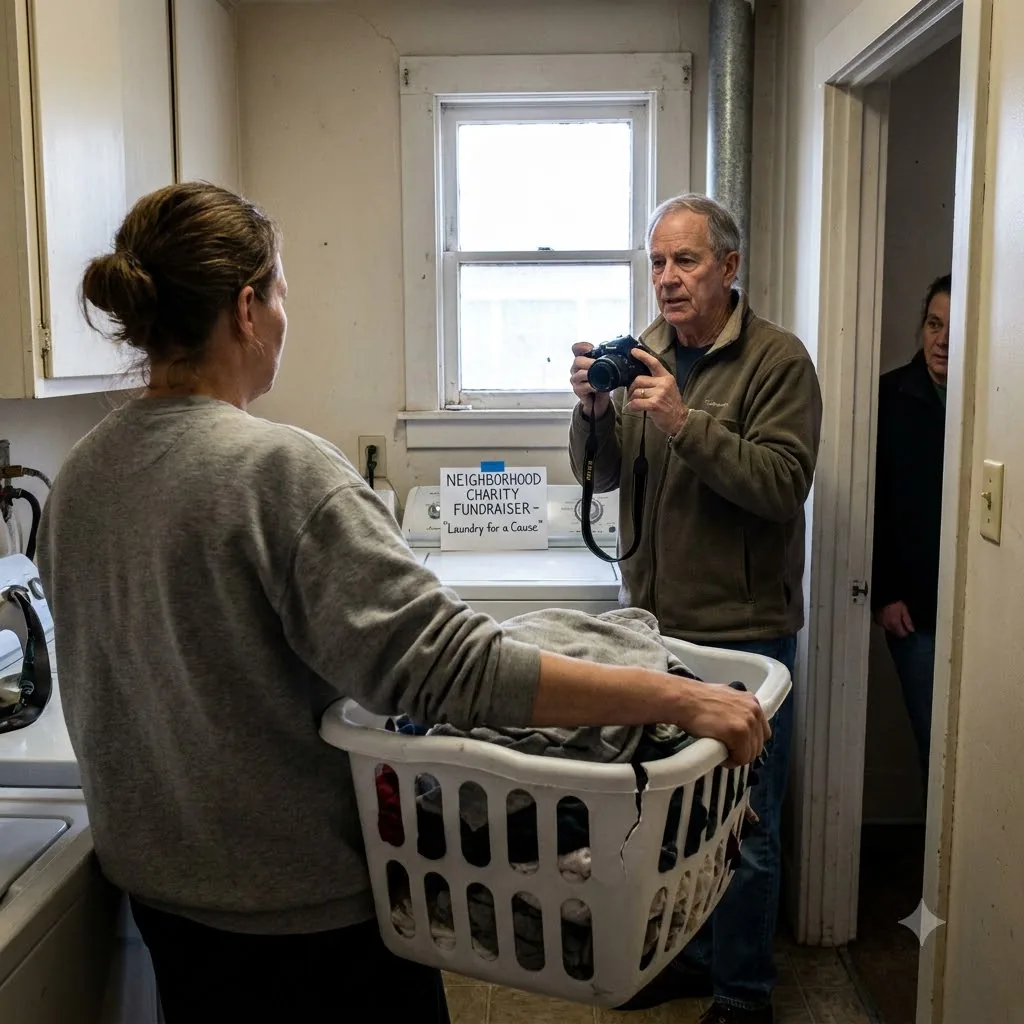
My landlord turned my laundry day into part of his charity image, and he did it in the shared utility nook of our duplex while my white plastic laundry basket with the cracked handle was still half full of socks. He walked in carrying that spare key ring, shifted my basket under the blue fundraiser sign he had leaned near the washer, and told me I could help him “make this look nice” if I just stayed quiet for ten minutes. The part that stuck was simple: none of his public kindness was going to work unless I stood there and let people think this had anything to do with helping me.
This happened at Pike House Duplex, the kind of place where everything looks ordinary until somebody decides the ordinary parts belong to his story. The washer and dryer sit in a utility nook off the shared side walkway. Tenants pass through with detergent, hampers, grocery bags, all the boring things nobody notices until one person starts arranging them like props.
Nora Delgado had carried her basket down the short hall the same way she always did, hip against the doorframe, towel draped over the rim, mesh bag of socks tucked under two T-shirts. The basket mattered because it had a cracked handle on one side, a split white edge that caught on sleeves if it faced out. That detail made it easy to tell when somebody had turned it.
When she first set it down, the cracked handle faced the dryer. By the time she came back from grabbing detergent from her front unit, the basket had been rotated toward the walkway and pulled three feet closer to the open side door, where afternoon light hit it cleanly.
Graham Pike was already there.
He had one hand on the basket rim and the other on the folding card table he was using for fundraiser envelopes and bottled water. His voice came out smooth and busy, the same tone people use when they are already acting like the plan is settled.
“Perfect,” he said, glancing at the basket, then at Nora. “Leave it there. We may use this corner for a quick community support shot before everyone gathers out front.”
Nora looked at the basket, then at him. “Use what corner? I’m doing laundry.”
“Right, and that’s exactly why it works,” he said. “Real life. Real tenants. People like seeing what this place actually needs.”
He said “needs” while adjusting the blue bath towel so more of it draped over the rim. He tucked the mesh sock bag lower, out of sight, and nudged the cracked handle away from the camera side that did not even exist yet but had clearly already been imagined.
Nora told him to stop moving her things.
He took two small steps back and lifted both hands for half a second, then dropped them to his sides. “I’m helping. Marlene’s coming by, Eli’s setting up a stream, and I told them I’d show how we support tenants here. This is good for the property and good for you if you don’t make it awkward.”
That last line changed the shape of it. It was no longer about a landlord hovering too much in shared space. It was an instruction. Be useful. Be silent. Let the picture stand.
There were already signs of the fundraiser on the front steps: a ring light in a cardboard box, a handwritten board about neighborhood winter supplies, stacks of folded flyers under a brick. Graham had spent the week telling everyone on the block that Pike House Duplex was doing a small community drive from the curbside. He liked to be visible carrying things, positioning things, speaking for people while facing slightly toward whoever was watching.
Nora said, very evenly, “My laundry is not a display.”
He looked past her toward the side walkway, checking traffic the way people do when they want an argument to end before witnesses get close. “Nobody’s displaying you. Just let me tell the story right.”
The phrase landed harder than if he had raised his voice.
Tasha Benton, the downstairs tenant, came up the walkway then with a pack of dryer sheets in one hand and her phone in the other. She slowed when she saw Graham standing over Nora’s basket.
“You using the machines?” Tasha asked.
“Two minutes,” Graham said before Nora answered. “We’re just organizing this area so it reads clean for later.”
“Reads clean,” Tasha repeated, not smiling.
Graham moved aside. Nora loaded the washer. The basket stayed where he had pulled it, turned outward, towel arranged, like it had been posed instead of used. Graham lingered long enough to straighten a flyer on the card table and remind both tenants that donor liaison Marlene Cho would be stopping by before the live stream started.
Then he stepped into the walkway and took a call. His voice dropped, but not enough.
Tasha had gone to the dryer and was checking the lint trap when Graham said, from just outside the nook, “No, don’t bring the supplies in yet. Leave the basket where it is and bring Nora out once Marlene’s here. It’ll look more natural if she seems surprised.”
There was a short pause.
Then Graham added, lower but still clear enough in the concrete corridor, “And make sure she doesn’t start in about the key or any of that. I already told her this is helping.”
Nora stopped with the detergent cap in her hand.
Tasha looked up from the dryer and stared toward the open side door where his shadow crossed the light. When Graham stepped back in, he saw both of them looking at him, and his next sentence came too quickly.
“All set,” he said. “We’ll keep this simple.”
Simple was not the word for a landlord explaining, in front of the wrong witness, that the charity moment depended on where a tenant’s laundry basket sat and what that tenant was not allowed to say.
My landlord turned my laundry day into part of his charity image, and he did it in the shared utility nook of our duplex while my white plastic laundry basket with the cracked handle was still half full of socks. He walked in carrying that spare key ring, shifted my basket under the blue fundraiser sign he had leaned near the washer, and told me I could help him “make this look nice” if I just stayed quiet for ten minutes. The part that stuck was simple: none of his public kindness was going to work unless I stood there and let people think this had anything to do with helping me.
This happened at Pike House Duplex, the kind of place where everything looks ordinary until somebody decides the ordinary parts belong to his story. The washer and dryer sit in a utility nook off the shared side walkway. Tenants pass through with detergent, hampers, grocery bags, all the boring things nobody notices until one person starts arranging them like props.
Nora Delgado had carried her basket down the short hall the same way she always did, hip against the doorframe, towel draped over the rim, mesh bag of socks tucked under two T-shirts. The basket mattered because it had a cracked handle on one side, a split white edge that caught on sleeves if it faced out. That detail made it easy to tell when somebody had turned it.
When she first set it down, the cracked handle faced the dryer. By the time she came back from grabbing detergent from her front unit, the basket had been rotated toward the walkway and pulled three feet closer to the open side door, where afternoon light hit it cleanly.
Graham Pike was already there.
He had one hand on the basket rim and the other on the folding card table he was using for fundraiser envelopes and bottled water. His voice came out smooth and busy, the same tone people use when they are already acting like the plan is settled.
“Perfect,” he said, glancing at the basket, then at Nora. “Leave it there. We may use this corner for a quick community support shot before everyone gathers out front.”
Nora looked at the basket, then at him. “Use what corner? I’m doing laundry.”
“Right, and that’s exactly why it works,” he said. “Real life. Real tenants. People like seeing what this place actually needs.”
He said “needs” while adjusting the blue bath towel so more of it draped over the rim. He tucked the mesh sock bag lower, out of sight, and nudged the cracked handle away from the camera side that did not even exist yet but had clearly already been imagined.
Nora told him to stop moving her things.
He took two small steps back and lifted both hands for half a second, then dropped them to his sides. “I’m helping. Marlene’s coming by, Eli’s setting up a stream, and I told them I’d show how we support tenants here. This is good for the property and good for you if you don’t make it awkward.”
That last line changed the shape of it. It was no longer about a landlord hovering too much in shared space. It was an instruction. Be useful. Be silent. Let the picture stand.
There were already signs of the fundraiser on the front steps: a ring light in a cardboard box, a handwritten board about neighborhood winter supplies, stacks of folded flyers under a brick. Graham had spent the week telling everyone on the block that Pike House Duplex was doing a small community drive from the curbside. He liked to be visible carrying things, positioning things, speaking for people while facing slightly toward whoever was watching.
Nora said, very evenly, “My laundry is not a display.”
He looked past her toward the side walkway, checking traffic the way people do when they want an argument to end before witnesses get close. “Nobody’s displaying you. Just let me tell the story right.”
The phrase landed harder than if he had raised his voice.
Tasha Benton, the downstairs tenant, came up the walkway then with a pack of dryer sheets in one hand and her phone in the other. She slowed when she saw Graham standing over Nora’s basket.
“You using the machines?” Tasha asked.
“Two minutes,” Graham said before Nora answered. “We’re just organizing this area so it reads clean for later.”
“Reads clean,” Tasha repeated, not smiling.
Graham moved aside. Nora loaded the washer. The basket stayed where he had pulled it, turned outward, towel arranged, like it had been posed instead of used. Graham lingered long enough to straighten a flyer on the card table and remind both tenants that donor liaison Marlene Cho would be stopping by before the live stream started.
Then he stepped into the walkway and took a call. His voice dropped, but not enough.
Tasha had gone to the dryer and was checking the lint trap when Graham said, from just outside the nook, “No, don’t bring the supplies in yet. Leave the basket where it is and bring Nora out once Marlene’s here. It’ll look more natural if she seems surprised.”
There was a short pause.
Then Graham added, lower but still clear enough in the concrete corridor, “And make sure she doesn’t start in about the key or any of that. I already told her this is helping.”
Nora stopped with the detergent cap in her hand.
Tasha looked up from the dryer and stared toward the open side door where his shadow crossed the light. When Graham stepped back in, he saw both of them looking at him, and his next sentence came too quickly.
“All set,” he said. “We’ll keep this simple.”
Simple was not the word for a landlord explaining, in front of the wrong witness, that the charity moment depended on where a tenant’s laundry basket sat and what that tenant was not allowed to say.