Story code: ST-000100
Part 1: She Started Reading My Life Back to Me
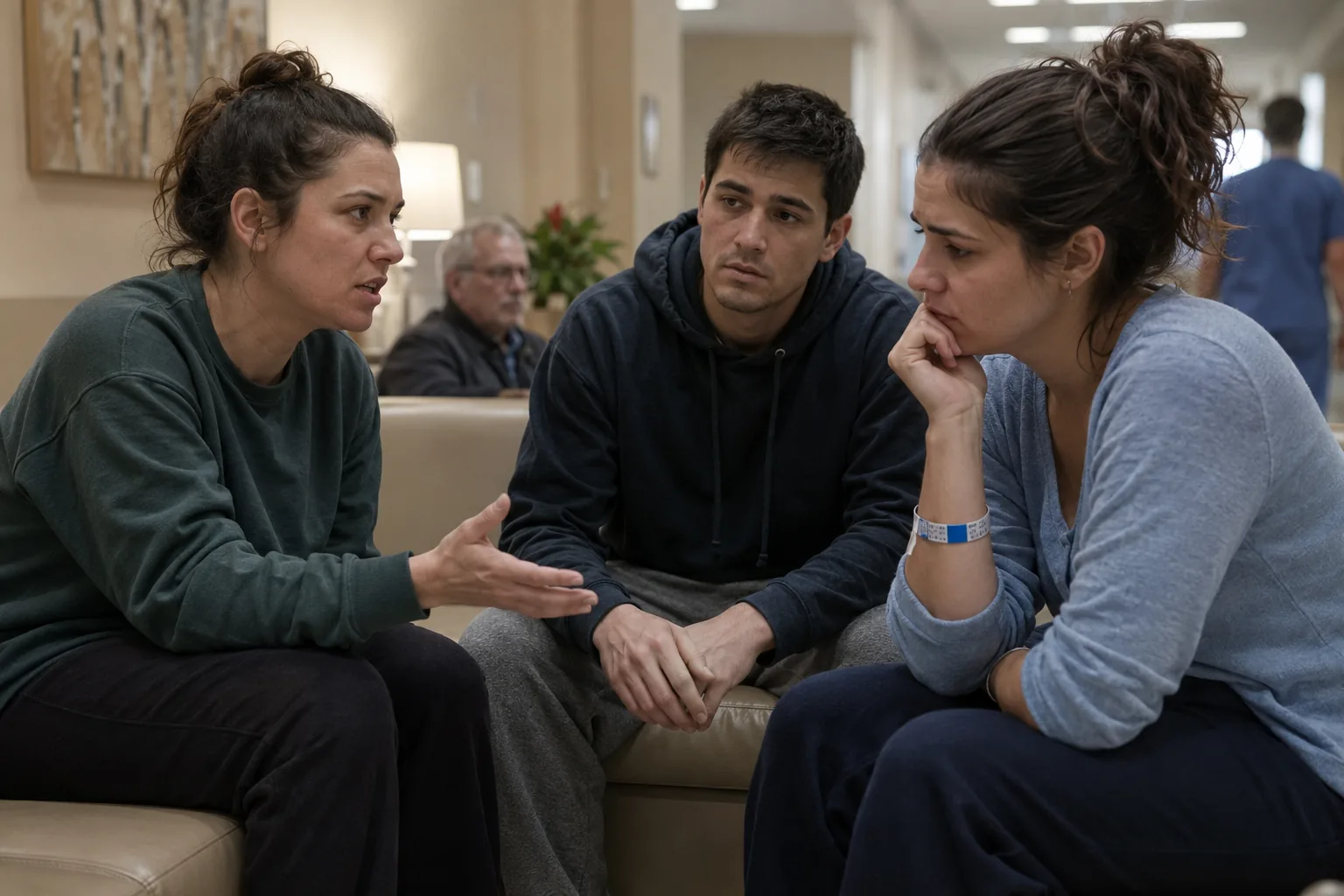
My aunt started billing me for old rides and casseroles while I was still wearing a donor bracelet for my brother. We were in the regional transplant center waiting room, two rows from the coffee station, and Denise said it loud enough to carry over the TV and the ice machine, like family help had turned into a tab I was finally supposed to settle. I was stuck in a plastic chair with my visitor sticker peeling at the corner, and she was talking like my kidney had already become her leverage.
It started when a volunteer rolled a cart of stale crackers past us and Denise looked at my phone in my hand.
“Who keeps texting you?” she asked.
I said, “Marcus. He dropped me off this morning.”
She gave one short nod and folded her arms. “Must be nice to have people show up for you.”
I should have let that one die. My mother was sitting beside the vending alcove with a paper cup of coffee going cold between both hands, staring at the surgical doors every time they swung open. Nobody in that room had slept. The TVs were on mute with captions running under a cooking show. Every few minutes some family would stand up when a nurse stepped out, then sit back down when the nurse called a different name.
I said, “Everybody’s showing up for Eli.”
Denise turned toward me fully then, knees angled into the aisle, purse on her lap like she’d settled in. “Everybody? Kayla, let’s not do that. Who drove your mama to appointments when your car was down? Me. Who brought groceries after Eli got sick the first time? Me. Who took off work to sit with your grandmother so you could keep your job? Me. Who loaned this family money when things got tight? Me.”
She tapped her chest with two fingers on every last word.
It wasn’t the list itself that made people look over. Families say strange things in waiting rooms. It was the way she said it, clear and measured, like she had practiced keeping count.
I kept my voice low. “I didn’t ask you for a speech.”
“No, you just act like help falls out of the ceiling,” she said. “You always do what you want, and then when family needs something, suddenly everything is about your boundaries.”
My mother finally looked at us. “Denise, not right now.”
“When then?” Denise asked without lowering her voice. “Because I’m tired of acting like things don’t add up. People remember who carried who.” Her eyes dropped to my wrist. “And if Kayla can make big decisions for this family, then Kayla can also start acting like she owes this family something back.”
For a second I actually looked behind me, because the sentence made no sense as spoken. Owes something back.
I looked at my wrist too. The bracelet was white, soft plastic, my name and a barcode printed in black. The clasp was still tight enough to leave an impression in my skin. I had forgotten it was there until she looked at it.
“I already showed up,” I said.
Denise gave me that pinched smile she uses when she wants to make correction sound like kindness. “Showing up for your brother doesn’t erase everything before today. You don’t get to pick one dramatic sacrifice and pretend history is gone. Your mother still needs help. This family still needs help. And to be honest, after all I’ve done, the least you could do is stop making everything harder and start giving back without attitude.”
Giving back.
Like I had taken something from her.
I sat there with the bracelet pressing into my wrist and the words landed in pieces. She wasn’t talking about one favor. She was building a shape around me. Rides. Meals. Money. Sitting with Grandma. Every ordinary thing she had ever mentioned in passing was now being stacked into a wall I was supposed to live inside.
My mother leaned over and said softly, “Kayla, just let it pass. Please. We need to get through today.”
That made the trap feel tighter, not smaller. The waiting room was public enough that I couldn’t say much without turning into the problem, but private enough that Denise could keep talking like this was family business.
I said, “What exactly do you think I owe you?”
She smoothed the handle of her purse before answering. “Respect, for one. Time. Consideration. Maybe some help for your mother instead of disappearing into your own life every time things get hard. Maybe remembering who kept this family together when you were too young to understand what things cost.”
The costs. She kept circling back to cost.
A nurse came through the doors then and called another family’s name. Chairs scraped. Somebody started crying near the far wall. Denise paused just long enough to watch, then leaned in again.
“I’m not saying this to be cruel,” she said. “I’m saying there comes a point where grown people pay what they owe.”
I looked down at the barcode around my wrist, then past it to the faint medical marker still staining my skin under the bandage line. Denise had just said pay what they owe to the person sitting in front of her because I had already agreed to be cut open for the surgery happening behind those doors.
That was the first moment the whole thing shifted for me. Not into clarity yet. Just enough to see the crack in it.
If her help made me her debtor, why was she saying it to me while my body was still part of the reason my brother was in surgery at all?
My aunt started billing me for old rides and casseroles while I was still wearing a donor bracelet for my brother. We were in the regional transplant center waiting room, two rows from the coffee station, and Denise said it loud enough to carry over the TV and the ice machine, like family help had turned into a tab I was finally supposed to settle. I was stuck in a plastic chair with my visitor sticker peeling at the corner, and she was talking like my kidney had already become her leverage.
It started when a volunteer rolled a cart of stale crackers past us and Denise looked at my phone in my hand.
“Who keeps texting you?” she asked.
I said, “Marcus. He dropped me off this morning.”
She gave one short nod and folded her arms. “Must be nice to have people show up for you.”
I should have let that one die. My mother was sitting beside the vending alcove with a paper cup of coffee going cold between both hands, staring at the surgical doors every time they swung open. Nobody in that room had slept. The TVs were on mute with captions running under a cooking show. Every few minutes some family would stand up when a nurse stepped out, then sit back down when the nurse called a different name.
I said, “Everybody’s showing up for Eli.”
Denise turned toward me fully then, knees angled into the aisle, purse on her lap like she’d settled in. “Everybody? Kayla, let’s not do that. Who drove your mama to appointments when your car was down? Me. Who brought groceries after Eli got sick the first time? Me. Who took off work to sit with your grandmother so you could keep your job? Me. Who loaned this family money when things got tight? Me.”
She tapped her chest with two fingers on every last word.
It wasn’t the list itself that made people look over. Families say strange things in waiting rooms. It was the way she said it, clear and measured, like she had practiced keeping count.
I kept my voice low. “I didn’t ask you for a speech.”
“No, you just act like help falls out of the ceiling,” she said. “You always do what you want, and then when family needs something, suddenly everything is about your boundaries.”
My mother finally looked at us. “Denise, not right now.”
“When then?” Denise asked without lowering her voice. “Because I’m tired of acting like things don’t add up. People remember who carried who.” Her eyes dropped to my wrist. “And if Kayla can make big decisions for this family, then Kayla can also start acting like she owes this family something back.”
For a second I actually looked behind me, because the sentence made no sense as spoken. Owes something back.
I looked at my wrist too. The bracelet was white, soft plastic, my name and a barcode printed in black. The clasp was still tight enough to leave an impression in my skin. I had forgotten it was there until she looked at it.
“I already showed up,” I said.
Denise gave me that pinched smile she uses when she wants to make correction sound like kindness. “Showing up for your brother doesn’t erase everything before today. You don’t get to pick one dramatic sacrifice and pretend history is gone. Your mother still needs help. This family still needs help. And to be honest, after all I’ve done, the least you could do is stop making everything harder and start giving back without attitude.”
Giving back.
Like I had taken something from her.
I sat there with the bracelet pressing into my wrist and the words landed in pieces. She wasn’t talking about one favor. She was building a shape around me. Rides. Meals. Money. Sitting with Grandma. Every ordinary thing she had ever mentioned in passing was now being stacked into a wall I was supposed to live inside.
My mother leaned over and said softly, “Kayla, just let it pass. Please. We need to get through today.”
That made the trap feel tighter, not smaller. The waiting room was public enough that I couldn’t say much without turning into the problem, but private enough that Denise could keep talking like this was family business.
I said, “What exactly do you think I owe you?”
She smoothed the handle of her purse before answering. “Respect, for one. Time. Consideration. Maybe some help for your mother instead of disappearing into your own life every time things get hard. Maybe remembering who kept this family together when you were too young to understand what things cost.”
The costs. She kept circling back to cost.
A nurse came through the doors then and called another family’s name. Chairs scraped. Somebody started crying near the far wall. Denise paused just long enough to watch, then leaned in again.
“I’m not saying this to be cruel,” she said. “I’m saying there comes a point where grown people pay what they owe.”
I looked down at the barcode around my wrist, then past it to the faint medical marker still staining my skin under the bandage line. Denise had just said pay what they owe to the person sitting in front of her because I had already agreed to be cut open for the surgery happening behind those doors.
That was the first moment the whole thing shifted for me. Not into clarity yet. Just enough to see the crack in it.
If her help made me her debtor, why was she saying it to me while my body was still part of the reason my brother was in surgery at all?