Story code: ST-001015
Part 1: She Tried to Drag Her Out
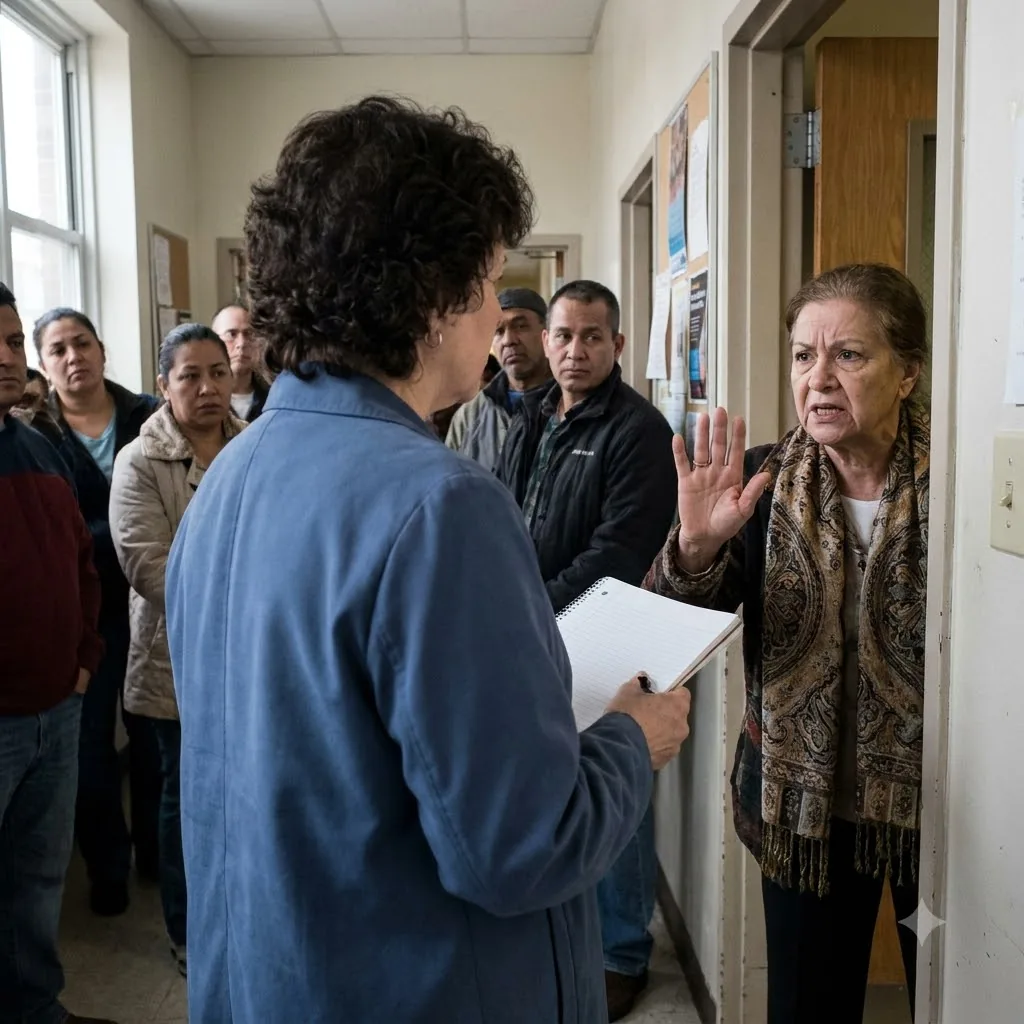
My student was standing in the citizenship class hallway with her practice notebook open in one hand when her aunt stepped in front of the classroom door and said, loud enough for everyone checking in to hear, “You need to come now. Family emergency. Right now.” Marisol had already signed in with me, class was starting, and the unfair part hit fast: Tia Rosa was not asking her to step aside, she was using the word emergency like a command while shaming her English in the same breath.
I work the front desk area outside the classroom, so I see who arrives late, who forgets a pen, who needs help finding the right room. That morning was ordinary until it wasn’t. Mr. Brennan Cole was at the doorway with the attendance sheet, students were still settling into their seats, and the wall clock had just rolled to the top of the hour when Tia Rosa came down the hall with quick steps and pointed straight at Marisol.
“There you are,” she said. “I told you not to stay for this. Come on. Don’t make me explain everything in front of people.”
Marisol kept one hand on the notebook. It was one of those cheap composition books with tabs sticking out of the side and citizenship interview questions written in careful blue ink across the top page. She looked at the classroom door, then at her aunt.
“My class is starting,” she said, very evenly. “What happened?”
Tia Rosa gave a short laugh that didn’t match the word she used next. “Emergency. That happened. You can ask questions later if your English is good enough to catch up. Move.”
A couple of students in the doorway stopped talking. One man sat back down inside the room but kept looking out. I left my chair and came around the check-in desk because once somebody says emergency in that hallway, it stops being private family business and becomes a procedure issue.
“Do you need me to call 911?” I asked.
That should have made things simple if it was real. Tia Rosa snapped her head toward me so fast her earrings swung.
“No, no, nothing like that,” she said. “It’s just family. She needs to come.”
Mr. Cole stayed in the doorway and asked, calm as ever, “Is this a medical emergency, ma’am? I need to know whether I’m marking Marisol absent for an emergency excusal.”
Marisol’s fingers tightened around the edge of the notebook. Tia Rosa reached toward it, not enough to grab it, but enough to hurry her. “Put that away. This class can wait. Family cannot.”
“What emergency?” Marisol asked again.
“Don’t do this here,” Tia Rosa said. “Why do you always make simple things difficult? I said come now.”
She moved half a step closer, not touching Marisol, but taking up the space between Marisol and the door. It was obvious from where I stood who was blocking whose path. I could also see the roster on my clipboard and the attendance sheet in Mr. Cole’s hand, both still waiting on the same thing: whether Marisol was entering class or being formally pulled out.
I pointed to the printed emergency contact sign posted beside the door. “If there’s an urgent family event and she needs support getting there, I can help call the listed contact, campus security, or emergency services depending on what happened.”
Tia Rosa’s voice sharpened. “I said it’s family. Why are you people making this bigger?”
Because she had made it big the second she came into a public hallway and used the word emergency to stop a student from entering class.
I kept my voice flat. “Because class is beginning and you are removing a student. I need to document the reason correctly.”
Marisol looked at me then, not at her aunt. “If I leave now,” she said carefully, “is it emergency absent?”
“If it is an actual emergency, yes,” Mr. Cole said. He held the attendance sheet against the doorframe and waited. “If not, I need you in class.”
Tia Rosa cut in before Marisol could answer. “You don’t need all this. Her grandmother needs her.”
“At the hospital?” I asked.
There was a beat of silence. Students near the doorway had gone very quiet. Someone inside the room closed a binder. The clock ticked once, then again.
Tia Rosa’s eyes moved from me to the emergency contact sign to Mr. Cole’s attendance sheet. “No hospital,” she said. “Just home. It’s personal.”
A minute earlier she had rushed in like the building was on fire. Now she was backing away from every specific word that would let us help. Marisol still hadn’t moved. Her notebook was open to civics questions, and one corner had bent where her thumb pressed too hard into the paper.
Mr. Cole asked the next question in the same even tone. “So to be clear, you want her out of class immediately for a family emergency, but you do not want medical help, security assistance, or a documented emergency excusal?”
That was when Tia Rosa lifted her hand like she wanted to stop the whole hallway from hearing the answer she had pushed us into.
My student was standing in the citizenship class hallway with her practice notebook open in one hand when her aunt stepped in front of the classroom door and said, loud enough for everyone checking in to hear, “You need to come now. Family emergency. Right now.” Marisol had already signed in with me, class was starting, and the unfair part hit fast: Tia Rosa was not asking her to step aside, she was using the word emergency like a command while shaming her English in the same breath.
I work the front desk area outside the classroom, so I see who arrives late, who forgets a pen, who needs help finding the right room. That morning was ordinary until it wasn’t. Mr. Brennan Cole was at the doorway with the attendance sheet, students were still settling into their seats, and the wall clock had just rolled to the top of the hour when Tia Rosa came down the hall with quick steps and pointed straight at Marisol.
“There you are,” she said. “I told you not to stay for this. Come on. Don’t make me explain everything in front of people.”
Marisol kept one hand on the notebook. It was one of those cheap composition books with tabs sticking out of the side and citizenship interview questions written in careful blue ink across the top page. She looked at the classroom door, then at her aunt.
“My class is starting,” she said, very evenly. “What happened?”
Tia Rosa gave a short laugh that didn’t match the word she used next. “Emergency. That happened. You can ask questions later if your English is good enough to catch up. Move.”
A couple of students in the doorway stopped talking. One man sat back down inside the room but kept looking out. I left my chair and came around the check-in desk because once somebody says emergency in that hallway, it stops being private family business and becomes a procedure issue.
“Do you need me to call 911?” I asked.
That should have made things simple if it was real. Tia Rosa snapped her head toward me so fast her earrings swung.
“No, no, nothing like that,” she said. “It’s just family. She needs to come.”
Mr. Cole stayed in the doorway and asked, calm as ever, “Is this a medical emergency, ma’am? I need to know whether I’m marking Marisol absent for an emergency excusal.”
Marisol’s fingers tightened around the edge of the notebook. Tia Rosa reached toward it, not enough to grab it, but enough to hurry her. “Put that away. This class can wait. Family cannot.”
“What emergency?” Marisol asked again.
“Don’t do this here,” Tia Rosa said. “Why do you always make simple things difficult? I said come now.”
She moved half a step closer, not touching Marisol, but taking up the space between Marisol and the door. It was obvious from where I stood who was blocking whose path. I could also see the roster on my clipboard and the attendance sheet in Mr. Cole’s hand, both still waiting on the same thing: whether Marisol was entering class or being formally pulled out.
I pointed to the printed emergency contact sign posted beside the door. “If there’s an urgent family event and she needs support getting there, I can help call the listed contact, campus security, or emergency services depending on what happened.”
Tia Rosa’s voice sharpened. “I said it’s family. Why are you people making this bigger?”
Because she had made it big the second she came into a public hallway and used the word emergency to stop a student from entering class.
I kept my voice flat. “Because class is beginning and you are removing a student. I need to document the reason correctly.”
Marisol looked at me then, not at her aunt. “If I leave now,” she said carefully, “is it emergency absent?”
“If it is an actual emergency, yes,” Mr. Cole said. He held the attendance sheet against the doorframe and waited. “If not, I need you in class.”
Tia Rosa cut in before Marisol could answer. “You don’t need all this. Her grandmother needs her.”
“At the hospital?” I asked.
There was a beat of silence. Students near the doorway had gone very quiet. Someone inside the room closed a binder. The clock ticked once, then again.
Tia Rosa’s eyes moved from me to the emergency contact sign to Mr. Cole’s attendance sheet. “No hospital,” she said. “Just home. It’s personal.”
A minute earlier she had rushed in like the building was on fire. Now she was backing away from every specific word that would let us help. Marisol still hadn’t moved. Her notebook was open to civics questions, and one corner had bent where her thumb pressed too hard into the paper.
Mr. Cole asked the next question in the same even tone. “So to be clear, you want her out of class immediately for a family emergency, but you do not want medical help, security assistance, or a documented emergency excusal?”
That was when Tia Rosa lifted her hand like she wanted to stop the whole hallway from hearing the answer she had pushed us into.