Story code: ST-001015
Part 4: It Went Into the Record
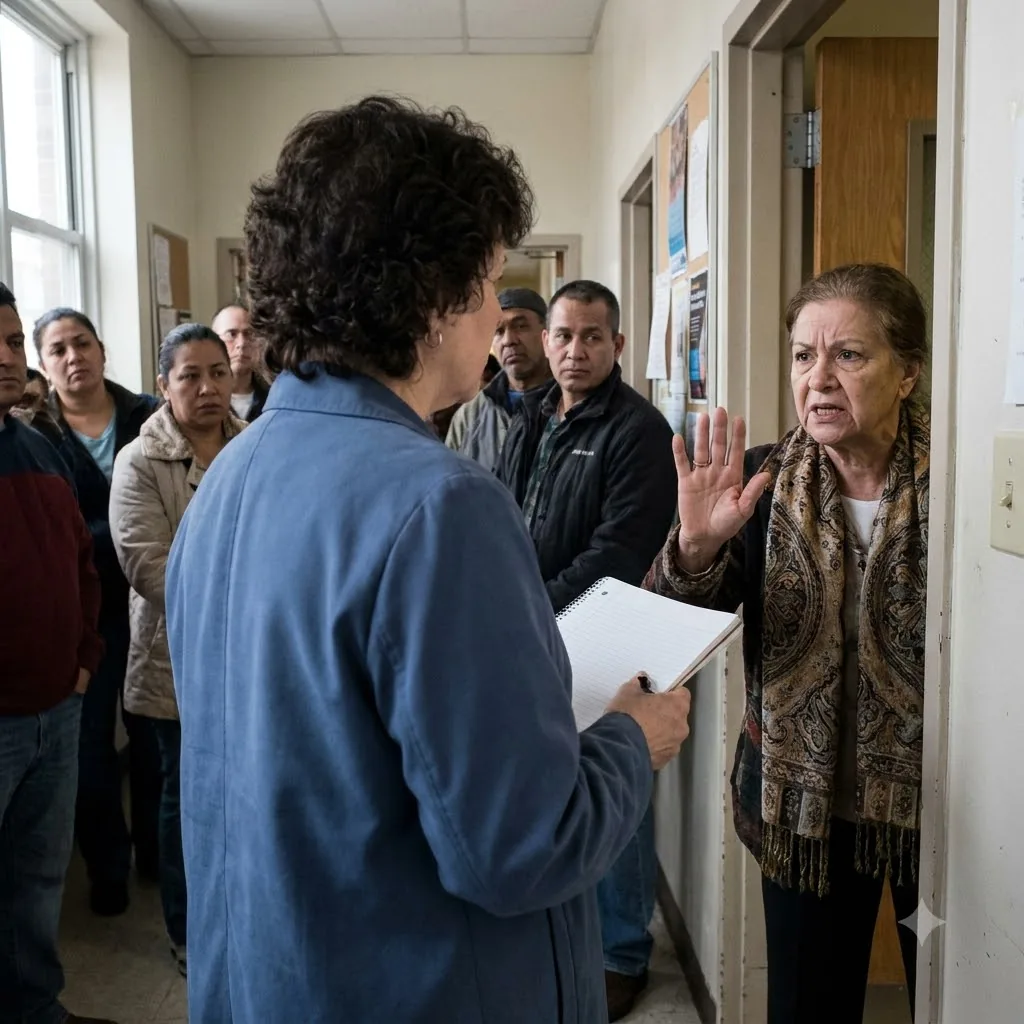
The threat hung in the hallway for a second, plain as a posted notice.
Mr. Cole looked up from the attendance sheet. “Please repeat that if you’re making conditions on her attendance.”
Tia Rosa’s jaw shifted. “I said family will remember this.”
He wrote anyway.
That was the coldest part of the whole morning. Nobody argued with her wording. Nobody gave it a dramatic name. He just recorded it because she had said it in front of staff, at a classroom door, while trying to remove a student who had already arrived prepared.
I set my clipboard on the desk and opened the incident log we use for disruptions in the hall. We don’t use it often, but it sits in the top drawer beside extra pencils and sign-in sheets. Same building, same hallway, same fluorescent lights. No special room. No private showdown. Just the ordinary forms we use when someone decides ordinary procedure does not apply to them.
“I’m adding a hallway interruption note,” I said. “Name of student, class time, and the removal attempt.”
Tia Rosa stared at the logbook in my hands. “You’re writing my name down over a family conversation?”
“Over a false emergency claim used to block entry to class,” I said.
She opened her mouth to push back, but Mr. Cole spoke first.
“Marisol,” he said, “if you are attending, come in now. I am marking you present.”
Marisol took one step, then another. She moved past her aunt without touching her. The notebook stayed against her chest until she crossed the threshold. Then she lowered it to her side and went into the room.
That was the payoff to the whole ugly scene, and it was small on the outside: one student entering class on time enough to count, notebook still in hand. But that little composition book had anchored everything from the beginning. It showed she had arrived ready. It showed exactly what Tia Rosa had tried to interrupt. It showed there had been no casual stop in the hallway, no mutual family chat, no student halfway out the door already. She was there to study until somebody came in demanding instant obedience.
Mr. Cole made the attendance mark in one clean stroke. Then he added a second notation under it. I could not read every word from where I stood, but I saw the phrases he wrote because he said them quietly as he entered them, matching the line to the form.
“Present at door,” he said. “Delayed by relative. Emergency claim unverified. Student admitted to class.”
Tia Rosa took a half step toward the room. “Marisol.”
Mr. Cole shifted one arm across the doorway, not touching her, just setting the boundary where it belonged. “Class is in session,” he said. “If you need further contact, it goes through the desk.”
She looked at him, then at me, then into the room where every seat was now facing forward except one near the front where Marisol was still standing beside her chair. The room had resumed the shape of class. Pens out. Folders open. The interruption had ended for everyone except the person who caused it.
I asked for Tia Rosa’s name to complete the log. She gave it after a pause, each part clipped and careful: “Rosa Vega. Aunt.”
I wrote exactly that. Then I added the observable facts only: arrived after class start, claimed emergency, refused emergency services, refused security assistance, refused direct verification call, attempted private removal, made a conditional statement after student chose to stay.
When I finished, I slid the logbook back into the drawer and kept my hand on it for a second before closing it. The sound of the drawer shutting was quiet, but in that hallway it felt final.
Tia Rosa noticed the closure too. “So that’s it?” she said.
“That’s the record,” I said.
“You’re banning me now?”
“I’m noting that future class interruptions by non-staff relatives won’t happen at the doorway,” I said. “If you come during class again, you check in with the front desk first, and we contact the student only if there’s verifiable urgency.”
She gave a short laugh, but there was no volume behind it now. “Verifiable.”
“Yes,” I said.
Mr. Cole turned back to his room. “Please close the hallway side of the door after you finish,” he told me, then went inside to begin the lesson.
Tia Rosa stood there one more beat, looking at the attendance sheet in his hand, then at the drawer where the logbook had gone. Her shoulders changed first. Not a collapse, not a performance. Just the visible drop that comes when there is nothing left to argue with except a written line.
She said, “Tell her I came.”
“She saw you come,” I said.
That was all. No apology. No crowd speech. No big ending. She turned and walked down the same hallway she had charged through a few minutes earlier, but without pointing, without shouting, without using the word emergency again.
I closed the classroom door until it was almost shut, leaving the narrow gap we always leave for late students. Through it I could see Marisol finally sit down. She put the practice notebook on her desk, opened it to the bent page, smoothed the corner flat, and picked up her pen.
On my clipboard, beside the roster, I wrote the last line for the morning note: student remained in class; relative advised future contact requires desk check-in and verification. Then I wrote the time.
After that, the hallway went back to looking ordinary, except now the lie was trapped in two records and a closed drawer.