Story code: ST-001080
Part 1: The Cost of Charity
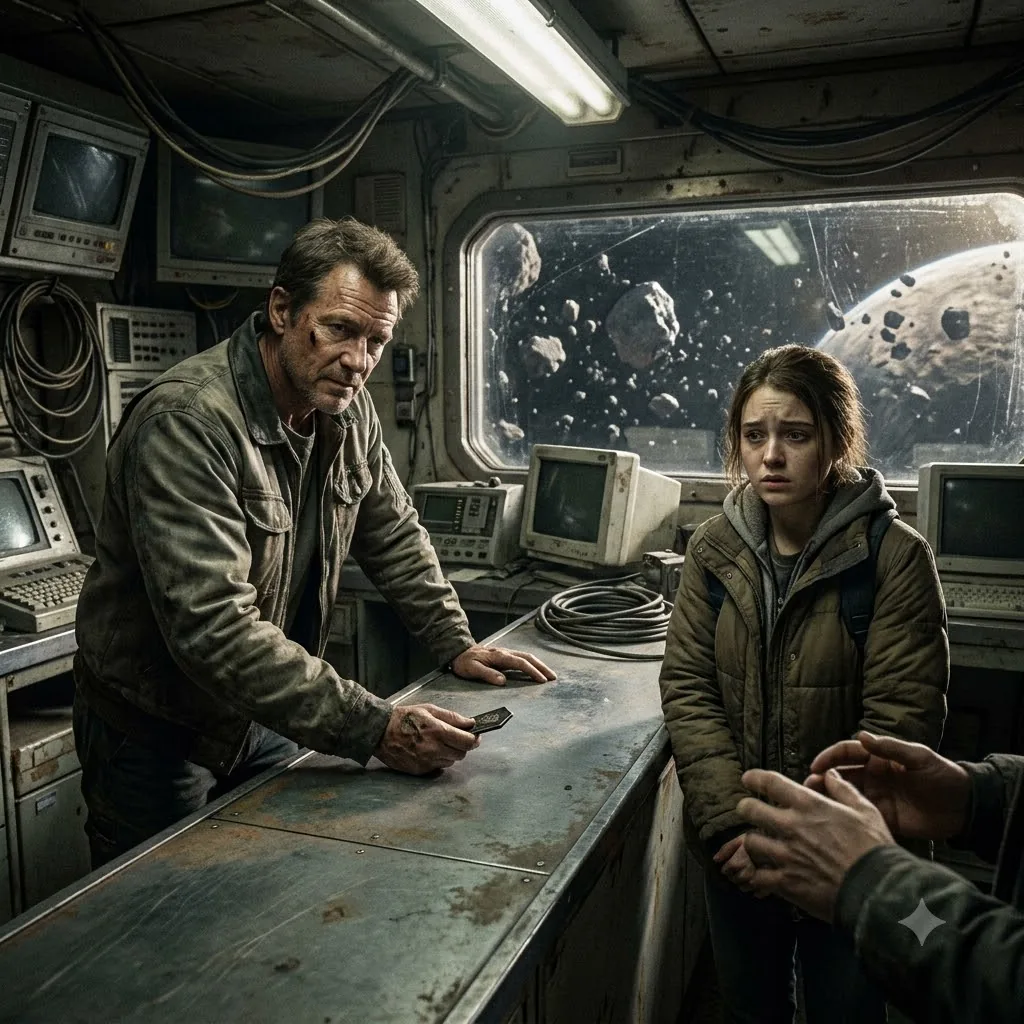
Marcus Thorne leaned over the grease-stained steel counter of his Caelum Station contract office, tapping our family’s magmatic silicate mineral claim token against the console. “I’m only asking you to honor a debt, Leo,” he said, his voice dripping with a practiced, neighborly warmth. Beside me, Clara stood perfectly still, her knuckles white as she gripped the strap of her flight harness. Marcus had just pulled up the station ledger, displaying a fifty-thousand-credit surcharge for the emergency fuel he delivered to our rig last winter-an unrequested delivery that he was now using to lock us out of our new mineral claim.
“We never requested that fuel, Marcus,” I said, keeping my voice level despite the tightness in my chest. “We had our auxiliary batteries. We were prepared to ride out the solar storm, and we told your dispatcher that we were fine.”
Marcus shook his head, a heavy sigh escaping him as he looked at us like stubborn children. “You were freezing out there in Sector Four. I saw the telemetry on my screens, got worried, and risked my own transport to make sure the Vance crew had heat. That fuel cost my brokerage real capital, Leo. Now, I need to balance my books. I can sign this claim token over to my brokerage account to settle the balance, or I can register the unpaid debt with the station authority. You know what happens to your mining rights if you have an active delinquency on your ledger.”
I looked down at the claim token. It was a dense, dark slab of silicate, its microscopic security etchings catching the harsh fluorescent light of the office. It represented six months of drilling in the dust lanes, hours of breathing recycled air, and our entire crew’s payroll. Without it, we couldn’t sell a single ounce of ore to the refineries. The ambient hum of the station’s cargo bays vibrated through the metal floorboards, accompanied by the clatter of terminal keys from the adjacent rooms.
“You’re billing us for a favor we actively turned down,” Clara said, her voice tight. “We told your team we had enough reserves.”
“And I did it anyway because I care about your family’s safety,” Marcus replied, leaning back in his chair and folding his arms. “But business is business. The ledger doesn’t care about good intentions, Leo. Either you pay the fifty thousand credits, or the claim token stays here to cover the debt.”
I leaned closer to the terminal screen, looking at the transaction log he had pulled up. The timestamp on the fuel dispatch was dated December twelfth, 04:00 station time. Something about that specific date dragged at my memory. That was the week of the sector-wide transport audit, the one where the Station Authority threatened to strip licenses from underperforming brokers who didn’t meet their shipping quotas. I stared at the log, tracking the serial numbers of the fuel transport Marcus had used. The delivery wasn’t listed as a standard commercial transfer; it was flagged with a corporate transit code. A cold realization began to take shape. The debt chain was not what Marcus claimed it to be, and the real question was who had actually saved whom.
Marcus Thorne leaned over the grease-stained steel counter of his Caelum Station contract office, tapping our family’s magmatic silicate mineral claim token against the console. “I’m only asking you to honor a debt, Leo,” he said, his voice dripping with a practiced, neighborly warmth. Beside me, Clara stood perfectly still, her knuckles white as she gripped the strap of her flight harness. Marcus had just pulled up the station ledger, displaying a fifty-thousand-credit surcharge for the emergency fuel he delivered to our rig last winter-an unrequested delivery that he was now using to lock us out of our new mineral claim.
“We never requested that fuel, Marcus,” I said, keeping my voice level despite the tightness in my chest. “We had our auxiliary batteries. We were prepared to ride out the solar storm, and we told your dispatcher that we were fine.”
Marcus shook his head, a heavy sigh escaping him as he looked at us like stubborn children. “You were freezing out there in Sector Four. I saw the telemetry on my screens, got worried, and risked my own transport to make sure the Vance crew had heat. That fuel cost my brokerage real capital, Leo. Now, I need to balance my books. I can sign this claim token over to my brokerage account to settle the balance, or I can register the unpaid debt with the station authority. You know what happens to your mining rights if you have an active delinquency on your ledger.”
I looked down at the claim token. It was a dense, dark slab of silicate, its microscopic security etchings catching the harsh fluorescent light of the office. It represented six months of drilling in the dust lanes, hours of breathing recycled air, and our entire crew’s payroll. Without it, we couldn’t sell a single ounce of ore to the refineries. The ambient hum of the station’s cargo bays vibrated through the metal floorboards, accompanied by the clatter of terminal keys from the adjacent rooms.
“You’re billing us for a favor we actively turned down,” Clara said, her voice tight. “We told your team we had enough reserves.”
“And I did it anyway because I care about your family’s safety,” Marcus replied, leaning back in his chair and folding his arms. “But business is business. The ledger doesn’t care about good intentions, Leo. Either you pay the fifty thousand credits, or the claim token stays here to cover the debt.”
I leaned closer to the terminal screen, looking at the transaction log he had pulled up. The timestamp on the fuel dispatch was dated December twelfth, 04:00 station time. Something about that specific date dragged at my memory. That was the week of the sector-wide transport audit, the one where the Station Authority threatened to strip licenses from underperforming brokers who didn’t meet their shipping quotas. I stared at the log, tracking the serial numbers of the fuel transport Marcus had used. The delivery wasn’t listed as a standard commercial transfer; it was flagged with a corporate transit code. A cold realization began to take shape. The debt chain was not what Marcus claimed it to be, and the real question was who had actually saved whom.