Story code: ST-000140
Part 1: She Put My Name on the Screen
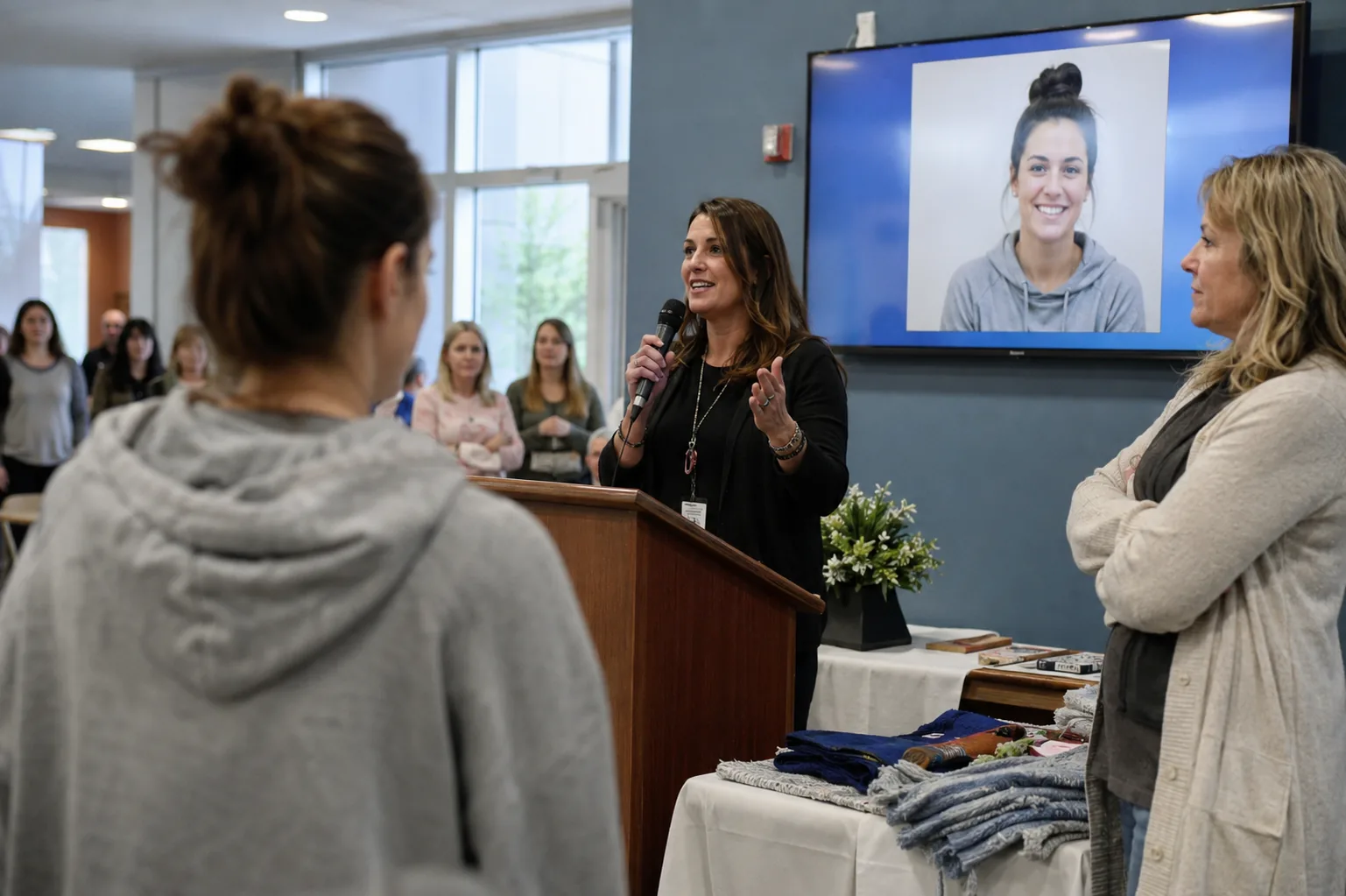
My name was already on the announcement screen when I walked into the West Ridge Community Center lobby, and Dana Pike was at the microphone thanking me for “finally stepping up” to repay everything she had done for my family. Parents were lining up at the check-in table with kids and paper flyers, my son Eli was holding our supply tote by the wall, and I was standing there finding out in public that I supposedly owed money and volunteer hours I had never agreed to. The worst part was the way she said it like everyone else had been told before me.
The screen near the front table usually rotated room numbers, craft schedules, and reminders about snacks with nut allergies. That night it had a bright slide with cartoon stars around the family fundraiser title, and under that, in plain white text: SPECIAL THANKS TO MARISA DELL FOR HONORING HER COMMITMENT TONIGHT.
I stopped hard enough that Eli almost walked into me.
He looked from the screen to Dana and said, quiet, “Mom?”
Dana had one hand around the mic and the other lifted like she was introducing a raffle winner. “Some people in this community forget how much support they’ve been given,” she said, smiling at the room. “But I always believe gratitude shows up in action. Marisa knows I covered printing costs, saved her table last spring, and made sure Eli stayed included when things got tight. And tonight she’s making that right by helping us close the gap.”
A few people clapped because they thought they were supposed to.
I could feel eyes move from the screen to me. Ruth Alvarez was at the check-in table with a stack of wristbands. She paused with one half-peeled between her fingers and looked over, not dramatic, just trying to understand what she had walked into.
I went straight to Dana. I kept my voice low because Eli was ten feet away and I was not going to let this turn into a show if I could stop it early.
“What commitment?” I asked.
She lowered the mic an inch, but not enough to stop being heard by the first few rows. “Marisa, don’t do this here.”
I looked up at the screen again. “You put my name on a screen in the lobby.”
Her smile tightened. “Because you said you cared about this program.”
“That is not the same as agreeing to pay your shortfall.”
She gave a little laugh for the room, the kind meant to make me sound difficult before I had fully answered. “No one said pay the whole thing. We all help each other. I have helped you plenty.”
That was the script she wanted: generosity, community, repayment. She said it like there was already a signed ledger in the air and I was the only one pretending not to see it.
I knew exactly what she was referring to because she had a habit of keeping a list and bringing it out when she wanted compliance. The printing costs were flyers she had rushed me into picking up because the center copier was down and she was “in six places at once.” I printed them, and later she handed me cash from the donation jar and called it settled. Saving my table last spring meant not giving away the table I had already signed up for at the school-readiness fair after she overbooked the room. And “making sure Eli stayed included when things got tight” meant she waived a late fee for one after-school session after she changed the payment deadline with two days’ notice.
None of that had sounded like debt at the time. It had sounded like ordinary fixes inside a chaotic community program. Now she was stacking those moments into something I supposedly owed back with interest.
A dad pushing a stroller slowed near the flyers. Two girls in dance shoes were tugging at their mother’s sleeve, waiting to be checked in. The room was still moving, but with that sideways attention people get when they want the story without admitting they are listening.
Dana raised the mic again. “We all make sacrifices to keep this place going,” she said. “Some of us don’t keep score.”
Then she looked directly at me.
That landed exactly the way she wanted. If I objected, I was ungrateful. If I stayed quiet, I accepted the debt.
I said, “Take my name off the screen.”
She didn’t. She glanced at the volunteer laptop by the check-in table and then back at me. “As soon as we finish tonight’s ask.”
“Tonight’s ask” was apparently me.
Eli had moved closer. He did not interrupt, but I saw him shift the tote from one hand to the other and keep his eyes on Dana. Ruth set the wristband roll down completely now.
Dana changed tactics without changing tone. “Marisa, after everything I’ve done, I did think I could count on a little loyalty. We are short on the family meal fund. You told me last month you wanted to help more. This is helping more.”
I remembered saying I could bring extra napkins if she gave me notice. That was the whole conversation.
She had taken one ordinary sentence and stretched it until it covered money, labor, and public obedience.
I looked at the screen again, at my full name under the fundraiser banner, and realized the problem was bigger than one embarrassing speech. She had built this so the room would hear “gratitude” before I could say “I never agreed.”
And the more she listed what she had supposedly done for me, the more one ugly detail started to surface: every single favor she named was also something that had helped her event, her schedule, or her image first.
I just did not have the cleanest way to say that yet, and Dana was still talking.
My name was already on the announcement screen when I walked into the West Ridge Community Center lobby, and Dana Pike was at the microphone thanking me for “finally stepping up” to repay everything she had done for my family. Parents were lining up at the check-in table with kids and paper flyers, my son Eli was holding our supply tote by the wall, and I was standing there finding out in public that I supposedly owed money and volunteer hours I had never agreed to. The worst part was the way she said it like everyone else had been told before me.
The screen near the front table usually rotated room numbers, craft schedules, and reminders about snacks with nut allergies. That night it had a bright slide with cartoon stars around the family fundraiser title, and under that, in plain white text: SPECIAL THANKS TO MARISA DELL FOR HONORING HER COMMITMENT TONIGHT.
I stopped hard enough that Eli almost walked into me.
He looked from the screen to Dana and said, quiet, “Mom?”
Dana had one hand around the mic and the other lifted like she was introducing a raffle winner. “Some people in this community forget how much support they’ve been given,” she said, smiling at the room. “But I always believe gratitude shows up in action. Marisa knows I covered printing costs, saved her table last spring, and made sure Eli stayed included when things got tight. And tonight she’s making that right by helping us close the gap.”
A few people clapped because they thought they were supposed to.
I could feel eyes move from the screen to me. Ruth Alvarez was at the check-in table with a stack of wristbands. She paused with one half-peeled between her fingers and looked over, not dramatic, just trying to understand what she had walked into.
I went straight to Dana. I kept my voice low because Eli was ten feet away and I was not going to let this turn into a show if I could stop it early.
“What commitment?” I asked.
She lowered the mic an inch, but not enough to stop being heard by the first few rows. “Marisa, don’t do this here.”
I looked up at the screen again. “You put my name on a screen in the lobby.”
Her smile tightened. “Because you said you cared about this program.”
“That is not the same as agreeing to pay your shortfall.”
She gave a little laugh for the room, the kind meant to make me sound difficult before I had fully answered. “No one said pay the whole thing. We all help each other. I have helped you plenty.”
That was the script she wanted: generosity, community, repayment. She said it like there was already a signed ledger in the air and I was the only one pretending not to see it.
I knew exactly what she was referring to because she had a habit of keeping a list and bringing it out when she wanted compliance. The printing costs were flyers she had rushed me into picking up because the center copier was down and she was “in six places at once.” I printed them, and later she handed me cash from the donation jar and called it settled. Saving my table last spring meant not giving away the table I had already signed up for at the school-readiness fair after she overbooked the room. And “making sure Eli stayed included when things got tight” meant she waived a late fee for one after-school session after she changed the payment deadline with two days’ notice.
None of that had sounded like debt at the time. It had sounded like ordinary fixes inside a chaotic community program. Now she was stacking those moments into something I supposedly owed back with interest.
A dad pushing a stroller slowed near the flyers. Two girls in dance shoes were tugging at their mother’s sleeve, waiting to be checked in. The room was still moving, but with that sideways attention people get when they want the story without admitting they are listening.
Dana raised the mic again. “We all make sacrifices to keep this place going,” she said. “Some of us don’t keep score.”
Then she looked directly at me.
That landed exactly the way she wanted. If I objected, I was ungrateful. If I stayed quiet, I accepted the debt.
I said, “Take my name off the screen.”
She didn’t. She glanced at the volunteer laptop by the check-in table and then back at me. “As soon as we finish tonight’s ask.”
“Tonight’s ask” was apparently me.
Eli had moved closer. He did not interrupt, but I saw him shift the tote from one hand to the other and keep his eyes on Dana. Ruth set the wristband roll down completely now.
Dana changed tactics without changing tone. “Marisa, after everything I’ve done, I did think I could count on a little loyalty. We are short on the family meal fund. You told me last month you wanted to help more. This is helping more.”
I remembered saying I could bring extra napkins if she gave me notice. That was the whole conversation.
She had taken one ordinary sentence and stretched it until it covered money, labor, and public obedience.
I looked at the screen again, at my full name under the fundraiser banner, and realized the problem was bigger than one embarrassing speech. She had built this so the room would hear “gratitude” before I could say “I never agreed.”
And the more she listed what she had supposedly done for me, the more one ugly detail started to surface: every single favor she named was also something that had helped her event, her schedule, or her image first.
I just did not have the cleanest way to say that yet, and Dana was still talking.