Story code: ST-000028
Part 4: The Audience
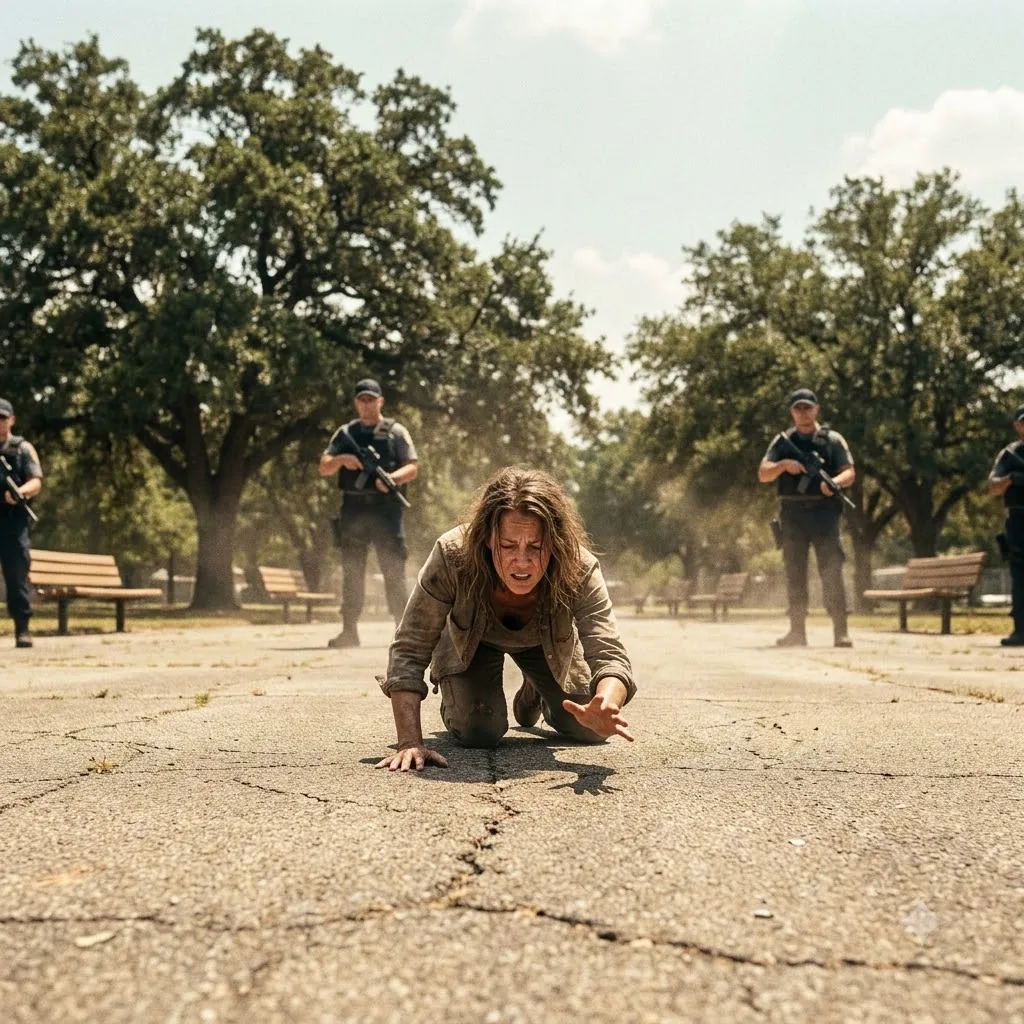
The water in the bathroom sink ran scalding hot, but Maya couldn’t feel the burn. She dragged the stiff bristles of a nail brush back and forth across her knuckles, watching the pale pink suds swirl down the chrome drain. The copper tang of the boy’s blood seemed permanently lodged in her sinuses, overriding the faint scent of the lavender soap sitting on the counter. She scrubbed until her skin was raw and weeping, but the dark, stubborn crescent lines trapped beneath her cuticles refused to wash away. Her knees throbbed, tightly wrapped in white bandages that covered the deep, weeping asphalt scrapes from the plaza-a physical reminder of a desperate, agonizing crawl that had ultimately failed.
On the marble counter next to the sink, her smartphone vibrated violently against the porcelain. The screen was cracked-a casualty of her frantic scramble away from the police barricades hours later-but the display still glowed with a blinding, unrelenting intensity. It was playing a video on an endless, muted loop.
The footage was unsteady, shot from a high angle. Maya saw her own digital ghost kneeling on the sun-baked concrete, her hands desperately pressing into the dying boy’s leg. She watched the silent, pixelated version of the tactical leader yank her backward by the collar. She watched herself snap, lunging forward to smear the thick, dark crimson across his pristine tactical vest and his embroidered patch.
But the video didn’t focus on the boy whose life was slipping away into the fountain drain. The lens had purposefully panned up, prioritizing the dramatic, violent confrontation between the screaming woman and the armed vigilante. The tall man in the pale blue polo shirt-or perhaps the woman who had leaned over his shoulder in the silent circle-had uploaded the nightmare before the actual paramedics had even arrived on the scene. It had instantly gone viral.
Maya stopped scrubbing and leaned her heavy, exhausted weight against the edge of the sink, staring hollowly at the scrolling text beneath the looping video. Hundreds of thousands of views. Tens of thousands of comments. The internet was violently debating the fifteen-second clip, dissecting the raw tragedy like a piece of interactive theater.
Some users praised the younger, terrified patrolman for finally shattering a bystander’s phone with his rifle stock, cheering on the violent outburst in the comments. Others fiercely defended the tactical leader’s caution, arguing blindly that in a post-explosion panic, Maya could have easily been a threat, an accomplice, or a distraction. A vocal, performative segment called Maya a hero, tagging her blurred, frantic face with crying emojis and hollow, meaningless prayers.
But none of them seemed to care that a twelve-year-old boy had bled to death in the middle of a crowded public plaza. The child was barely visible at the bottom edge of the frame, reduced to a blurry, insignificant prop in a viral, nationwide debate about vigilante justice and smartphone etiquette.
The sheer, suffocating apathy of it all pressed down on Maya’s chest, heavier than the crushing weight of the stampede. Five years of intensive trauma therapy, of grounding techniques and breathing exercises, had been designed to help her re-enter a society she had once believed was inherently decent. She had fought every single day to convince herself that people would help one another when the worst happened.
She remembered the exact, horrifying moment the boy’s pulse had vanished beneath her blood-slicked palms. The real paramedics had eventually pushed through the chaotic perimeter, their heavy trauma bags thudding against the concrete, but it had been far too late. The boy’s body had already turned cold, while the cameras never stopped rolling, capturing the medics’ futile, desperate chest compressions in crisp, high definition to be consumed by the masses.
The tactical leader’s delusional fantasy of being a battlefield savior had been permanently shattered by a single bloody handprint, but Maya realized her own illusion had been completely destroyed as well. She had spent half a decade convincing herself that the world was a community. Now, staring at the endless stream of engagement metrics, she understood the terrifying reality. They weren’t a community. They were an audience. If she ever fell, if she ever needed a hand to pull her from the wreckage, no one would drop their screens to save her. They would just frame the shot, zoom in on her agony, and wait for the likes to roll in.
Maya reached out with a trembling, raw hand and flipped her phone face down on the marble counter. The muted glow vanished instantly, plunging the small bathroom back into the dim, solitary light of the vanity bulbs. She reached forward and turned off the faucet. The sudden silence in the room was deafening, mimicking the suffocating, apathetic quiet of that human wall at the plaza. She slowly peeled a towel off the rack and dried her stinging hands, knowing that the dried blood beneath her nails would eventually flake away, but the cold, paralyzing truth of the silent circle would remain with her forever.