Story code: ST-000027
Part 1: The Ash Loophole
“We cannot process an appeal on Claim 884-J without the co-owner’s physical, notarized signature on the primary liability release,” the claims adjuster named Todd said, his voice flattened by the sterile headset connection.
Maya pressed the phone harder against her ear, staring at the thick stack of county citations covering her kitchen table. The top notice was printed on bright yellow paper, detailing an eight-hundred-dollar daily fine for toxic ash runoff. The wildfire had leveled the mountain property three weeks ago, and the heavy autumn rains were already washing metals from the burnt debris directly into the municipal watershed. Because Maya’s name was listed first on the inherited deed, the county considered her solely responsible for the daily penalties.
Todd continued reading from his script in a droning, robotic cadence. He explained that the wildfire damage fell under a technical liability loophole classified as a ‘preventable vegetation event.’ According to the Pacific Guardian field inspector, the dry brush surrounding the structures had not been cleared to the required fifty-foot defensive perimeter, completely voiding the primary fire coverage.
Maya gripped the edge of the kitchen table and told Todd she needed to file the emergency appeal today. She explained that the fines were compounding exponentially, already threatening to place a massive lien on her personal checking account and destroy her credit. She demanded an override.
Todd remained entirely unmoved by her panic. He reiterated that the policy was co-owned and the system absolutely required a wet-ink signature from the secondary policyholder to initiate any dispute over a vegetation clause. He added that an electronic signature would not be accepted for a Tier 4 dispute, and no supervisor could bypass the compliance software.
The secondary policyholder was her father.
Maya hung up the phone and pushed it away like it was radioactive. A heavy, suffocating weight settled in the center of her chest, making it difficult to draw a full breath. She had not spoken to her father in three years. It had been three years of absolute, unbroken silence. She had changed her number twice, blocked his emails, and returned his manic letters unopened. That strict boundary was the only thing that had kept her sane, built brick by brick to protect her life from his relentless chaos. Now, a corporate insurance algorithm was forcing her to walk right back into the blast zone.
She gathered her car keys and the stack of yellow county notices, forcing them into a manila envelope. The drive up into the foothills took over an hour, pulling her further from the safety of the city. The landscape gradually transformed from green suburban sprawl into a scorched, monochrome wasteland. Blackened tree trunks stood like skeletal fingers against the overcast gray sky. The air seeping through the car’s vents still smelled heavily of wet charcoal, melted plastic, and scorched earth.
Maya turned her sedan onto the winding gravel road leading to the property. The tires crunched loudly over fallen branches and compacted ash. The main house was entirely gone. Nothing remained of her childhood summer home but a cracked, soot-stained concrete foundation and the twisted, melted metal frame of a washing machine. The county’s bright orange warning tape flapped violently in the wind, strung across the driveway to mark the toxic hazard zone.
She parked her car near the edge of the property line, leaving the engine idling for a long moment. She gripped the steering wheel, her knuckles turning bone white. The thought of facing him made her stomach twist into a hard knot. She had desperately hoped to find the property completely abandoned, leaving her a valid excuse to tell the insurance company that the co-owner could not be located anywhere in the state.
But as the dust settled around her windshield, her hope evaporated.
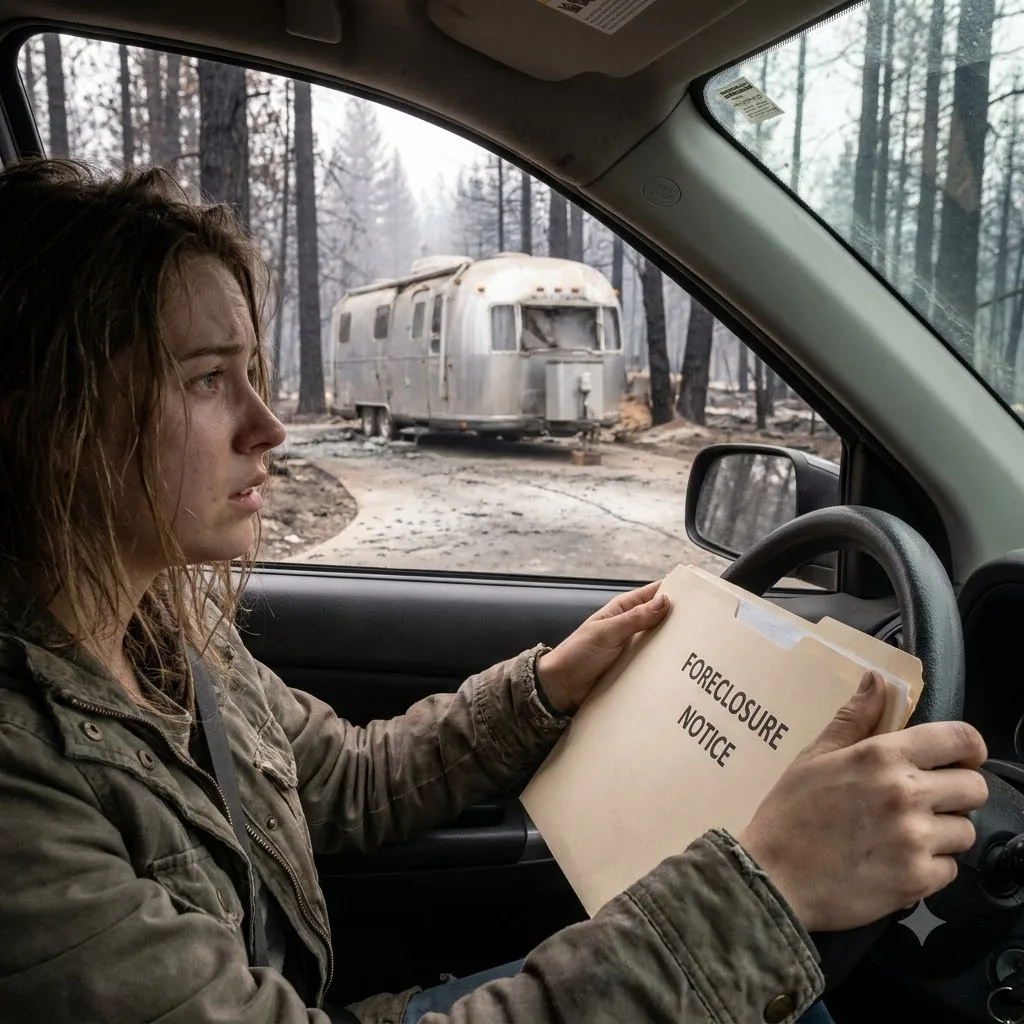
Parked on a patch of scorched dirt directly behind the ruined foundation was a dented, silver travel trailer. It looked completely out of place amid the absolute destruction, a battered aluminum box that had clearly been dragged onto the ash-covered lot after the flames had passed. A thick black extension cord snaked from the trailer’s side panel toward a sputtering, gas-powered generator sitting on a blackened cinder block.
Maya turned off the engine and stepped out of the car. The cold mountain air bit through her thin denim jacket. She clutched the insurance appeal forms and the yellow fines in her left hand, the paper trembling slightly as a sudden gust of wind kicked up a thick cloud of toxic gray dust. She walked slowly toward the trailer, each step feeling heavier than the last. The crunch of her boots on the charred gravel seemed deafening in the dead silence of the burned forest. She held her breath, mentally preparing a brief, emotionless script to get his signature and leave immediately.
Then the heavy silence broke.
A booming, distinctly furious voice echoed from within the metal walls of the trailer. It was the unmistakable, rapid-fire cadence of a syndicated cable news anchor, ranting at maximum volume about global conspiracies and manufactured weather events. The angry broadcast blared through the thin aluminum, vibrating the dented siding and shattering the solemn quiet of the burnt woods. The jarring, aggressive sound of the television host echoed across the wasteland, vibrating the yellow county notices in Maya’s hand just as the trailer door’s heavy brass handle began to turn.
“We cannot process an appeal on Claim 884-J without the co-owner’s physical, notarized signature on the primary liability release,” the claims adjuster named Todd said, his voice flattened by the sterile headset connection.
Maya pressed the phone harder against her ear, staring at the thick stack of county citations covering her kitchen table. The top notice was printed on bright yellow paper, detailing an eight-hundred-dollar daily fine for toxic ash runoff. The wildfire had leveled the mountain property three weeks ago, and the heavy autumn rains were already washing metals from the burnt debris directly into the municipal watershed. Because Maya’s name was listed first on the inherited deed, the county considered her solely responsible for the daily penalties.
Todd continued reading from his script in a droning, robotic cadence. He explained that the wildfire damage fell under a technical liability loophole classified as a ‘preventable vegetation event.’ According to the Pacific Guardian field inspector, the dry brush surrounding the structures had not been cleared to the required fifty-foot defensive perimeter, completely voiding the primary fire coverage.
Maya gripped the edge of the kitchen table and told Todd she needed to file the emergency appeal today. She explained that the fines were compounding exponentially, already threatening to place a massive lien on her personal checking account and destroy her credit. She demanded an override.
Todd remained entirely unmoved by her panic. He reiterated that the policy was co-owned and the system absolutely required a wet-ink signature from the secondary policyholder to initiate any dispute over a vegetation clause. He added that an electronic signature would not be accepted for a Tier 4 dispute, and no supervisor could bypass the compliance software.
The secondary policyholder was her father.
Maya hung up the phone and pushed it away like it was radioactive. A heavy, suffocating weight settled in the center of her chest, making it difficult to draw a full breath. She had not spoken to her father in three years. It had been three years of absolute, unbroken silence. She had changed her number twice, blocked his emails, and returned his manic letters unopened. That strict boundary was the only thing that had kept her sane, built brick by brick to protect her life from his relentless chaos. Now, a corporate insurance algorithm was forcing her to walk right back into the blast zone.
She gathered her car keys and the stack of yellow county notices, forcing them into a manila envelope. The drive up into the foothills took over an hour, pulling her further from the safety of the city. The landscape gradually transformed from green suburban sprawl into a scorched, monochrome wasteland. Blackened tree trunks stood like skeletal fingers against the overcast gray sky. The air seeping through the car’s vents still smelled heavily of wet charcoal, melted plastic, and scorched earth.
Maya turned her sedan onto the winding gravel road leading to the property. The tires crunched loudly over fallen branches and compacted ash. The main house was entirely gone. Nothing remained of her childhood summer home but a cracked, soot-stained concrete foundation and the twisted, melted metal frame of a washing machine. The county’s bright orange warning tape flapped violently in the wind, strung across the driveway to mark the toxic hazard zone.
She parked her car near the edge of the property line, leaving the engine idling for a long moment. She gripped the steering wheel, her knuckles turning bone white. The thought of facing him made her stomach twist into a hard knot. She had desperately hoped to find the property completely abandoned, leaving her a valid excuse to tell the insurance company that the co-owner could not be located anywhere in the state.
But as the dust settled around her windshield, her hope evaporated.
Parked on a patch of scorched dirt directly behind the ruined foundation was a dented, silver travel trailer. It looked completely out of place amid the absolute destruction, a battered aluminum box that had clearly been dragged onto the ash-covered lot after the flames had passed. A thick black extension cord snaked from the trailer’s side panel toward a sputtering, gas-powered generator sitting on a blackened cinder block.
Maya turned off the engine and stepped out of the car. The cold mountain air bit through her thin denim jacket. She clutched the insurance appeal forms and the yellow fines in her left hand, the paper trembling slightly as a sudden gust of wind kicked up a thick cloud of toxic gray dust. She walked slowly toward the trailer, each step feeling heavier than the last. The crunch of her boots on the charred gravel seemed deafening in the dead silence of the burned forest. She held her breath, mentally preparing a brief, emotionless script to get his signature and leave immediately.
Then the heavy silence broke.
A booming, distinctly furious voice echoed from within the metal walls of the trailer. It was the unmistakable, rapid-fire cadence of a syndicated cable news anchor, ranting at maximum volume about global conspiracies and manufactured weather events. The angry broadcast blared through the thin aluminum, vibrating the dented siding and shattering the solemn quiet of the burnt woods. The jarring, aggressive sound of the television host echoed across the wasteland, vibrating the yellow county notices in Maya’s hand just as the trailer door’s heavy brass handle began to turn.