Story code: ST-000065
Part 1: The Cost of a Photograph
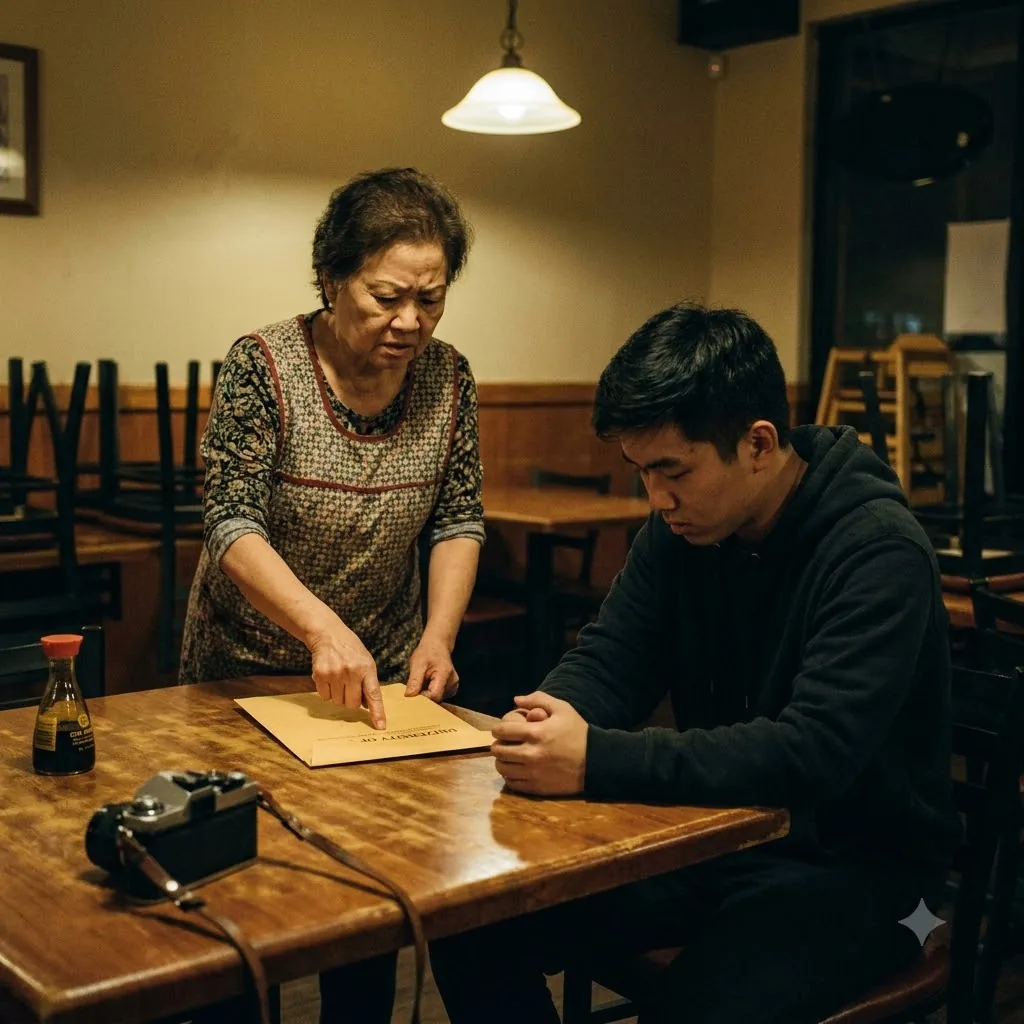
The heavy, embossed paper of the university seal landed with a sickening smack against the sticky laminate of booth number four. My mother’s knuckles were white as she pressed the academic dismissal letter flat, her apron still smelling faintly of stale frying oil and exhausted dreams. We were the only two people left inside the closed restaurant, surrounded by the low, rattling hum of the industrial refrigerators and the harsh fluorescent lights beating down on our worst nightmare. The neon sign in the window had been switched off hours ago, leaving the dining room bathed in a sickly, pale glare.
“Pre-med,” she spat, the word scraping her throat like sandpaper. She jabbed a grease-stained finger at the bold lettering at the top of the page. “Four years I stand behind that fryer. Four years my legs swell up so big I cannot take off my shoes at night. For this.”
I kept my eyes anchored to the scuffed linoleum floor. Right next to my worn sneakers sat my canvas camera bag. My mother kicked it with the worn toe of her non-slip shoe, making the lenses inside clank together with a heavy thud. She blamed the camera. She believed my late nights out shooting street photography and working in the campus darkroom had distracted me from organic chemistry and cellular biology. She thought I had thrown away my future on a foolish hobby, failing my exams because I simply did not care enough to study.
I let her believe it.
I sat there and absorbed the bitter, jagged edges of her disappointment because the alternative was infinitely worse. I could not tell her the actual reason the university had unceremoniously expelled me. My mother operated on a simple, sacred religion. She believed in pure meritocracy. As an immigrant who had scrubbed floors and fried chicken to survive, she believed that this country rewarded honest sweat. She firmly believed that if you put your head down, followed the rules, and worked harder than anyone else, the institutions of power would recognize your worth. She believed the system was inherently fair to those who earned it.
If I explained the reality of my dismissal, that lifelong faith would shatter. If I detailed the unjust, hidden reality of what had actually happened behind the closed doors of the science department, it would destroy her spirit completely. I could not bring myself to explain the true mechanics of how power worked at that school, how easily a student with no connections could be erased when the administration needed a convenient casualty to cover their own tracks. Letting her think I was just a lazy, foolish son obsessed with photography was a heavy shield, but it was the only one I had. It protected her dignity and her worldview.
“You have nothing to say,” she hissed, pacing the narrow aisle between the vinyl booths. “You throw away a medical degree to take pictures of pigeons and dirty alleys. You throw away my life.”
I gripped the edge of the table until my fingers went numb, feeling the sticky residue of spilled syrup under my nails. The dismissal letter stared up at me. Effective immediately. Prohibited from campus property. The bureaucratic language was so cold, completely detached from the devastation it was currently wreaking in this humid, grease-coated dining room. I wanted to scream the truth. I wanted to tell her about the closed-door meetings, the immense pressure, the impossible situation they had forced me into. I swallowed the words instead, letting them burn my throat. The secret tore a hole in my chest, but I locked it down tighter.
She stopped pacing. The silence in the restaurant grew suffocating, broken only by the rhythmic dripping of the industrial sink in the back kitchen. I watched her shoulders sag, the fight temporarily draining out of her small frame. She looked older in that moment than she ever had before. The deep lines around her mouth were carved with absolute, heartbreaking defeat. She stared at the wall clock ticking past midnight, the red second hand sweeping away the last fragments of our peace.
Then, a terrifying shift happened.
Her posture straightened, her expression hardening from despair into something desperate and frantic. She smoothed her hands over her stained apron, tucking stray wisps of graying hair behind her ears with a sudden, rigid determination. She looked at the letter, then at the ring of keys resting on the cash register counter next to the receipt spike.
“I am not letting them do this,” she said, her voice dropping to an eerie, hollow whisper.
She reached across the counter and grabbed the keys to our rusted family van. The metal jingled sharply in the quiet room, sounding like an alarm bell.
I finally stood up, panic seizing my throat, knocking my knees against the table leg. I told her the university offices were closed, that it was the middle of the night, that there was absolutely nothing she could do right now.
She ignored me, marching past the front counter. She stated she was going to drive to the university right now, sleep in the van, and wait outside the Dean of Students’ office until the sun came up. She declared she would get on her knees right there in the administrative lobby if she had to. She was going to beg them to give me another chance, to explain that she would work triple shifts to pay for whatever extra classes I needed to make up for my foolish mistakes.
I moved to block the front door. The thought of my proud, exhausted mother dropping to her swollen knees to beg the very same corrupt administrators who had unjustly ruined me made my vision blur with panic. I could not let her humiliate herself for a crime I did not commit. I reached out to grab her arm, desperately trying to pull her away from the glass door, but she shoved my hands away and jammed the key into the heavy deadbolt.
The heavy, embossed paper of the university seal landed with a sickening smack against the sticky laminate of booth number four. My mother’s knuckles were white as she pressed the academic dismissal letter flat, her apron still smelling faintly of stale frying oil and exhausted dreams. We were the only two people left inside the closed restaurant, surrounded by the low, rattling hum of the industrial refrigerators and the harsh fluorescent lights beating down on our worst nightmare. The neon sign in the window had been switched off hours ago, leaving the dining room bathed in a sickly, pale glare.
“Pre-med,” she spat, the word scraping her throat like sandpaper. She jabbed a grease-stained finger at the bold lettering at the top of the page. “Four years I stand behind that fryer. Four years my legs swell up so big I cannot take off my shoes at night. For this.”
I kept my eyes anchored to the scuffed linoleum floor. Right next to my worn sneakers sat my canvas camera bag. My mother kicked it with the worn toe of her non-slip shoe, making the lenses inside clank together with a heavy thud. She blamed the camera. She believed my late nights out shooting street photography and working in the campus darkroom had distracted me from organic chemistry and cellular biology. She thought I had thrown away my future on a foolish hobby, failing my exams because I simply did not care enough to study.
I let her believe it.
I sat there and absorbed the bitter, jagged edges of her disappointment because the alternative was infinitely worse. I could not tell her the actual reason the university had unceremoniously expelled me. My mother operated on a simple, sacred religion. She believed in pure meritocracy. As an immigrant who had scrubbed floors and fried chicken to survive, she believed that this country rewarded honest sweat. She firmly believed that if you put your head down, followed the rules, and worked harder than anyone else, the institutions of power would recognize your worth. She believed the system was inherently fair to those who earned it.
If I explained the reality of my dismissal, that lifelong faith would shatter. If I detailed the unjust, hidden reality of what had actually happened behind the closed doors of the science department, it would destroy her spirit completely. I could not bring myself to explain the true mechanics of how power worked at that school, how easily a student with no connections could be erased when the administration needed a convenient casualty to cover their own tracks. Letting her think I was just a lazy, foolish son obsessed with photography was a heavy shield, but it was the only one I had. It protected her dignity and her worldview.
“You have nothing to say,” she hissed, pacing the narrow aisle between the vinyl booths. “You throw away a medical degree to take pictures of pigeons and dirty alleys. You throw away my life.”
I gripped the edge of the table until my fingers went numb, feeling the sticky residue of spilled syrup under my nails. The dismissal letter stared up at me. Effective immediately. Prohibited from campus property. The bureaucratic language was so cold, completely detached from the devastation it was currently wreaking in this humid, grease-coated dining room. I wanted to scream the truth. I wanted to tell her about the closed-door meetings, the immense pressure, the impossible situation they had forced me into. I swallowed the words instead, letting them burn my throat. The secret tore a hole in my chest, but I locked it down tighter.
She stopped pacing. The silence in the restaurant grew suffocating, broken only by the rhythmic dripping of the industrial sink in the back kitchen. I watched her shoulders sag, the fight temporarily draining out of her small frame. She looked older in that moment than she ever had before. The deep lines around her mouth were carved with absolute, heartbreaking defeat. She stared at the wall clock ticking past midnight, the red second hand sweeping away the last fragments of our peace.
Then, a terrifying shift happened.
Her posture straightened, her expression hardening from despair into something desperate and frantic. She smoothed her hands over her stained apron, tucking stray wisps of graying hair behind her ears with a sudden, rigid determination. She looked at the letter, then at the ring of keys resting on the cash register counter next to the receipt spike.
“I am not letting them do this,” she said, her voice dropping to an eerie, hollow whisper.
She reached across the counter and grabbed the keys to our rusted family van. The metal jingled sharply in the quiet room, sounding like an alarm bell.
I finally stood up, panic seizing my throat, knocking my knees against the table leg. I told her the university offices were closed, that it was the middle of the night, that there was absolutely nothing she could do right now.
She ignored me, marching past the front counter. She stated she was going to drive to the university right now, sleep in the van, and wait outside the Dean of Students’ office until the sun came up. She declared she would get on her knees right there in the administrative lobby if she had to. She was going to beg them to give me another chance, to explain that she would work triple shifts to pay for whatever extra classes I needed to make up for my foolish mistakes.
I moved to block the front door. The thought of my proud, exhausted mother dropping to her swollen knees to beg the very same corrupt administrators who had unjustly ruined me made my vision blur with panic. I could not let her humiliate herself for a crime I did not commit. I reached out to grab her arm, desperately trying to pull her away from the glass door, but she shoved my hands away and jammed the key into the heavy deadbolt.