Story code: ST-000087
Part 1: The Data Point
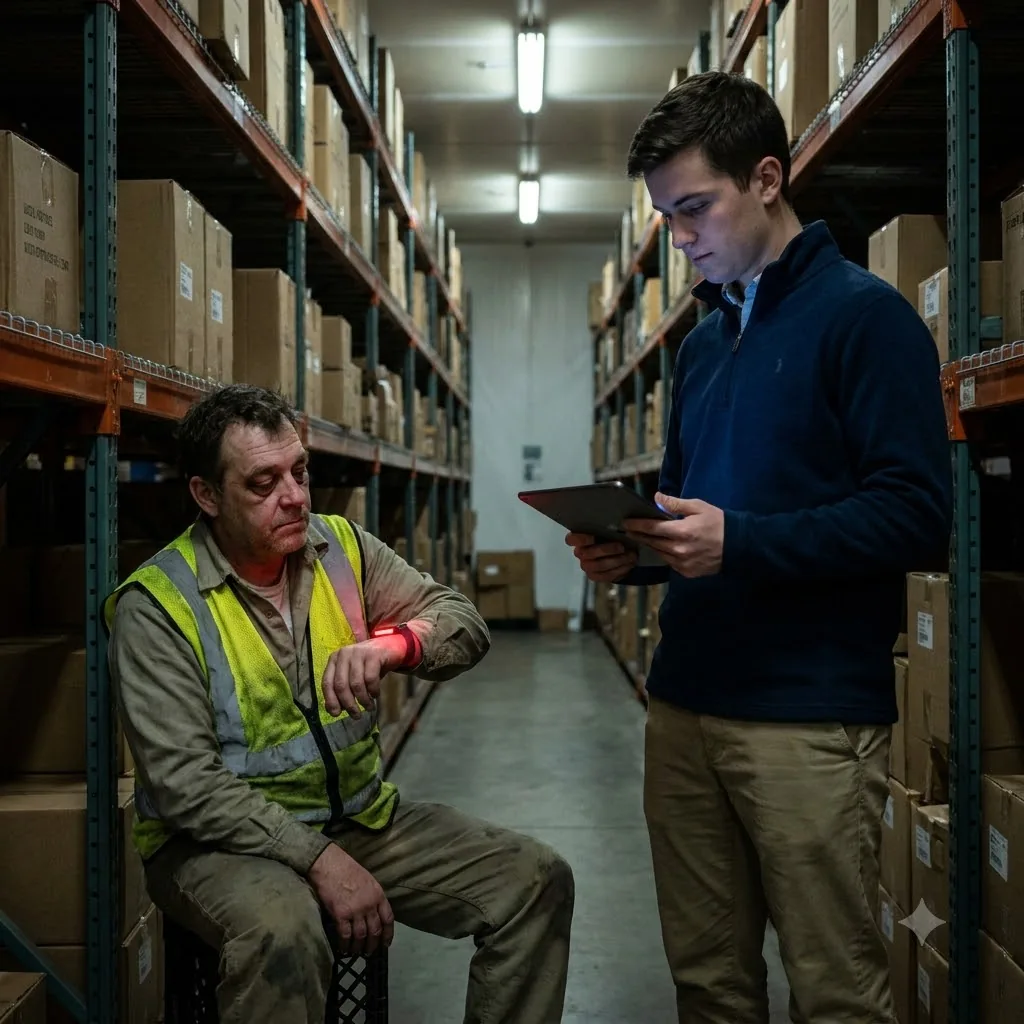
The black polymer band on Elias’s left wrist convulsed with a rapid, triple-stutter vibration, throwing a harsh crimson glare against the corrugated cardboard he pressed to his chest. He stood boxed into the dead end of Aisle 44, his work boots planted on the cracked concrete, while the fifty-pound crate of brass manifolds dug a sharp groove into his ribs. Three feet in front of him, blocking the narrow gap between the towering steel racking shelves, a twenty-three-year-old engineer named Julian stood perfectly still, his eyes locked on a silver iPad. The screen on Elias’s wrist flashed ERR-709, an alert designation that did not exist in the warehouse’s standard operating manual.
Sweat pooled in the deep lines around Elias’s eyes, stinging as it dripped down his cheek. The air in the aisle felt thick, superheated by the lack of ventilation in the deepest corner of the fulfillment center, and every intake of breath pulled dry dust into his lungs. He shifted his grip on the crate. The brass shifted inside, a dead, metallic weight pulling relentlessly at the exhausted ligaments in his forearms. His biometric wristband recognized the minute change in his posture and vibrated again, the red light strobing faster, biting into his peripheral vision.
Julian did not look up. He wore a crisp, powder-blue polo shirt that looked absurdly clean against the backdrop of grime and rust, his hair styled with a neatness that belonged in a corporate boardroom rather than the floor of a distribution hub. A white stylus danced across the glass of his tablet, making faint, rhythmic tapping sounds.
Elias’s left calf began to tremor. He clamped his jaw shut, determined not to let the young man see him stagger, but the sheer physics of the load were breaking him down. The aisle was thirty inches wide. The crate was twenty-four. Julian stood dead center, leaving no room for Elias to pivot, slide past, or even set the box down without smashing it into the engineer’s pristine white sneakers.
“I need to clear the aisle,” Elias said, his voice coming out as a raspy bark.
Julian held up one immaculately manicured finger, his eyes never leaving the data streaming across his screen. The white stylus tapped a final time, and the young man scrolled down with a slow, deliberate swipe of his thumb.
The tracker on Elias’s wrist flared a brighter, more aggressive shade of red. The vibration intensified, no longer a pulse but a continuous, numbing drill against his radius bone. He had worn the company tracker for five years. He knew the soft blue pulse of a standard pick-rate. He knew the jagged yellow buzz of a time-off-task warning. He had never felt this searing, relentless red hum. It felt less like a mechanical alert and more like a live wire strapped to his skin.
Pain radiated up Elias’s neck, settling into the base of his skull. The edges of his vision began to blur, the towering shelves of brown boxes and shrink-wrap dissolving into a hazy tunnel. He locked his knees, desperately trying to find a structural balance that would take the strain off his failing biceps. The tracker whirred furiously.
“Move out of the way,” Elias said, the syllables forced out between clenched teeth.
Julian tilted the iPad slightly, watching a bar graph adjust in real time. The young engineer’s face was completely devoid of malice, anger, or even mild annoyance. It was an expression of pure, unadulterated clinical detachment. He was watching Elias the way a biologist might watch a single cell rupture under a microscope. There was no human being behind the crate of brass manifolds in Julian’s eyes. There was only a data point feeding into the tablet.
Elias’s grip slipped a fraction of an inch. The cardboard scraped against his canvas work shirt. The tracker flashed ERR-709 again, the digits scrolling sideways in a frantic loop. The red glow illuminated the falling dust motes in the air between the two men. Elias’s breathing turned ragged. The heavy thud of a forklift horn echoed from the main thoroughfare, sounding like it belonged to an entirely different planet. In Aisle 44, the only sounds were the rasp of Elias’s breath, the frantic buzz of the tracker, and the soft clicks of the stylus.
“I am going to drop this crate,” Elias warned, his arms shaking so violently now that the brass fittings clanked together inside the box.
Julian finally lowered the iPad. His gaze shifted from the glowing glass to the agonizing display of human endurance failing right in front of him. He looked at Elias’s purple, straining hands, then at the erratic red strobe of the wristband, and finally up to Elias’s bloodshot eyes.
“The new optimization metric requires a live capture of your absolute muscular failure to set the baseline,” Julian said in a flat, conversational tone.
The sheer inhumanity of the instruction hit Elias like a physical blow to the chest, severing the last fragile thread of his concentration and sending his exhausted hands into a violent, uncontrollable spasm.
The black polymer band on Elias’s left wrist convulsed with a rapid, triple-stutter vibration, throwing a harsh crimson glare against the corrugated cardboard he pressed to his chest. He stood boxed into the dead end of Aisle 44, his work boots planted on the cracked concrete, while the fifty-pound crate of brass manifolds dug a sharp groove into his ribs. Three feet in front of him, blocking the narrow gap between the towering steel racking shelves, a twenty-three-year-old engineer named Julian stood perfectly still, his eyes locked on a silver iPad. The screen on Elias’s wrist flashed ERR-709, an alert designation that did not exist in the warehouse’s standard operating manual.
Sweat pooled in the deep lines around Elias’s eyes, stinging as it dripped down his cheek. The air in the aisle felt thick, superheated by the lack of ventilation in the deepest corner of the fulfillment center, and every intake of breath pulled dry dust into his lungs. He shifted his grip on the crate. The brass shifted inside, a dead, metallic weight pulling relentlessly at the exhausted ligaments in his forearms. His biometric wristband recognized the minute change in his posture and vibrated again, the red light strobing faster, biting into his peripheral vision.
Julian did not look up. He wore a crisp, powder-blue polo shirt that looked absurdly clean against the backdrop of grime and rust, his hair styled with a neatness that belonged in a corporate boardroom rather than the floor of a distribution hub. A white stylus danced across the glass of his tablet, making faint, rhythmic tapping sounds.
Elias’s left calf began to tremor. He clamped his jaw shut, determined not to let the young man see him stagger, but the sheer physics of the load were breaking him down. The aisle was thirty inches wide. The crate was twenty-four. Julian stood dead center, leaving no room for Elias to pivot, slide past, or even set the box down without smashing it into the engineer’s pristine white sneakers.
“I need to clear the aisle,” Elias said, his voice coming out as a raspy bark.
Julian held up one immaculately manicured finger, his eyes never leaving the data streaming across his screen. The white stylus tapped a final time, and the young man scrolled down with a slow, deliberate swipe of his thumb.
The tracker on Elias’s wrist flared a brighter, more aggressive shade of red. The vibration intensified, no longer a pulse but a continuous, numbing drill against his radius bone. He had worn the company tracker for five years. He knew the soft blue pulse of a standard pick-rate. He knew the jagged yellow buzz of a time-off-task warning. He had never felt this searing, relentless red hum. It felt less like a mechanical alert and more like a live wire strapped to his skin.
Pain radiated up Elias’s neck, settling into the base of his skull. The edges of his vision began to blur, the towering shelves of brown boxes and shrink-wrap dissolving into a hazy tunnel. He locked his knees, desperately trying to find a structural balance that would take the strain off his failing biceps. The tracker whirred furiously.
“Move out of the way,” Elias said, the syllables forced out between clenched teeth.
Julian tilted the iPad slightly, watching a bar graph adjust in real time. The young engineer’s face was completely devoid of malice, anger, or even mild annoyance. It was an expression of pure, unadulterated clinical detachment. He was watching Elias the way a biologist might watch a single cell rupture under a microscope. There was no human being behind the crate of brass manifolds in Julian’s eyes. There was only a data point feeding into the tablet.
Elias’s grip slipped a fraction of an inch. The cardboard scraped against his canvas work shirt. The tracker flashed ERR-709 again, the digits scrolling sideways in a frantic loop. The red glow illuminated the falling dust motes in the air between the two men. Elias’s breathing turned ragged. The heavy thud of a forklift horn echoed from the main thoroughfare, sounding like it belonged to an entirely different planet. In Aisle 44, the only sounds were the rasp of Elias’s breath, the frantic buzz of the tracker, and the soft clicks of the stylus.
“I am going to drop this crate,” Elias warned, his arms shaking so violently now that the brass fittings clanked together inside the box.
Julian finally lowered the iPad. His gaze shifted from the glowing glass to the agonizing display of human endurance failing right in front of him. He looked at Elias’s purple, straining hands, then at the erratic red strobe of the wristband, and finally up to Elias’s bloodshot eyes.
“The new optimization metric requires a live capture of your absolute muscular failure to set the baseline,” Julian said in a flat, conversational tone.
The sheer inhumanity of the instruction hit Elias like a physical blow to the chest, severing the last fragile thread of his concentration and sending his exhausted hands into a violent, uncontrollable spasm.