Story code: ST-000208
Part 1: The Yellow Shirts
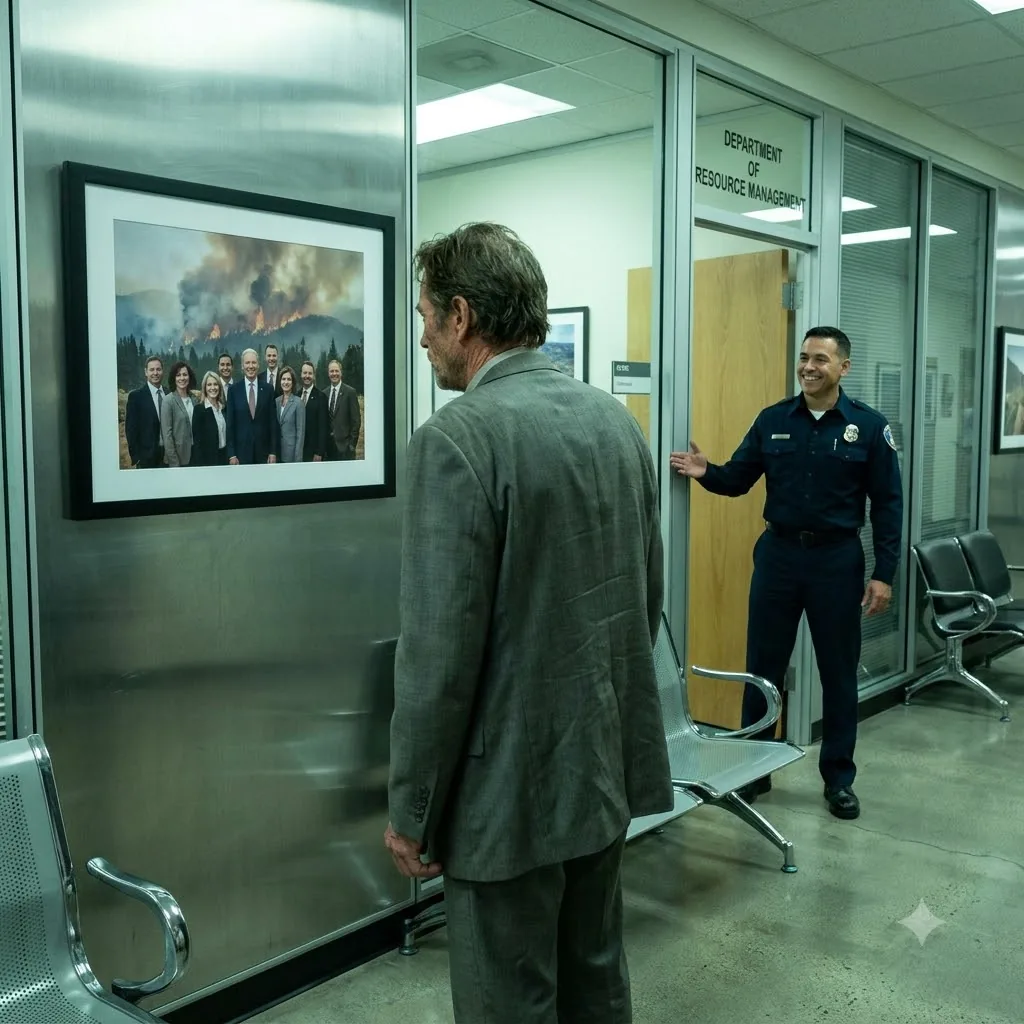
The air conditioning in the Department of Forestry lobby blew a steady, freezing draft across the waiting area, yet Elias could feel a bead of sweat sliding down his ribs inside his borrowed suit. The jacket pulled too tight across his broad shoulders, the cuffs riding up just enough to expose the slick, silver edges of his burn scars when he shifted his weight. He kept his hands clasped behind his back, staring straight ahead at a massive, glossily framed photograph mounted on the sterile white wall. The brass plaque beneath the glass read Ridge Fire Containment, Year Three.
In the foreground of the picture, three state politicians and a regional director stood shoulder-to-shoulder, their bright yellow Nomex shirts completely unblemished and their smiles ready for the press cameras. Elias was not looking at them. His eyes traced the blurry background of the shot, past the official podium, to the shadowed tree line. He recognized the soot-blackened figures slumped against the brush engine bumper, their faces entirely obscured by ash and exhaustion. He recognized the dented fiberglass helmet of his old squad boss, the patched knee of his own fire trousers, and the grim slump of a crew that had worked forty hours straight while the men in the foreground flew in on a helicopter for the morning briefing. Elias shifted his weight in the rigid leather chair. The dress collar dug into his neck. He reached up, adjusting the cheap polyester tie his brother-in-law had lent him for this interview, smoothing down the unfamiliar lapel.
The heavy oak doors at the end of the hall swung outward with a sharp click. Chief Hayes stepped into the lobby, his face split into a wide, practiced grin. He wore a crisp, tailored Class-A uniform that looked as though it had never been within fifty miles of a smoke column.
“Elias,” Hayes boomed, throwing the name across the room so loudly that the receptionist at the front desk stopped typing and looked up. Hayes crossed the tile floor in long, confident strides, extending a hand before he even reached the waiting area. “Get up here, son. Let me look at you.”
Elias stood, tugging the hem of the short jacket down, and took the man’s hand. Hayes’s grip was overpowering, aggressively firm, the kind of handshake meant for an audience.
“It is an absolute honor,” Hayes announced to the lobby at large. With his left hand, the Chief reached into his breast pocket and produced a heavy brass coin, slapping it down on the reception desk with a loud clatter. Elias recognized the insignia of his military service branch stamped into the metal. Hayes tapped the coin with a manicured index finger, making sure the wide-eyed receptionist saw it. “Combat veteran. Three tours over there. We owe guys like you everything. The state is incredibly lucky to have you applying for this position.”
Elias nodded once, offering a tight, closed-mouth smile. He kept his gaze steady on the chief’s face. The effusive public display felt heavy, a performance that required Elias to stand still and play the silent prop.
“Come on back,” Hayes ordered, grabbing Elias by the elbow and steering him away from the waiting area. “Let’s get you out of this freezing lobby and talk about your future.”
They walked down a long corridor lined with more framed photographs and motivational posters about safety and integrity. Hayes kept up a steady stream of chatter. He praised Elias’s military record again, citing the commendations Elias had listed on page two of his application. He spoke about duty, about the brotherhood of uniform, about how the state forestry service desperately needed men who understood discipline under fire. Elias walked beside him in silence, his dress shoes squeaking faintly on the polished linoleum. He felt the sweat creeping down his spine, dampening the cheap cotton shirt. The deeper they went into the administrative wing, the quieter the building became, the sound of ringing phones and clacking keyboards fading behind heavy acoustic doors.
Hayes pushed open a frosted glass door marked Regional Director of Operations. The office beyond was vast, featuring floor-to-ceiling windows that looked out over the sprawling concrete parking lot. The room was dominated by a massive mahogany desk, perfectly clear of clutter. There were no scattered topographic maps, no incident reports, no radio chargers, none of the organized chaos Elias usually associated with a fire boss. There was only a silver pen set, a leather blotter, and a single, vivid red folder resting precisely in the center of the desk.
“Have a seat,” Hayes instructed, gesturing to a low-slung, black leather chair opposite the desk.
Elias lowered himself into the chair. The angle forced him to look up slightly at Hayes, who remained standing for a moment, rounding the desk with a slow, deliberate pace. The smile had not left the chief’s face, but the energy in the room had shifted, condensing into something dense and breathless. Elias kept his posture rigid, his hands resting on his knees. His eyes drifted to the red folder. The color was striking against the dark wood. It was the standard issue file color for a Tier-One Background and Disciplinary Check, the kind of dossier reserved for red-flag candidates or internal investigations.
Hayes sat down, leaning back in his high-backed chair, steepling his fingers beneath his chin. He let the silence stretch. He looked at Elias, then down at the red folder, then back to Elias. The beaming, boisterous veteran-worshipper from the lobby was entirely gone, replaced by a still, assessing bureaucrat.
“Your military service is unassailable,” Hayes stated, his voice dropping to a flat, conversational volume. “A flawless record. That is exactly what I told the hiring committee when your application for the crew boss position came across my desk.”
Elias remained silent, letting the statement hang in the air. He watched Hayes’s hands.
Hayes leaned forward, bringing his elbows to rest on the leather blotter. He placed one hand flat on top of the red folder. The brass service coin he had retrieved from the lobby desk clinked softly as he set it down next to the cardboard file.
“But state forestry is a different beast entirely,” Hayes continued, his fingers tracing the edge of the red cover. “We have to be absolutely certain about the men we put in charge of our engines. We have to look at the whole picture. Especially your three seasons as a temporary state contractor.”
Hayes flipped the red cover open. Elias caught a glimpse of thick, densely printed pages covered in heavy black redaction marker and a bright yellow sticky note attached to the top sheet, right before Hayes leveled a dead stare at him and pushed a glossy eight-by-ten photograph across the smooth mahogany surface.
The air conditioning in the Department of Forestry lobby blew a steady, freezing draft across the waiting area, yet Elias could feel a bead of sweat sliding down his ribs inside his borrowed suit. The jacket pulled too tight across his broad shoulders, the cuffs riding up just enough to expose the slick, silver edges of his burn scars when he shifted his weight. He kept his hands clasped behind his back, staring straight ahead at a massive, glossily framed photograph mounted on the sterile white wall. The brass plaque beneath the glass read Ridge Fire Containment, Year Three.
In the foreground of the picture, three state politicians and a regional director stood shoulder-to-shoulder, their bright yellow Nomex shirts completely unblemished and their smiles ready for the press cameras. Elias was not looking at them. His eyes traced the blurry background of the shot, past the official podium, to the shadowed tree line. He recognized the soot-blackened figures slumped against the brush engine bumper, their faces entirely obscured by ash and exhaustion. He recognized the dented fiberglass helmet of his old squad boss, the patched knee of his own fire trousers, and the grim slump of a crew that had worked forty hours straight while the men in the foreground flew in on a helicopter for the morning briefing. Elias shifted his weight in the rigid leather chair. The dress collar dug into his neck. He reached up, adjusting the cheap polyester tie his brother-in-law had lent him for this interview, smoothing down the unfamiliar lapel.
The heavy oak doors at the end of the hall swung outward with a sharp click. Chief Hayes stepped into the lobby, his face split into a wide, practiced grin. He wore a crisp, tailored Class-A uniform that looked as though it had never been within fifty miles of a smoke column.
“Elias,” Hayes boomed, throwing the name across the room so loudly that the receptionist at the front desk stopped typing and looked up. Hayes crossed the tile floor in long, confident strides, extending a hand before he even reached the waiting area. “Get up here, son. Let me look at you.”
Elias stood, tugging the hem of the short jacket down, and took the man’s hand. Hayes’s grip was overpowering, aggressively firm, the kind of handshake meant for an audience.
“It is an absolute honor,” Hayes announced to the lobby at large. With his left hand, the Chief reached into his breast pocket and produced a heavy brass coin, slapping it down on the reception desk with a loud clatter. Elias recognized the insignia of his military service branch stamped into the metal. Hayes tapped the coin with a manicured index finger, making sure the wide-eyed receptionist saw it. “Combat veteran. Three tours over there. We owe guys like you everything. The state is incredibly lucky to have you applying for this position.”
Elias nodded once, offering a tight, closed-mouth smile. He kept his gaze steady on the chief’s face. The effusive public display felt heavy, a performance that required Elias to stand still and play the silent prop.
“Come on back,” Hayes ordered, grabbing Elias by the elbow and steering him away from the waiting area. “Let’s get you out of this freezing lobby and talk about your future.”
They walked down a long corridor lined with more framed photographs and motivational posters about safety and integrity. Hayes kept up a steady stream of chatter. He praised Elias’s military record again, citing the commendations Elias had listed on page two of his application. He spoke about duty, about the brotherhood of uniform, about how the state forestry service desperately needed men who understood discipline under fire. Elias walked beside him in silence, his dress shoes squeaking faintly on the polished linoleum. He felt the sweat creeping down his spine, dampening the cheap cotton shirt. The deeper they went into the administrative wing, the quieter the building became, the sound of ringing phones and clacking keyboards fading behind heavy acoustic doors.
Hayes pushed open a frosted glass door marked Regional Director of Operations. The office beyond was vast, featuring floor-to-ceiling windows that looked out over the sprawling concrete parking lot. The room was dominated by a massive mahogany desk, perfectly clear of clutter. There were no scattered topographic maps, no incident reports, no radio chargers, none of the organized chaos Elias usually associated with a fire boss. There was only a silver pen set, a leather blotter, and a single, vivid red folder resting precisely in the center of the desk.
“Have a seat,” Hayes instructed, gesturing to a low-slung, black leather chair opposite the desk.
Elias lowered himself into the chair. The angle forced him to look up slightly at Hayes, who remained standing for a moment, rounding the desk with a slow, deliberate pace. The smile had not left the chief’s face, but the energy in the room had shifted, condensing into something dense and breathless. Elias kept his posture rigid, his hands resting on his knees. His eyes drifted to the red folder. The color was striking against the dark wood. It was the standard issue file color for a Tier-One Background and Disciplinary Check, the kind of dossier reserved for red-flag candidates or internal investigations.
Hayes sat down, leaning back in his high-backed chair, steepling his fingers beneath his chin. He let the silence stretch. He looked at Elias, then down at the red folder, then back to Elias. The beaming, boisterous veteran-worshipper from the lobby was entirely gone, replaced by a still, assessing bureaucrat.
“Your military service is unassailable,” Hayes stated, his voice dropping to a flat, conversational volume. “A flawless record. That is exactly what I told the hiring committee when your application for the crew boss position came across my desk.”
Elias remained silent, letting the statement hang in the air. He watched Hayes’s hands.
Hayes leaned forward, bringing his elbows to rest on the leather blotter. He placed one hand flat on top of the red folder. The brass service coin he had retrieved from the lobby desk clinked softly as he set it down next to the cardboard file.
“But state forestry is a different beast entirely,” Hayes continued, his fingers tracing the edge of the red cover. “We have to be absolutely certain about the men we put in charge of our engines. We have to look at the whole picture. Especially your three seasons as a temporary state contractor.”
Hayes flipped the red cover open. Elias caught a glimpse of thick, densely printed pages covered in heavy black redaction marker and a bright yellow sticky note attached to the top sheet, right before Hayes leveled a dead stare at him and pushed a glossy eight-by-ten photograph across the smooth mahogany surface.