Story code: ST-000158
Part 1: He Said the Basket Proved It
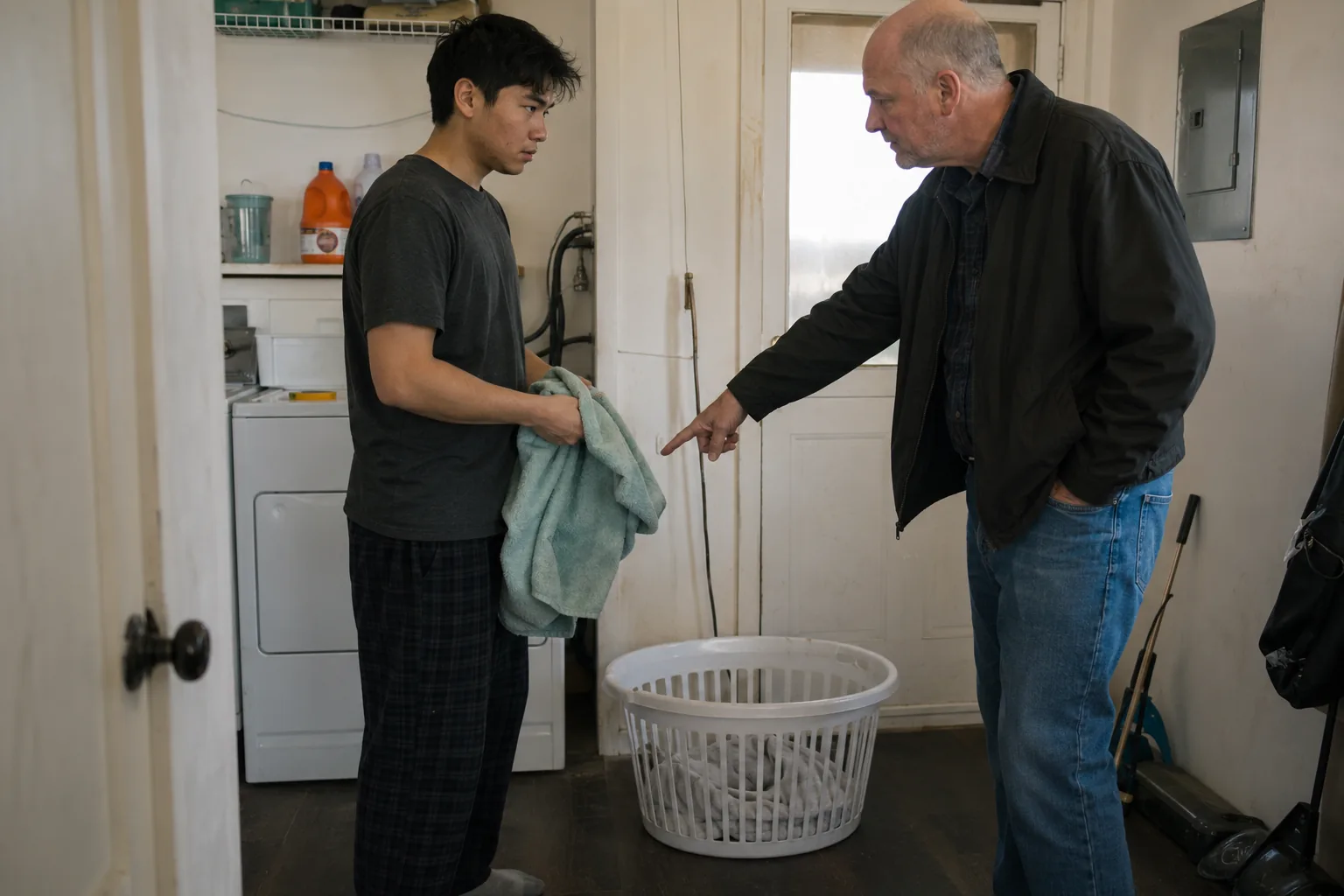
My landlord stepped into our duplex utility room while Eli was sorting towels, pointed at a plastic laundry basket on the floor, and started talking to him like he was a trainee who had failed a certification exam. Before Eli could finish one sentence, Darren said, “This is a clear cross-vent contamination load,” and said it loud enough to make him look stupid for not already knowing what that meant.
I was at the folding counter matching socks into pairs when he came in. The room was the narrow back workroom off the kitchen in our duplex, the one with the washer, dryer, utility sink, shelves, and just enough standing space for two people if nobody decided to make a show at the doorway. Darren always used the doorway that way. He planted one hand on the frame and leaned in just enough to block the easy path out.
Eli had one towel in his hands when Darren started. He lowered it halfway, looked at him, then looked at the basket.
“What are you talking about?” Eli said.
Darren tapped the rim of the basket with two fingers like he was marking evidence. “Cross-vent contamination load. You cannot stage textiles under active intake conditions and then act surprised when I note it on inspection.”
He said inspection like he had walked in with a clipboard, even though all he had in his hand was his phone.
Eli opened his mouth again. “It’s a laundry basket. It’s not under any vent.”
Darren cut across him without even raising his voice. “That’s exactly the kind of answer I hear from tenants who don’t understand air draw behavior.”
The room went flat after that. Not loud. Not dramatic. Just flat in that way where one person keeps using clean, technical words and everybody else suddenly has to decide whether asking a basic question will make them sound even less informed.
I kept folding because my hands do better with something to do when someone starts performing at close range. Darren shifted his stance and pointed again, this time not just at the basket but at the open shelf where detergent, folded rags, and a box of trash bags sat.
“Your intake path is compromised by proximity staging,” he said. “This is how lint migration becomes a structural housekeeping issue.”
Eli gave one short laugh with no smile in it. “Structural housekeeping issue?”
Darren looked at him the way people look at a student who has asked the wrong question in front of the class. “You can mock the terminology if you want. It doesn’t make the violation disappear.”
Violation.
That word changed the shape of the room. Eli set the towel down on top of the dryer, slower than before.
“What violation?” he said.
Darren nodded toward the basket again. It was an ordinary white one with slotted sides, half full of clean wash that still needed to be carried upstairs. It sat beside the folding counter, nowhere near the dryer vent, nowhere under the ceiling return, nowhere touching anything except the floor tile and one corner of the counter leg. I had stepped around it twice in the last five minutes.
“This placement,” Darren said. “Combined with active machine use. Combined with stacked porous load. Combined with cross-vent conditions.”
He stacked the words like each one settled the matter.
Eli said, “You just walked in here. You didn’t even ask what we were doing.”
“I don’t need a narrative,” Darren said. “I need compliance.”
He finally looked at me then, maybe because I had gone still. “You understand what I’m describing, right?”
I looked at the basket because that was the object he had chosen, and I repeated the phrase exactly the way he had said it.
“Cross-vent contamination load?”
“Yes,” he said at once, quick and crisp, relieved to hear his own term back in the room. “Exactly.”
I asked, “What vent is crossing what?”
He didn’t answer that directly. He took one step inside, pointed at the dryer, then up toward the ceiling vent, then down toward the basket, drawing a shape in the air that had more confidence than sense.
“The problem is not one vent crossing another in a literal way,” he said. “It’s the pressure relationship created by poor basket staging in a mixed-flow service room.”
Eli looked at me, then back at him. “Poor basket staging.”
Darren nodded like he was pleased Eli was finally catching up. “Now you’re hearing it.”
That was the part that made Eli look like he was being corrected in his own home by a man using made-up language faster than either of us could pin it down. Eli’s jaw tightened. He stayed where he was, one hand on the dryer top, but he stopped trying to interrupt.
Darren kept going because nobody had stopped him yet.
“I’ve seen this before,” he said. “Tenants assume a basket is just a basket. It isn’t, not in a room with active intake and heat exhaust competing for draw.”
I looked at the basket again. Then at the vent. Then at the dryer. Then back at Darren, who had started explaining with bigger and bigger circles of his hand, like the less plain the words got, the more official they became.
And the strange thing was, the longer he talked, the more his whole claim seemed to depend on that one basket staying exactly where it was while nobody asked him to show what any of his terms were supposed to mean.
My landlord stepped into our duplex utility room while Eli was sorting towels, pointed at a plastic laundry basket on the floor, and started talking to him like he was a trainee who had failed a certification exam. Before Eli could finish one sentence, Darren said, “This is a clear cross-vent contamination load,” and said it loud enough to make him look stupid for not already knowing what that meant.
I was at the folding counter matching socks into pairs when he came in. The room was the narrow back workroom off the kitchen in our duplex, the one with the washer, dryer, utility sink, shelves, and just enough standing space for two people if nobody decided to make a show at the doorway. Darren always used the doorway that way. He planted one hand on the frame and leaned in just enough to block the easy path out.
Eli had one towel in his hands when Darren started. He lowered it halfway, looked at him, then looked at the basket.
“What are you talking about?” Eli said.
Darren tapped the rim of the basket with two fingers like he was marking evidence. “Cross-vent contamination load. You cannot stage textiles under active intake conditions and then act surprised when I note it on inspection.”
He said inspection like he had walked in with a clipboard, even though all he had in his hand was his phone.
Eli opened his mouth again. “It’s a laundry basket. It’s not under any vent.”
Darren cut across him without even raising his voice. “That’s exactly the kind of answer I hear from tenants who don’t understand air draw behavior.”
The room went flat after that. Not loud. Not dramatic. Just flat in that way where one person keeps using clean, technical words and everybody else suddenly has to decide whether asking a basic question will make them sound even less informed.
I kept folding because my hands do better with something to do when someone starts performing at close range. Darren shifted his stance and pointed again, this time not just at the basket but at the open shelf where detergent, folded rags, and a box of trash bags sat.
“Your intake path is compromised by proximity staging,” he said. “This is how lint migration becomes a structural housekeeping issue.”
Eli gave one short laugh with no smile in it. “Structural housekeeping issue?”
Darren looked at him the way people look at a student who has asked the wrong question in front of the class. “You can mock the terminology if you want. It doesn’t make the violation disappear.”
Violation.
That word changed the shape of the room. Eli set the towel down on top of the dryer, slower than before.
“What violation?” he said.
Darren nodded toward the basket again. It was an ordinary white one with slotted sides, half full of clean wash that still needed to be carried upstairs. It sat beside the folding counter, nowhere near the dryer vent, nowhere under the ceiling return, nowhere touching anything except the floor tile and one corner of the counter leg. I had stepped around it twice in the last five minutes.
“This placement,” Darren said. “Combined with active machine use. Combined with stacked porous load. Combined with cross-vent conditions.”
He stacked the words like each one settled the matter.
Eli said, “You just walked in here. You didn’t even ask what we were doing.”
“I don’t need a narrative,” Darren said. “I need compliance.”
He finally looked at me then, maybe because I had gone still. “You understand what I’m describing, right?”
I looked at the basket because that was the object he had chosen, and I repeated the phrase exactly the way he had said it.
“Cross-vent contamination load?”
“Yes,” he said at once, quick and crisp, relieved to hear his own term back in the room. “Exactly.”
I asked, “What vent is crossing what?”
He didn’t answer that directly. He took one step inside, pointed at the dryer, then up toward the ceiling vent, then down toward the basket, drawing a shape in the air that had more confidence than sense.
“The problem is not one vent crossing another in a literal way,” he said. “It’s the pressure relationship created by poor basket staging in a mixed-flow service room.”
Eli looked at me, then back at him. “Poor basket staging.”
Darren nodded like he was pleased Eli was finally catching up. “Now you’re hearing it.”
That was the part that made Eli look like he was being corrected in his own home by a man using made-up language faster than either of us could pin it down. Eli’s jaw tightened. He stayed where he was, one hand on the dryer top, but he stopped trying to interrupt.
Darren kept going because nobody had stopped him yet.
“I’ve seen this before,” he said. “Tenants assume a basket is just a basket. It isn’t, not in a room with active intake and heat exhaust competing for draw.”
I looked at the basket again. Then at the vent. Then at the dryer. Then back at Darren, who had started explaining with bigger and bigger circles of his hand, like the less plain the words got, the more official they became.
And the strange thing was, the longer he talked, the more his whole claim seemed to depend on that one basket staying exactly where it was while nobody asked him to show what any of his terms were supposed to mean.