Story code: ST-000238
Part 1: Drowning in Daylight
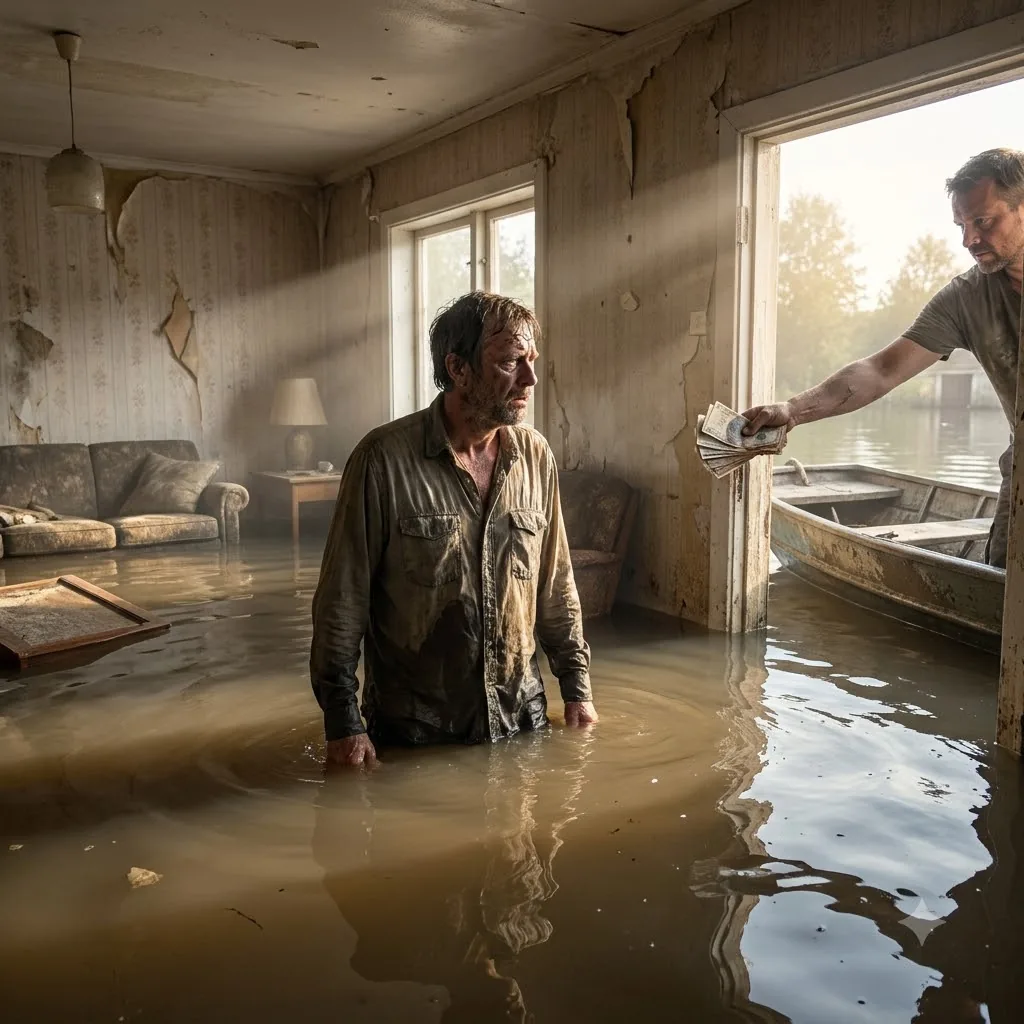
Mateo stood in the center of his living room, the cold water lapping just above his belt buckle. A slick, iridescent film coated the surface, radiating a sharp, chemical stench that burned the back of his throat. Outside the half-submerged picture window, the morning sun blazed in a cloudless blue sky. There was no storm, no rain, no breached levee he knew of, yet the neighborhood of Las Palmas was steadily drowning.
He waded toward the kitchen, his boots heavy and slow on the submerged floorboards. Floating couch cushions bumped against his hips like dead fish. The metallic tang in the air made his eyes water. He grabbed a broom handle to check the depth near the hallway, feeling the soft drag of ruined carpet beneath the murky surface. Every step stirred up clouds of dark, foul silt that hung suspended in the water.
A low hum vibrated through the sloshing tide inside his home. A shadow fell across the blinding sunlight streaming through the front window. Mateo turned, shielding his eyes to see a flat-bottomed aluminum skiff gliding over his submerged front lawn. The boat nudged against the porch railing, the metal hull scraping against the submerged wood.
The man at the tiller was Hector, a fixer Mateo recognized from the downtown development office. Hector wore a pristine yellow rain slicker that looked mocking in the bright sunshine. Hector did not throw a life preserver. He did not offer an evacuation harness. He simply killed the outboard motor and let the skiff drift closer to the edge of the living room window.
Hector reached into a heavy waterproof bag resting on the floorboards of the skiff. He pulled out a thick, rubber-banded brick of hundred-dollar bills, waterlogged but tightly bound. He tossed it through the open window without a word of greeting. It landed with a heavy splash near Mateo’s chest, sinking instantly into the toxic sludge. Mateo plunged a hand beneath the foul water and grabbed the stack, his fingers slick with whatever chemical laced the flood.
“Keep your doors locked,” Hector said, his voice flat and practiced. “Keep your mouth shut.”
Mateo stared at the cash dripping in his hand. The amount was staggering, more than he made in two entire years at the loading docks. Hector restarted the motor, the exhaust puffing blue smoke into the bright, dry air.
“The water goes down when it goes down,” Hector added over the idle of the engine. “Tell anyone else, and we don’t come back with money next time.”
Hector shifted the gear, reversing the skiff over the submerged mailbox and gliding back down the center of the flooded street. Mateo watched him stop at the Ramirez house three doors down, repeating the silent transaction. They were not rescuing the neighborhood. They were paying for its silence, trapping the residents in their own rotting homes while the city continued functioning just a few miles away.
Mateo waded back to the center of his living room, the water now creeping a fraction higher, pressing cold against his lower ribs. The chemical smell grew thicker, sinking into the drywall, turning the paint a sickly, peeling yellow. He placed the heavy wad of bills on the highest shelf of his floating bookcase. The paper money felt like an anchor. He looked around his ruined home, listening to the agonizing slosh of water against plaster.
This side of the tracks had always been an afterthought to the city council, a grid of cheap housing hidden behind the industrial park. Now, it was being erased entirely, choked out by toxic water under a perfectly clear sky. Mateo could hear the structural groans of his house giving way under the immense pressure. He waded toward the bedroom to find dry clothes, pushing hard through the thick, viscous liquid. The stench was getting worse, a heavy industrial rot that made him gag.
He paused by the side window, looking out at the narrow alley separating his house from the neighboring property. The water level out there appeared even higher, pushing violently against the exterior walls. His neighbor, old Mr. Vargas, lived in a split-level with a deep basement apartment. The water had entirely swallowed Vargas’s lower floor windows, leaving only the dark, murky surface reflecting the sunlight.
Mateo pressed his palm against the glass. He told himself to stay quiet, to keep the cash and wait for the city to handle it. He told himself it was not his business to fight Hector or the powerful people signing those stacks of hundred-dollar bills. He needed to pack whatever fit in a trash bag, climb onto the roof, and wait for the water to recede.
A muffled, frantic thudding echoed through the water. Mateo froze, his hand slipping on the wet window frame. The sound came again, a desperate, hollow pounding vibrating through the exterior wall. It was coming directly from the Vargas house.
Mateo pressed his ear to the glass. Beneath the sloshing of the flood and the distant hum of Hector’s skiff, a muffled, watery scream tore through the silence. It was a raw, terrified shriek originating from the completely submerged basement next door.
The bribe money sat uselessly on the top shelf. Mateo turned his back on it. He waded violently through the waist-deep water, fighting the heavy drag of the toxic sludge, making a direct line for the hallway utility closet. He shoved the door open, ignoring the floating paint cans and ruined tools. He reached deep past the chemical film and closed his hands tightly around the solid, heavy steel handle of his sledgehammer.
Mateo stood in the center of his living room, the cold water lapping just above his belt buckle. A slick, iridescent film coated the surface, radiating a sharp, chemical stench that burned the back of his throat. Outside the half-submerged picture window, the morning sun blazed in a cloudless blue sky. There was no storm, no rain, no breached levee he knew of, yet the neighborhood of Las Palmas was steadily drowning.
He waded toward the kitchen, his boots heavy and slow on the submerged floorboards. Floating couch cushions bumped against his hips like dead fish. The metallic tang in the air made his eyes water. He grabbed a broom handle to check the depth near the hallway, feeling the soft drag of ruined carpet beneath the murky surface. Every step stirred up clouds of dark, foul silt that hung suspended in the water.
A low hum vibrated through the sloshing tide inside his home. A shadow fell across the blinding sunlight streaming through the front window. Mateo turned, shielding his eyes to see a flat-bottomed aluminum skiff gliding over his submerged front lawn. The boat nudged against the porch railing, the metal hull scraping against the submerged wood.
The man at the tiller was Hector, a fixer Mateo recognized from the downtown development office. Hector wore a pristine yellow rain slicker that looked mocking in the bright sunshine. Hector did not throw a life preserver. He did not offer an evacuation harness. He simply killed the outboard motor and let the skiff drift closer to the edge of the living room window.
Hector reached into a heavy waterproof bag resting on the floorboards of the skiff. He pulled out a thick, rubber-banded brick of hundred-dollar bills, waterlogged but tightly bound. He tossed it through the open window without a word of greeting. It landed with a heavy splash near Mateo’s chest, sinking instantly into the toxic sludge. Mateo plunged a hand beneath the foul water and grabbed the stack, his fingers slick with whatever chemical laced the flood.
“Keep your doors locked,” Hector said, his voice flat and practiced. “Keep your mouth shut.”
Mateo stared at the cash dripping in his hand. The amount was staggering, more than he made in two entire years at the loading docks. Hector restarted the motor, the exhaust puffing blue smoke into the bright, dry air.
“The water goes down when it goes down,” Hector added over the idle of the engine. “Tell anyone else, and we don’t come back with money next time.”
Hector shifted the gear, reversing the skiff over the submerged mailbox and gliding back down the center of the flooded street. Mateo watched him stop at the Ramirez house three doors down, repeating the silent transaction. They were not rescuing the neighborhood. They were paying for its silence, trapping the residents in their own rotting homes while the city continued functioning just a few miles away.
Mateo waded back to the center of his living room, the water now creeping a fraction higher, pressing cold against his lower ribs. The chemical smell grew thicker, sinking into the drywall, turning the paint a sickly, peeling yellow. He placed the heavy wad of bills on the highest shelf of his floating bookcase. The paper money felt like an anchor. He looked around his ruined home, listening to the agonizing slosh of water against plaster.
This side of the tracks had always been an afterthought to the city council, a grid of cheap housing hidden behind the industrial park. Now, it was being erased entirely, choked out by toxic water under a perfectly clear sky. Mateo could hear the structural groans of his house giving way under the immense pressure. He waded toward the bedroom to find dry clothes, pushing hard through the thick, viscous liquid. The stench was getting worse, a heavy industrial rot that made him gag.
He paused by the side window, looking out at the narrow alley separating his house from the neighboring property. The water level out there appeared even higher, pushing violently against the exterior walls. His neighbor, old Mr. Vargas, lived in a split-level with a deep basement apartment. The water had entirely swallowed Vargas’s lower floor windows, leaving only the dark, murky surface reflecting the sunlight.
Mateo pressed his palm against the glass. He told himself to stay quiet, to keep the cash and wait for the city to handle it. He told himself it was not his business to fight Hector or the powerful people signing those stacks of hundred-dollar bills. He needed to pack whatever fit in a trash bag, climb onto the roof, and wait for the water to recede.
A muffled, frantic thudding echoed through the water. Mateo froze, his hand slipping on the wet window frame. The sound came again, a desperate, hollow pounding vibrating through the exterior wall. It was coming directly from the Vargas house.
Mateo pressed his ear to the glass. Beneath the sloshing of the flood and the distant hum of Hector’s skiff, a muffled, watery scream tore through the silence. It was a raw, terrified shriek originating from the completely submerged basement next door.
The bribe money sat uselessly on the top shelf. Mateo turned his back on it. He waded violently through the waist-deep water, fighting the heavy drag of the toxic sludge, making a direct line for the hallway utility closet. He shoved the door open, ignoring the floating paint cans and ruined tools. He reached deep past the chemical film and closed his hands tightly around the solid, heavy steel handle of his sledgehammer.