Story code: ST-000237
Part 1: The Thirteenth Second
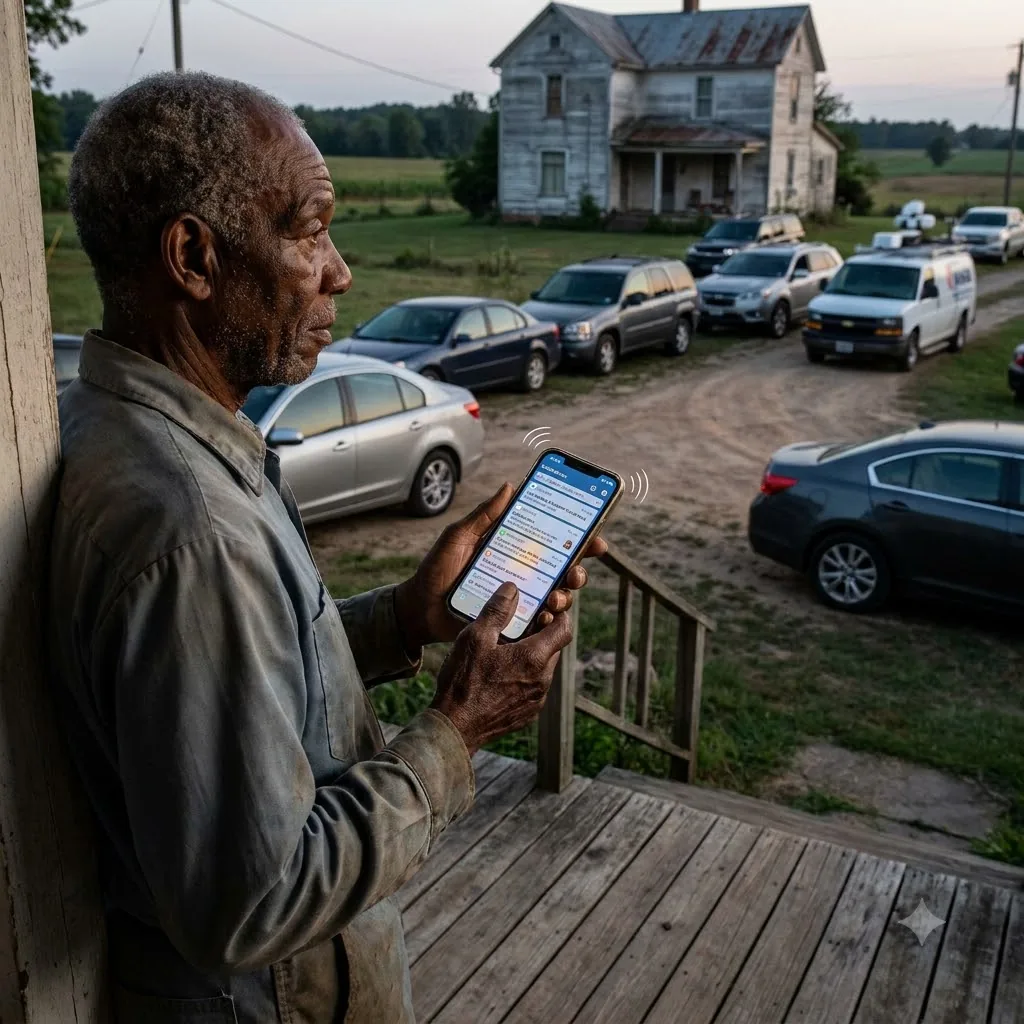
The steady, mechanical buzzing against the Formica counter made Marcus’s teeth ache. He stood perfectly still by the kitchen sink, staring through the grease-spotted window at the invasion taking place on his dying front lawn. Six unfamiliar vehicles-a mix of lifted trucks and pristine suburban SUVs-were parked haphazardly across his fragile spring alfalfa crop. Strangers in flannel shirts and distressed denim were trampling the irrigation lines, holding up their phones to livestream their trespassing. A man in a neon vest leaned against Marcus’s weathered tractor, snapping a selfie with a thumbs-up. The notification chime on Marcus’s phone shrieked again, blending with the low, continuous vibration of thousands of tags, mentions, and direct messages pouring in by the second.
Overnight virality had turned his isolated family farm into a circus. He looked down at the glowing screen of his phone, swiping a sticky thumb across the glass to silence the alarm. The app opened automatically, throwing him right back into the same looping twelve-second clip that had already hijacked the world.
It was a vertical, shaky video, clearly filmed from behind the overgrown hedgerow near the county road. On the screen, a pixelated version of Marcus stood on his own porch, his shoulders slumped, dirt smeared across his forehead. Opposite him stood Chloe, the regional USDA director. In the video, her dark blazer looked stark and threatening against the peeling white paint of the farmhouse. She held a bright orange eviction and foreclosure notice, waving it with a stiff flick of her wrist.
The autogenerated captions flashed across the bottom of the video in bold, aggressive yellow text.
“You failed to meet the yield requirements, Marcus. The department is done waiting. This land isn’t a charity.”
In the twelve-second window, Chloe’s expression was frozen in what the internet had collectively decided was a cruel, elitist sneer. She looked down her nose at him, the embodiment of a soulless bureaucracy crushing the backbone of American agriculture. In the footage, Marcus just stared at the wooden floorboards, a portrait of absolute defeat. The comments beneath the video scrolled by in a dizzying blur of rage. They demanded Chloe’s immediate firing. They posted her office number, her email, the names of her colleagues. They called for her to be run out of the state. The view counter at the bottom of the screen ticked past four million.
Then the video looped. Twelve seconds. Over and over.
Marcus hit the lock button, plunging the screen into darkness, but he could not shut off his own memory. He knew exactly what had happened in the thirteenth second, right after the unseen hiker behind the hedgerow had dropped their phone and walked away.
He remembered the heavy, suffocating silence that fell over the porch once Chloe delivered that brutal line. He remembered her face changing the absolute second she thought they were unobserved. The cruel sneer melted into something desperate and terrified. She had stepped closer to him, glancing over her shoulder at the empty driveway. Her hands had been shaking. She reached into the interior breast pocket of her sharp blazer and pulled out something small, hard, and wrapped in tight duct tape. She pressed it directly into Marcus’s calloused palm, closing his fingers around it with surprising strength. He could still feel the phantom weight of that object, a heavy little block of metal and plastic that now sat locked in the bottom drawer of his gun safe. He remembered the urgent, whispered instruction she gave him before spinning on her heel and marching back to her government-issued sedan.
A heavy thud against the front door jolted Marcus back to the present. He flinched, stepping back from the window. A woman with a megaphone was setting up a folding table right on his porch, stacking homemade placards that read “DEFEND MARCUS, DESTROY THE USDA.” The crowd on his lawn cheered as she tested the siren function on the megaphone, the piercing wail rattling the single-pane glass of the kitchen window.
His phone vibrated again, this time overriding his do-not-disturb settings with a local emergency news alert. Marcus tapped the notification. A live broadcast from a regional syndicate loaded on the screen.
The news helicopter footage showed a modest suburban neighborhood thirty miles away. Marcus recognized Chloe’s dark blue minivan parked in the driveway. The street was completely blocked by news vans and angry protestors holding signs identical to the ones on his own porch. The camera zoomed in tight as Chloe tried to make her way from her front door to her vehicle. She was shielding her face with a leather tote bag, her head ducked low while reporters shoved thick microphones in her path.
The audio feed caught the vicious shouts of the crowd. Someone hurled a large plastic cup of iced coffee, splashing dark liquid across the back of her blazer. Chloe stumbled against the side of her van, fumbling wildly with her keys. The news anchor’s voice-over drifted through the phone speaker, heavily laced with self-righteous condemnation, labeling her a corrupt official finally facing the consequences of her tyranny. A brick suddenly sailed into the frame, smashing through the front window of Chloe’s house. The glass shattered outward in a glittering explosion.
Marcus watched the USDA director curl into a tight ball against the side of her minivan as the mob closed the distance. Outside his own window, the trespassers on his lawn were chanting his name, crowning him their martyr. The phone screen illuminated the deep lines on his face. He swiped the broadcast away, his hand shooting across the Formica counter to snatch his heavy brass truck keys.
The steady, mechanical buzzing against the Formica counter made Marcus’s teeth ache. He stood perfectly still by the kitchen sink, staring through the grease-spotted window at the invasion taking place on his dying front lawn. Six unfamiliar vehicles-a mix of lifted trucks and pristine suburban SUVs-were parked haphazardly across his fragile spring alfalfa crop. Strangers in flannel shirts and distressed denim were trampling the irrigation lines, holding up their phones to livestream their trespassing. A man in a neon vest leaned against Marcus’s weathered tractor, snapping a selfie with a thumbs-up. The notification chime on Marcus’s phone shrieked again, blending with the low, continuous vibration of thousands of tags, mentions, and direct messages pouring in by the second.
Overnight virality had turned his isolated family farm into a circus. He looked down at the glowing screen of his phone, swiping a sticky thumb across the glass to silence the alarm. The app opened automatically, throwing him right back into the same looping twelve-second clip that had already hijacked the world.
It was a vertical, shaky video, clearly filmed from behind the overgrown hedgerow near the county road. On the screen, a pixelated version of Marcus stood on his own porch, his shoulders slumped, dirt smeared across his forehead. Opposite him stood Chloe, the regional USDA director. In the video, her dark blazer looked stark and threatening against the peeling white paint of the farmhouse. She held a bright orange eviction and foreclosure notice, waving it with a stiff flick of her wrist.
The autogenerated captions flashed across the bottom of the video in bold, aggressive yellow text.
“You failed to meet the yield requirements, Marcus. The department is done waiting. This land isn’t a charity.”
In the twelve-second window, Chloe’s expression was frozen in what the internet had collectively decided was a cruel, elitist sneer. She looked down her nose at him, the embodiment of a soulless bureaucracy crushing the backbone of American agriculture. In the footage, Marcus just stared at the wooden floorboards, a portrait of absolute defeat. The comments beneath the video scrolled by in a dizzying blur of rage. They demanded Chloe’s immediate firing. They posted her office number, her email, the names of her colleagues. They called for her to be run out of the state. The view counter at the bottom of the screen ticked past four million.
Then the video looped. Twelve seconds. Over and over.
Marcus hit the lock button, plunging the screen into darkness, but he could not shut off his own memory. He knew exactly what had happened in the thirteenth second, right after the unseen hiker behind the hedgerow had dropped their phone and walked away.
He remembered the heavy, suffocating silence that fell over the porch once Chloe delivered that brutal line. He remembered her face changing the absolute second she thought they were unobserved. The cruel sneer melted into something desperate and terrified. She had stepped closer to him, glancing over her shoulder at the empty driveway. Her hands had been shaking. She reached into the interior breast pocket of her sharp blazer and pulled out something small, hard, and wrapped in tight duct tape. She pressed it directly into Marcus’s calloused palm, closing his fingers around it with surprising strength. He could still feel the phantom weight of that object, a heavy little block of metal and plastic that now sat locked in the bottom drawer of his gun safe. He remembered the urgent, whispered instruction she gave him before spinning on her heel and marching back to her government-issued sedan.
A heavy thud against the front door jolted Marcus back to the present. He flinched, stepping back from the window. A woman with a megaphone was setting up a folding table right on his porch, stacking homemade placards that read “DEFEND MARCUS, DESTROY THE USDA.” The crowd on his lawn cheered as she tested the siren function on the megaphone, the piercing wail rattling the single-pane glass of the kitchen window.
His phone vibrated again, this time overriding his do-not-disturb settings with a local emergency news alert. Marcus tapped the notification. A live broadcast from a regional syndicate loaded on the screen.
The news helicopter footage showed a modest suburban neighborhood thirty miles away. Marcus recognized Chloe’s dark blue minivan parked in the driveway. The street was completely blocked by news vans and angry protestors holding signs identical to the ones on his own porch. The camera zoomed in tight as Chloe tried to make her way from her front door to her vehicle. She was shielding her face with a leather tote bag, her head ducked low while reporters shoved thick microphones in her path.
The audio feed caught the vicious shouts of the crowd. Someone hurled a large plastic cup of iced coffee, splashing dark liquid across the back of her blazer. Chloe stumbled against the side of her van, fumbling wildly with her keys. The news anchor’s voice-over drifted through the phone speaker, heavily laced with self-righteous condemnation, labeling her a corrupt official finally facing the consequences of her tyranny. A brick suddenly sailed into the frame, smashing through the front window of Chloe’s house. The glass shattered outward in a glittering explosion.
Marcus watched the USDA director curl into a tight ball against the side of her minivan as the mob closed the distance. Outside his own window, the trespassers on his lawn were chanting his name, crowning him their martyr. The phone screen illuminated the deep lines on his face. He swiped the broadcast away, his hand shooting across the Formica counter to snatch his heavy brass truck keys.