Story code: ST-000247
Part 3: The Buffer Zone
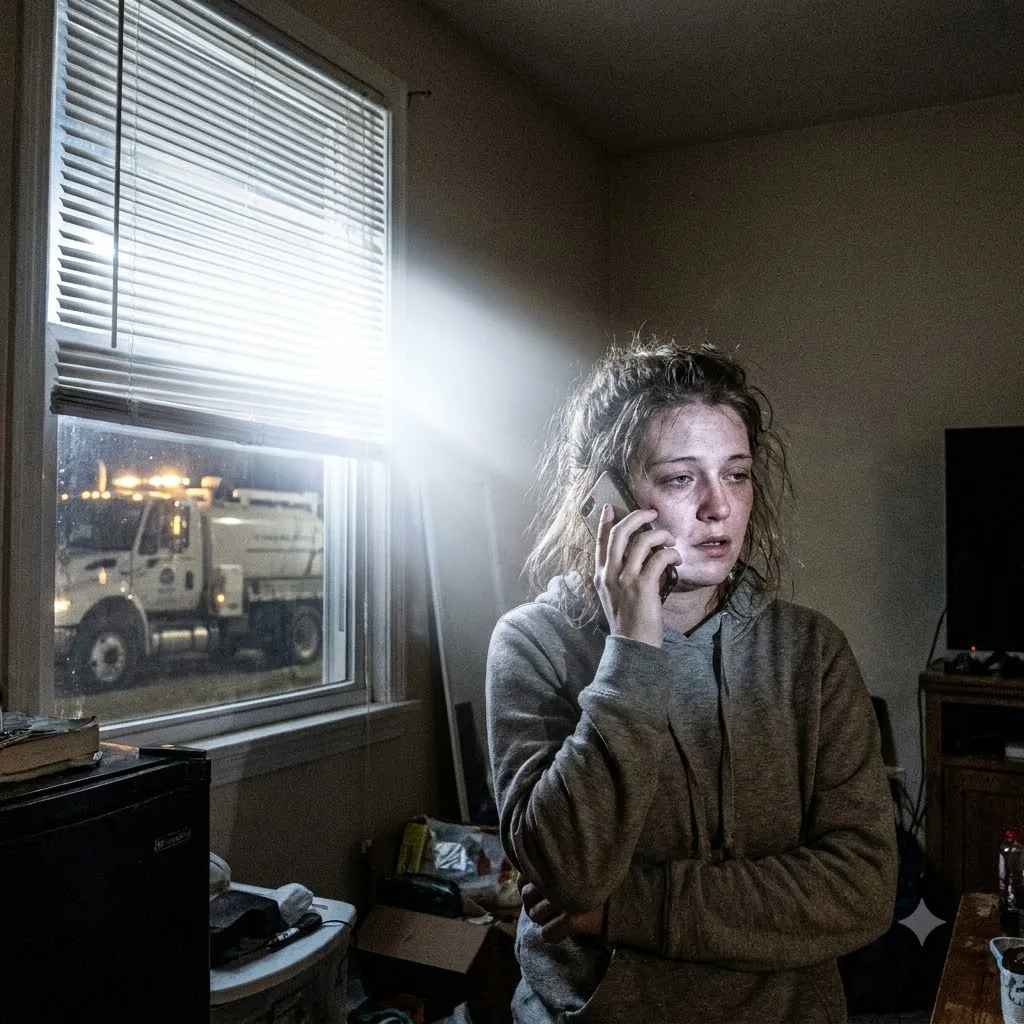
Becca stared at the heavy gold fountain pen resting on the polished mahogany. The cold metal reflected the harsh glare of the fluorescent lights overhead, stinging her eyes with a reminder of the surgical-white beam that had slashed through her windows. The fixtures buzzed, a faint hum that mirrored the phantom vibration still rattling inside her skull. The pen felt like a trap, waiting for her to blindly sign away her own peace of mind.
“Becca,” Diane prompted again, her aristocratic voice dropping an octave into a register usually reserved for scolding disobedient spaniels or reprimanding careless waitstaff. “The document. We do not have all morning.”
Becca didn’t reach for the pen. Instead, her eyes drifted back to the map pinned beneath the Chief’s brass paperweight. She traced the angry red circle at the corner of Elm and 4th, the crimson ink bleeding slightly into the white paper.
“Why there?” Becca asked, her voice quiet but shockingly steady in the cavernous, mahogany-lined conference room.
Diane let out a sharp, impatient exhale. “Because it is an abandoned gravel lot, Becca. It’s perfectly suitable for heavy machinery.”
“It is exactly twenty feet from my front window,” Becca said, looking up from the table to meet her mother-in-law’s pristine, unblinking stare. “There is a massive commercial industrial park three miles further south. Acres of empty concrete. No houses. No duplexes. No children trying to sleep through a diesel engine that rattles the drywall off the studs. Why put a twenty-ton idling tank in the middle of a residential block?”
“It is a high-density zone,” the woman with the diamond tennis bracelet interjected, waving a dismissive hand. “The police need to be where the crime is, dear.”
“There hasn’t been a violent crime on Elm Street in four years,” Becca countered, her heart beginning to hammer a frantic rhythm against her ribs. She looked across the table at the Chief. “Why Elm and 4th, Chief Miller? Who decided that specific lot was the only valid option for a twenty-four-hour staging ground?”
Chief Miller’s neutral expression didn’t shift, but his thick fingers drummed once against his ceramic mug. He glanced sideways at Diane, who offered a tight, warning smile, and then he looked back to Becca. With a slow, deliberate movement, he reached back into the thick manila folder.
“The precinct did not independently select the staging ground,” Miller stated, his gravelly voice echoing off the expensive wood paneling. “The placement of the tactical asset was a strict condition of the municipal zoning addendum that funded our operational budget for the fiscal year.”
He pulled out a second document-a municipal zoning map-and unrolled it over the first one. This map was different. It didn’t just show streets; it showed property lines, tax brackets, and shaded barrier zones marked in dark ink.
“As you know,” Miller continued, his broad hands smoothing the heavy parchment flat against the table, “the Urban Pacification Unit was partially funded by private community donations to supplement the federal grant. Under town bylaws, major financial contributors are permitted to submit zoning requests for the asset’s permanent deployment.”
Becca stared at the new map, her breath catching in her throat. A thick, dark blue line had been drawn right down the center of 4th Street. It acted as a solid, undeniable wall separating the sprawling, lush green of the Heights from the utilitarian gray of Becca’s neighborhood.
Right on that blue line, exactly where Elm Street connected the lower district to the winding, picturesque road up the hill, sat the heavy red circle.
“A community directive?” Becca asked, her throat suddenly uncomfortably tight.
Miller tapped a large, stapled addendum attached to the bottom corner of the zoning map. “The directive formally requested that the vehicle be permanently staged at the primary access point between the lower residential grid and the heritage estates. The exact wording in the donor file states it is to serve as a ‘physical buffer and visual deterrent’ to prevent undesirable foot traffic from migrating up the hill toward the country club.”
The room fell dead silent. The faint buzzing of the fluorescent lights suddenly seemed deafening, rushing in to fill the vacuum.
“A physical buffer,” Becca repeated. The words felt like dry ash in her mouth. The twenty-ton monstrosity wasn’t just parked there by accident. It wasn’t a logistical necessity born of municipal convenience. It was a barricade. A wall built out of military-grade armor, blinding spotlights, and choking diesel fumes, deliberately placed to keep people like her away from people like Diane.
Becca reached out with a trembling hand and pulled the stapled addendum toward her. The paper was thick, official city stationery. At the bottom of the page, scrawled in thick, confident black ink, was the signature of the primary donor who had drafted the request.
Richard Sterling.
Her father-in-law.
Becca’s gaze snapped up to Diane. Diane’s victorious posture had suddenly gone completely rigid, her perfectly painted lips pressed together in a thin line. She wasn’t looking at the document. She was staring at the mahogany wall just over Becca’s right shoulder, a stark, desperate refusal to make eye contact.
“You knew,” Becca whispered, the realization hitting her with the staggering physical force of a blow. “Richard filed the paperwork. He bought the police a tank, and you specifically asked them to park it on my front lawn.”
“Don’t be melodramatic, Becca,” Diane snapped, though her voice lacked its usual commanding resonance. It sounded thin. Brittle. “Richard was simply thinking of the neighborhood’s overall security. That access road has always been a vulnerability for the estates. It’s not about you.”
“Not about me?” Becca stood up, her chair scraping so harshly against the polished hardwood floor that the woman with the tennis bracelet visibly flinched. “You knew exactly where I lived, Diane. You’ve mailed my husband’s birthday cards there for three years. You knew exactly whose windows that engine was shaking. You knew whose house was being targeted by that spotlight.”
“The historical avenues must be protected,” Diane insisted, her hands gripping the edges of her designer leather handbag so tightly her knuckles were white. “We have heritage assets to maintain. Property values to consider. The staging lot is municipal land, Becca. We have every right to utilize it for the betterment of the Heights.”
“By turning my street into a demilitarized zone?” Becca asked, her voice rising, shaking with a cold, terrifying fury that completely erased her earlier intimidation. “By vibrating my floorboards and blinding me in my own living room so you don’t have to risk looking at lower-income people on your way to the country club?”
Chief Miller sat perfectly still, his large hands folded calmly back over his dark uniform shirt, making absolutely no move to intervene or defend the wealthy women sitting to his left. He just watched the paper trail do its intended work.
Diane opened her mouth to issue another crisp, aristocratic command, to put Becca back in her place, but for the first time since Becca had known her, no words came out. The matriarch’s gaze flickered to the gold pen on the table, then down to her husband’s damning signature on the zoning map, her pristine facade finally fracturing under the harsh glare of the precinct lights.