Story code: ST-000247
Part 2: The Compromise
Becca leaned forward, the harsh fluorescent lights of the precinct conference room reflecting off the glossy surface of the map. Chief Miller’s thick fingers smoothed the curled edges, weighing down the corners with a heavy brass paperweight and a ceramic coffee mug. The map was an aerial blueprint of their divided town, heavily marked with thick markers in varying shades of urgency.
Becca immediately recognized the pale, calming green shading that blanketed the northern hills. That was the Heights. Diane’s territory. The sprawling, inherited estates, the manicured country club greens, and the historical avenues were all safely encased in that tranquil green border. But as Becca’s eyes drifted south, toward the grid of tightly packed streets where she lived, the colors shifted violently. Her neighborhood-a patchwork of cheap duplexes, tired strip malls, and cracked sidewalks-was buried under an angry, cross-hatched crimson.
Thick, black arrows traced a continuous loop through the red zone, circling like vultures over the lower residential blocks.
“As you noted, ladies,” Chief Miller began, his deep voice filling the quiet room, “the new Urban Pacification Unit is a heavy piece of machinery. It weighs upwards of twenty tons. Its operational profile is… substantial.”
“It is a complete eyesore,” Diane interrupted smoothly, adjusting her tailored blazer. “And as we discussed, entirely inappropriate for the historical aesthetics of the Heights. Our property values are predicated on tranquility, Chief. That machine is an intrusion.”
“Agreed,” Miller said, his neutral expression never wavering. He tapped a thick finger against the green zone on the map. “Which is why I am proposing a complete cessation of tactical patrols in the heritage districts. The unit’s weight risks damaging the cobblestone at the south entrance, and the engine noise violates the strict HOA sound ordinances on the hill.”
A collective sigh of relief rippled through the coalition. The woman with the diamond tennis bracelet smiled thinly, relaxing back into her leather chair. Diane’s posture loosened, a victorious gleam catching in her eye.
Becca stared at the map, a cold knot tightening in her stomach. If the unit was banned from the green zone, there was only one place left for it to go.
“To maintain our municipal safety ratings and justify the federal grant that paid for the unit,” Miller continued, tracing the black arrows with the tip of his pen, “the vehicle must remain in active circulation. We are officially rerouting the asset entirely to the southern commercial and high-density residential grids.”
He tapped the pen directly onto the crimson cross-hatching of Becca’s neighborhood.
“A sensible compromise,” Diane announced, nodding her pristine blonde head. “The lower zones have a much more utilitarian aesthetic to begin with. The architecture is cinderblock and vinyl siding. It won’t disrupt the visual harmony down there. And frankly, a stronger police presence in the high-density areas is just good public policy.”
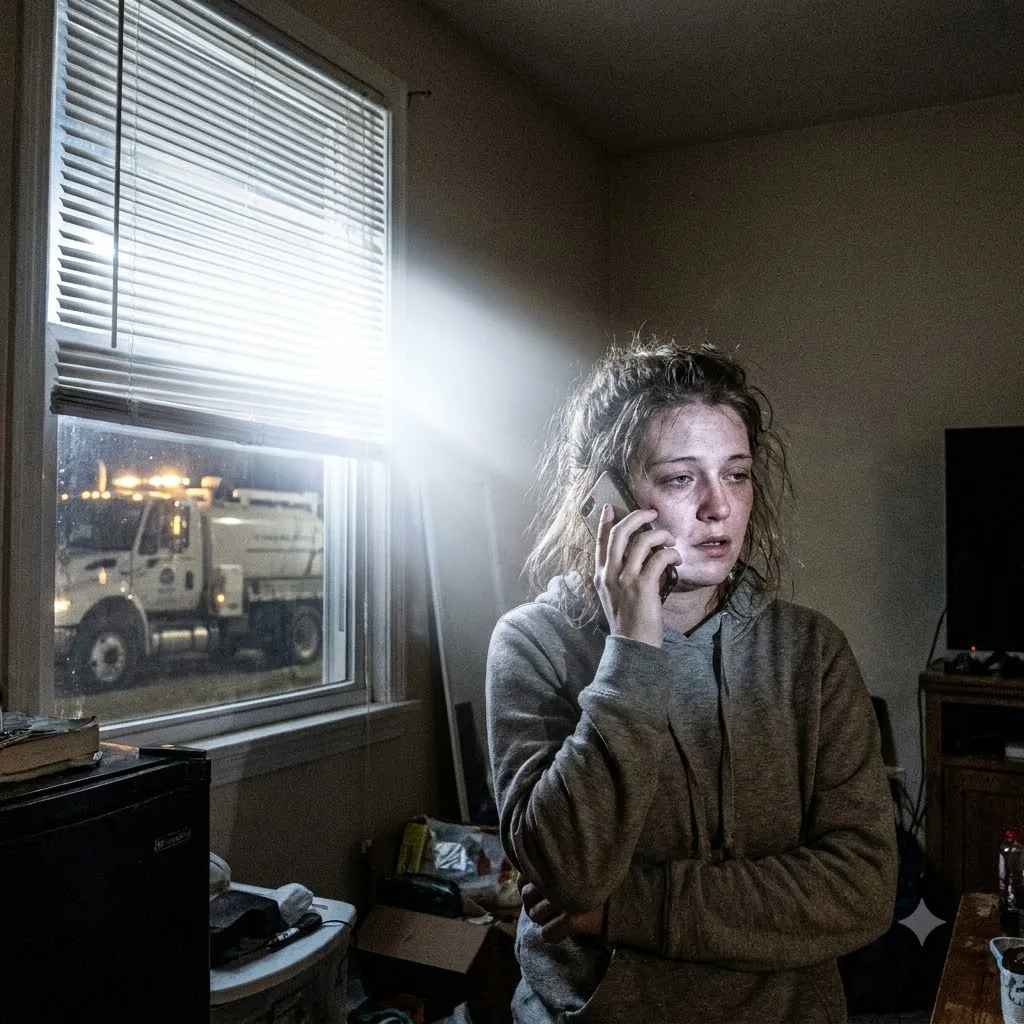
Becca’s throat felt uncomfortably dry. Utilitarian aesthetic. Diane was talking about Becca’s home as if it were an abandoned warehouse district. The oppressive diesel hum that had shaken the picture frames off her walls just twelve hours ago echoed in Becca’s memory. The blinding, surgical-white spotlight that had cut through her cheap plastic blinds. That wasn’t just a passing disruption. Under this new plan, it was going to be her permanent reality.
“There is one logistical necessity we must address,” Miller said, folding his hands back over his stomach. “The Pacification Unit requires a twenty-four-hour operational readiness cycle. The tactical arrays and communication suites draw massive amounts of power. The diesel engine must idle continuously when not on active patrol. We cannot shut it down.”
Becca’s breath caught. Continuously.
“Naturally, we cannot stage an idling industrial engine at the precinct,” Miller explained smoothly. “The fumes and vibration disrupt our dispatch center. Therefore, we have identified a municipal lot in the southern grid to serve as the permanent staging and idle point.”
He picked up a red marker and drew a thick, heavy circle on the map.
Becca felt the blood drain from her face. The circle enclosed the abandoned gravel lot at the corner of Elm and 4th Street. It was directly across the street from her duplex window. The exact spot where the monstrous vehicle had parked the night before. They were going to leave it there. Every day. Every night. A vibrating, twenty-ton behemoth choking her street with diesel fumes, shaking the thin drywall of her bedroom while she tried to sleep.
“It keeps the asset entirely out of sight from the main thoroughfares and the country club,” Miller added, looking directly at Diane. “Your daily commutes will be completely unaffected.”
“Brilliant,” Diane said, clapping her hands together in a single, sharp sound of approval. “We fully support this initiative, Chief. You have our complete backing.”
Diane reached into her designer handbag and produced a thick, leather-bound portfolio. She unzipped it, extracting a pristine municipal endorsement form. “The city council promised to rubber-stamp the permanent routing if the coalition presented a united front in agreement. Which we do.”
She signed her name at the top of the document with a heavy gold fountain pen, the nib scratching loudly against the silent tension of the room. The other wealthy mothers murmured their agreement, preparing to pass the document down the line.
Diane paused, her eyes shifting to Becca. She smiled-a tight, patronizing curve of her lips-and slid the heavy gold pen across the mahogany table. It rolled to a stop just inches from Becca’s folded hands.
“Add your signature, Becca,” Diane commanded gently, her tone laced with the absolute expectation of obedience. “As our representative from the lower district, your endorsement will prove to the council that the entire town, across all demographics, welcomes this… what did you call it, Chief? The Pacification Unit.”
Becca stared at the gold pen. The cold metal reflected the fluorescent lights. Diane wasn’t just using her as a silent prop anymore. She was demanding that Becca actively sign away her own peace, her own sleep, and the quiet of her own home, just to guarantee that Diane’s sweeping views of the lake remained perfectly undisturbed.
“Go on, dear,” Diane urged, her voice taking on a sharper edge as the silence stretched out. “The Chief is a busy man. We all are.”