Story code: ST-000252
Part 1: The Circle of Lenses
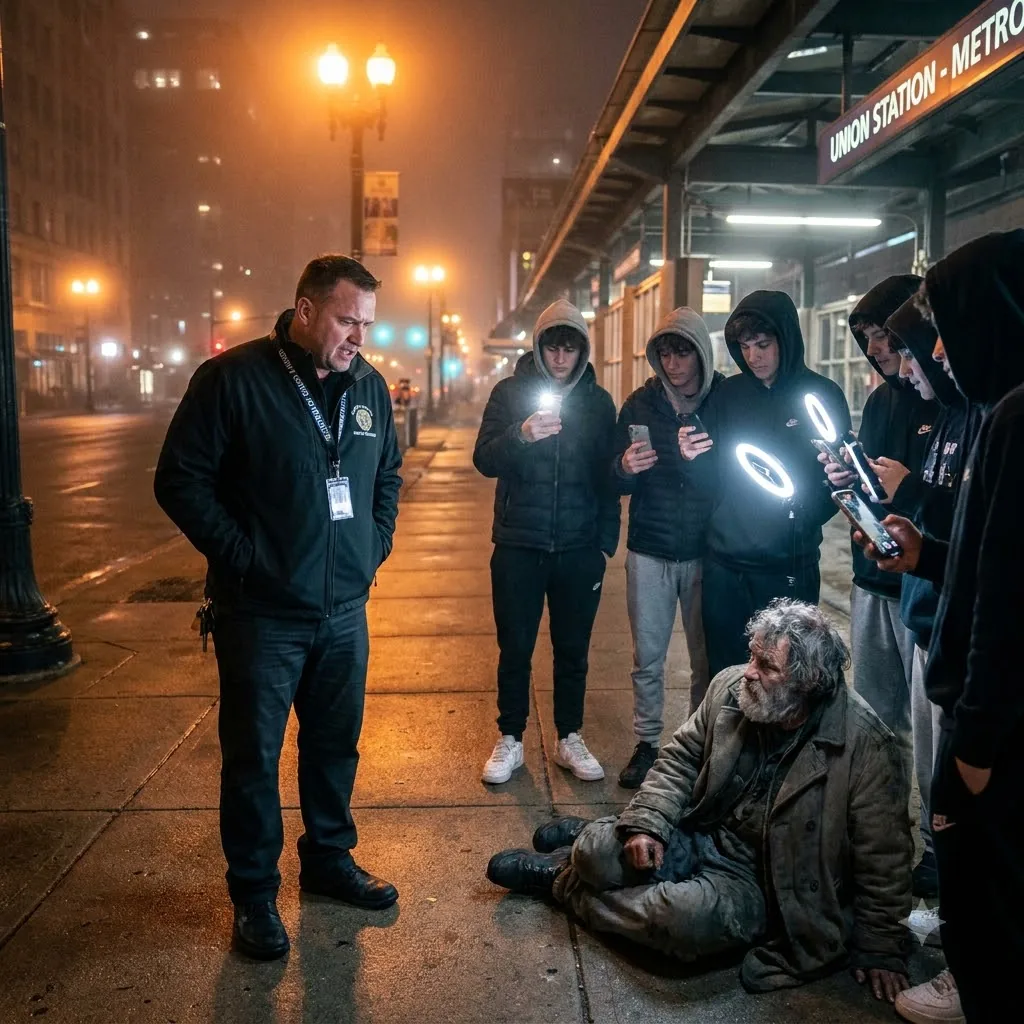
The heavy canvas of the trauma kit slapped against Marcus’s thigh as he sprinted toward the flashing ring of cell phones. He lowered his shoulder, driving his momentum through a dense wall of teenagers who were completely blocking the sidewalk outside the transit station. He expected to find a street fight, but the reality was far more urgent. A man was violently convulsing on the damp pavement, his skull missing the jagged edge of a concrete planter by mere inches.
Marcus dropped his heavy bag to the ground, his knees hitting the wet asphalt with a dull thud. The teenagers had formed a perfect, unmoving circle around the crisis. Their arms were fully extended, screens glowing brightly as they livestreamed the medical emergency to thousands of viewers. Not a single hand reached out to stabilize the flailing victim.
“Move back,” Marcus ordered, his voice booming with the practiced authority of a veteran street outreach counselor. “Give him space right now. Step away and call emergency services.”
The crowd ignored his commands, only shuffling their sneakers backward a few inches to capture a wider angle of the devastation. Their flashlights cut through the evening gloom, throwing harsh, jittering shadows against the brick wall of the station. The man on the ground thrashed wildly, his heavy work boots drumming a frantic, irregular beat against the pavement. His arms whipped outward, knuckles scraping raw and bloody against the rough ground.
Marcus tuned out the indifferent audience. This was his territory, his exact area of expertise. He had spent five long years walking these specific blocks, reversing overdoses, packing wounds, and dragging lost people back from the absolute edge. His muscle memory took over, fluid, fast, and unrelenting. He reached into the chest pocket of his neon-striped outreach vest, tore open a sterile paper packet, and snapped a pair of blue nitrile gloves over his hands.
He grabbed the thick zipper of his medical bag, yanking it open in one smooth motion. The fluorescent light from the transit station caught the neatly organized rows of medical gear inside. He bypassed the trauma bandages and went straight for the airway kit, ready to secure the man’s head and ensure he didn’t swallow his tongue or aspirate on the thick white foam rapidly gathering at the corners of his mouth.
Marcus shifted his weight, preparing to slide his hands beneath the victim’s thrashing neck to protect his cervical spine. The victim’s torso arched upward in a brutal, uncontrollable spasm. The violent motion threw the man’s head back, bringing his face directly into the stark, unforgiving beam of a dozen phone flashlights.
Marcus saw the man’s face.
The furious, life-saving momentum propelling Marcus forward instantly died.
It was a physical sensation, exactly like walking chest-first into a wall of solid ice. His gloved hands stopped abruptly, hovering precisely two inches from the convulsing man’s sweat-drenched temples. The urgent rush of adrenaline that usually sharpened his senses collapsed into a deep, paralyzing dread that locked his joints in place.
He recognized the jagged, uneven scar slicing diagonally through the man’s left eyebrow. He recognized the distinct, crooked slope of the broken nose. He recognized the faded, blocky ink scarred deep into the skin just beneath the thrashing jawline.
Marcus stopped breathing.
The sounds of the city street around him-the distant wail of a police siren, the overlapping, excited chatter of the teenagers, the sickening thud of the man’s elbows striking the pavement-all faded away. The noise was replaced by a hollow, high-pitched ringing that filled Marcus’s skull. He remained frozen in a deep half-crouch, leaning closely over the dying man, perfectly still.
One of the teenagers stepped closer, thrusting a phone mere inches from Marcus’s face to capture his inexplicable hesitation. The illuminated screen displayed a rapidly scrolling chat of viewers demanding to know why the trained professional in the neon vest was just staring at the pavement.
Marcus felt a sheet of cold sweat break out across his shoulder blades. The man on the ground let out a choked, wet gasp, his airway clearly compromised. Standard protocol dictated immediate, aggressive intervention. The man needed to be rolled onto his side. He needed his airway mechanically cleared. He needed the man in the neon vest to do exactly what he was trained and paid to do.
Marcus did not roll him over.
His hands began to tremble violently. The blue nitrile stretched tight over his knuckles squeaked as he curled his fingers into rigid fists. Slowly, he pulled his hands away from the man’s head.
A teenager shouted loudly at him from across the circle, demanding action, telling him to do his job before the guy died on camera.
Marcus ignored the voice. He looked down at the bright orange medical bag resting open by his knees. It contained everything required to keep this man breathing until the paramedics arrived. Marcus reached down, gripped the heavy metal zipper, and pulled it completely shut.
The sharp sound of the zipper echoed loudly in his mind.
He peeled the blue gloves off his hands, snapping the rubber against his wrists with a sharp crack. He let the discarded gloves flutter down onto the wet pavement next to the thrashing victim. With slow, deliberate steps, Marcus backed away. He retreated backward into the glaring ring of camera lenses, leaving the convulsing man entirely alone on the concrete as another terrible, wet gasp ripped from his throat.
The heavy canvas of the trauma kit slapped against Marcus’s thigh as he sprinted toward the flashing ring of cell phones. He lowered his shoulder, driving his momentum through a dense wall of teenagers who were completely blocking the sidewalk outside the transit station. He expected to find a street fight, but the reality was far more urgent. A man was violently convulsing on the damp pavement, his skull missing the jagged edge of a concrete planter by mere inches.
Marcus dropped his heavy bag to the ground, his knees hitting the wet asphalt with a dull thud. The teenagers had formed a perfect, unmoving circle around the crisis. Their arms were fully extended, screens glowing brightly as they livestreamed the medical emergency to thousands of viewers. Not a single hand reached out to stabilize the flailing victim.
“Move back,” Marcus ordered, his voice booming with the practiced authority of a veteran street outreach counselor. “Give him space right now. Step away and call emergency services.”
The crowd ignored his commands, only shuffling their sneakers backward a few inches to capture a wider angle of the devastation. Their flashlights cut through the evening gloom, throwing harsh, jittering shadows against the brick wall of the station. The man on the ground thrashed wildly, his heavy work boots drumming a frantic, irregular beat against the pavement. His arms whipped outward, knuckles scraping raw and bloody against the rough ground.
Marcus tuned out the indifferent audience. This was his territory, his exact area of expertise. He had spent five long years walking these specific blocks, reversing overdoses, packing wounds, and dragging lost people back from the absolute edge. His muscle memory took over, fluid, fast, and unrelenting. He reached into the chest pocket of his neon-striped outreach vest, tore open a sterile paper packet, and snapped a pair of blue nitrile gloves over his hands.
He grabbed the thick zipper of his medical bag, yanking it open in one smooth motion. The fluorescent light from the transit station caught the neatly organized rows of medical gear inside. He bypassed the trauma bandages and went straight for the airway kit, ready to secure the man’s head and ensure he didn’t swallow his tongue or aspirate on the thick white foam rapidly gathering at the corners of his mouth.
Marcus shifted his weight, preparing to slide his hands beneath the victim’s thrashing neck to protect his cervical spine. The victim’s torso arched upward in a brutal, uncontrollable spasm. The violent motion threw the man’s head back, bringing his face directly into the stark, unforgiving beam of a dozen phone flashlights.
Marcus saw the man’s face.
The furious, life-saving momentum propelling Marcus forward instantly died.
It was a physical sensation, exactly like walking chest-first into a wall of solid ice. His gloved hands stopped abruptly, hovering precisely two inches from the convulsing man’s sweat-drenched temples. The urgent rush of adrenaline that usually sharpened his senses collapsed into a deep, paralyzing dread that locked his joints in place.
He recognized the jagged, uneven scar slicing diagonally through the man’s left eyebrow. He recognized the distinct, crooked slope of the broken nose. He recognized the faded, blocky ink scarred deep into the skin just beneath the thrashing jawline.
Marcus stopped breathing.
The sounds of the city street around him-the distant wail of a police siren, the overlapping, excited chatter of the teenagers, the sickening thud of the man’s elbows striking the pavement-all faded away. The noise was replaced by a hollow, high-pitched ringing that filled Marcus’s skull. He remained frozen in a deep half-crouch, leaning closely over the dying man, perfectly still.
One of the teenagers stepped closer, thrusting a phone mere inches from Marcus’s face to capture his inexplicable hesitation. The illuminated screen displayed a rapidly scrolling chat of viewers demanding to know why the trained professional in the neon vest was just staring at the pavement.
Marcus felt a sheet of cold sweat break out across his shoulder blades. The man on the ground let out a choked, wet gasp, his airway clearly compromised. Standard protocol dictated immediate, aggressive intervention. The man needed to be rolled onto his side. He needed his airway mechanically cleared. He needed the man in the neon vest to do exactly what he was trained and paid to do.
Marcus did not roll him over.
His hands began to tremble violently. The blue nitrile stretched tight over his knuckles squeaked as he curled his fingers into rigid fists. Slowly, he pulled his hands away from the man’s head.
A teenager shouted loudly at him from across the circle, demanding action, telling him to do his job before the guy died on camera.
Marcus ignored the voice. He looked down at the bright orange medical bag resting open by his knees. It contained everything required to keep this man breathing until the paramedics arrived. Marcus reached down, gripped the heavy metal zipper, and pulled it completely shut.
The sharp sound of the zipper echoed loudly in his mind.
He peeled the blue gloves off his hands, snapping the rubber against his wrists with a sharp crack. He let the discarded gloves flutter down onto the wet pavement next to the thrashing victim. With slow, deliberate steps, Marcus backed away. He retreated backward into the glaring ring of camera lenses, leaving the convulsing man entirely alone on the concrete as another terrible, wet gasp ripped from his throat.