Story code: ST-000296
Part 4: The Cost of the Record
Carter’s face was mottled purple. “Do you have any idea who I am?!” he screamed at the terrified orderly. He kicked his mahogany desk, the heavy thud vibrating through his expensive microphone and distorting the audio feed into a sharp burst of static.
Admin Alvarez stared at the screen. Her typing had stopped. She slowly raised her hand, pressing a single button on her plastic headset.
“Mr. Hayes,” she said, her voice slicing through the chaotic noise of his tantrum. “I am muting your microphone.”
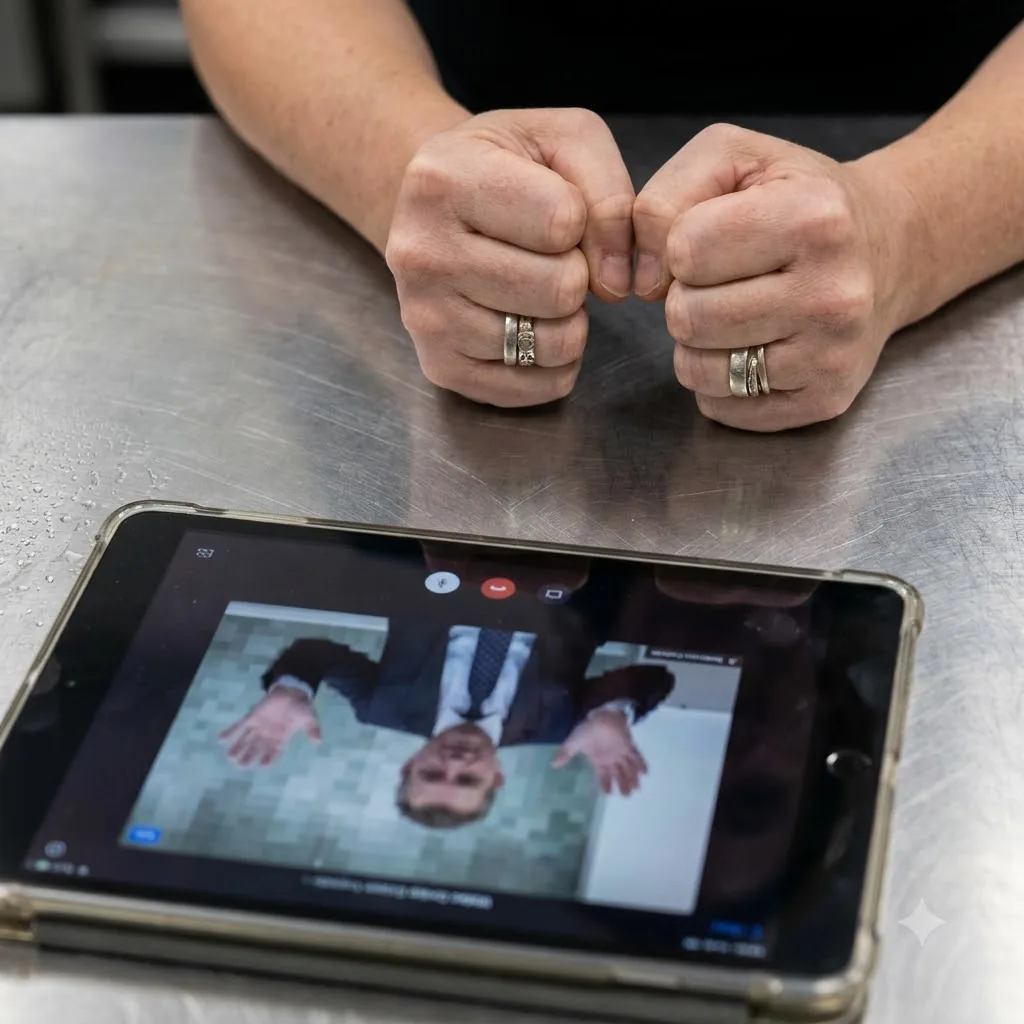
A small red icon of a slashed microphone appeared in the corner of Carter’s video square. His mouth continued to move furiously, spittle flying as he berated the unseen camp staff, but his audio was entirely gone.
Alvarez took a deep, shaky breath. She turned her gaze to the chat log on her secondary monitor. The stark white text Lettie had just typed glowed brightly, reflecting in the mediator’s thick glasses. Her brutal reality sat juxtaposed against the wealthy executive raging over a delayed tennis match.
“The respondent’s motion for immediate dismissal with prejudice is firmly denied,” Alvarez stated, all traces of her previous weary bureaucracy stripped away. “The sworn written testimony submitted by the plaintiff has been secured. It is now encrypted into the permanent federal ledger and cannot be expunged by outside counsel.”
On the monitor, Carter suddenly realized he could no longer be heard. He stopped yelling at the orderly and whipped his head back toward the webcam. He slammed his palms onto his desk, his face a mask of furious panic.
“Pending a full judicial review of both the respondent’s deeply erratic behavior during this deposition and the severe allegations now recorded in the chat transcript,” Alvarez continued smoothly, “this court will reassess the cybersecurity injunction blocking Exhibit A. I am suspending this hearing.”
Carter lunged forward, clawing at his laptop to type something, to regain control, but he was too late.
“This deposition is adjourned,” Alvarez said.
The tablet feed was abruptly cut.
The split-screen vanished, leaving only the dead, black reflection of Lettie’s own exhausted face. The glowing white text-her truth, finally spoken-disappeared into the dark glass.
Lettie sat completely still in the humming silence of the cinderblock room. Her breath plumed in the freezing air. The frantic adrenaline that had fueled her bruised fingers evaporated, leaving behind a hollow ache in her chest.
Behind her, the heavy steel door unlocked with a deafening clack. A correctional deputy stepped into the windowless room, his heavy boots scuffing the concrete. He held a brass key ring that jingled sharply with every movement.
“Time’s up, Barton,” the deputy grunted. He stepped past her and inserted a long key into the side of the metal desk. With a heavy click, the plexiglass barrier disengaged. The deputy reached in, unlatched the heavy, encased tablet that had served as her monitor, and pulled the screen away. He tucked the device under his arm, taking her final connection to the outside world with him.
“Hands,” he ordered.
Lettie stood up. Her knees locked momentarily, stiff from the bitter chill of the steel stool. She held out her raw wrists. The deputy secured the heavy steel cuffs, the cold metal biting into the tender skin she had just described to the mediator.
He guided her out of the barren interrogation room and into the cavernous hallway of the maximum-security wing. The smell of industrial bleach and unwashed bodies hit her instantly. As they walked toward Cell Block 4, the oppressive reality of the prison washed over her. It wasn’t the quiet hum of the hearing room anymore. It was the chaotic, maddening din of three hundred women locked in steel cages-shouting, weeping, and banging heavily against their bars.
They reached her cell. It had been designed for a single inmate but currently housed three. Her cellmates were huddled on their respective metal bunks, wrapped tightly in thin, scratchy wool blankets, staring blankly at the peeling paint.
The deputy unlocked the grated door, shoved her inside, and pulled it shut. The locking mechanism engaged with a heavy thud that rattled the floorboards.
Lettie moved to her designated corner, sitting on the very edge of the rigid mattress. She looked down at her chained hands. The phantom sting of frostbite throbbed in her toes, a permanent, agonizing reminder of the winter Carter had stolen from her.
She had won a battle today. Alvarez had seen the truth. The court record now held her testimony, permanently etched into the federal database where Carter’s lawyers could no longer bury it. His carefully curated illusion of untouchable executive privilege had shattered.
But as Lettie pulled her abrasive blanket tightly around her shoulders, shivering in the drafty, overcrowded cell, a heavy, quiet realization settled deep into her bones. The system was still meticulously built for the wealthy. Carter would return to his plush leather armchair and his hot showers while his lawyers drafted frantic new motions to protect his stolen millions.
Speaking the truth had cost her everything-her home, her dignity, the feeling in her extremities, and her freedom. She had dragged Carter’s corruption into the light, but that light did not warm the freezing concrete beneath her feet. She closed her eyes, listening to the echoing screams of the cell block, waiting in the dark for the slow, grinding wheels of justice to finally turn.