Story code: ST-000298
Part 1: The Staging Environment
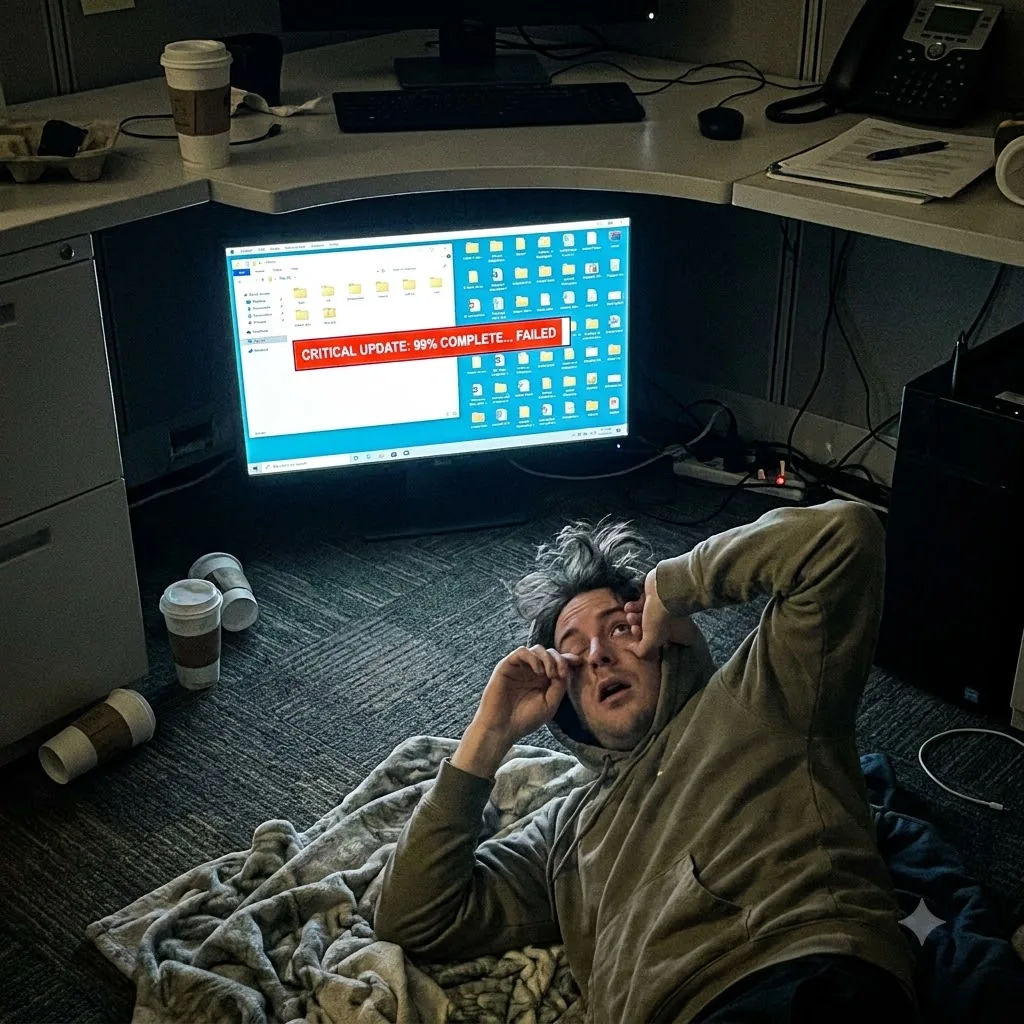
The harsh fluorescent light of the engineering bay bled through the narrow gap under David’s desk, searing his bloodshot eyes the second he jolted awake. He peeled his cheek off the static-charged commercial carpet, his spine emitting a series of sharp pops after spending a fourth consecutive night curled around a dusty cooling fan. His mouth tasted like stale copper and dried energy drinks. He braced his palms against the metal desk legs and hauled his depleted body upright, fighting a severe wave of vertigo. Today was the live state demo for the education board. Four years of eighty-hour weeks, ruined relationships, and missed holidays all culminated at nine o’clock this morning, the exact moment his life-changing equity package finally vested.
David collapsed into his chair, rubbing the deep grit from his eyelids, and tapped his spacebar to wake his monitors. The Lumina staging server dashboard illuminated the dark, empty office. He needed to run one last deployment health check on the digital library infrastructure before the state regulators arrived for the walkthrough. His fingers hovered over the keyboard, stiff and trembling with profound exhaustion, as he pulled up the live database metrics.
The main catalog node was glowing a faint, pulsing yellow instead of the stable green he expected.
He leaned closer to the screen, squinting at the raw data feed. The master index count for the digital curriculum was dropping. The integer ticked down in real-time. Eight hundred thousand. Seven hundred ninety-nine thousand. He refreshed the terminal, assuming a graphical glitch. Another block vanished. He pulled the raw logs and watched the horror unfold in plain text. Exactly 4,200 books had just been actively wiped from the staging environment, completely evaporating from the platform the state was about to purchase. The deletion protocol was silent, completely bypassing the standard warning prompts and executing directly at the root level of the database.
Cold panic flooded his system, instantly overwriting his physical fatigue. He launched a command line interface and initiated a frantic trace on the active deletion script. Lumina had been the target of intense external protests for months, with various fringe political factions threatening to sabotage the rollout over the platform’s diverse educational content. David assumed the absolute worst. A targeted penetration by one of the activist collectives had finally breached the staging layer. He hammered the keys, deploying a network packet sniffer to isolate the origin of the destructive commands. He had to stop the bleed before the core architecture collapsed entirely.
The terminal returned a cascading wall of green text. He locked onto the IP address feeding the massive delete requests. He prepared to blacklist the external node, assuming he would find a masked proxy routing through a foreign server.
The trace completed. The origin point was not external.
The malicious packets were generating locally. David ran a rapid reverse DNS lookup, his heart slamming against his ribs like a trapped bird. The terminal output resolved to a fixed IP address on the seventh floor of their own building. That specific subnet was exclusively reserved for the C-suite executives. The hostile actor wiping the library was sitting directly above him.
David slammed his laptop shut, yanked the power cord from the wall, and tore out of the engineering bay. The hallway was dead quiet at six in the morning. His sneakers squeaked violently against the polished concrete floors as he sprinted toward the central stairwell. He took the steps two at a time, clutching the warm aluminum chassis of his computer against his chest. He needed to warn Marcus. The CEO had promised him this equity, promised him permanent financial security if they just got the state contract signed today. If the protesters had somehow cloned an executive credential to destroy the demo from the inside, Marcus needed to authorize a hard server rollback immediately, before the data loss became permanent.
He burst through the seventh-floor fire doors and sprinted down the executive wing. The heavy frosted glass door to the CEO’s corner office was cracked open. A single desk lamp cast a long, sharp shadow across the imported rug. David shoved the door wide, entirely breathless, preparing to shout the catastrophic news to his boss.
He froze just inside the threshold, his warning dying in his throat.
Marcus sat perfectly upright behind his massive mahogany desk, fully dressed in his tailored demo-day suit, his hands resting calmly on his own illuminated keyboard. A massive secondary monitor faced the doorway, positioned so David could see every pixel clearly. On that screen, the exact same deletion script David had just traced was running in plain text, actively authorized by Marcus’s personal administrator account. The CEO lifted his hand from the mouse, clicked the final execution prompt, and looked up from the plummeting book count to meet David’s horrified stare.
The harsh fluorescent light of the engineering bay bled through the narrow gap under David’s desk, searing his bloodshot eyes the second he jolted awake. He peeled his cheek off the static-charged commercial carpet, his spine emitting a series of sharp pops after spending a fourth consecutive night curled around a dusty cooling fan. His mouth tasted like stale copper and dried energy drinks. He braced his palms against the metal desk legs and hauled his depleted body upright, fighting a severe wave of vertigo. Today was the live state demo for the education board. Four years of eighty-hour weeks, ruined relationships, and missed holidays all culminated at nine o’clock this morning, the exact moment his life-changing equity package finally vested.
David collapsed into his chair, rubbing the deep grit from his eyelids, and tapped his spacebar to wake his monitors. The Lumina staging server dashboard illuminated the dark, empty office. He needed to run one last deployment health check on the digital library infrastructure before the state regulators arrived for the walkthrough. His fingers hovered over the keyboard, stiff and trembling with profound exhaustion, as he pulled up the live database metrics.
The main catalog node was glowing a faint, pulsing yellow instead of the stable green he expected.
He leaned closer to the screen, squinting at the raw data feed. The master index count for the digital curriculum was dropping. The integer ticked down in real-time. Eight hundred thousand. Seven hundred ninety-nine thousand. He refreshed the terminal, assuming a graphical glitch. Another block vanished. He pulled the raw logs and watched the horror unfold in plain text. Exactly 4,200 books had just been actively wiped from the staging environment, completely evaporating from the platform the state was about to purchase. The deletion protocol was silent, completely bypassing the standard warning prompts and executing directly at the root level of the database.
Cold panic flooded his system, instantly overwriting his physical fatigue. He launched a command line interface and initiated a frantic trace on the active deletion script. Lumina had been the target of intense external protests for months, with various fringe political factions threatening to sabotage the rollout over the platform’s diverse educational content. David assumed the absolute worst. A targeted penetration by one of the activist collectives had finally breached the staging layer. He hammered the keys, deploying a network packet sniffer to isolate the origin of the destructive commands. He had to stop the bleed before the core architecture collapsed entirely.
The terminal returned a cascading wall of green text. He locked onto the IP address feeding the massive delete requests. He prepared to blacklist the external node, assuming he would find a masked proxy routing through a foreign server.
The trace completed. The origin point was not external.
The malicious packets were generating locally. David ran a rapid reverse DNS lookup, his heart slamming against his ribs like a trapped bird. The terminal output resolved to a fixed IP address on the seventh floor of their own building. That specific subnet was exclusively reserved for the C-suite executives. The hostile actor wiping the library was sitting directly above him.
David slammed his laptop shut, yanked the power cord from the wall, and tore out of the engineering bay. The hallway was dead quiet at six in the morning. His sneakers squeaked violently against the polished concrete floors as he sprinted toward the central stairwell. He took the steps two at a time, clutching the warm aluminum chassis of his computer against his chest. He needed to warn Marcus. The CEO had promised him this equity, promised him permanent financial security if they just got the state contract signed today. If the protesters had somehow cloned an executive credential to destroy the demo from the inside, Marcus needed to authorize a hard server rollback immediately, before the data loss became permanent.
He burst through the seventh-floor fire doors and sprinted down the executive wing. The heavy frosted glass door to the CEO’s corner office was cracked open. A single desk lamp cast a long, sharp shadow across the imported rug. David shoved the door wide, entirely breathless, preparing to shout the catastrophic news to his boss.
He froze just inside the threshold, his warning dying in his throat.
Marcus sat perfectly upright behind his massive mahogany desk, fully dressed in his tailored demo-day suit, his hands resting calmly on his own illuminated keyboard. A massive secondary monitor faced the doorway, positioned so David could see every pixel clearly. On that screen, the exact same deletion script David had just traced was running in plain text, actively authorized by Marcus’s personal administrator account. The CEO lifted his hand from the mouse, clicked the final execution prompt, and looked up from the plummeting book count to meet David’s horrified stare.