Story code: ST-000304
Part 1: The Weight of Debris
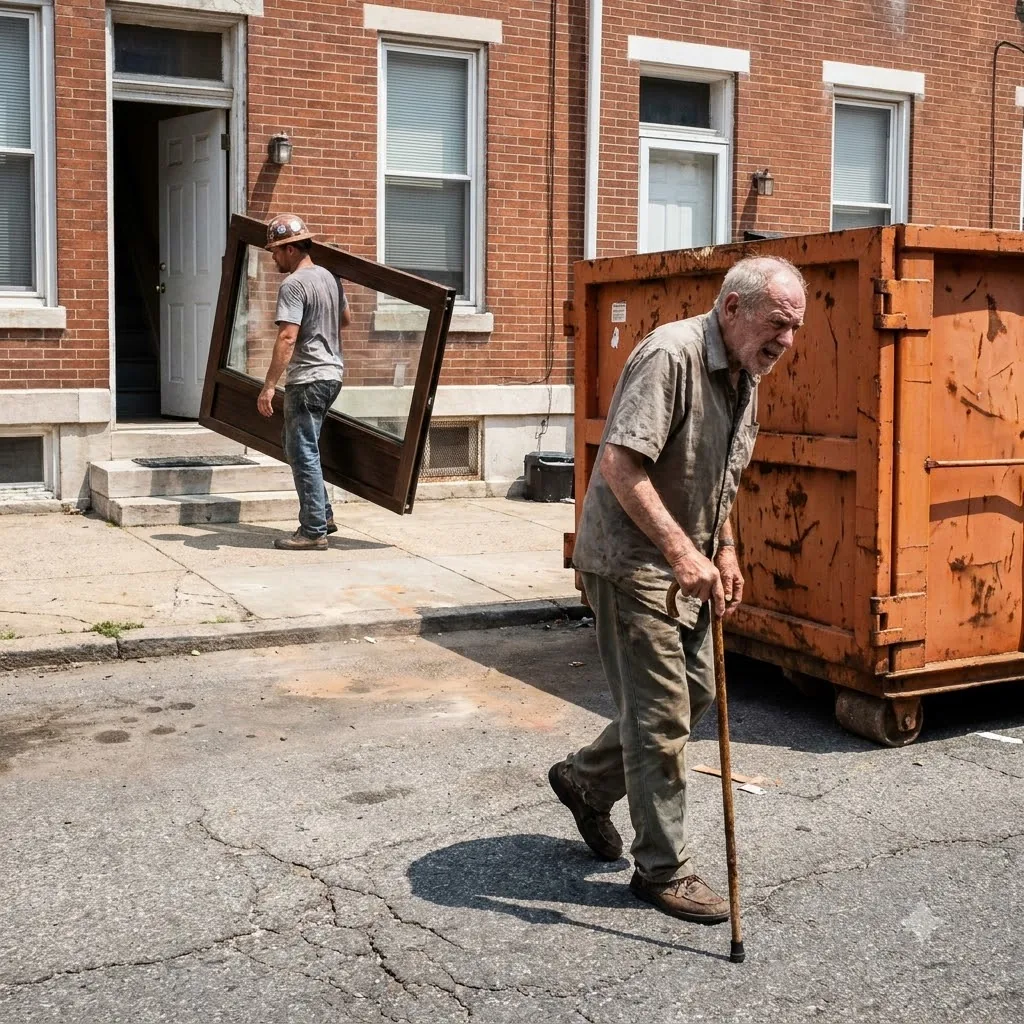
The rhythmic, bone-jarring thud of a sledgehammer striking brick yanked Marcus out of his front door and onto his narrow concrete porch. Across the street, a massive steel roll-off dumpster squatted on the cracked asphalt, receiving a violent shower of shattered wood and familiar fabric. The suffocating summer heat already pressed down on the block like a damp woolen blanket, but it was the aggressive noise of destruction that made it hard for Marcus to pull air into his lungs. Another tremendous crash echoed off the adjacent brick rowhouses as a crew of men in neon vests hurled armfuls of belongings from the second-story window of the house directly opposite his own.
Marcus gripped the worn wooden handle of his cane. His right knee throbbed, a deep and permanent ache exacerbated by the heavy morning humidity, but he forced his stiff joints into motion. He navigated the three steps down to the sidewalk, every footfall sending a sharp, electric spike of pain shooting up through his hip. The air in the street tasted heavily of pulverized plaster and decades-old dust, coating his tongue with the chalky flavor of demolition. The construction crew was not just renovating the old rowhouse. They were aggressively gutting it with a ruthless, frantic energy, stripping out every trace of the history it held.
A broad-shouldered man in a sweat-stained gray shirt stood on the front stoop, casually tossing a stack of thick hardcover books into the metal bin. The spines cracked and tore as they hit the rusted bottom. Marcus recognized the faded blue covers from countless evenings sitting in that very living room. He knew exactly whose shelves those books had come from. The realization hit him with the force of a physical blow, demanding immediate action.
The narrow two-lane street suddenly felt miles wide. Marcus gritted his teeth, shifting his weight forward, forcing his bad leg to bear his weight. The rubber tip of his cane slipped slightly on a patch of uneven gravel scattered by the work trucks, sending a fresh jolt of agony through his kneecap. He caught his balance, gasping in the thick, stagnant air, and kept moving forward. He kept his eyes locked on the open front door of the neighboring house, watching as a procession of strangers hauled out the physical remnants of a life he knew incredibly well.
A carved mahogany end table splintered into jagged pieces as it was heaved mercilessly over the dumpster rim. A cardboard box overflowing with porcelain teacups and framed photographs followed, the delicate crash of shattering glass and ceramic barely audible over the relentless, rhythmic pounding of the sledgehammers inside the gutted walls. This was the sound of the neighborhood being erased. For months, the block of historic brick facades had been slowly falling to flippers and out-of-town developers, their aggressive, rapid-fire renovations turning familiar, lived-in homes into sterile, high-priced shells. But this house was different. The possessions being treated like disposable garbage were not just abandoned debris. They were a legacy.
Marcus pushed himself harder, sweat stinging his eyes and soaking the collar of his shirt. His breathing grew ragged, his chest heaving with the exertion of the awkward, hurried march. He was only halfway across the baking asphalt, the heat radiating up through the thin soles of his shoes. His knuckles turned white around the handle of his cane as he fought against the physical toll the movement was taking on his body.
A new figure emerged from the shadowed doorway of the gutted house. The man wore heavy work boots and a dusty baseball cap pulled low over his eyes, and he was visibly struggling under the awkward weight of a large object. Marcus stopped in the middle of the street, lifting a trembling hand to wipe a line of sweat from his forehead to clear his vision. The contractor was carrying a heavy, glass-fronted shadowbox out to the trash.
The dark, polished wood of the frame caught the harsh mid-morning sunlight, reflecting the glare. Inside the thick glass, resting against a faded velvet backing, was something deeply significant. Marcus knew exactly what the shadowbox held, even from a distance. The contractor did not pause to examine it. He did not handle the heavy frame with any degree of care or respect. He simply marched straight toward the towering edge of the roll-off dumpster, shifting his grip on the polished wood to heave the shadowbox up and over the side.
Marcus ignored the screaming pain radiating up his leg. He abandoned his measured, limping pace entirely and lunged forward with a sudden burst of desperate momentum. The remaining distance closed in a blur of frantic motion. The contractor raised the heavy frame, resting it for a fraction of a second on the rusted upper edge of the bin, preparing to tip it forward into the chaotic wreckage below.
Marcus let go of his cane. The wood clattered sharply onto the hot asphalt as he threw his entire upper body weight over the rusted rim of the metal dumpster, his bad knee completely buckling beneath him as he reached out his bare hands to intercept the falling frame.
The rhythmic, bone-jarring thud of a sledgehammer striking brick yanked Marcus out of his front door and onto his narrow concrete porch. Across the street, a massive steel roll-off dumpster squatted on the cracked asphalt, receiving a violent shower of shattered wood and familiar fabric. The suffocating summer heat already pressed down on the block like a damp woolen blanket, but it was the aggressive noise of destruction that made it hard for Marcus to pull air into his lungs. Another tremendous crash echoed off the adjacent brick rowhouses as a crew of men in neon vests hurled armfuls of belongings from the second-story window of the house directly opposite his own.
Marcus gripped the worn wooden handle of his cane. His right knee throbbed, a deep and permanent ache exacerbated by the heavy morning humidity, but he forced his stiff joints into motion. He navigated the three steps down to the sidewalk, every footfall sending a sharp, electric spike of pain shooting up through his hip. The air in the street tasted heavily of pulverized plaster and decades-old dust, coating his tongue with the chalky flavor of demolition. The construction crew was not just renovating the old rowhouse. They were aggressively gutting it with a ruthless, frantic energy, stripping out every trace of the history it held.
A broad-shouldered man in a sweat-stained gray shirt stood on the front stoop, casually tossing a stack of thick hardcover books into the metal bin. The spines cracked and tore as they hit the rusted bottom. Marcus recognized the faded blue covers from countless evenings sitting in that very living room. He knew exactly whose shelves those books had come from. The realization hit him with the force of a physical blow, demanding immediate action.
The narrow two-lane street suddenly felt miles wide. Marcus gritted his teeth, shifting his weight forward, forcing his bad leg to bear his weight. The rubber tip of his cane slipped slightly on a patch of uneven gravel scattered by the work trucks, sending a fresh jolt of agony through his kneecap. He caught his balance, gasping in the thick, stagnant air, and kept moving forward. He kept his eyes locked on the open front door of the neighboring house, watching as a procession of strangers hauled out the physical remnants of a life he knew incredibly well.
A carved mahogany end table splintered into jagged pieces as it was heaved mercilessly over the dumpster rim. A cardboard box overflowing with porcelain teacups and framed photographs followed, the delicate crash of shattering glass and ceramic barely audible over the relentless, rhythmic pounding of the sledgehammers inside the gutted walls. This was the sound of the neighborhood being erased. For months, the block of historic brick facades had been slowly falling to flippers and out-of-town developers, their aggressive, rapid-fire renovations turning familiar, lived-in homes into sterile, high-priced shells. But this house was different. The possessions being treated like disposable garbage were not just abandoned debris. They were a legacy.
Marcus pushed himself harder, sweat stinging his eyes and soaking the collar of his shirt. His breathing grew ragged, his chest heaving with the exertion of the awkward, hurried march. He was only halfway across the baking asphalt, the heat radiating up through the thin soles of his shoes. His knuckles turned white around the handle of his cane as he fought against the physical toll the movement was taking on his body.
A new figure emerged from the shadowed doorway of the gutted house. The man wore heavy work boots and a dusty baseball cap pulled low over his eyes, and he was visibly struggling under the awkward weight of a large object. Marcus stopped in the middle of the street, lifting a trembling hand to wipe a line of sweat from his forehead to clear his vision. The contractor was carrying a heavy, glass-fronted shadowbox out to the trash.
The dark, polished wood of the frame caught the harsh mid-morning sunlight, reflecting the glare. Inside the thick glass, resting against a faded velvet backing, was something deeply significant. Marcus knew exactly what the shadowbox held, even from a distance. The contractor did not pause to examine it. He did not handle the heavy frame with any degree of care or respect. He simply marched straight toward the towering edge of the roll-off dumpster, shifting his grip on the polished wood to heave the shadowbox up and over the side.
Marcus ignored the screaming pain radiating up his leg. He abandoned his measured, limping pace entirely and lunged forward with a sudden burst of desperate momentum. The remaining distance closed in a blur of frantic motion. The contractor raised the heavy frame, resting it for a fraction of a second on the rusted upper edge of the bin, preparing to tip it forward into the chaotic wreckage below.
Marcus let go of his cane. The wood clattered sharply onto the hot asphalt as he threw his entire upper body weight over the rusted rim of the metal dumpster, his bad knee completely buckling beneath him as he reached out his bare hands to intercept the falling frame.