Story code: ST-000303
Part 4: The Refusal
The heavy silence in the bakery was broken only by the sharp, metallic snap of a silver laptop being closed.
Elias did not look away from Julian’s flushed, blotchy face, but he heard the scrape of a chair against the pristine subway tile. The woman in the corner slung her leather bag over her shoulder. She walked toward the glass door, keeping her eyes fixed firmly on the floor, deliberately giving Julian a wide berth. The digital bell chimed a polite, sanitized farewell as she hurried out onto the sidewalk, her departure heavy with unspoken judgment.
Julian watched her go, the violent crimson in his cheeks draining into a sickly, mottled pale. His mouth opened, but the rehearsed, aggressive cheerfulness was gone. He had shattered his own carefully curated aesthetic, exposing the ruthless gentrification he championed beneath the artisanal flour.
Elias did not offer him a single word. There was nothing left to discuss, no debate to be had about synergy or neighborhood revitalization. The truth was out, laid bare on the immaculate quartz counter alongside the eviction notice.
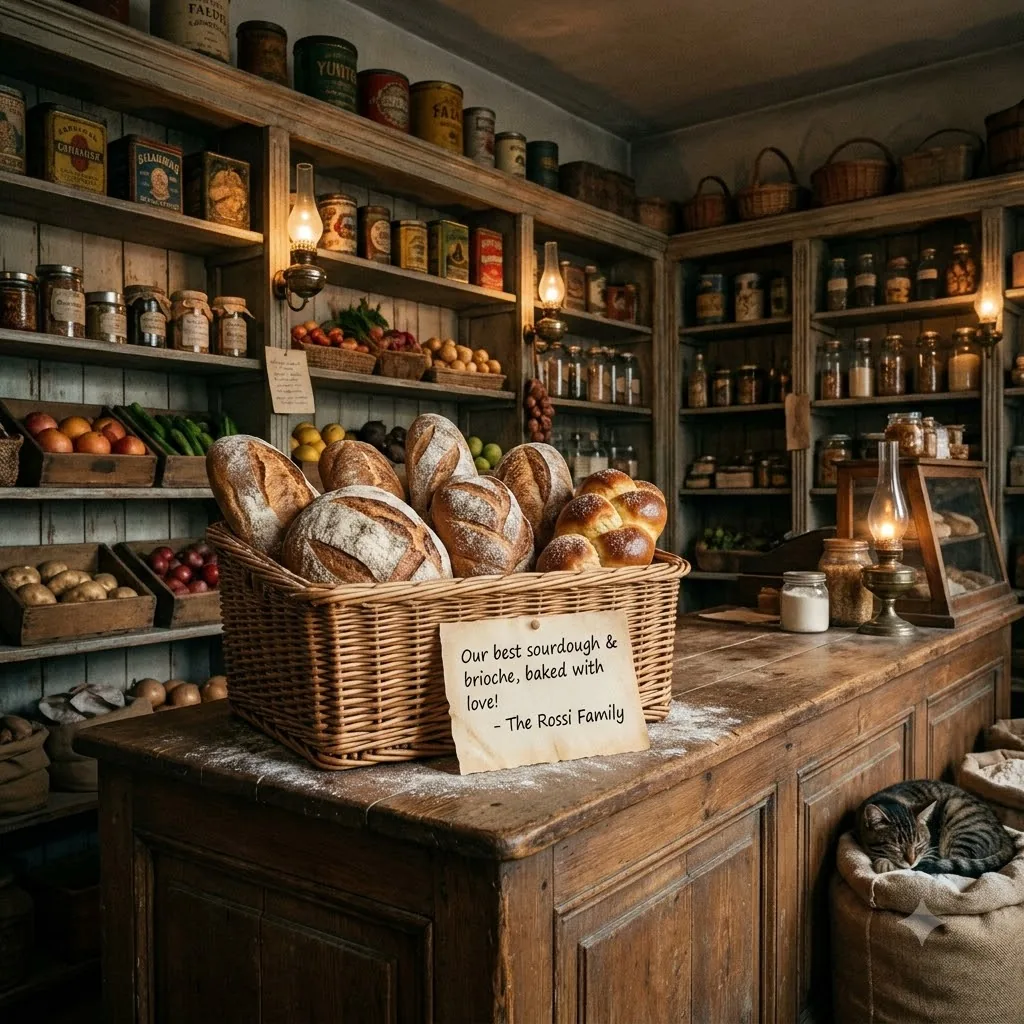
Moving with deliberate, slow precision, Elias reached out and took hold of the massive wicker basket. He left the manila envelope and the glossy aesthetic brochure exactly where they lay, right next to the damning blueprints. He hoisted the heavy, flour-dusted arrangement into his arms, turning his back on the gleaming copper piping and reclaimed wood.
He pushed through the heavy glass door, stepping out of the climate-controlled chill and back into the heavy, humid reality of the afternoon sun. He didn’t turn right to enter his own grocery. Instead, Elias kept walking, turning the corner into the narrow, shadowed alleyway that ran behind the block.
The alley smelled deeply of damp cardboard, stale rainwater, and the sharp tang of overripe citrus. It was a working street’s artery, entirely devoid of Edison bulbs. Elias marched down the cracked asphalt until he reached the battered green industrial dumpster that sat behind his stockroom door.
He lifted the extravagant wicker basket over the rusted metal rim.
With a sudden, violent heave, Elias tipped it forward. The intricately scored sourdough boules tumbled out first, bouncing off black plastic trash bags. The heavy glass jar of expensive, small-batch preserves shattered against the metal floor, sending a spray of dark berry compote across discarded heads of bruised lettuce. Chocolate croissants and twisted artisan baguettes rained down into the refuse, their laminated layers and mirror glazes instantly ruined by the grease and grime of the bin.
Elias shook the wicker basket until every last crumb was gone. He tossed the empty basket in after them, watching it settle atop the pile of discarded luxury. The heavy, buttery scent of expensive baking was swallowed completely by the honest, familiar decay of the alleyway.
He brushed the white flour off his calloused hands and unlocked the heavy steel door to his back room.
Stepping into the dim, cool air of his stockroom, Elias navigated the narrow pathways between stacks of generic canned goods and bulk bags of rice. He walked through the swinging wooden doors and emerged behind his scratched Formica counter.
The grocery was empty, silent except for the low, erratic hum of the neon beer sign in the front window. Elias stood in his familiar place, resting his palms against the cool metal of the cash register. He looked out over his store. Julian saw only a filthy, rotting bodega dragging down property values. Julian saw a space to be gutted, stripped to the concrete, and transformed into a tasting room for people who could afford twelve-dollar loaves of bread.
But Elias saw the scuff marks on the linoleum where three generations of his family had paced. He saw the exact shelf where Mrs. Higgins knew she could find pinto beans she could afford on a fixed pension. He saw the credit ledger tucked beneath the counter, filled with the names of working-class families who relied on him to make it to payday.
The forty-eight-hour deadline loomed over him, a ticking clock orchestrated by a faceless holding company and a ruthless neighbor. The eviction process would likely begin on Monday. The fight ahead would be grueling, and perhaps ultimately impossible to win against a corporate landlord with endless resources.
But Elias was not going to sign their paper. He was not going to pay for his own destruction, and he was not going to surrender the space quietly to save Julian the embarrassment of a fight.
Elias reached under the counter and pulled out a clean, damp rag. He wiped down the Formica, clearing away the lingering dust of white flour that Julian’s basket had left behind. When the surface was clean, he pulled out his battered credit ledger, opened it to the day’s date, and stood tall, watching the front door, waiting for the neighborhood to come in.