Story code: ST-000335
Part 1: The Sound Check
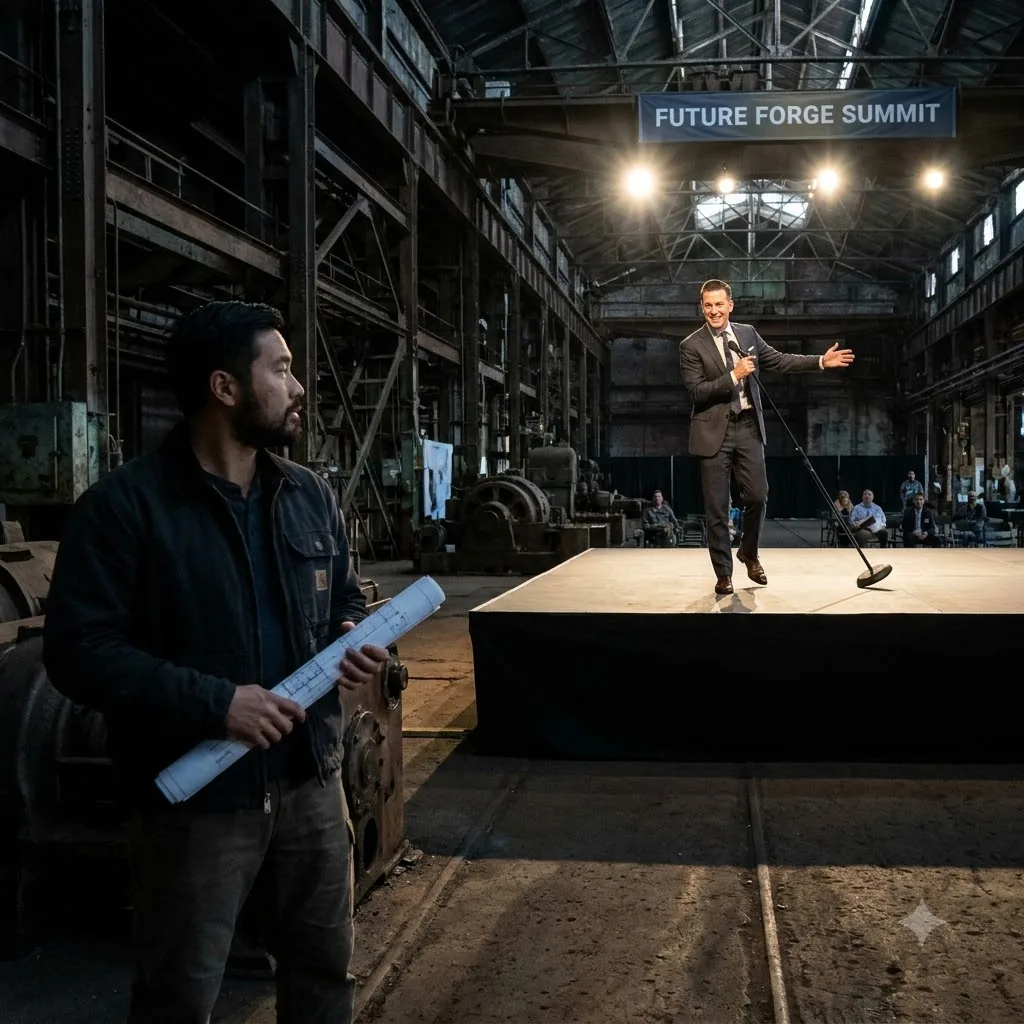
High-pitched feedback screeched through the cavernous space of the retrofitted Oakhaven steel mill, forcing the hundred-odd locals in the folding chairs to wince and cover their ears. David stood dead center at the back of the room, his knuckles turning white around the thick cardboard tube containing the structural blueprints, as he watched his colleague Blake slap the side of the podium microphone. Blake adjusted his tailored linen jacket-a garment completely out of place beneath the rust-stained industrial gantry cranes-and tapped the metal grill, sending a fresh wave of booming static over the audience.
This town hall was the keystone of the mill’s redevelopment. David knew the exact load-bearing capacity of every iron pillar in the building because he had grown up three streets over, playing in the shadow of those very smokestacks. Blake, on the other hand, had arrived in town exactly two hours ago.
Blake leaned away from the squealing floor monitors and shielded his eyes from the stage lights, scanning the shadowy back rows of the audience. He spotted David standing near the emergency exit.
A wide, practiced smile spread across Blake’s face. He leaned carefully toward the problematic microphone, keeping his voice slick and loud enough to cut through the hum. He told everyone to hang tight, announcing that his man David in the back was going to come up and play AV tech for a second. He added a chuckle and told David to hustle up and fix the wires so they could get the show on the road.
The screeching audio loop held for a second. Then, row by row, the entire room turned around to look at the back wall.
David froze under the collective gaze of his hometown. He saw Mrs. Gable, who used to slip him extra pastries when he delivered her newspaper. He saw Mr. Hendry, his high school physics teacher. He saw the shift workers and shop owners who had trusted him when he promised the corporate buyout of the mill would bring a community center and a modernized fabrication plant. They were all staring at him, watching the hometown engineer get summoned to the stage like an intern.
Just three days ago, the regional vice president had pulled David into a glass-walled office to explain that Blake was receiving the newly vacant Director of Operations role. David had logged sixty-hour weeks for four years straight, drafting every structural conversion plan for the Oakhaven project. Blake had a reputation for taking three-hour lunches, missing critical deadline meetings, and outsourcing his risk-assessment reports to David. The vice president had patted David on the arm and explained that Blake simply had the right ‘culture fit’ for executive leadership.
Now, the new Director of Operations was failing to operate a dynamic microphone, and he was using his title to humiliate David in front of his own neighbors.
David tucked the heavy blueprint tube under his arm. He walked down the center aisle, feeling the wooden floorboards creak under his work boots. The silence in the room was heavier than the audio feedback. Every step felt like wading through wet concrete. Blake stood at the podium with his hands resting casually on the edges, looking down at David with an expression of mild amusement.
When David reached the wooden stairs at the side of the stage, Blake stepped back and gestured grandly at the mess of cables taped to the floor. He leaned over without the mic and told David to make it quick because the locals were getting restless.
David set the cardboard tube down on the edge of the stage. He crouched beside the speaker monitor. The problem was entirely obvious to anyone who possessed basic spatial awareness. Blake had dragged the microphone stand directly in front of the amplification monitor while simultaneously turning the mixer gain up to its maximum limit. David reached for the small black mixing board tucked behind the podium drape. He rolled the gain dial back down to a normal level and pushed the monitor away from the microphone stand.
He stood up and tapped the mic. A clean, dull thump echoed through the room without a single trace of feedback.
Blake clapped him on the shoulder, hard. He leaned into the mic and told the crowd to give a hand for the IT department. A few uncomfortable chuckles rippled through the front row. David stepped back to retrieve his blueprints, intending to return to the shadows, but his eyes caught the glowing screen of Blake’s open laptop on the podium shelf.
The laptop was driving the massive projection screen suspended above the stage. Blake clicked a button on his remote presenter, bringing up the first slide of the deck.
David stared at the monitor. The title on the slide read Phase One Material Extraction Protocol.
There were no diagrams of the proposed community center. There were no schematics for the modernized fabrication floor David had spent six months designing. Instead, the screen displayed a color-coded map of the mill divided into salvage sectors. The structural pillars David had rigorously tested were marked with red tags for scrap steel value. The copper wiring grid was highlighted with estimated market extraction yields.
Blake cleared his throat, flashed his brightest smile at the front row, and rested his thumb on the presentation clicker.
David reached for his blueprint tube, his fingers brushing the cardboard, just as Blake pressed the button and the massive words Asset Liquidation Schedule filled the projection screen above them.
High-pitched feedback screeched through the cavernous space of the retrofitted Oakhaven steel mill, forcing the hundred-odd locals in the folding chairs to wince and cover their ears. David stood dead center at the back of the room, his knuckles turning white around the thick cardboard tube containing the structural blueprints, as he watched his colleague Blake slap the side of the podium microphone. Blake adjusted his tailored linen jacket-a garment completely out of place beneath the rust-stained industrial gantry cranes-and tapped the metal grill, sending a fresh wave of booming static over the audience.
This town hall was the keystone of the mill’s redevelopment. David knew the exact load-bearing capacity of every iron pillar in the building because he had grown up three streets over, playing in the shadow of those very smokestacks. Blake, on the other hand, had arrived in town exactly two hours ago.
Blake leaned away from the squealing floor monitors and shielded his eyes from the stage lights, scanning the shadowy back rows of the audience. He spotted David standing near the emergency exit.
A wide, practiced smile spread across Blake’s face. He leaned carefully toward the problematic microphone, keeping his voice slick and loud enough to cut through the hum. He told everyone to hang tight, announcing that his man David in the back was going to come up and play AV tech for a second. He added a chuckle and told David to hustle up and fix the wires so they could get the show on the road.
The screeching audio loop held for a second. Then, row by row, the entire room turned around to look at the back wall.
David froze under the collective gaze of his hometown. He saw Mrs. Gable, who used to slip him extra pastries when he delivered her newspaper. He saw Mr. Hendry, his high school physics teacher. He saw the shift workers and shop owners who had trusted him when he promised the corporate buyout of the mill would bring a community center and a modernized fabrication plant. They were all staring at him, watching the hometown engineer get summoned to the stage like an intern.
Just three days ago, the regional vice president had pulled David into a glass-walled office to explain that Blake was receiving the newly vacant Director of Operations role. David had logged sixty-hour weeks for four years straight, drafting every structural conversion plan for the Oakhaven project. Blake had a reputation for taking three-hour lunches, missing critical deadline meetings, and outsourcing his risk-assessment reports to David. The vice president had patted David on the arm and explained that Blake simply had the right ‘culture fit’ for executive leadership.
Now, the new Director of Operations was failing to operate a dynamic microphone, and he was using his title to humiliate David in front of his own neighbors.
David tucked the heavy blueprint tube under his arm. He walked down the center aisle, feeling the wooden floorboards creak under his work boots. The silence in the room was heavier than the audio feedback. Every step felt like wading through wet concrete. Blake stood at the podium with his hands resting casually on the edges, looking down at David with an expression of mild amusement.
When David reached the wooden stairs at the side of the stage, Blake stepped back and gestured grandly at the mess of cables taped to the floor. He leaned over without the mic and told David to make it quick because the locals were getting restless.
David set the cardboard tube down on the edge of the stage. He crouched beside the speaker monitor. The problem was entirely obvious to anyone who possessed basic spatial awareness. Blake had dragged the microphone stand directly in front of the amplification monitor while simultaneously turning the mixer gain up to its maximum limit. David reached for the small black mixing board tucked behind the podium drape. He rolled the gain dial back down to a normal level and pushed the monitor away from the microphone stand.
He stood up and tapped the mic. A clean, dull thump echoed through the room without a single trace of feedback.
Blake clapped him on the shoulder, hard. He leaned into the mic and told the crowd to give a hand for the IT department. A few uncomfortable chuckles rippled through the front row. David stepped back to retrieve his blueprints, intending to return to the shadows, but his eyes caught the glowing screen of Blake’s open laptop on the podium shelf.
The laptop was driving the massive projection screen suspended above the stage. Blake clicked a button on his remote presenter, bringing up the first slide of the deck.
David stared at the monitor. The title on the slide read Phase One Material Extraction Protocol.
There were no diagrams of the proposed community center. There were no schematics for the modernized fabrication floor David had spent six months designing. Instead, the screen displayed a color-coded map of the mill divided into salvage sectors. The structural pillars David had rigorously tested were marked with red tags for scrap steel value. The copper wiring grid was highlighted with estimated market extraction yields.
Blake cleared his throat, flashed his brightest smile at the front row, and rested his thumb on the presentation clicker.
David reached for his blueprint tube, his fingers brushing the cardboard, just as Blake pressed the button and the massive words Asset Liquidation Schedule filled the projection screen above them.