Story code: ST-000343
Part 1: The Midnight Summons
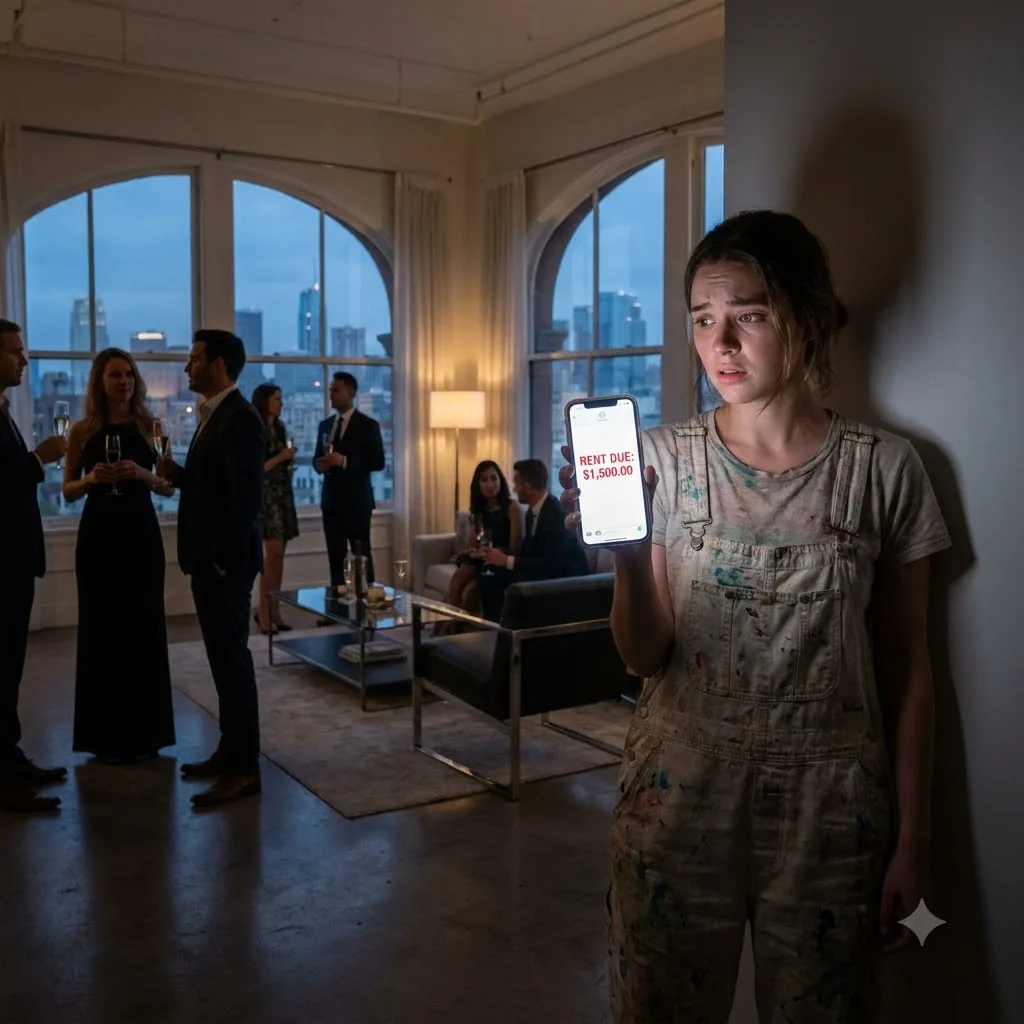
I folded a third smoked salmon blini into a thick white cocktail napkin and shoved it deep into the pocket of my oversized coat. Around me, the cavernous Brooklyn loft buzzed with the careless laughter of people who had never checked a bank balance in their lives. Julian, tonight’s featured artist, was currently explaining his abstract sculptures to a group of collectors, his trust fund practically radiating from his perfectly tailored linen suit. I grabbed two more mini-quiches from a passing silver tray. I had sacrificed everything to be part of this world, dropping out of my second year of medical school to pursue painting, a decision that effectively shattered my immigrant parents’ hearts. Now, I was stealing hors d’oeuvres just to secure my meals for the weekend.
My phone vibrated violently against my hip, startling me so badly I nearly dropped a quiche onto the polished concrete floor. I pulled it out, bracing myself for another automated overdraft alert. Instead, the screen displayed a text from Arthur.
Arthur was my older brother, a newly minted cardiothoracic fellow, and the undisputed golden child of our family. We had not spoken in six months, not since the explosive shouting match at Thanksgiving over my career choices. He rarely texted me at all, let alone on a Friday night.
The message was brief. *Come to the diner now. Mom’s doing it.*
I stared at the glowing letters as a cold knot of dread tightened in my stomach. The cryptic phrase offered zero context, but the urgency was deafening. My immediate assumption was the absolute worst case scenario. I had ruined them. My parents had poured every ounce of profit from their small Queens diner into my undergraduate degree and my aborted medical school tuition. For the past two years, I had lived with the suffocating terror that my selfish pivot to the art world had pushed their finances over the edge. His frantic summons felt like the final gavel falling on our business.
I did not bother saying goodbye to Julian. I slipped out the heavy steel door of the loft and ran three blocks to the subway station, the stolen pastries flattening in my pocket. The ride to Queens took an agonizing forty minutes. Sitting under the flickering lights of the N train, I braced myself to find the diner foreclosed and padlocked. I pictured my mother weeping over unpaid bills, forced to surrender the only livelihood she and my father had known since arriving in America.
I sprinted the last four blocks from the Astoria station. The neighborhood was quiet, the usual hum of midnight traffic muted by a heavy layer of overcast clouds. I turned the corner onto our street, bracing myself for the familiar neon glow of the ‘OPEN 24 HOURS’ sign reflecting off the pavement.
The sign was completely dark.
I slowed to a walk, my breath catching in my throat. The diner, a steadfast fixture for three decades, looked like a tomb. I stepped closer to the front facade. The large plate-glass windows, usually offering a warm view of the counter and the pie displays, were entirely blacked out. Someone had taped thick, opaque sheets of brown butcher paper over every single inch of the glass. The edges were sealed tight with heavy strips of silver duct tape, ensuring no light escaped and no eyes peered inside.
My hands shook as I reached for my keychain. I still carried the brass key to the side entrance. I fumbled with the lock, half expecting the cylinder to have been changed by a bank representative. The key slid in smoothly and turned with a heavy click.
I pushed the heavy metal door open and stepped into the cramped back hallway leading to the kitchen. The familiar smells of stale grease and industrial coffee were gone, replaced by the sharp, metallic scent of packing tape and cardboard. The kitchen was silent, the fryers cold and emptied of oil, the flat top grill scrubbed to bare steel.
I moved past the prep stations and pushed through the swinging double doors into the main dining room, freezing the moment I took in the space.
The red vinyl booths had been completely dismantled and pushed to the center of the room. In their place, dominating the entirety of the dining area, were moving boxes. They were heavy-duty cardboard boxes, stacked in precarious towers that reached all the way to the drop ceiling. There had to be hundreds of them, forming a labyrinth of cardboard walls that swallowed the room.
Arthur stood in the narrow aisle between two massive stacks. He was still wearing his hospital scrubs, his stethoscope shoved carelessly into his side pocket. He held a heavy-duty tape dispenser in one hand and a thick black marker in the other. He looked up, his eyes bloodshot and wide with a manic exhaustion I had never seen in him before. Before I could speak, a loud, rhythmic thud echoed from the basement stairs, followed by my mother’s voice calling out a sharp, frantic instruction that made Arthur drop the tape dispenser and lunge toward the basement door.
I folded a third smoked salmon blini into a thick white cocktail napkin and shoved it deep into the pocket of my oversized coat. Around me, the cavernous Brooklyn loft buzzed with the careless laughter of people who had never checked a bank balance in their lives. Julian, tonight’s featured artist, was currently explaining his abstract sculptures to a group of collectors, his trust fund practically radiating from his perfectly tailored linen suit. I grabbed two more mini-quiches from a passing silver tray. I had sacrificed everything to be part of this world, dropping out of my second year of medical school to pursue painting, a decision that effectively shattered my immigrant parents’ hearts. Now, I was stealing hors d’oeuvres just to secure my meals for the weekend.
My phone vibrated violently against my hip, startling me so badly I nearly dropped a quiche onto the polished concrete floor. I pulled it out, bracing myself for another automated overdraft alert. Instead, the screen displayed a text from Arthur.
Arthur was my older brother, a newly minted cardiothoracic fellow, and the undisputed golden child of our family. We had not spoken in six months, not since the explosive shouting match at Thanksgiving over my career choices. He rarely texted me at all, let alone on a Friday night.
The message was brief. *Come to the diner now. Mom’s doing it.*
I stared at the glowing letters as a cold knot of dread tightened in my stomach. The cryptic phrase offered zero context, but the urgency was deafening. My immediate assumption was the absolute worst case scenario. I had ruined them. My parents had poured every ounce of profit from their small Queens diner into my undergraduate degree and my aborted medical school tuition. For the past two years, I had lived with the suffocating terror that my selfish pivot to the art world had pushed their finances over the edge. His frantic summons felt like the final gavel falling on our business.
I did not bother saying goodbye to Julian. I slipped out the heavy steel door of the loft and ran three blocks to the subway station, the stolen pastries flattening in my pocket. The ride to Queens took an agonizing forty minutes. Sitting under the flickering lights of the N train, I braced myself to find the diner foreclosed and padlocked. I pictured my mother weeping over unpaid bills, forced to surrender the only livelihood she and my father had known since arriving in America.
I sprinted the last four blocks from the Astoria station. The neighborhood was quiet, the usual hum of midnight traffic muted by a heavy layer of overcast clouds. I turned the corner onto our street, bracing myself for the familiar neon glow of the ‘OPEN 24 HOURS’ sign reflecting off the pavement.
The sign was completely dark.
I slowed to a walk, my breath catching in my throat. The diner, a steadfast fixture for three decades, looked like a tomb. I stepped closer to the front facade. The large plate-glass windows, usually offering a warm view of the counter and the pie displays, were entirely blacked out. Someone had taped thick, opaque sheets of brown butcher paper over every single inch of the glass. The edges were sealed tight with heavy strips of silver duct tape, ensuring no light escaped and no eyes peered inside.
My hands shook as I reached for my keychain. I still carried the brass key to the side entrance. I fumbled with the lock, half expecting the cylinder to have been changed by a bank representative. The key slid in smoothly and turned with a heavy click.
I pushed the heavy metal door open and stepped into the cramped back hallway leading to the kitchen. The familiar smells of stale grease and industrial coffee were gone, replaced by the sharp, metallic scent of packing tape and cardboard. The kitchen was silent, the fryers cold and emptied of oil, the flat top grill scrubbed to bare steel.
I moved past the prep stations and pushed through the swinging double doors into the main dining room, freezing the moment I took in the space.
The red vinyl booths had been completely dismantled and pushed to the center of the room. In their place, dominating the entirety of the dining area, were moving boxes. They were heavy-duty cardboard boxes, stacked in precarious towers that reached all the way to the drop ceiling. There had to be hundreds of them, forming a labyrinth of cardboard walls that swallowed the room.
Arthur stood in the narrow aisle between two massive stacks. He was still wearing his hospital scrubs, his stethoscope shoved carelessly into his side pocket. He held a heavy-duty tape dispenser in one hand and a thick black marker in the other. He looked up, his eyes bloodshot and wide with a manic exhaustion I had never seen in him before. Before I could speak, a loud, rhythmic thud echoed from the basement stairs, followed by my mother’s voice calling out a sharp, frantic instruction that made Arthur drop the tape dispenser and lunge toward the basement door.