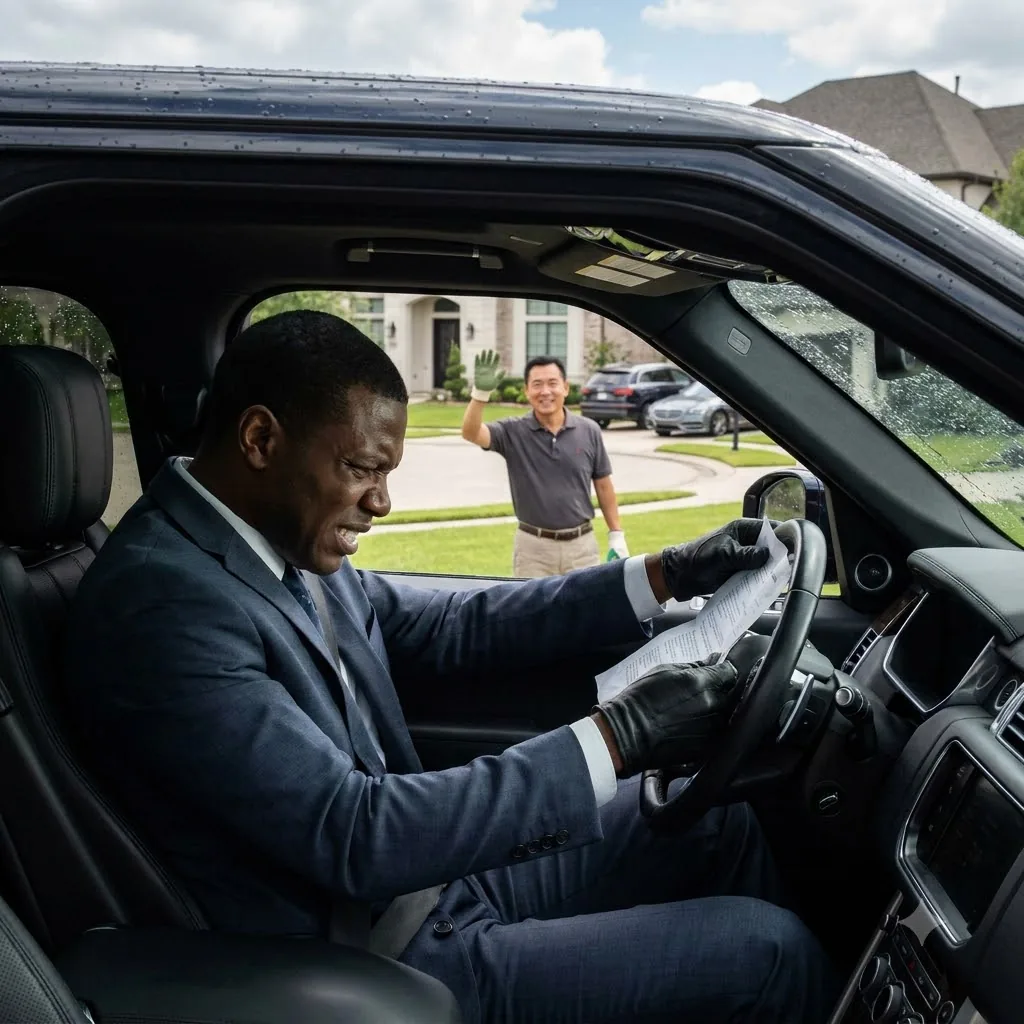
Story code: ST-000342
Part 4: The Illusion of the Gates
The silence in the clubhouse hung heavy and fragile, smelling of stale coffee and sudden, uncomfortable tension. Marcus stood over the folding table, watching Dr. Lin’s throat work as the older man swallowed hard. The evidence lay exposed under the harsh fluorescent lights-four yellow slips, an undeniable pattern of harassment, a documented lie. Marcus waited for the outrage. He waited for the heavy armor of the homeowner’s association to pivot and protect him, one of their own.
Instead, Dr. Lin reached out. Not to examine the citations, but to slide them carefully back across the plastic table toward Marcus.
“There’s a perfectly logical explanation,” Dr. Lin said. His voice was thin at first, but he cleared his throat, leaning forward into the microphone to reestablish his authority. The hollow realization that had briefly cracked his expression vanished, sealed over by the desperate, reflexive need to maintain his worldview. “The precinct uses automated templates for those app alerts, Marcus. It wasn’t written about you specifically.”
Marcus stared at him, his pulse pounding a slow, heavy rhythm in his ears. “He wrote my license plate down four times in four weeks, Dr. Lin. The alert specifically said ‘unregistered plates’ just minutes after looking at my car. It is a direct, fabricated contradiction.”
“It means Officer Miller is doing exactly what we pay the city taxes for,” a woman’s voice called out from the third row.
Marcus turned. It was Mrs. Gable, the community social committee chair. She sat with her arms crossed tightly over her pastel cardigan, her jaw set defensively. “He’s being thorough. If you’ve been stopped four times, perhaps you really do need to be more mindful of the stop signs. We can’t have people attacking the police who protect us.”
“He is targeting me,” Marcus said, the words feeling suddenly hollow as they sank into the sterile room.
“Oh, please,” another neighbor muttered, the sound carrying easily over the folding chairs. “Dr. Lin just told you he’s faced real racism. This is just a personal vendetta against a police officer over a traffic warning.”
Marcus looked back at the board. Dr. Lin offered a sad, patronizing shake of his head. “Marcus, I understand you feel embarrassed, perhaps even singled out. But turning a clerical discrepancy into an accusation of racial profiling is exactly what divides communities. We are a family here in Oak Creek. We don’t attack the people keeping the gates secure based on an overreaction.”
The room collectively exhaled. Marcus felt it-a palpable, physical shift in the air pressure as forty residents eagerly grabbed the lifeline Dr. Lin threw them. The older man’s minority status acted as the ultimate absolution. If Dr. Lin firmly declared it wasn’t racism, then the affluent, predominantly white room didn’t have to feel uncomfortable. They didn’t have to confront the predatory nature of the patrol car that guarded their property values. They chose the comfortable, easy lie of an ‘automated template’ over the cold, hard reality of the four yellow slips on the table.
Marcus was completely, utterly isolated. The community had just voted, silently and unanimously, to sacrifice him to preserve their illusion.
He didn’t argue. The adrenaline drained out of his muscles, replaced by a cold, leaden exhaustion. Arguing required an audience willing to look at the truth. He reached down and gathered the four citations, the carbon paper crinkling sharply in the quiet room, and slid them back into his manila folder. When he turned to walk down the center aisle, the residents physically leaned away from him, pulling their knees in, avoiding his eyes. He was no longer a neighbor. He had become the disruption. He was the threat to their peace.
Marcus pushed through the double doors of the clubhouse and stepped out into the oppressive summer night. The humidity wrapped around him instantly, thick with the drone of cicadas. He didn’t take his SUV. He walked the half-mile back to his cul-de-sac, his expensive leather dress shoes clicking rhythmically against the pristine, sweeping curves of the neighborhood sidewalks.
When he reached his property, he stopped at the edge of his slate driveway. The streetlamps cast a perfect, warm glow over his manicured hydrangeas and the heavy oak front door of his brick colonial. Through the front window, he could see the soft blue light of the television playing in the living room, where his wife and children were relaxing under the assumption they were perfectly safe.
It was exactly the sanctuary he had broken his back to build. He had spent his entire adult life climbing corporate ladders, swallowing microaggressions, and saving every bonus to buy his family a fortress in a zip code that promised security.
He looked down at his brass mailbox, remembering the massive grill of the police cruiser aligned perfectly with it earlier that afternoon.
His wealth had bought him the house. His status had bought him entry through the front gates. But standing in the humid dark, feeling the useless weight of the manila folder in his hand, Marcus realized none of it had bought him equality. The gates didn’t keep the wolves out; they just locked him inside with them. And when the predator finally came to his door, his neighbors would smile, wave, and politely look the other way.
Marcus stood alone in his immaculate driveway, listening to the distant, muffled sound of a heavy V8 engine patrolling the dark streets of his own neighborhood.