Story code: ST-000350
Part 1: The Erasure
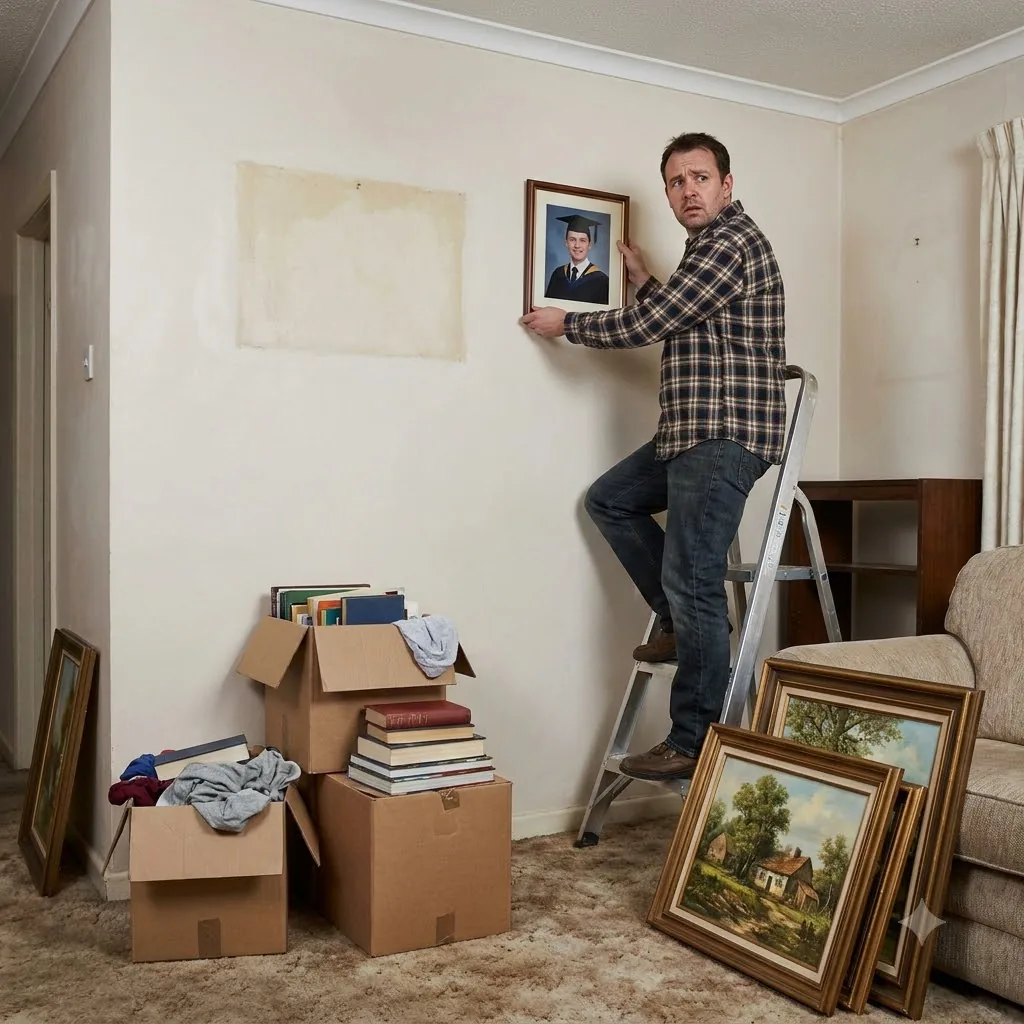
Marcus lifted his grandfather’s military shadowbox off the drywall, leaving a pale, dust-lined rectangle where the silver medals and folded flag used to gleam. The house remained dead silent, the quiet pressing heavily against his eardrums as he laid the heavy mahogany frame face-up on a sheet of bubble wrap. He folded the plastic over the glass, taping it down with sharp, tearing pulls from the dispenser. Once secured, he lowered the heirloom into a heavy-duty cardboard bin sitting in the center of the living room rug.
He did not pause to look at the empty space on the wall. He moved directly to the mantelpiece, his hands working with a clinical, rehearsed speed. He grabbed the large silver-framed wedding photo, wrapping it in two layers of packing paper before burying it beside the shadowbox. The smaller candid shots from family vacations followed, clattering softly against each other as he stacked them in the bottom of the box. His breathing was shallow, his focus entirely consumed by the task of making every trace of his family vanish before the afternoon was over.
The hallway proved to be the most labor-intensive stretch. Marcus took down a dozen frames of various sizes. He removed the sprawling canvas of his daughter’s high school graduation, carefully dismantling the mounting brackets with a flathead screwdriver so nothing would protrude from the wood panels. He unhooked the brass hooks holding her childhood portraits, wrapping each one with frantic precision. The pile of discarded mounts and screws grew on the hardwood floor. He swept them into a dustpan and dumped them into the kitchen trash, pressing the metal debris deep down into the damp coffee grounds and discarded eggshells so not a single piece of hardware remained visible.
With the personal history stripped away, the walls looked bruised. Bright, unblemished patches of paint stood out like beacons against the slightly faded eggshell color of the surrounding plaster. Marcus dragged a large canvas tote from the entryway, filled with the generic decor he had sourced from a local thrift shop just hours earlier.
He pulled out a mass-produced painting of a lighthouse and hung it over the faded square where the shadowbox had been. The wire backing scraped against the original nail. The cheap, plastic frame smelled faintly of mothballs and old attic dust, a stark contrast to the rich mahogany he had just packed away. In the hallway, he covered the bright patches with dull floral prints and washed-out watercolor landscapes. A faded print of a bowl of fruit took the place of his wedding portrait in the dining area. He stepped back, adjusting a snowy mountain scene that now hung exactly where his daughter’s graduation photo had been displayed for the last five years.
The house was rapidly transforming into a sterile, anonymous space. It looked like a cheap motel or a staged model home, utterly devoid of warmth, history, or identity. Marcus paced through the living room, his eyes darting across the shelves, the coffee table, and the sideboards. He was hunting for anything he might have missed in his initial sweep.
He spotted a monogrammed coaster on the end table. He snatched it up, shoving it deep into his pocket. He found a stack of personalized mail on the kitchen counter, quickly scooping the envelopes into a black trash bag and tying it off with a tight double knot. He checked the refrigerator door, pulling down three magnets holding a child’s drawing and a dental appointment reminder card. Those went into the trash bag as well.
His chest heaved as he hauled the first cardboard bin toward the garage. The muscles in his forearms burned, but he ignored the strain, pushing the heavy box into the darkest corner behind the lawnmower. He covered it with a thick, dusty tarp, pulling the heavy plastic down tightly and ensuring no corners of cardboard were visible. He returned for the second bin, the one holding his daughter’s photos, and dragged it down the hall to the guest room closet. He shoved it behind a row of heavy winter coats, pulling a spare woolen blanket over the lid to completely obscure it from view.
He walked back into the center of the living room, wiping a bead of sweat from his forehead with the back of his wrist. He did a final sweep of the space. The lighthouse painting hung perfectly level. The floral prints masked the wall’s discoloration. No faces smiled back at him from the mantelpiece. The history of his entire family had been successfully erased, leaving behind only this empty, generic shell.
He let out a long, shaky breath, letting his shoulders drop just a fraction of an inch as he stood in the absolute silence of the unfamiliar room.
Then, the front doorbell chimed.
Marcus lifted his grandfather’s military shadowbox off the drywall, leaving a pale, dust-lined rectangle where the silver medals and folded flag used to gleam. The house remained dead silent, the quiet pressing heavily against his eardrums as he laid the heavy mahogany frame face-up on a sheet of bubble wrap. He folded the plastic over the glass, taping it down with sharp, tearing pulls from the dispenser. Once secured, he lowered the heirloom into a heavy-duty cardboard bin sitting in the center of the living room rug.
He did not pause to look at the empty space on the wall. He moved directly to the mantelpiece, his hands working with a clinical, rehearsed speed. He grabbed the large silver-framed wedding photo, wrapping it in two layers of packing paper before burying it beside the shadowbox. The smaller candid shots from family vacations followed, clattering softly against each other as he stacked them in the bottom of the box. His breathing was shallow, his focus entirely consumed by the task of making every trace of his family vanish before the afternoon was over.
The hallway proved to be the most labor-intensive stretch. Marcus took down a dozen frames of various sizes. He removed the sprawling canvas of his daughter’s high school graduation, carefully dismantling the mounting brackets with a flathead screwdriver so nothing would protrude from the wood panels. He unhooked the brass hooks holding her childhood portraits, wrapping each one with frantic precision. The pile of discarded mounts and screws grew on the hardwood floor. He swept them into a dustpan and dumped them into the kitchen trash, pressing the metal debris deep down into the damp coffee grounds and discarded eggshells so not a single piece of hardware remained visible.
With the personal history stripped away, the walls looked bruised. Bright, unblemished patches of paint stood out like beacons against the slightly faded eggshell color of the surrounding plaster. Marcus dragged a large canvas tote from the entryway, filled with the generic decor he had sourced from a local thrift shop just hours earlier.
He pulled out a mass-produced painting of a lighthouse and hung it over the faded square where the shadowbox had been. The wire backing scraped against the original nail. The cheap, plastic frame smelled faintly of mothballs and old attic dust, a stark contrast to the rich mahogany he had just packed away. In the hallway, he covered the bright patches with dull floral prints and washed-out watercolor landscapes. A faded print of a bowl of fruit took the place of his wedding portrait in the dining area. He stepped back, adjusting a snowy mountain scene that now hung exactly where his daughter’s graduation photo had been displayed for the last five years.
The house was rapidly transforming into a sterile, anonymous space. It looked like a cheap motel or a staged model home, utterly devoid of warmth, history, or identity. Marcus paced through the living room, his eyes darting across the shelves, the coffee table, and the sideboards. He was hunting for anything he might have missed in his initial sweep.
He spotted a monogrammed coaster on the end table. He snatched it up, shoving it deep into his pocket. He found a stack of personalized mail on the kitchen counter, quickly scooping the envelopes into a black trash bag and tying it off with a tight double knot. He checked the refrigerator door, pulling down three magnets holding a child’s drawing and a dental appointment reminder card. Those went into the trash bag as well.
His chest heaved as he hauled the first cardboard bin toward the garage. The muscles in his forearms burned, but he ignored the strain, pushing the heavy box into the darkest corner behind the lawnmower. He covered it with a thick, dusty tarp, pulling the heavy plastic down tightly and ensuring no corners of cardboard were visible. He returned for the second bin, the one holding his daughter’s photos, and dragged it down the hall to the guest room closet. He shoved it behind a row of heavy winter coats, pulling a spare woolen blanket over the lid to completely obscure it from view.
He walked back into the center of the living room, wiping a bead of sweat from his forehead with the back of his wrist. He did a final sweep of the space. The lighthouse painting hung perfectly level. The floral prints masked the wall’s discoloration. No faces smiled back at him from the mantelpiece. The history of his entire family had been successfully erased, leaving behind only this empty, generic shell.
He let out a long, shaky breath, letting his shoulders drop just a fraction of an inch as he stood in the absolute silence of the unfamiliar room.
Then, the front doorbell chimed.