Story code: ST-000374
Part 1: The Armor of a Clean Shirt
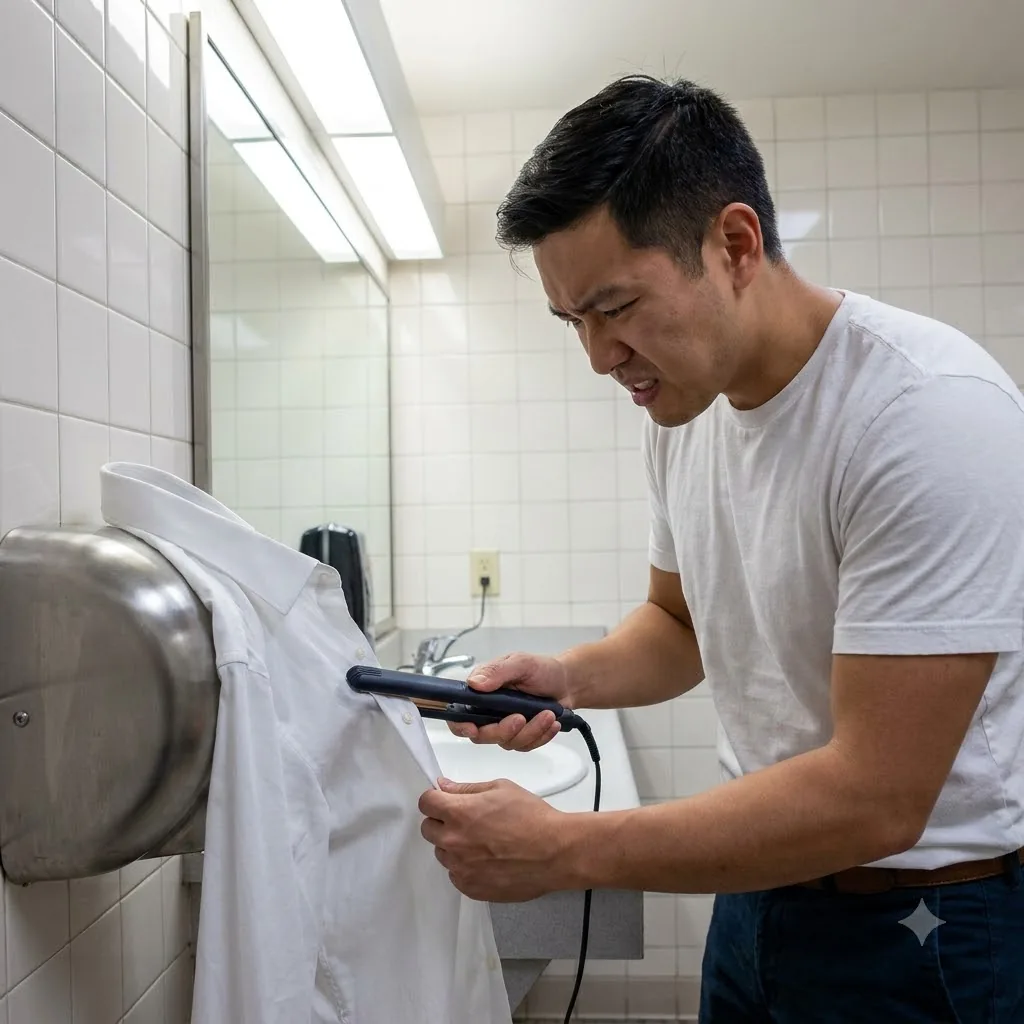
David clamped the hot ceramic plates of a pink travel hair straightener over the collar of his pale blue button-down shirt, pulling the device slowly along the fraying cotton. The cord stretched taut from the single working outlet beside the shattered mirror of the Shell station restroom. His right hand shook so violently that the plastic casing rattled against his knuckles. He forced his wrist rigid, clamping down on the tremor with every ounce of his remaining strength. He could not afford a single crease. He released the collar, letting the warm fabric cool against his fingertips, and inspected the sharp line he had just manufactured. It looked crisp. It looked like the collar of a man who slept in an actual bed, rather than a man who spent the night shivering in the backseat of a repossessed sedan.
The smell of burnt hair spray wafted from the straightener’s plates, masking the sharp odor of industrial bathroom cleaner. He unplugged the device and tucked it carefully into his canvas duffel bag, hiding it beneath a tightly rolled sleeping mat. Taking a slow, measured breath, he shrugged the shirt over his shoulders and fastened the buttons all the way to his throat. His reflection in the cracked glass stared back, eyes dark and hollow, but the shirt did its job. The neat fabric acted as armor. He practiced a polite, even smile, forcing the twitching muscles in his jaw to relax. The VA caseworker needed to see a veteran who was respectable and proactive. He locked his knees to stop his legs from shaking and stepped out into the blinding morning light.
The bus ride to the Veterans Affairs regional office required an agonizing level of physical control. Every jolt of the chassis sent a shockwave up David’s spine, threatening to unleash the frantic, vibrating energy trapped in his chest. He gripped the metal bar on the seat in front of him, keeping his knuckles white, making sure his arms stayed pinned to his sides. A woman across the aisle glanced at him, and he offered her a brief, polite nod. She smiled back and returned to her phone. The camouflage was working perfectly. He looked like an ordinary civilian heading to a mid-level desk job, perfectly put together, perfectly fine.
He stepped off the bus two blocks from the concrete fortress of the VA building. His chest tightened with the familiar sensation of shrinking lungs. He stopped on the sidewalk and ran a trembling hand through his closely cropped hair, smoothing down a stray tuft. He adjusted his sleeves, ensuring the cuffs completely covered the raw, nervous scratching on his forearms. He had spent his last two dollars on a black coffee just to use the gas station bathroom for his morning grooming routine. He had absolutely nothing left to his name but this final appointment. He marched through the sliding glass doors with his shoulders squared, projecting a steady confidence that felt like swallowing broken glass.
The waiting room hummed with flickering fluorescent lights and the low murmur of a muted daytime television. David took a seat in the back row. He crossed one leg over the other to mask the relentless, involuntary bouncing of his left foot. He rested his hands flat and heavy on his thighs, using sheer downward pressure to keep them still. Forty-five minutes dragged by in a haze of suppressed adrenaline. His back muscles screamed from the rigid, upright posture, but he refused to slouch. When the loudspeaker finally crackled, mispronouncing his last name, he stood up slowly. He smoothed the front of his freshly pressed shirt one last time and walked toward cubicle four with an even, measured stride.
The caseworker, a man with thinning gray hair and a lanyard sagging heavily around his neck, did not look up from his monitor when David sat down. The aggressive clicking of a keyboard filled the small space. David maintained his upright posture, keeping his hands neatly folded in his lap. He focused his gaze on a blue pushpin stuck in the fabric wall of the cubicle, using it as a visual anchor to keep the tiny room from spinning.
“State your full name for the record,” the caseworker said, eyes still glued to the glowing screen.
David complied. He kept his tone incredibly level, ensuring his vocal cords did not betray the panic bubbling in his throat. He stated his date of birth and the last four digits of his social security number without a single stutter.
The caseworker finally turned his head. His gaze swept over David, moving from the crisp, straight collar of the pale blue shirt down to his combed hair and steady, folded hands. A subtle shift occurred in the caseworker’s expression. The rigid bureaucratic tension in the man’s shoulders relaxed, replaced instantly by a dismissive ease. He leaned back in his padded swivel chair and let out a short, tired sigh. He clicked a thick manila folder closed on his desk.
“I see your claim for emergency housing and intensive psychiatric intervention right here,” the caseworker said, tapping a plastic pen against the edge of the desk. “But looking at you today, and reviewing these intake notes, we have a very clear protocol on prioritizing critical cases.”
David felt the rigid architecture of his carefully constructed posture begin to fracture. The caseworker gestured vaguely at David’s pristine shirt and calm demeanor.
“We must reserve immediate, emergency intervention for veterans in visible, severe distress,” the caseworker stated, sliding David’s file toward the outgoing tray. “You are clearly managing yourself extremely well.”
David opened his mouth to explain the freezing car, the pink hair straightener, the absolute terror clawing at his throat, but the caseworker was already reaching for the next file.
David clamped the hot ceramic plates of a pink travel hair straightener over the collar of his pale blue button-down shirt, pulling the device slowly along the fraying cotton. The cord stretched taut from the single working outlet beside the shattered mirror of the Shell station restroom. His right hand shook so violently that the plastic casing rattled against his knuckles. He forced his wrist rigid, clamping down on the tremor with every ounce of his remaining strength. He could not afford a single crease. He released the collar, letting the warm fabric cool against his fingertips, and inspected the sharp line he had just manufactured. It looked crisp. It looked like the collar of a man who slept in an actual bed, rather than a man who spent the night shivering in the backseat of a repossessed sedan.
The smell of burnt hair spray wafted from the straightener’s plates, masking the sharp odor of industrial bathroom cleaner. He unplugged the device and tucked it carefully into his canvas duffel bag, hiding it beneath a tightly rolled sleeping mat. Taking a slow, measured breath, he shrugged the shirt over his shoulders and fastened the buttons all the way to his throat. His reflection in the cracked glass stared back, eyes dark and hollow, but the shirt did its job. The neat fabric acted as armor. He practiced a polite, even smile, forcing the twitching muscles in his jaw to relax. The VA caseworker needed to see a veteran who was respectable and proactive. He locked his knees to stop his legs from shaking and stepped out into the blinding morning light.
The bus ride to the Veterans Affairs regional office required an agonizing level of physical control. Every jolt of the chassis sent a shockwave up David’s spine, threatening to unleash the frantic, vibrating energy trapped in his chest. He gripped the metal bar on the seat in front of him, keeping his knuckles white, making sure his arms stayed pinned to his sides. A woman across the aisle glanced at him, and he offered her a brief, polite nod. She smiled back and returned to her phone. The camouflage was working perfectly. He looked like an ordinary civilian heading to a mid-level desk job, perfectly put together, perfectly fine.
He stepped off the bus two blocks from the concrete fortress of the VA building. His chest tightened with the familiar sensation of shrinking lungs. He stopped on the sidewalk and ran a trembling hand through his closely cropped hair, smoothing down a stray tuft. He adjusted his sleeves, ensuring the cuffs completely covered the raw, nervous scratching on his forearms. He had spent his last two dollars on a black coffee just to use the gas station bathroom for his morning grooming routine. He had absolutely nothing left to his name but this final appointment. He marched through the sliding glass doors with his shoulders squared, projecting a steady confidence that felt like swallowing broken glass.
The waiting room hummed with flickering fluorescent lights and the low murmur of a muted daytime television. David took a seat in the back row. He crossed one leg over the other to mask the relentless, involuntary bouncing of his left foot. He rested his hands flat and heavy on his thighs, using sheer downward pressure to keep them still. Forty-five minutes dragged by in a haze of suppressed adrenaline. His back muscles screamed from the rigid, upright posture, but he refused to slouch. When the loudspeaker finally crackled, mispronouncing his last name, he stood up slowly. He smoothed the front of his freshly pressed shirt one last time and walked toward cubicle four with an even, measured stride.
The caseworker, a man with thinning gray hair and a lanyard sagging heavily around his neck, did not look up from his monitor when David sat down. The aggressive clicking of a keyboard filled the small space. David maintained his upright posture, keeping his hands neatly folded in his lap. He focused his gaze on a blue pushpin stuck in the fabric wall of the cubicle, using it as a visual anchor to keep the tiny room from spinning.
“State your full name for the record,” the caseworker said, eyes still glued to the glowing screen.
David complied. He kept his tone incredibly level, ensuring his vocal cords did not betray the panic bubbling in his throat. He stated his date of birth and the last four digits of his social security number without a single stutter.
The caseworker finally turned his head. His gaze swept over David, moving from the crisp, straight collar of the pale blue shirt down to his combed hair and steady, folded hands. A subtle shift occurred in the caseworker’s expression. The rigid bureaucratic tension in the man’s shoulders relaxed, replaced instantly by a dismissive ease. He leaned back in his padded swivel chair and let out a short, tired sigh. He clicked a thick manila folder closed on his desk.
“I see your claim for emergency housing and intensive psychiatric intervention right here,” the caseworker said, tapping a plastic pen against the edge of the desk. “But looking at you today, and reviewing these intake notes, we have a very clear protocol on prioritizing critical cases.”
David felt the rigid architecture of his carefully constructed posture begin to fracture. The caseworker gestured vaguely at David’s pristine shirt and calm demeanor.
“We must reserve immediate, emergency intervention for veterans in visible, severe distress,” the caseworker stated, sliding David’s file toward the outgoing tray. “You are clearly managing yourself extremely well.”
David opened his mouth to explain the freezing car, the pink hair straightener, the absolute terror clawing at his throat, but the caseworker was already reaching for the next file.