Story code: ST-000427
Part 1: The Green Light
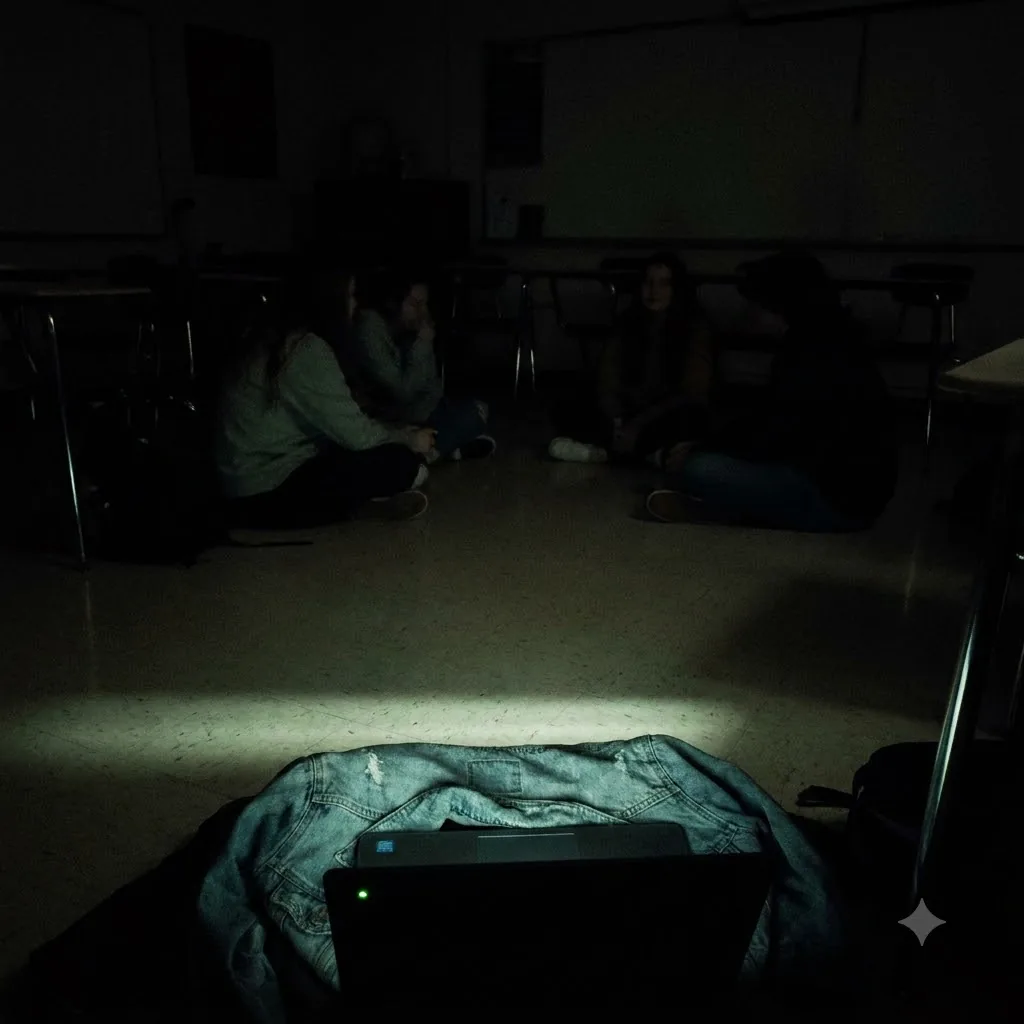
The pitch-black choir room smelled of industrial floor wax and panicked sweat as the unannounced Code Red drill stretched into its twentieth agonizing minute. Crouched under the heavy wooden risers with his knees pressed painfully against his chest, Toby stared at the sliver of space between his district-issued Chromebook’s screen and keyboard. A tiny, piercing green light had just flickered on in the absolute darkness, pinpointing the webcam lens.
The acoustic dampening of the room made the silence feel dead and suffocating. Forty students huddled shoulder-to-shoulder on the floor, strictly obeying the lockdown protocols to remain unseen and completely unheard. The choir director stood by the door, gripping a heavy metal music stand in the gloom. Toby had snapped his laptop shut the exact moment the intercom barked the lockdown order. The machine was supposed to be asleep. It was supposed to be a dead, inert block of plastic.
Yet the green LED burned with an intense, steady glare. It cast a sickly, luminous halo against the dusty underside of the risers. Next to Toby, a sophomore named Sarah recoiled, her eyes wide with terror as the faint emerald light washed over her pale face. She raised a trembling finger to her lips, silently begging him to turn it off.
Toby pressed his thumb over the glowing dot. The light bled through the edges of his thumbnail, turning his skin a translucent, radioactive green. His pulse hammered a frantic rhythm against his eardrums. The school district installed heavy-duty monitoring software on every student machine to track web history and log keystrokes. They never activated the cameras. They were expressly forbidden from remotely triggering the webcams without a teacher actively present and a notification on the screen.
Someone was watching them in the dark.
The realization settled like jagged ice in Toby’s stomach. If this was just an overzealous drill, a bored administrator might be checking compliance. But drills rarely lasted this long without an all-clear bell. The intercom had been dead silent for nearly half an hour. The heavy steel doors were locked, the window blinds were drawn, and the barricade was in place. If an actual intruder had somehow compromised the school’s local network, they could be scanning the active classroom webcams to see exactly which rooms were packed with hiding students.
Toby could not just wait in the dark as a glowing beacon.
He shifted his weight, agonizingly careful not to let his sneakers squeak on the linoleum. He slowly pried the Chromebook lid open. The cheap plastic hinge offered a stiff resistance that sounded like a tectonic fault line in the dead quiet of the room. He stopped at a forty-five-degree angle. The main screen remained off, but the webcam light stared back at him like a digital eye. He knew the microphone array was housed right next to the lens. The watcher could hear every shuddering breath taking place under the risers.
Toby rested his fingers lightly on the keys. He knew the layout by pure muscle memory. He pressed the combination to wake the machine while instantly dragging the screen brightness down to its absolute lowest setting before the backlight could flash. The display flickered to life, emitting a dim, charcoal-gray glow that barely reached his knuckles.
He bypassed the standard browser window and hit the shortcut to bring up the developer shell. Toby had quietly enabled the Linux beta environment on his device on the first day of the semester. He spent most of his study halls circumventing the district’s firewall to map their network architecture out of sheer boredom. He never bragged about it. He just liked knowing how the locked doors of the digital world worked.
Now, that hidden boredom project was his only defense.
A black terminal window popped onto the dim screen. Toby typed silently, his fingers gliding over the keys without fully depressing the noisy mechanical switches. He executed a command to list all active network connections. Rows of white text cascaded down the screen in a blur. He scanned the open ports, looking for established video-streaming protocols.
He found the intruder in seconds. A remote IP address was actively pulling an encrypted video stream from his local hardware.
Toby’s jaw tightened. He could just kill the network card or shut the laptop down entirely. That would sever the feed immediately. It would also alert the watcher that someone in the dark choir room was fighting back. He needed to know exactly who was on the other end of the connection before he gave away his position.
He pulled up a Python script he had written weeks ago for testing peer-to-peer data interception. He modified the parameters directly in the command line, pointing the script at the established remote socket. Instead of breaking the connection, he typed out a command to mirror the incoming data packets and force the local display to render whatever the remote client was broadcasting. If they were using the district’s standard two-way administration tool, their own camera feed was attached to the hidden session.
The terminal cursor blinked rapidly at the end of the command line. Toby took a slow, shallow breath. He hit the enter key.
Lines of code ripped across the screen as the script broke through the administrative wrapper. A small, secondary window forced its way to the center of Toby’s dim display. The raw video feed from the watcher’s side began to decode and render in the gloom of the choir room. The pixelated gray static cleared, revealing the brightly lit face illuminated by a monitor on the other end.
The pitch-black choir room smelled of industrial floor wax and panicked sweat as the unannounced Code Red drill stretched into its twentieth agonizing minute. Crouched under the heavy wooden risers with his knees pressed painfully against his chest, Toby stared at the sliver of space between his district-issued Chromebook’s screen and keyboard. A tiny, piercing green light had just flickered on in the absolute darkness, pinpointing the webcam lens.
The acoustic dampening of the room made the silence feel dead and suffocating. Forty students huddled shoulder-to-shoulder on the floor, strictly obeying the lockdown protocols to remain unseen and completely unheard. The choir director stood by the door, gripping a heavy metal music stand in the gloom. Toby had snapped his laptop shut the exact moment the intercom barked the lockdown order. The machine was supposed to be asleep. It was supposed to be a dead, inert block of plastic.
Yet the green LED burned with an intense, steady glare. It cast a sickly, luminous halo against the dusty underside of the risers. Next to Toby, a sophomore named Sarah recoiled, her eyes wide with terror as the faint emerald light washed over her pale face. She raised a trembling finger to her lips, silently begging him to turn it off.
Toby pressed his thumb over the glowing dot. The light bled through the edges of his thumbnail, turning his skin a translucent, radioactive green. His pulse hammered a frantic rhythm against his eardrums. The school district installed heavy-duty monitoring software on every student machine to track web history and log keystrokes. They never activated the cameras. They were expressly forbidden from remotely triggering the webcams without a teacher actively present and a notification on the screen.
Someone was watching them in the dark.
The realization settled like jagged ice in Toby’s stomach. If this was just an overzealous drill, a bored administrator might be checking compliance. But drills rarely lasted this long without an all-clear bell. The intercom had been dead silent for nearly half an hour. The heavy steel doors were locked, the window blinds were drawn, and the barricade was in place. If an actual intruder had somehow compromised the school’s local network, they could be scanning the active classroom webcams to see exactly which rooms were packed with hiding students.
Toby could not just wait in the dark as a glowing beacon.
He shifted his weight, agonizingly careful not to let his sneakers squeak on the linoleum. He slowly pried the Chromebook lid open. The cheap plastic hinge offered a stiff resistance that sounded like a tectonic fault line in the dead quiet of the room. He stopped at a forty-five-degree angle. The main screen remained off, but the webcam light stared back at him like a digital eye. He knew the microphone array was housed right next to the lens. The watcher could hear every shuddering breath taking place under the risers.
Toby rested his fingers lightly on the keys. He knew the layout by pure muscle memory. He pressed the combination to wake the machine while instantly dragging the screen brightness down to its absolute lowest setting before the backlight could flash. The display flickered to life, emitting a dim, charcoal-gray glow that barely reached his knuckles.
He bypassed the standard browser window and hit the shortcut to bring up the developer shell. Toby had quietly enabled the Linux beta environment on his device on the first day of the semester. He spent most of his study halls circumventing the district’s firewall to map their network architecture out of sheer boredom. He never bragged about it. He just liked knowing how the locked doors of the digital world worked.
Now, that hidden boredom project was his only defense.
A black terminal window popped onto the dim screen. Toby typed silently, his fingers gliding over the keys without fully depressing the noisy mechanical switches. He executed a command to list all active network connections. Rows of white text cascaded down the screen in a blur. He scanned the open ports, looking for established video-streaming protocols.
He found the intruder in seconds. A remote IP address was actively pulling an encrypted video stream from his local hardware.
Toby’s jaw tightened. He could just kill the network card or shut the laptop down entirely. That would sever the feed immediately. It would also alert the watcher that someone in the dark choir room was fighting back. He needed to know exactly who was on the other end of the connection before he gave away his position.
He pulled up a Python script he had written weeks ago for testing peer-to-peer data interception. He modified the parameters directly in the command line, pointing the script at the established remote socket. Instead of breaking the connection, he typed out a command to mirror the incoming data packets and force the local display to render whatever the remote client was broadcasting. If they were using the district’s standard two-way administration tool, their own camera feed was attached to the hidden session.
The terminal cursor blinked rapidly at the end of the command line. Toby took a slow, shallow breath. He hit the enter key.
Lines of code ripped across the screen as the script broke through the administrative wrapper. A small, secondary window forced its way to the center of Toby’s dim display. The raw video feed from the watcher’s side began to decode and render in the gloom of the choir room. The pixelated gray static cleared, revealing the brightly lit face illuminated by a monitor on the other end.