Story code: ST-000448
Part 1: The Morning Raid
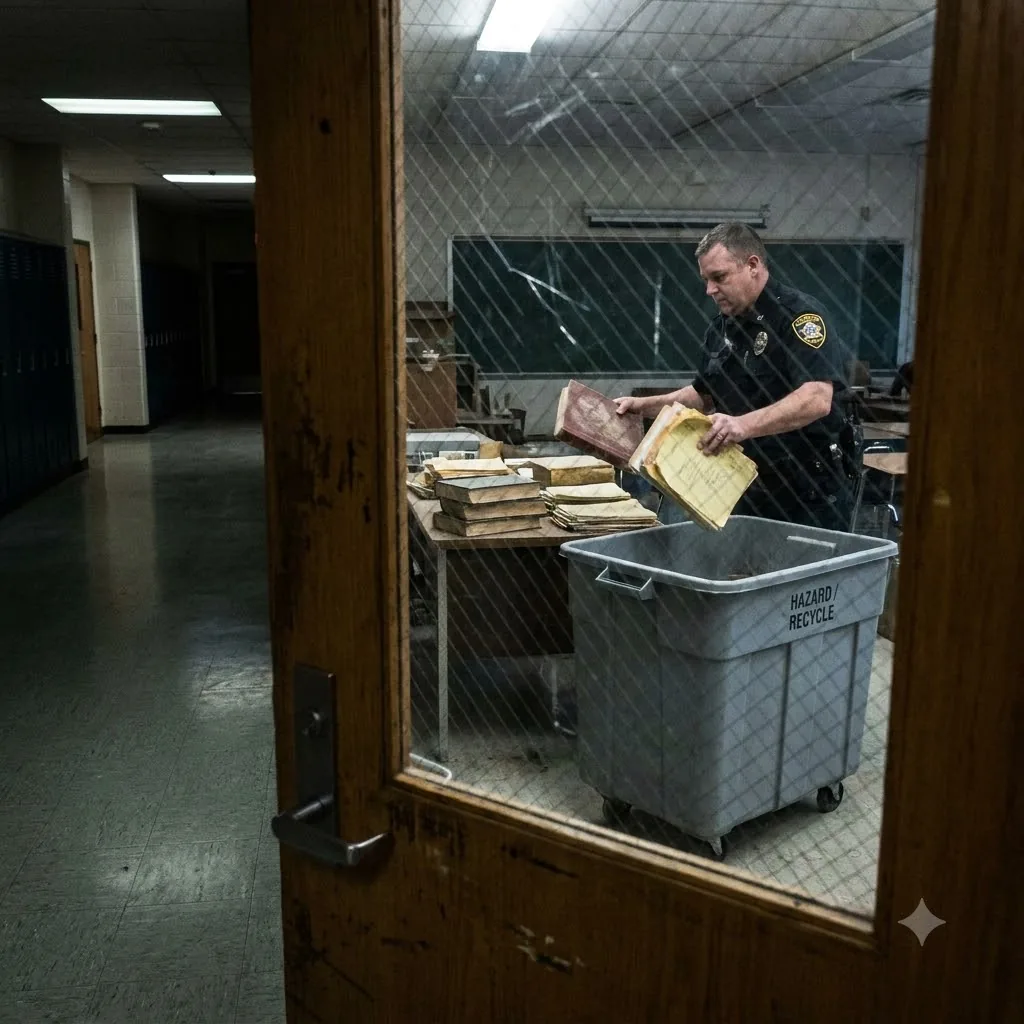
Marcus jammed his faculty keycard against the reader for Room 204, but the deadbolt responded with a flat, hollow click and a solid red light. He rattled the handle in the early morning silence, then peered through the narrow wire-mesh window to find three armed security officers tearing apart his classroom.
The men moved with the urgent, synchronized precision of a tactical sweep. Officer Davies, the lead School Resource Officer, stood by the front chalkboard with his right hand resting casually over his holstered sidearm. Two unfamiliar men in dark utility polos pulled out desk drawers and swept heavy-duty flashlights under the ancient cast-iron radiators. Marcus stepped back into the empty hallway, his breath catching. The linoleum beneath his shoes was still damp from the night crew’s waxing. The corridor was completely dead, devoid of the usual early-arriving students or the hum of the morning announcements.
He pressed his face back against the cold glass of the door panel. He fully expected to see the men holding up a contraband weapon or searching for a rumored explosive device. The red LED on the card reader mocked him with another slow pulse. For twenty years, he had arrived at this exact door at six-thirty in the morning without fail. His plastic badge had always granted him instant access to his educational domain. Now, the heavy fire-rated steel felt like the perimeter of a hostile zone. He rapped his knuckles against the reinforced glass. The thick fireproofing swallowed the sound completely. Inside the room, Davies gestured sharply to one of the men near the back row. The man abandoned the radiators and moved directly to Marcus’s tall metal filing cabinets.
Marcus watched the man produce a heavy ring of keys, select a silver master key, and unlock the bottom drawer. The intensity of the raid felt deeply terrifying. Marcus’s pulse hammered a frantic rhythm against his ribs. He cataloged his recent memory, searching for any forgotten incident or any logical reason the authorities would treat his homeroom like an active crime scene. His mental search turned up completely empty. There were no missing lab chemicals, no disgruntled threats from former students, no district-wide lockdown alerts on his phone. He pulled his cell phone from his wool coat pocket to check the illuminated screen. He stared at a lock screen devoid of any emergency notifications.
The second officer wheeled a stack of gray, industrial hazard bins into the center of the room. The heavy plastic containers clattered loudly against the scuffed tile floor, vibrating right through the door frame. Davies pointed a gloved finger toward the wooden shelves behind Marcus’s desk. Those shelves did not hold contraband. They held Marcus’s physical archives. The man at the filing cabinet began hauling out thick, heavily loaded manila folders.
Marcus recognized the faded edges and color-coded tabs of those specific folders. They contained his historical documents. Those files represented two decades of curated primary sources. They held his original newspaper clippings from the civil rights movement, the delicate handwritten letters from local voting rights activists, and his meticulously drafted curriculum notes. The officer unceremoniously dumped the first massive stack of history files into the gray hazard bin. The irreplaceable papers spilled violently over the plastic edge, crumpling against the bottom.
Davies grabbed a clipboard from Marcus’s desk and checked an item off with a heavy black marker. They were treating his life’s work like toxic biological hazards. Marcus slammed the flat of his hand against the door. The loud, percussive thud finally caught Davies’s attention. The SRO turned slowly, his hand still hovering near his utility belt, and stared right at Marcus through the wire mesh.
Davies did not signal his men to stop the destruction. He walked with heavy, deliberate steps toward the door. Marcus waited for the officer to use his own override card to open it. Instead, Davies merely crossed his thick arms and stood on the other side of the glass, acting as a human barricade. The standoff lasted for ten agonizing seconds. Marcus realized he was being systematically locked out of his own career. He reached deep into his coat pocket and withdrew his physical brass override key, an old antique given to department heads a decade before the electronic security upgrade.
He slid the cold metal into the bottom mechanical keyhole. The deadbolt engaged with a heavy, protesting scrape. Marcus shoved the door inward.
The air inside smelled of stale coffee and the sharp, chemical scent of the new gray plastic bins. Davies immediately stepped forward, his boots squeaking on the tile, to block Marcus from moving past the threshold. The SRO held up a broad, commanding hand right at chest level. In the back corner, the two men kept violently tossing Marcus’s lesson plans and historical archives into the bins. Davies adjusted his duty belt, the leather creaking loudly in the quiet room, and looked down at Marcus with an expression completely devoid of warmth.
Davies reached into his tactical vest, pulled out a laminated sheet of district letterhead, and shoved the paper directly against Marcus’s chest to physically push the older man back into the hallway.
Marcus jammed his faculty keycard against the reader for Room 204, but the deadbolt responded with a flat, hollow click and a solid red light. He rattled the handle in the early morning silence, then peered through the narrow wire-mesh window to find three armed security officers tearing apart his classroom.
The men moved with the urgent, synchronized precision of a tactical sweep. Officer Davies, the lead School Resource Officer, stood by the front chalkboard with his right hand resting casually over his holstered sidearm. Two unfamiliar men in dark utility polos pulled out desk drawers and swept heavy-duty flashlights under the ancient cast-iron radiators. Marcus stepped back into the empty hallway, his breath catching. The linoleum beneath his shoes was still damp from the night crew’s waxing. The corridor was completely dead, devoid of the usual early-arriving students or the hum of the morning announcements.
He pressed his face back against the cold glass of the door panel. He fully expected to see the men holding up a contraband weapon or searching for a rumored explosive device. The red LED on the card reader mocked him with another slow pulse. For twenty years, he had arrived at this exact door at six-thirty in the morning without fail. His plastic badge had always granted him instant access to his educational domain. Now, the heavy fire-rated steel felt like the perimeter of a hostile zone. He rapped his knuckles against the reinforced glass. The thick fireproofing swallowed the sound completely. Inside the room, Davies gestured sharply to one of the men near the back row. The man abandoned the radiators and moved directly to Marcus’s tall metal filing cabinets.
Marcus watched the man produce a heavy ring of keys, select a silver master key, and unlock the bottom drawer. The intensity of the raid felt deeply terrifying. Marcus’s pulse hammered a frantic rhythm against his ribs. He cataloged his recent memory, searching for any forgotten incident or any logical reason the authorities would treat his homeroom like an active crime scene. His mental search turned up completely empty. There were no missing lab chemicals, no disgruntled threats from former students, no district-wide lockdown alerts on his phone. He pulled his cell phone from his wool coat pocket to check the illuminated screen. He stared at a lock screen devoid of any emergency notifications.
The second officer wheeled a stack of gray, industrial hazard bins into the center of the room. The heavy plastic containers clattered loudly against the scuffed tile floor, vibrating right through the door frame. Davies pointed a gloved finger toward the wooden shelves behind Marcus’s desk. Those shelves did not hold contraband. They held Marcus’s physical archives. The man at the filing cabinet began hauling out thick, heavily loaded manila folders.
Marcus recognized the faded edges and color-coded tabs of those specific folders. They contained his historical documents. Those files represented two decades of curated primary sources. They held his original newspaper clippings from the civil rights movement, the delicate handwritten letters from local voting rights activists, and his meticulously drafted curriculum notes. The officer unceremoniously dumped the first massive stack of history files into the gray hazard bin. The irreplaceable papers spilled violently over the plastic edge, crumpling against the bottom.
Davies grabbed a clipboard from Marcus’s desk and checked an item off with a heavy black marker. They were treating his life’s work like toxic biological hazards. Marcus slammed the flat of his hand against the door. The loud, percussive thud finally caught Davies’s attention. The SRO turned slowly, his hand still hovering near his utility belt, and stared right at Marcus through the wire mesh.
Davies did not signal his men to stop the destruction. He walked with heavy, deliberate steps toward the door. Marcus waited for the officer to use his own override card to open it. Instead, Davies merely crossed his thick arms and stood on the other side of the glass, acting as a human barricade. The standoff lasted for ten agonizing seconds. Marcus realized he was being systematically locked out of his own career. He reached deep into his coat pocket and withdrew his physical brass override key, an old antique given to department heads a decade before the electronic security upgrade.
He slid the cold metal into the bottom mechanical keyhole. The deadbolt engaged with a heavy, protesting scrape. Marcus shoved the door inward.
The air inside smelled of stale coffee and the sharp, chemical scent of the new gray plastic bins. Davies immediately stepped forward, his boots squeaking on the tile, to block Marcus from moving past the threshold. The SRO held up a broad, commanding hand right at chest level. In the back corner, the two men kept violently tossing Marcus’s lesson plans and historical archives into the bins. Davies adjusted his duty belt, the leather creaking loudly in the quiet room, and looked down at Marcus with an expression completely devoid of warmth.
Davies reached into his tactical vest, pulled out a laminated sheet of district letterhead, and shoved the paper directly against Marcus’s chest to physically push the older man back into the hallway.