Story code: ST-000998
Part 1: The Compassionate Citizen
Ethan adjusted the felt pads under his imported Murano glass vase, shielding the fragile base from the relentless, rhythmic thudding vibrating up through his reclaimed-oak floorboards. He tapped his tablet screen, meticulously deleting the word “nuisance” and replacing it with “safety concern” in the police department’s community reporting portal. The bass from the street outside was a physical entity, a heavy pressure that crawled up his shins and settled right in the center of his chest.
He had paid a premium for the triple-pane, gas-insulated windows when he gutted and renovated the Victorian row house six months ago. The contractor had promised absolute silence, a fortress of solitude in the middle of a transitioning district. Tonight, that expensive promise was failing spectacularly. The block party had erupted three hours ago, an unauthorized sprawl of folding tables, rented subwoofers, and bodies spilling across the cracked asphalt of the narrow street.
Ethan tapped the backspace key again on his digital keyboard. He wanted the complaint to sound compassionate and professional, the measured words of a civic-minded resident looking out for the community’s best interests. He typed that the sheer volume of the gathering was undoubtedly violating local noise ordinances and preventing emergency vehicles from passing should a genuine crisis arise. It was a perfectly reasonable, objective angle. He hit save on the draft and walked over to the floating shelves mounted on his exposed brick wall.
The bass dropped again, plunging into a low frequency that made his teeth ache. A framed architectural print rattled sharply against the masonry. Ethan pressed his palm flat against the glass frame to steady it, feeling the chaotic energy of the street pounding against his pristine interior. He had spent a small fortune modernizing this space, installing biometric deadbolts, shatterproof security film on all the ground-floor glass, and a smart-climate system. The house was designed to be an impenetrable sanctuary. Yet, the neighborhood was currently invading his living room through the sheer brute force of displaced air.
He moved to the front window and tapped a custom command on his phone. The automated blackout shades rose exactly two inches, giving him a narrow, horizontal slit to observe the chaos without exposing himself to the crowd. The street was packed shoulder to shoulder. A makeshift DJ booth sat in the bed of a battered pickup truck parked diagonally across the center line. People were swaying in unison, passing red plastic cups, their faces illuminated by the harsh glare of a single rigged halogen work light. There were no municipal permits for this, no official orange barricades, just a rogue takeover of the public right-of-way.
Ethan let the motorized blind drop back down. The heavy fabric sealed the room in its carefully curated dimness, illuminated only by the soft glow of his recessed smart lighting. He picked up his tablet from the quartz kitchen island. He added a final sentence about the immediate potential for property damage, citing the intense acoustic vibrations rattling his fixtures. He felt entirely justified in his action. He was simply enforcing the standard of living he had purchased. He hit submit.
The application displayed a spinning loading circle, followed by a crisp green checkmark indicating the municipal dispatch center had received his priority alert.
Ethan set the tablet down and walked slowly through the open-concept living space. He double-checked the reinforced locks on his steel-core back door and verified on a wall-mounted panel that the exterior perimeter alarm was armed. He poured himself a glass of filtered water, standing in the kitchen to watch the surface of the liquid ripple in perfect time with the booming subwoofers outside. He took a slow breath, telling himself the disruption would be over soon. The authorities would handle it efficiently. They would arrive, disperse the crowd, issue their standard warnings, and restore the neighborhood to its proper order.
He sat on his Italian leather sofa, pulling a folded cashmere throw over his knees. The sofa was mathematically positioned for optimal acoustic balance from his own high-end surround sound system, which he currently kept powered off. He closed his eyes, trying intensely to focus on the hum of the smart refrigerator, anything at all to block out the rhythmic pounding bleeding in from the street.
The bass intensified suddenly, shifting to a faster, far more aggressive track. The floorboards vibrated so violently that a decorative ceramic bowl on the coffee table began to inch toward the edge. Ethan shot forward, grabbing the cold ceramic just before it tipped over the side. He held it against his chest, his jaw clenched tight. It was unacceptable to be held hostage in his own home.
He stared straight ahead at the blank rectangle of his television screen, waiting in the dark. Ten minutes passed in agonizingly slow increments. Then fifteen. The gathering outside showed absolutely no signs of slowing down. The shouts and bursts of laughter grew more distinct, bleeding through the heavy insulated walls to mingle with the relentless thumping pulse of the music.
Then, the quality of the light in his living room shifted abruptly.
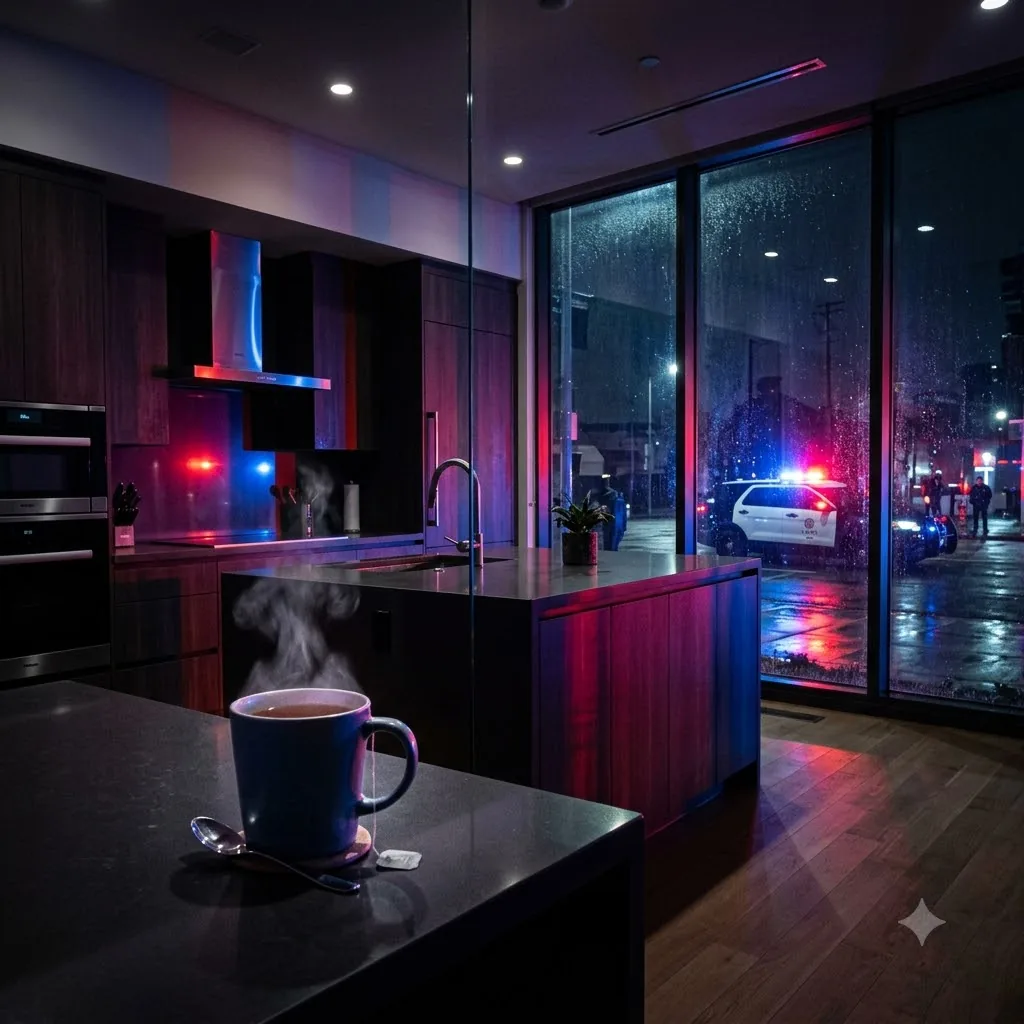
The soft, steady amber glow of his expensive lamps was fractured by a harsh, sweeping intrusion. Sharp red and blue beams sliced aggressively through the millimeter gaps at the edges of his blackout blinds. The intense, synthetic colors strobed across the white ceiling, sliding rapidly across the exposed brick and the floating shelves, painting his imported glass vase in violent flashing hues.
At the exact same moment, the massive wall of bass cut out completely.
Ethan adjusted the felt pads under his imported Murano glass vase, shielding the fragile base from the relentless, rhythmic thudding vibrating up through his reclaimed-oak floorboards. He tapped his tablet screen, meticulously deleting the word “nuisance” and replacing it with “safety concern” in the police department’s community reporting portal. The bass from the street outside was a physical entity, a heavy pressure that crawled up his shins and settled right in the center of his chest.
He had paid a premium for the triple-pane, gas-insulated windows when he gutted and renovated the Victorian row house six months ago. The contractor had promised absolute silence, a fortress of solitude in the middle of a transitioning district. Tonight, that expensive promise was failing spectacularly. The block party had erupted three hours ago, an unauthorized sprawl of folding tables, rented subwoofers, and bodies spilling across the cracked asphalt of the narrow street.
Ethan tapped the backspace key again on his digital keyboard. He wanted the complaint to sound compassionate and professional, the measured words of a civic-minded resident looking out for the community’s best interests. He typed that the sheer volume of the gathering was undoubtedly violating local noise ordinances and preventing emergency vehicles from passing should a genuine crisis arise. It was a perfectly reasonable, objective angle. He hit save on the draft and walked over to the floating shelves mounted on his exposed brick wall.
The bass dropped again, plunging into a low frequency that made his teeth ache. A framed architectural print rattled sharply against the masonry. Ethan pressed his palm flat against the glass frame to steady it, feeling the chaotic energy of the street pounding against his pristine interior. He had spent a small fortune modernizing this space, installing biometric deadbolts, shatterproof security film on all the ground-floor glass, and a smart-climate system. The house was designed to be an impenetrable sanctuary. Yet, the neighborhood was currently invading his living room through the sheer brute force of displaced air.
He moved to the front window and tapped a custom command on his phone. The automated blackout shades rose exactly two inches, giving him a narrow, horizontal slit to observe the chaos without exposing himself to the crowd. The street was packed shoulder to shoulder. A makeshift DJ booth sat in the bed of a battered pickup truck parked diagonally across the center line. People were swaying in unison, passing red plastic cups, their faces illuminated by the harsh glare of a single rigged halogen work light. There were no municipal permits for this, no official orange barricades, just a rogue takeover of the public right-of-way.
Ethan let the motorized blind drop back down. The heavy fabric sealed the room in its carefully curated dimness, illuminated only by the soft glow of his recessed smart lighting. He picked up his tablet from the quartz kitchen island. He added a final sentence about the immediate potential for property damage, citing the intense acoustic vibrations rattling his fixtures. He felt entirely justified in his action. He was simply enforcing the standard of living he had purchased. He hit submit.
The application displayed a spinning loading circle, followed by a crisp green checkmark indicating the municipal dispatch center had received his priority alert.
Ethan set the tablet down and walked slowly through the open-concept living space. He double-checked the reinforced locks on his steel-core back door and verified on a wall-mounted panel that the exterior perimeter alarm was armed. He poured himself a glass of filtered water, standing in the kitchen to watch the surface of the liquid ripple in perfect time with the booming subwoofers outside. He took a slow breath, telling himself the disruption would be over soon. The authorities would handle it efficiently. They would arrive, disperse the crowd, issue their standard warnings, and restore the neighborhood to its proper order.
He sat on his Italian leather sofa, pulling a folded cashmere throw over his knees. The sofa was mathematically positioned for optimal acoustic balance from his own high-end surround sound system, which he currently kept powered off. He closed his eyes, trying intensely to focus on the hum of the smart refrigerator, anything at all to block out the rhythmic pounding bleeding in from the street.
The bass intensified suddenly, shifting to a faster, far more aggressive track. The floorboards vibrated so violently that a decorative ceramic bowl on the coffee table began to inch toward the edge. Ethan shot forward, grabbing the cold ceramic just before it tipped over the side. He held it against his chest, his jaw clenched tight. It was unacceptable to be held hostage in his own home.
He stared straight ahead at the blank rectangle of his television screen, waiting in the dark. Ten minutes passed in agonizingly slow increments. Then fifteen. The gathering outside showed absolutely no signs of slowing down. The shouts and bursts of laughter grew more distinct, bleeding through the heavy insulated walls to mingle with the relentless thumping pulse of the music.
Then, the quality of the light in his living room shifted abruptly.
The soft, steady amber glow of his expensive lamps was fractured by a harsh, sweeping intrusion. Sharp red and blue beams sliced aggressively through the millimeter gaps at the edges of his blackout blinds. The intense, synthetic colors strobed across the white ceiling, sliding rapidly across the exposed brick and the floating shelves, painting his imported glass vase in violent flashing hues.
At the exact same moment, the massive wall of bass cut out completely.