Story code: ST-000834
Part 1: Zone Violation
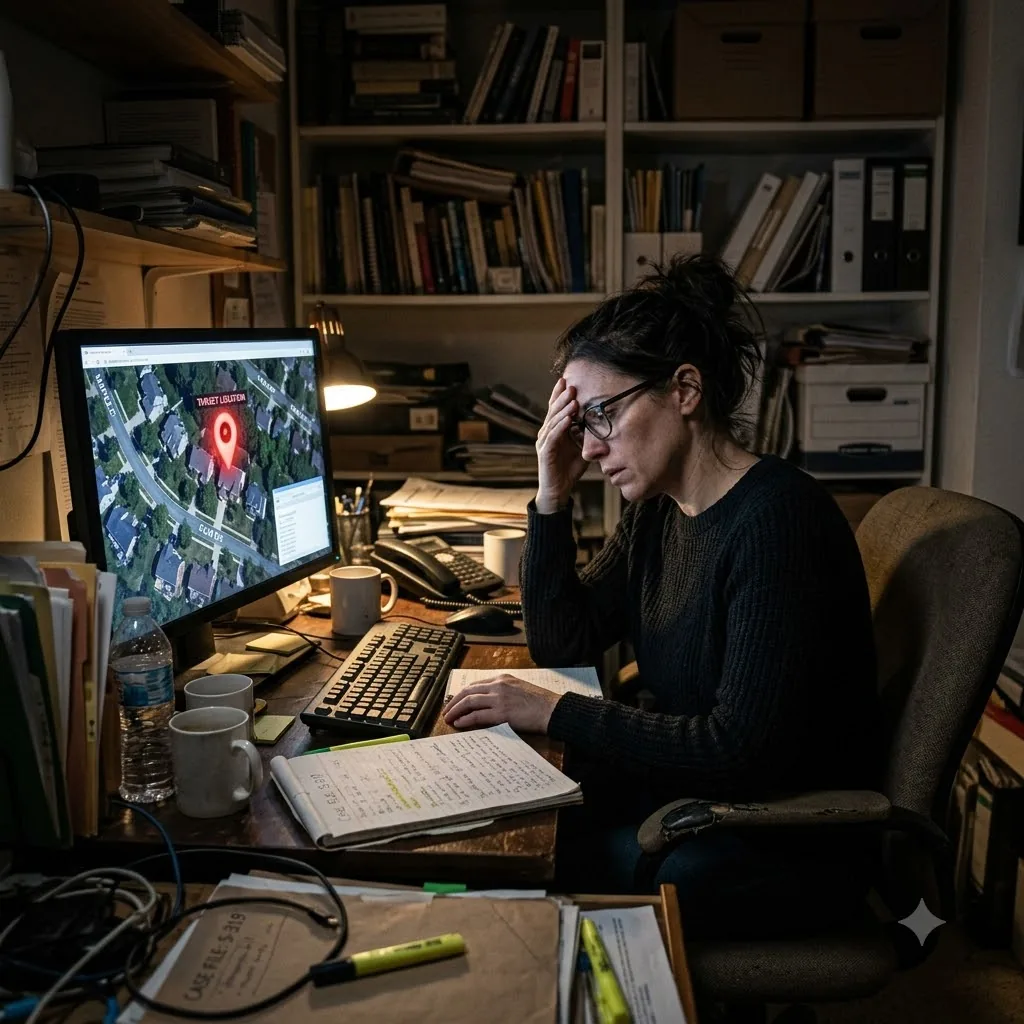
The blue dot on Maya’s secondary monitor pulsed steadily over the address for the Oak Creek Trauma Center, instantly triggering a flashing red alert on the leaked probation dashboard. The county’s automated supervision algorithm stamped a severe violation code across the screen and generated an active arrest warrant in less than two seconds. Maya hammered the target’s cell number into her burner phone to warn him to run, but a heavy, echoing voice answered the line with a flat, “County Sheriff dispatch, state your business.”
Maya killed the call instantly. She dropped the plastic handset onto her cluttered desk, knocking over a stack of empty energy drink cans and a pile of tangled charging cables. Her eyes darted back to the screen. The dashboard, a mirrored instance of the county’s live tracking server she had tapped into three weeks ago, showed the target’s GPS coordinate holding perfectly still. He was sitting in the outpatient clinic waiting room. The algorithmic log scrolling down the right side of her monitor showed exactly what the system saw. It did not see a man waiting for his weekly PTSD therapy session. The system only registered a spatial coordinate intersecting with a newly drawn, highly restricted exclusion zone.
She dragged her mouse over the map, clicking to expand the geographical layers. A harsh yellow circle radiated from a point across the street from the clinic. The map labeled it as a newly constructed public playground. The automated parameters required all individuals with this specific probation tier to remain one thousand feet away from public parks at all times. The trauma clinic fell inside the radius by exactly eleven feet.
No human parole officer had reviewed the alert. The software recognized the proximity, applied a strict zero-tolerance protocol, forged a digital magistrate’s signature, and dispatched an active warrant directly to the nearest patrol units.
Maya typed a rapid command into her terminal to pull up the local police dispatch frequencies. Her cramped, windowless office filled with the static-laced chatter of encrypted radio traffic. She watched the primary map. Two icons representing sheriff cruisers were already converging on the Oak Creek Trauma Center. They were traveling at high speed, completely ignoring traffic signals, less than three blocks away.
The target had no idea. He had attended this exact clinic every Tuesday for six months without a single incident. The playground across the street had only officially opened that morning, instantly updating the city’s automated geofencing database and transforming a place of healing into a digital trap.
Maya pulled up the target’s case file on her left monitor. A technical violation of this tier carried a mandatory remand order. He would go straight back to a maximum-security cell for a minimum of ninety days before a human judge ever looked at the paperwork.
She grabbed her phone again. Calling the target directly had routed to dispatch, meaning the police had already isolated his mobile identifier and spoofed his routing, or they had physically confiscated his device at a previous location. She needed another way to reach the waiting room before the cruisers pulled up. She opened a secured browser and searched for the clinic’s front desk number. The site loaded with painful slowness on her encrypted connection. She found the main line and dialed.
The phone rang four times. An automated receptionist began listing out the department extensions in a cheerful, synthetic voice. Maya pressed zero repeatedly. The line finally clicked over to a live person.
A hushed, panicked whisper came through the speaker. “Oak Creek front desk, we are on a lockdown, please hold.”
Maya gripped the edge of her composite wood desk. She leaned closer to the monitor, her face illuminated by the harsh glow of the screen. The two cruiser icons were perfectly overlapping the clinic’s address. She refreshed the GPS ping of her target. The blue dot remained stationary in the waiting room, completely separated from the cluster of police activity shifting toward the back alley of the building.
She switched her view to the clinic’s public-facing security camera feed, a stream she had bookmarked for monitoring high-risk client movements. The feed was grainy, refreshing only once every three seconds in low resolution.
The waiting room appeared entirely empty. The padded chairs were abandoned. Magazines lay scattered across the scuffed linoleum floor.
Maya cross-referenced the live GPS ping again. The automated system insisted the target was sitting in the third chair from the left, completely motionless.
She looked back at the security feed. The third chair from the left held a heavy winter coat draped over the plastic backrest. A localized tracking bracelet sat neatly unclasped on top of the fabric.
The heavy voice from the sheriff’s dispatch crackled over her local scanner radio.
“Control, this is Unit Four. Target is not on site. Repeat, target has breached the perimeter. We have a secondary trail leading down into the municipal maintenance tunnels.”
Maya reached for her keyboard to pull up the city’s subterranean schematics. Before her fingers touched the keys, a sharp, metallic ping echoed from her own computer speakers. A new red dot appeared on the county dashboard.
It was not located at the clinic. It was not in the maintenance tunnels.
The red dot was pulsing directly over the address of Maya’s apartment building.
The heavy deadbolt on her office door slowly turned.
The blue dot on Maya’s secondary monitor pulsed steadily over the address for the Oak Creek Trauma Center, instantly triggering a flashing red alert on the leaked probation dashboard. The county’s automated supervision algorithm stamped a severe violation code across the screen and generated an active arrest warrant in less than two seconds. Maya hammered the target’s cell number into her burner phone to warn him to run, but a heavy, echoing voice answered the line with a flat, “County Sheriff dispatch, state your business.”
Maya killed the call instantly. She dropped the plastic handset onto her cluttered desk, knocking over a stack of empty energy drink cans and a pile of tangled charging cables. Her eyes darted back to the screen. The dashboard, a mirrored instance of the county’s live tracking server she had tapped into three weeks ago, showed the target’s GPS coordinate holding perfectly still. He was sitting in the outpatient clinic waiting room. The algorithmic log scrolling down the right side of her monitor showed exactly what the system saw. It did not see a man waiting for his weekly PTSD therapy session. The system only registered a spatial coordinate intersecting with a newly drawn, highly restricted exclusion zone.
She dragged her mouse over the map, clicking to expand the geographical layers. A harsh yellow circle radiated from a point across the street from the clinic. The map labeled it as a newly constructed public playground. The automated parameters required all individuals with this specific probation tier to remain one thousand feet away from public parks at all times. The trauma clinic fell inside the radius by exactly eleven feet.
No human parole officer had reviewed the alert. The software recognized the proximity, applied a strict zero-tolerance protocol, forged a digital magistrate’s signature, and dispatched an active warrant directly to the nearest patrol units.
Maya typed a rapid command into her terminal to pull up the local police dispatch frequencies. Her cramped, windowless office filled with the static-laced chatter of encrypted radio traffic. She watched the primary map. Two icons representing sheriff cruisers were already converging on the Oak Creek Trauma Center. They were traveling at high speed, completely ignoring traffic signals, less than three blocks away.
The target had no idea. He had attended this exact clinic every Tuesday for six months without a single incident. The playground across the street had only officially opened that morning, instantly updating the city’s automated geofencing database and transforming a place of healing into a digital trap.
Maya pulled up the target’s case file on her left monitor. A technical violation of this tier carried a mandatory remand order. He would go straight back to a maximum-security cell for a minimum of ninety days before a human judge ever looked at the paperwork.
She grabbed her phone again. Calling the target directly had routed to dispatch, meaning the police had already isolated his mobile identifier and spoofed his routing, or they had physically confiscated his device at a previous location. She needed another way to reach the waiting room before the cruisers pulled up. She opened a secured browser and searched for the clinic’s front desk number. The site loaded with painful slowness on her encrypted connection. She found the main line and dialed.
The phone rang four times. An automated receptionist began listing out the department extensions in a cheerful, synthetic voice. Maya pressed zero repeatedly. The line finally clicked over to a live person.
A hushed, panicked whisper came through the speaker. “Oak Creek front desk, we are on a lockdown, please hold.”
Maya gripped the edge of her composite wood desk. She leaned closer to the monitor, her face illuminated by the harsh glow of the screen. The two cruiser icons were perfectly overlapping the clinic’s address. She refreshed the GPS ping of her target. The blue dot remained stationary in the waiting room, completely separated from the cluster of police activity shifting toward the back alley of the building.
She switched her view to the clinic’s public-facing security camera feed, a stream she had bookmarked for monitoring high-risk client movements. The feed was grainy, refreshing only once every three seconds in low resolution.
The waiting room appeared entirely empty. The padded chairs were abandoned. Magazines lay scattered across the scuffed linoleum floor.
Maya cross-referenced the live GPS ping again. The automated system insisted the target was sitting in the third chair from the left, completely motionless.
She looked back at the security feed. The third chair from the left held a heavy winter coat draped over the plastic backrest. A localized tracking bracelet sat neatly unclasped on top of the fabric.
The heavy voice from the sheriff’s dispatch crackled over her local scanner radio.
“Control, this is Unit Four. Target is not on site. Repeat, target has breached the perimeter. We have a secondary trail leading down into the municipal maintenance tunnels.”
Maya reached for her keyboard to pull up the city’s subterranean schematics. Before her fingers touched the keys, a sharp, metallic ping echoed from her own computer speakers. A new red dot appeared on the county dashboard.
It was not located at the clinic. It was not in the maintenance tunnels.
The red dot was pulsing directly over the address of Maya’s apartment building.
The heavy deadbolt on her office door slowly turned.