Story code: ST-000144
Part 4: The Sanctuary
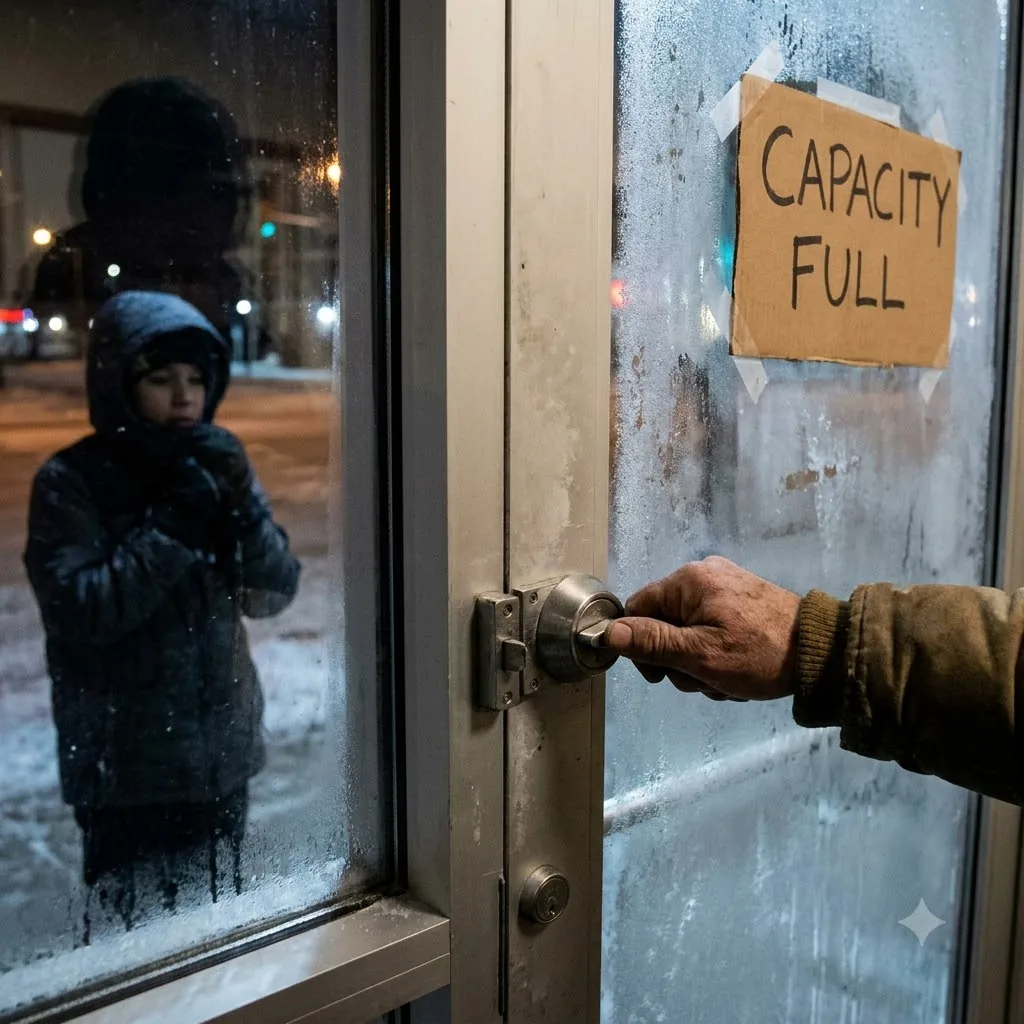
Miller’s thumb finally slipped off the radio’s transmit button. The sharp click of the plastic was the loudest sound in the freezing vestibule. He stared at the VA ID card pressed against his chest, then slowly raised his eyes to Mark. The fire marshal’s face had lost its aggressive flush, replaced by a pale, calculating grimace.
“Cancel the units,” Miller barked at Barnes, not breaking eye contact with Mark.
Barnes stammered, his hand hovering over his own radio. “Sir, the code violation-”
“I said cancel them, Barnes!” Miller snapped. He took a deliberate step backward, putting distance between himself and the damning piece of plastic in Mark’s hand. “You win tonight, Councilman. But the Mayor’s office will have your head on a spike by nine tomorrow morning. You’re done in this city.”
“I’m already done,” Mark said quietly.
The two marshals turned and shoved their way back out into the blizzard. The heavy glass doors slammed shut behind them, cutting off the howl of the wind and leaving the vestibule in a heavy, exhausted silence.
Mark let out a long, ragged breath, sliding down the brick wall until he hit the damp floor mats. He looked over at William Vance. The older veteran had already moved to the shivering teenager, draping his thick, worn overcoat over the boy’s trembling shoulders. They were huddled together on the floor, directly beneath the glossy, city-funded PR poster taped to the glass. The poster featured Mark and the Mayor, beaming perfectly white smiles over the bold blue word, “Compassion.”
The absolute absurdity of the image-two freezing, discarded human beings shivering beneath a glossy political advertisement-turned Mark’s stomach.
“The package,” Vance said, his gravelly voice pulling Mark from his disgust. The veteran pointed a bare, scarred hand at the heavy brown block Mark had dropped on the tiles during the scuffle.
Mark crawled over to the bundle. His numb fingers struggled with the thick twine, finally snapping the knots. He tore away the coarse brown paper. Inside rested a massive, rusted iron padlock and a length of heavy, industrial chain. It was an antique, thick with age and flaking metal.
“From the old Broad Street shelter,” Vance murmured, not looking up as he rubbed the young migrant’s arms to generate heat. “The city chained the doors during the freeze of ’08. Fourteen people froze on the steps. I kept the lock.”
Mark stared at the rusted iron. It was the physical embodiment of the system he had served, the very system that had just ordered him to repeat history tonight. The weight of it in his hands felt like a sickening anchor. He dropped the lock onto the damp floor. It hit the tiles with a heavy, final clank.
Mark reached into his pocket and pulled out his phone. He opened the camera application and framed the shot carefully. He captured the shivering veteran and the exhausted migrant huddled together on the wet floor mats, the rusted chain resting beside them, and the smiling, hypocritical faces of the Mayor floating above them on the PR poster. The fluorescent lighting was harsh, unflattering, and entirely real.
He snapped the photo.
Leaving the vestibule, Mark walked into his cramped, unheated office just off the main gymnasium. The sounds of three hundred and three people-coughing, snoring, shifting on canvas cots-bled through the thin drywall. He opened his laptop, the screen illuminating his exhausted face in the dark room.
He didn’t bother opening his campaign software. He opened his direct city council email.
The subject line was simple: *Resignation and Evacuation Order.*
Mark’s fingers flew across the keyboard. He didn’t use political speak. He didn’t soften the edges. He detailed the direct order from the fire marshals to force a disabled Gulf War veteran and a freezing migrant out into single-digit temperatures to satisfy a technicality. He explicitly named the Mayor’s office and the structural failures of the city’s housing initiatives. He renounced his council seat, effective immediately, declaring that the community center was no longer a city-sanctioned facility subject to political whims, but an independent sanctuary.
He attached the photograph.
In the BCC line, Mark pasted the contact addresses for every local news station, every investigative journalist, and every major newspaper editor in the city. Channel 4. Channel 9. The Tribune. He added the Mayor’s chief of staff in the direct line.
Mark stared at the cursor blinking at the end of the email. For five years, he had swallowed his morals, convinced that playing the game was the only way to effect change from the inside. He had built an entire career on carefully curated optics and measured liabilities. All of it had led to him standing at a glass door, locking people out to die.
He hit send.
The outbox swooshed. The connection to the system was instantly, permanently severed.
Mark closed the laptop and pushed it to the edge of his desk. The paralyzing anxiety that had gripped his chest since noon evaporated, replaced by a profound, hollow calm. He was jobless. He was politically ruined. By morning, the city would likely attempt to seize the building.
He stood up and walked out of the office, stepping into the massive, humid gymnasium. The sour smell of unwashed bodies and damp wool no longer felt like a hazard; it felt like life. Near the double doors, William Vance was helping the young man onto a spare patch of floor near a radiator.
Mark walked past them, making his way to the front vestibule. He picked up the heavy iron padlock from the wet tiles. He looked at the brass deadbolt on the glass door, then at the freezing snow swirling under the streetlamps outside. Mark shoved the heavy padlock deep into his coat pocket and turned his back on the cold, leaving the door completely unlocked.