Story code: ST-000219
Part 2: Automated Erasure
“This is Dennis with Pacific Mutual. Am I speaking with Maya Lin regarding claim eight-eight-three-nine-zero-four?”
Maya cleared her throat, her eyes still locked on Tyler Roarke’s stolen digital masterpiece on her tablet. “Yes. I’m here.”
“This statement is being recorded for quality and evaluation purposes,” Dennis droned, his voice utterly devoid of empathy. “I see your primary residence was located within the Canyon Creek total loss zone. To process the commercial inventory claim for your business, we need to establish the value of the destroyed assets.”
Maya swallowed hard, forcing herself to look away from Tyler’s grinning face. “I’m a working artist. My studio was in the converted garage. I lost forty-two completed oil paintings, extensive raw materials, two drafting tables, and a commercial kiln. The rough value of the inventory and equipment is forty-five thousand dollars.”
“Understood,” Dennis said, typing loudly in the background. “Because this is a commercial loss occurring on a residential footprint, Pacific Mutual requires time-stamped photographic evidence of the assets in situ prior to the incident. Do you have a digital ledger or photographic catalog?”
Maya’s chest tightened. Her physical ledger and backup drives were reduced to gray ash. “My laptop burned, but I have an online portfolio. And I posted a video tour of the studio on my professional social media page the day before the evacuation. You can see all the completed canvases. I also posted photos of the property.”
“Excellent,” Dennis said, though he didn’t sound pleased. “Please upload the direct URLs to your claim portal within forty-eight hours. If we cannot verify the commercial assets by Thursday, the file will default to standard residential contents.”
Standard residential meant a two-thousand-dollar payout for “hobby equipment.” It meant total bankruptcy.
“I’ll upload them right now,” Maya promised.
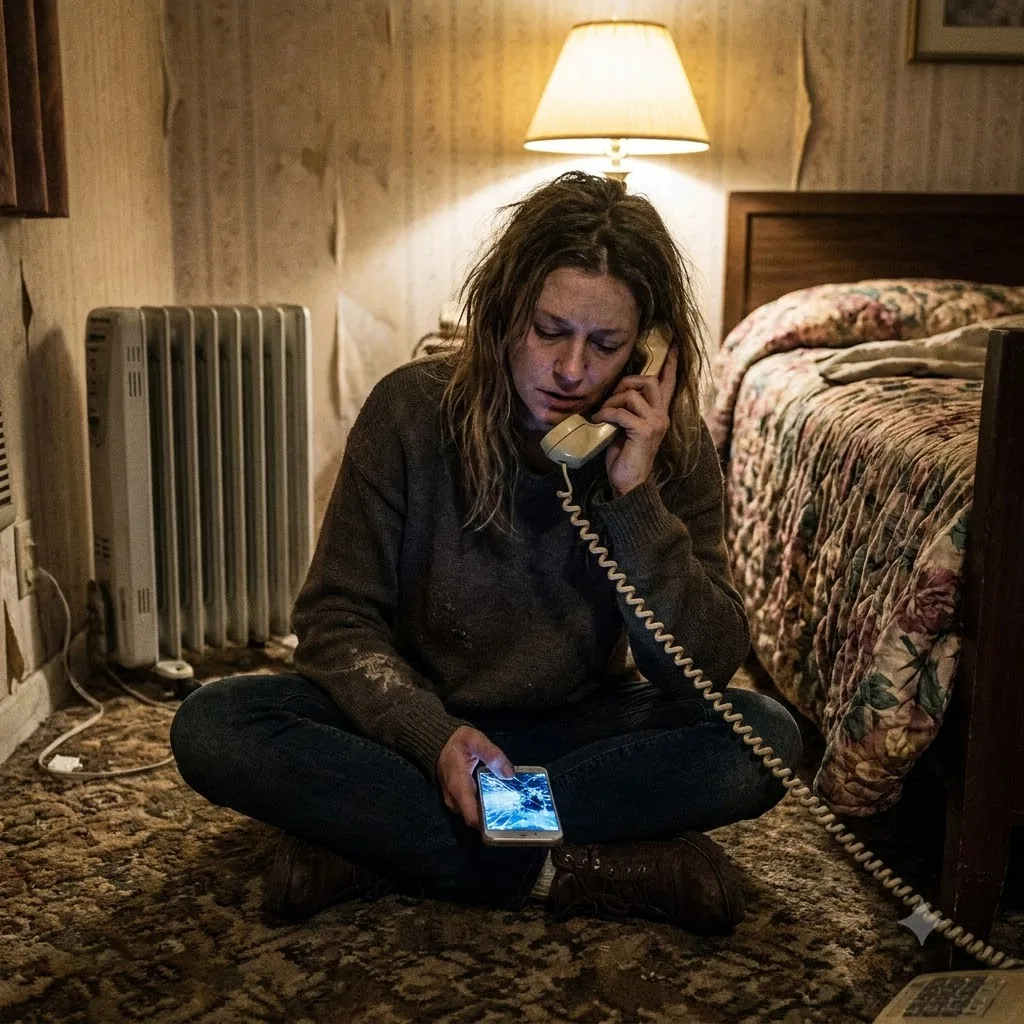
The call ended, and the heavy silence of the motel room rushed back in. Maya rubbed her temples, trying to focus. She had forty-eight hours. All she needed to do was link her online gallery and her recent posts to the insurance portal.
She toggled her tablet browser back to her artist portfolio site, navigating to her main gallery to copy the URLs.
She logged in. The homepage loaded, but instead of the vibrant grid of her landscape paintings and studio shots, a series of blank, sterile gray squares populated the screen.
Maya blinked, tapping the glass. A small red exclamation point hovered over the first gray box. She clicked it.
A pop-up materialized: *Content Removed. This image has been disabled in response to a Digital Millennium Copyright Act (DMCA) takedown notice filed by Roarke Digital LLC.*
Her stomach plummeted. She clicked the next square. *Content Removed.* She clicked the video tour of her studio. *Content Removed.*
Panic flaring in her throat, Maya opened her social media app. She scrolled frantically down to the photo of her porch-the exact photo Tyler Roarke had scraped to generate his award-winning *Embers on the Threshold*.
It was gone. Replaced by the same automated copyright violation notice.
She clicked the link for the takedown details. The claim stated that Maya’s images contained “unauthorized similarities to copyrighted digital assets registered to Tyler Roarke.”
It was a fully automated legal sweep. When Tyler won the fifty-thousand-dollar Future Visions grant, he hadn’t just claimed the money. He had registered his AI-generated portfolio for copyright protection. To secure his commercial rights before his upcoming gallery exhibition, his software-or his lawyers-had unleashed crawler bots across the web to find and eradicate any images that closely matched his “original” outputs.
Because his AI model had perfectly replicated Maya’s porch, her wind chimes, and the very layout of her studio from the hashtag she used during the evacuation, the bots flagged *her* original source photographs as the illegal copies.
She tapped wildly on the dispute button. A new window appeared: *Counter-notices may take up to 14 business days to be reviewed by our legal team. During this time, the content will remain inaccessible.*
Fourteen days.
Dennis at Pacific Mutual had given her forty-eight hours.
Maya sat on the edge of the mattress, the tablet growing hot against her palms. The sheer absurdity of it threatened to crack her open. The fire had taken the physical canvas, the wood, the paint, the years of labor. Now, the algorithm was taking the memory, the very proof that her livelihood had ever existed. Tyler Roarke was being celebrated as a visionary of climate tragedy, while the machine he used systematically erased the actual victims to protect his intellectual property.
She opened a new search tab and typed in the Future Visions Digital Arts Grant. She found the press contact for the regional arts council. There was a phone number listed for media inquiries regarding the winner.
Maya didn’t think; she just dialed.
A cheerful receptionist answered. “Future Visions Arts Council, how can I direct your call?”
“I need to speak to someone about the grant awarded to Tyler Roarke,” Maya said, her voice shaking with restrained fury. “He didn’t create those images. He stole them. He scraped them from the evacuation feeds of the Canyon Creek wildfire, and now his company is filing false copyright strikes against my original photos!”
There was a sharp pause on the line. The cheerfulness vanished, replaced by a practiced corporate caution. “Ma’am, Mr. Roarke’s submission underwent a rigorous verification process. He provided his prompt logs and the underlying seed codes to the judges. The work is highly transformative.”
“It’s not transformative! It’s my front porch. It’s my ruined studio!” Maya yelled, gripping the phone tight enough to make her knuckles ache. “He used my photos to train his model, and now his automated legal bots are deleting my original uploads! I need those photos for my insurance claim!”
“If you have a legal dispute regarding copyright, you will need to direct that to Mr. Roarke’s representation,” the receptionist said coldly. “We do not handle third-party IP disputes for our grant recipients.”
“Wait, please-”
The line went dead.
Maya stared at the disconnected screen. She was entirely boxed in. The insurance company demanded proof of her life’s work, but the tech sector had already digested her life’s work, repackaged it for a grant, and legally locked her out of her own digital footprint.
A notification slid down from the top of her tablet screen. It was an automated email from Pacific Mutual: *Action Required: Upload Evidence of Commercial Inventory (Claim 883904-B) within 48 Hours.*
Maya looked from the tablet to the single charred sketchbook resting on her nightstand. The soot stained the cheap laminate. The twin machines of bureaucracy and technology were working in perfect, blind harmony to guarantee she walked away with nothing.