Story code: ST-000700
Part 1: The Metric
The optical switch on Sarah’s ergonomic mouse issued a hollow, plastic snap as she selected *Not Medically Necessary* from the glowing blue dropdown menu of the CarePath portal. Beyond the reinforced glass of her fourth-floor cubicle, a muffled, rhythmic chanting vibrated against the pane, but she kept her eyes locked on the digital quota tracker at the bottom right of her screen. The counter read seventy-four, leaving her six files short of the daily minimum with exactly twenty-two minutes left until her mandated lunch break.
She adjusted her noise-canceling headset, pressing the thick foam tighter against her ears to block out the rising commotion from the street below. The software refreshed, pulling up a loading wheel that spun for three agonizing seconds. A new file populated on her primary monitor. She scanned the intake notes, her index finger resting heavily on the rejection macro she had bound to the side button of her mouse. The street noise escalated into a series of dull, heavy thuds that vibrated up through the steel girders of the corporate clinic. A fine layer of dust drifted down from the acoustic ceiling tiles, settling onto the black plastic edge of her keyboard.
Sarah did not look toward the window. Looking away from the dual monitors broke her rhythm, and rhythm was the only thing keeping her employed. Her shift supervisor pulled the biometric tracking logs every Friday at noon, and idle time over thirty seconds triggered an automated warning in her personnel file. She clicked the next tab on the patient ledger. It was a request for an immediate, high-tier behavioral therapy intervention. The automated triage algorithm had already flagged the file with a bright yellow warning border, indicating a deviation from standard out-of-network coverage limits.
She moved the cursor to the red decline button. The screen flashed a brief, satisfying green confirmation checkmark. Seventy-five.
The overhead fluorescent lights flickered, buzzing loudly before stabilizing into a harsh glare. A siren wailed in the distance, the pitch bending sharply as an emergency vehicle slammed on its heavy brakes directly outside the building. Brilliant red and blue strobes pulsed through the horizontal window blinds, painting sharp, rotating lines across her gray fabric partition.
Around her, the soft, collective chorus of typing and mouse clicks began to fade. The sudden silence inside the open-plan office felt entirely unnatural, far heavier than the escalating chaos outside. Sarah stubbornly kept her eyes glued to the screen, opening file seventy-six. She heard the distinct squeak of caster wheels rolling backward on the low-pile carpet. Shadows shifted rapidly at the extreme edge of her peripheral vision as her colleagues stood up in unison, leaning over their low dividers to peer down at the street.
A woman two rows over let out a sharp gasp. A heavy impact rattled the exterior wall, followed by the sickening, crystalline shatter of thick safety glass raining down onto the concrete pavement.
Sarah stiffened in her ergonomic chair, her finger frozen over the scroll wheel. She stared at the sterile white background of the medical portal, fighting the urge to turn her head. She had processed the manual override denial for that high-tier therapy extension barely ten minutes ago. It was a completely routine click, a simple, emotionless enforcement of the company’s stringent policy guidelines regarding resource allocation. It was nothing out of the ordinary, just another number in the daily grind to hit eighty.
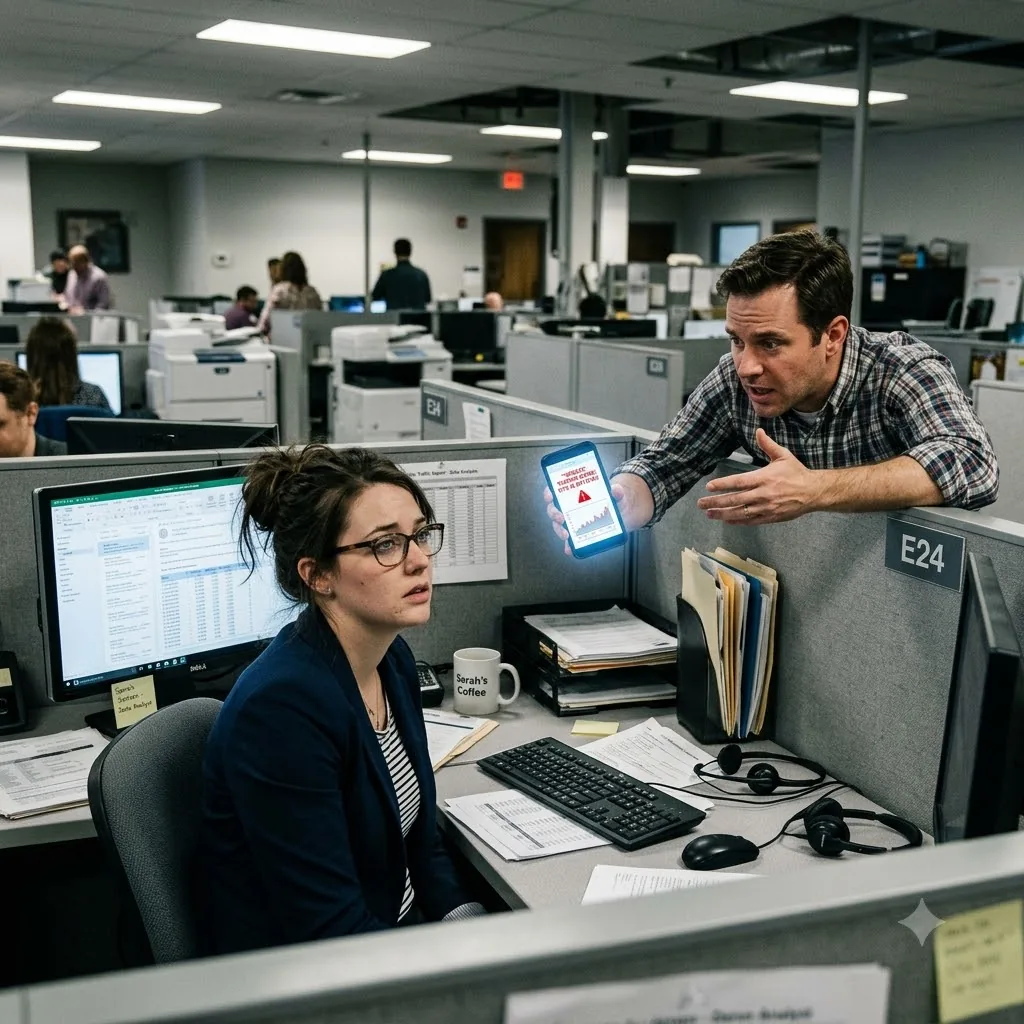
Her cubicle wall shook violently as someone collided with it. Mark, the senior claims adjuster from the adjacent row, leaned directly into her line of sight, breathing heavily. He did not say a word about her metrics, the broken glass, or the impending lunch hour. Instead, he thrust his glowing smartphone forward, shoving the device directly between her face and her primary monitor.
The screen displayed a chaotic, shaky livestream pulled from a local news aggregate account. The view was angled from the sidewalk directly in front of their building, the camera operator ducking behind a green postal box for cover.
Sarah blinked, the harsh blue light of the phone screen reflecting perfectly in the lenses of her glasses. The livestream was raw and unfiltered, the camera panning wildly as pedestrians scrambled away from the clinic’s main entrance. In the exact center of the frame, a lone figure stood atop a crushed black sedan, clutching a heavy piece of jagged asphalt. The person was screaming, their face distorted by rage and digital pixelation, aiming their fury specifically at the glass facade of the fourth floor.
Mark tapped the physical volume button on the side of his phone, pushing the audio to the maximum level over the stunned silence of the office. The streamer running the camera digitally zoomed in on the figure on the car. The person dropped the chunk of asphalt and held up a large, industrial-grade tablet. They began aggressively tapping the screen, turning the display toward the street.
The camera lost focus for a second before snapping back into crisp resolution. The streamer managed to capture a clear, perfectly zoomed-in shot of the tablet screen, which displayed a high-contrast digital email notification.
Sarah felt the chilled, conditioned air leave her lungs.
The livestream audio picked up the person screaming a specific, sixteen-character alphanumeric reference code. It was the exact string of characters the CarePath system automatically generated when a manual override denial was finalized by a human operator. The timestamp visible at the very top of the tablet screen in the video read ten minutes ago.
Mark stared at her, his expression a tight, grim mask of horror and sudden realization. He pointed a trembling, ink-stained finger at her secondary monitor, where her recent processing history remained permanently visible in a small sidebar window. The sixteen-character alphanumeric code being broadcast on the livestream matched the top entry on her completed ledger, character for character.
On the phone screen, the person picked up another heavy chunk of concrete and hurled it directly at the camera, shattering the lens and sending the broadcast into a sudden, silent screen of gray static.
A deafening metallic crash echoed up from the lobby downstairs, followed instantly by the frantic, ear-piercing shriek of the emergency stairwell alarms blaring to life.
The optical switch on Sarah’s ergonomic mouse issued a hollow, plastic snap as she selected *Not Medically Necessary* from the glowing blue dropdown menu of the CarePath portal. Beyond the reinforced glass of her fourth-floor cubicle, a muffled, rhythmic chanting vibrated against the pane, but she kept her eyes locked on the digital quota tracker at the bottom right of her screen. The counter read seventy-four, leaving her six files short of the daily minimum with exactly twenty-two minutes left until her mandated lunch break.
She adjusted her noise-canceling headset, pressing the thick foam tighter against her ears to block out the rising commotion from the street below. The software refreshed, pulling up a loading wheel that spun for three agonizing seconds. A new file populated on her primary monitor. She scanned the intake notes, her index finger resting heavily on the rejection macro she had bound to the side button of her mouse. The street noise escalated into a series of dull, heavy thuds that vibrated up through the steel girders of the corporate clinic. A fine layer of dust drifted down from the acoustic ceiling tiles, settling onto the black plastic edge of her keyboard.
Sarah did not look toward the window. Looking away from the dual monitors broke her rhythm, and rhythm was the only thing keeping her employed. Her shift supervisor pulled the biometric tracking logs every Friday at noon, and idle time over thirty seconds triggered an automated warning in her personnel file. She clicked the next tab on the patient ledger. It was a request for an immediate, high-tier behavioral therapy intervention. The automated triage algorithm had already flagged the file with a bright yellow warning border, indicating a deviation from standard out-of-network coverage limits.
She moved the cursor to the red decline button. The screen flashed a brief, satisfying green confirmation checkmark. Seventy-five.
The overhead fluorescent lights flickered, buzzing loudly before stabilizing into a harsh glare. A siren wailed in the distance, the pitch bending sharply as an emergency vehicle slammed on its heavy brakes directly outside the building. Brilliant red and blue strobes pulsed through the horizontal window blinds, painting sharp, rotating lines across her gray fabric partition.
Around her, the soft, collective chorus of typing and mouse clicks began to fade. The sudden silence inside the open-plan office felt entirely unnatural, far heavier than the escalating chaos outside. Sarah stubbornly kept her eyes glued to the screen, opening file seventy-six. She heard the distinct squeak of caster wheels rolling backward on the low-pile carpet. Shadows shifted rapidly at the extreme edge of her peripheral vision as her colleagues stood up in unison, leaning over their low dividers to peer down at the street.
A woman two rows over let out a sharp gasp. A heavy impact rattled the exterior wall, followed by the sickening, crystalline shatter of thick safety glass raining down onto the concrete pavement.
Sarah stiffened in her ergonomic chair, her finger frozen over the scroll wheel. She stared at the sterile white background of the medical portal, fighting the urge to turn her head. She had processed the manual override denial for that high-tier therapy extension barely ten minutes ago. It was a completely routine click, a simple, emotionless enforcement of the company’s stringent policy guidelines regarding resource allocation. It was nothing out of the ordinary, just another number in the daily grind to hit eighty.
Her cubicle wall shook violently as someone collided with it. Mark, the senior claims adjuster from the adjacent row, leaned directly into her line of sight, breathing heavily. He did not say a word about her metrics, the broken glass, or the impending lunch hour. Instead, he thrust his glowing smartphone forward, shoving the device directly between her face and her primary monitor.
The screen displayed a chaotic, shaky livestream pulled from a local news aggregate account. The view was angled from the sidewalk directly in front of their building, the camera operator ducking behind a green postal box for cover.
Sarah blinked, the harsh blue light of the phone screen reflecting perfectly in the lenses of her glasses. The livestream was raw and unfiltered, the camera panning wildly as pedestrians scrambled away from the clinic’s main entrance. In the exact center of the frame, a lone figure stood atop a crushed black sedan, clutching a heavy piece of jagged asphalt. The person was screaming, their face distorted by rage and digital pixelation, aiming their fury specifically at the glass facade of the fourth floor.
Mark tapped the physical volume button on the side of his phone, pushing the audio to the maximum level over the stunned silence of the office. The streamer running the camera digitally zoomed in on the figure on the car. The person dropped the chunk of asphalt and held up a large, industrial-grade tablet. They began aggressively tapping the screen, turning the display toward the street.
The camera lost focus for a second before snapping back into crisp resolution. The streamer managed to capture a clear, perfectly zoomed-in shot of the tablet screen, which displayed a high-contrast digital email notification.
Sarah felt the chilled, conditioned air leave her lungs.
The livestream audio picked up the person screaming a specific, sixteen-character alphanumeric reference code. It was the exact string of characters the CarePath system automatically generated when a manual override denial was finalized by a human operator. The timestamp visible at the very top of the tablet screen in the video read ten minutes ago.
Mark stared at her, his expression a tight, grim mask of horror and sudden realization. He pointed a trembling, ink-stained finger at her secondary monitor, where her recent processing history remained permanently visible in a small sidebar window. The sixteen-character alphanumeric code being broadcast on the livestream matched the top entry on her completed ledger, character for character.
On the phone screen, the person picked up another heavy chunk of concrete and hurled it directly at the camera, shattering the lens and sending the broadcast into a sudden, silent screen of gray static.
A deafening metallic crash echoed up from the lobby downstairs, followed instantly by the frantic, ear-piercing shriek of the emergency stairwell alarms blaring to life.