Story code: ST-001726
Part 1: The Bleed
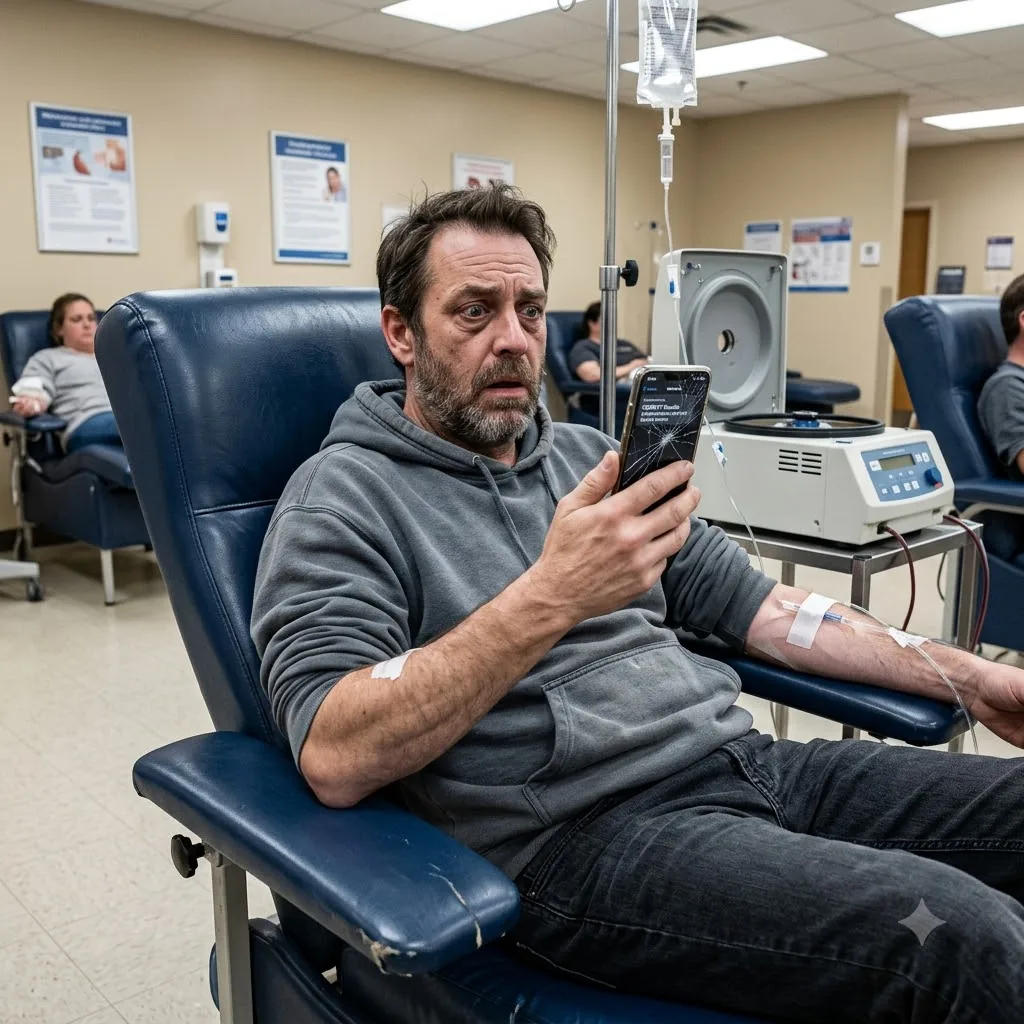
The cracked vinyl of the recliner squeaked beneath Elias as the centrifuge beside him kicked into its high-pitched whine. It was a familiar, rhythmic hum that meant he was trading his plasma for fifty dollars. He squinted at the shattered screen of his phone, dragging his thumb carefully over the glass. He was grading a freshman essay on structural inequality, attempting to leave a comment about thesis clarity without highlighting the entire page. The needle in his left arm throbbed with a dull, persistent ache he had trained himself to ignore. His loan payment was due in exactly three days, and this clinic was the only reliable way to keep his electricity on through the upcoming weekend.
The donation center smelled of rubbing alcohol and cheap floor wax. Above him, a muted television played a daytime court show. A row of exhausted people sat in identical chairs, all hooked to identical machines, silently watching their blood spin.
A banner notification dropped down over the student’s essay. The sender was the university provost’s automated mailing list.
Elias tapped the alert, abandoning the grading app. The text was formatted in the sterile, corporate font the administration reserved for devastating news. The subject line read ‘Critical Update Regarding Adjunct Faculty Contracts.’
He read the first paragraph. It announced an immediate and indefinite freeze on all adjunct faculty contract renewals, citing a severe, unanticipated budget deficit for the upcoming fiscal year. All current contracts would terminate on their stated end dates.
Elias stared at the bright white screen. His current contract expired in twelve days. After that, he would have no income, no university access, and no way to pay the loans he had taken out just to get the degree required to teach there.
He scrolled numbly past the boilerplate apologies. He scrolled past the generic paragraphs thanking the adjunct staff for their dedication to the student body. He scrolled past the links to community mental health resources that he would no longer be eligible to use once his ID card deactivated.
At the very bottom of the email sat an attachment, labeled as the finalized public budget deficit report.
He tapped the PDF icon. The file took a long time to load over the clinic’s weak, overloaded Wi-Fi network, eventually rendering as a dense grid of numbers spanning over sixty pages. Elias pinched the shattered glass of his screen, zooming in on the tiny columns of black and red ink.
He swiped past the bloated administrative salaries that never seemed to experience a freeze. He swiped past the multi-million dollar stadium renovation budget and the extensive discretionary funds allocated for the board of trustees. He knew the university had plenty of money. They just categorically refused to spend it on the people actually teaching the core curriculum.
He swiped down to page forty-two, to a section labeled ‘Operational Deficiencies and Reallocations.’
The centrifuge clicked beside him, shifting into a return cycle. Elias rubbed his burning eyes and adjusted his grip on the phone, bringing the screen a few inches closer to his face.
A highly specific line item caught his attention. It sat buried beneath a list of deferred maintenance costs for the eastern science building. The label read ‘Tier 3 Staff Welfare Fund.’
Elias stopped breathing.
He stared at the final figure in the column next to that label. Two million, four hundred twelve thousand, six hundred and eight dollars and forty-two cents.
He knew that exact sequence of numbers. He had spent the last three months serving as the unpaid representative for the adjunct union, fighting in endless closed-door meetings to keep their emergency health pool alive. That specific pool was the only reason his colleague Sarah could afford her insulin. It was the only reason Mark from the history department had not lost his apartment after a hit-and-run accident.
The administration had officially dissolved that pool last week. The provost had looked Elias directly in the eye across a mahogany conference table and stated that the money simply did not exist anymore, claiming it had been entirely absorbed into general operating losses due to low enrollment.
The exact balance in the adjunct health pool account on the morning they locked it was two million, four hundred twelve thousand, six hundred and eight dollars and forty-two cents.
It had not been absorbed by operating losses. It had been moved. It had been neatly relabeled as a ‘Tier 3 Staff Welfare Fund’ and tucked away in an administrative account that only senior staff could access. They had stolen the emergency medical funds to pad the discretionary accounts of people who already made six figures.
The realization hit him like a physical blow to the chest. They were firing him and keeping the money he had bled to save. He looked down at the thick needle taped securely to his arm, siphoning his plasma just so he could afford to eat rice and beans. The provost was sitting on the very funds that belonged to the desperate, exhausted people bleeding out in chairs exactly like this one.
A hot, blinding surge of adrenaline spiked through his veins. The clinic’s fluorescent lights seemed to hum louder, vibrating violently against his skull. He stared at the exact cent value on the screen again, the sheer audacity of the accounting error mocking him in twelve-point Arial font.
Elias gripped the cold armrests of the vinyl chair. He forgot the needle. He forgot the whirring centrifuge. He forgot the fifty dollars he desperately needed.
He surged upward, driving his heavy boots hard into the linoleum floor.
The plastic tubing connecting his vein to the machine snapped incredibly taut. A sharp, searing rip tore through the crook of his elbow as the tape gave way. The heavy metal IV stand, dragged violently forward by his sudden momentum, tipped directly off its cast-iron base.
The steel pole crashed down against the linoleum. The centrifuge machine hit the floor a split second later, cracking its plastic housing and triggering a shrieking mechanical alarm.
A phlebotomist across the room shouted and dropped a metal clipboard. Elias stood rigid over the shattered equipment with bright red blood running down his forearm, his eyes locked entirely on the cracked phone screen still glowing in his hand as security guards rushed down the aisle.
The cracked vinyl of the recliner squeaked beneath Elias as the centrifuge beside him kicked into its high-pitched whine. It was a familiar, rhythmic hum that meant he was trading his plasma for fifty dollars. He squinted at the shattered screen of his phone, dragging his thumb carefully over the glass. He was grading a freshman essay on structural inequality, attempting to leave a comment about thesis clarity without highlighting the entire page. The needle in his left arm throbbed with a dull, persistent ache he had trained himself to ignore. His loan payment was due in exactly three days, and this clinic was the only reliable way to keep his electricity on through the upcoming weekend.
The donation center smelled of rubbing alcohol and cheap floor wax. Above him, a muted television played a daytime court show. A row of exhausted people sat in identical chairs, all hooked to identical machines, silently watching their blood spin.
A banner notification dropped down over the student’s essay. The sender was the university provost’s automated mailing list.
Elias tapped the alert, abandoning the grading app. The text was formatted in the sterile, corporate font the administration reserved for devastating news. The subject line read ‘Critical Update Regarding Adjunct Faculty Contracts.’
He read the first paragraph. It announced an immediate and indefinite freeze on all adjunct faculty contract renewals, citing a severe, unanticipated budget deficit for the upcoming fiscal year. All current contracts would terminate on their stated end dates.
Elias stared at the bright white screen. His current contract expired in twelve days. After that, he would have no income, no university access, and no way to pay the loans he had taken out just to get the degree required to teach there.
He scrolled numbly past the boilerplate apologies. He scrolled past the generic paragraphs thanking the adjunct staff for their dedication to the student body. He scrolled past the links to community mental health resources that he would no longer be eligible to use once his ID card deactivated.
At the very bottom of the email sat an attachment, labeled as the finalized public budget deficit report.
He tapped the PDF icon. The file took a long time to load over the clinic’s weak, overloaded Wi-Fi network, eventually rendering as a dense grid of numbers spanning over sixty pages. Elias pinched the shattered glass of his screen, zooming in on the tiny columns of black and red ink.
He swiped past the bloated administrative salaries that never seemed to experience a freeze. He swiped past the multi-million dollar stadium renovation budget and the extensive discretionary funds allocated for the board of trustees. He knew the university had plenty of money. They just categorically refused to spend it on the people actually teaching the core curriculum.
He swiped down to page forty-two, to a section labeled ‘Operational Deficiencies and Reallocations.’
The centrifuge clicked beside him, shifting into a return cycle. Elias rubbed his burning eyes and adjusted his grip on the phone, bringing the screen a few inches closer to his face.
A highly specific line item caught his attention. It sat buried beneath a list of deferred maintenance costs for the eastern science building. The label read ‘Tier 3 Staff Welfare Fund.’
Elias stopped breathing.
He stared at the final figure in the column next to that label. Two million, four hundred twelve thousand, six hundred and eight dollars and forty-two cents.
He knew that exact sequence of numbers. He had spent the last three months serving as the unpaid representative for the adjunct union, fighting in endless closed-door meetings to keep their emergency health pool alive. That specific pool was the only reason his colleague Sarah could afford her insulin. It was the only reason Mark from the history department had not lost his apartment after a hit-and-run accident.
The administration had officially dissolved that pool last week. The provost had looked Elias directly in the eye across a mahogany conference table and stated that the money simply did not exist anymore, claiming it had been entirely absorbed into general operating losses due to low enrollment.
The exact balance in the adjunct health pool account on the morning they locked it was two million, four hundred twelve thousand, six hundred and eight dollars and forty-two cents.
It had not been absorbed by operating losses. It had been moved. It had been neatly relabeled as a ‘Tier 3 Staff Welfare Fund’ and tucked away in an administrative account that only senior staff could access. They had stolen the emergency medical funds to pad the discretionary accounts of people who already made six figures.
The realization hit him like a physical blow to the chest. They were firing him and keeping the money he had bled to save. He looked down at the thick needle taped securely to his arm, siphoning his plasma just so he could afford to eat rice and beans. The provost was sitting on the very funds that belonged to the desperate, exhausted people bleeding out in chairs exactly like this one.
A hot, blinding surge of adrenaline spiked through his veins. The clinic’s fluorescent lights seemed to hum louder, vibrating violently against his skull. He stared at the exact cent value on the screen again, the sheer audacity of the accounting error mocking him in twelve-point Arial font.
Elias gripped the cold armrests of the vinyl chair. He forgot the needle. He forgot the whirring centrifuge. He forgot the fifty dollars he desperately needed.
He surged upward, driving his heavy boots hard into the linoleum floor.
The plastic tubing connecting his vein to the machine snapped incredibly taut. A sharp, searing rip tore through the crook of his elbow as the tape gave way. The heavy metal IV stand, dragged violently forward by his sudden momentum, tipped directly off its cast-iron base.
The steel pole crashed down against the linoleum. The centrifuge machine hit the floor a split second later, cracking its plastic housing and triggering a shrieking mechanical alarm.
A phlebotomist across the room shouted and dropped a metal clipboard. Elias stood rigid over the shattered equipment with bright red blood running down his forearm, his eyes locked entirely on the cracked phone screen still glowing in his hand as security guards rushed down the aisle.