Story code: ST-001444
Part 1: The Bleach and the Cardamom
The bleach burned the raw cuts on Mateo’s knuckles, but he kept the stiff bristles of the wire brush moving in tight, vicious circles over the bathroom tile. The grout held a stubborn, chalky blue residue. It was a chemical ghost left behind by the skeletal kid the paramedics had dragged out by the armpits less than twenty minutes ago. Mateo wiped his forearm across his sweating forehead, forcing himself to breathe through his mouth. He let the harsh chemical fumes override the lingering scent of stale sweat and near-death. This was the third time this month he had found someone slumped against the toilet tank in his family’s bodega. He tossed the bleach-stained paper towels into the metal bin, tied off the plastic bag with violent jerks, and locked the bathroom door tight behind him.
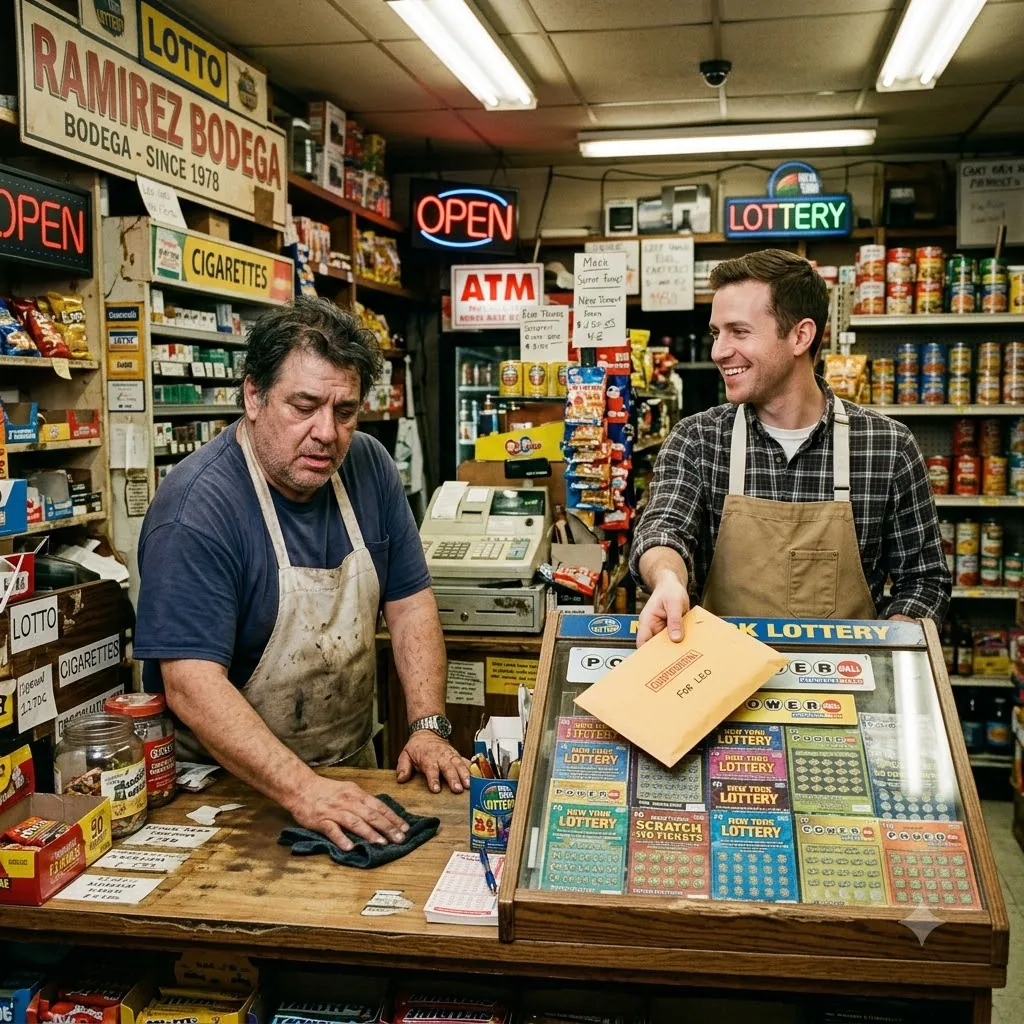
Out on the shop floor, the uneven rattle of the ancient refrigeration units provided a familiar, hollow soundtrack. Mateo walked behind the scratched Formica of the front counter and leaned his weight against it. A thick stack of final-notice medical bills sat next to the register, each one a stark white reminder of Elena’s inpatient rehab facility upstate. He had sent them his last two thousand dollars yesterday, barely covering a fraction of her care. The numbers on those pages were a slow-rising tide, threatening to pull him under entirely. He shoved the stack beneath the cash drawer, hiding them from his own sight. He needed to restock the instant noodles and face the reality of the bare shelves in aisle three, but his limbs felt cast in lead. His father had built this store from nothing, and now it was bleeding out.
The brass bell above the glass door chimed, sharp and agonizingly cheerful.
Silas stepped out of the glaring midday sun and into the dim, fluorescent flicker of the bodega. He wore a stiff, pristine canvas apron over a perfectly fitted chambray shirt. The scent of him arrived a second later, a thick wave of warm cardamom and expensive single-origin roast that completely overpowered the bleach soaking Mateo’s hands. Silas owned the artisanal cafe next door, a place that sold six-dollar lattes to people who never looked locals in the eye. More importantly, as of three weeks ago, Silas owned the entire brick building they both stood inside.
Silas paused by the door, adjusting his thick tortoiseshell glasses. His gaze swept over the dust-coated bags of plantain chips, the faded lottery signs, and the scuffed linoleum floor. He looked around as if observing a quaint, slightly tragic museum exhibit on urban decay. He did not look at the heavy, dark bags under Mateo’s eyes. He definitely did not notice the faint trace of blue dust still caught deep under Mateo’s fingernails. Silas lived in a sterile bubble, entirely insulated from the body count piling up on the pavement right outside his floor-to-ceiling cafe windows.
Mateo gripped the edge of the counter, bracing himself. Silas offered a bright, symmetrical smile that rigidly refused to reach the corners of his eyes. He carried a thick manila envelope tucked neatly under his arm. Silas walked down the center aisle, stepping over a peeling floor tile with exaggerated care. He made an upbeat comment about the neighborhood’s rustic character, gesturing vaguely toward the outdated cigarette display behind Mateo’s head. Mateo stayed perfectly silent. The air between them felt thick and completely incompatible. One man breathed roasted spices and steamed oat milk, while the other breathed the exhaust of ambulances and industrial cleaners.
Silas placed his manicured hands on the counter, gently pushing aside a plastic display box of cheap lighters to make room. He spoke in a measured, practiced tone. He talked about necessary renovations, about maximizing the commercial potential of the block, and about moving the community forward into a new era. He used corporate words that meant nothing to a man scrubbing overdose residue off his floor. Mateo focused all his attention on the manila envelope.
Silas slid the envelope across the scratched Formica. The heavy paper made a dry, rasping sound against the plastic surface. Silas tapped the top corner of the envelope twice with his clean index finger. He told Mateo he was terminating the commercial lease. He mentioned a thirty-day window, framing it as a generous transition period so Mateo could pack up his family’s thirty years of history without rushing. Mateo stared at the stark black letters of his own name printed on the front of the envelope. The buzzing of the refrigeration unit seemed to roar in his ears, drowning out the rest of Silas’s polished, empty speech. Silas gave one final patronizing nod and turned to leave, his leather boots crisp on the floor. Mateo reached out across the counter and clamped his bleach-burned hand firmly over Silas’s wrist, locking him in place.
The bleach burned the raw cuts on Mateo’s knuckles, but he kept the stiff bristles of the wire brush moving in tight, vicious circles over the bathroom tile. The grout held a stubborn, chalky blue residue. It was a chemical ghost left behind by the skeletal kid the paramedics had dragged out by the armpits less than twenty minutes ago. Mateo wiped his forearm across his sweating forehead, forcing himself to breathe through his mouth. He let the harsh chemical fumes override the lingering scent of stale sweat and near-death. This was the third time this month he had found someone slumped against the toilet tank in his family’s bodega. He tossed the bleach-stained paper towels into the metal bin, tied off the plastic bag with violent jerks, and locked the bathroom door tight behind him.
Out on the shop floor, the uneven rattle of the ancient refrigeration units provided a familiar, hollow soundtrack. Mateo walked behind the scratched Formica of the front counter and leaned his weight against it. A thick stack of final-notice medical bills sat next to the register, each one a stark white reminder of Elena’s inpatient rehab facility upstate. He had sent them his last two thousand dollars yesterday, barely covering a fraction of her care. The numbers on those pages were a slow-rising tide, threatening to pull him under entirely. He shoved the stack beneath the cash drawer, hiding them from his own sight. He needed to restock the instant noodles and face the reality of the bare shelves in aisle three, but his limbs felt cast in lead. His father had built this store from nothing, and now it was bleeding out.
The brass bell above the glass door chimed, sharp and agonizingly cheerful.
Silas stepped out of the glaring midday sun and into the dim, fluorescent flicker of the bodega. He wore a stiff, pristine canvas apron over a perfectly fitted chambray shirt. The scent of him arrived a second later, a thick wave of warm cardamom and expensive single-origin roast that completely overpowered the bleach soaking Mateo’s hands. Silas owned the artisanal cafe next door, a place that sold six-dollar lattes to people who never looked locals in the eye. More importantly, as of three weeks ago, Silas owned the entire brick building they both stood inside.
Silas paused by the door, adjusting his thick tortoiseshell glasses. His gaze swept over the dust-coated bags of plantain chips, the faded lottery signs, and the scuffed linoleum floor. He looked around as if observing a quaint, slightly tragic museum exhibit on urban decay. He did not look at the heavy, dark bags under Mateo’s eyes. He definitely did not notice the faint trace of blue dust still caught deep under Mateo’s fingernails. Silas lived in a sterile bubble, entirely insulated from the body count piling up on the pavement right outside his floor-to-ceiling cafe windows.
Mateo gripped the edge of the counter, bracing himself. Silas offered a bright, symmetrical smile that rigidly refused to reach the corners of his eyes. He carried a thick manila envelope tucked neatly under his arm. Silas walked down the center aisle, stepping over a peeling floor tile with exaggerated care. He made an upbeat comment about the neighborhood’s rustic character, gesturing vaguely toward the outdated cigarette display behind Mateo’s head. Mateo stayed perfectly silent. The air between them felt thick and completely incompatible. One man breathed roasted spices and steamed oat milk, while the other breathed the exhaust of ambulances and industrial cleaners.
Silas placed his manicured hands on the counter, gently pushing aside a plastic display box of cheap lighters to make room. He spoke in a measured, practiced tone. He talked about necessary renovations, about maximizing the commercial potential of the block, and about moving the community forward into a new era. He used corporate words that meant nothing to a man scrubbing overdose residue off his floor. Mateo focused all his attention on the manila envelope.
Silas slid the envelope across the scratched Formica. The heavy paper made a dry, rasping sound against the plastic surface. Silas tapped the top corner of the envelope twice with his clean index finger. He told Mateo he was terminating the commercial lease. He mentioned a thirty-day window, framing it as a generous transition period so Mateo could pack up his family’s thirty years of history without rushing. Mateo stared at the stark black letters of his own name printed on the front of the envelope. The buzzing of the refrigeration unit seemed to roar in his ears, drowning out the rest of Silas’s polished, empty speech. Silas gave one final patronizing nod and turned to leave, his leather boots crisp on the floor. Mateo reached out across the counter and clamped his bleach-burned hand firmly over Silas’s wrist, locking him in place.