Story code: ST-000993
Part 1: Dana Said It Never Happened
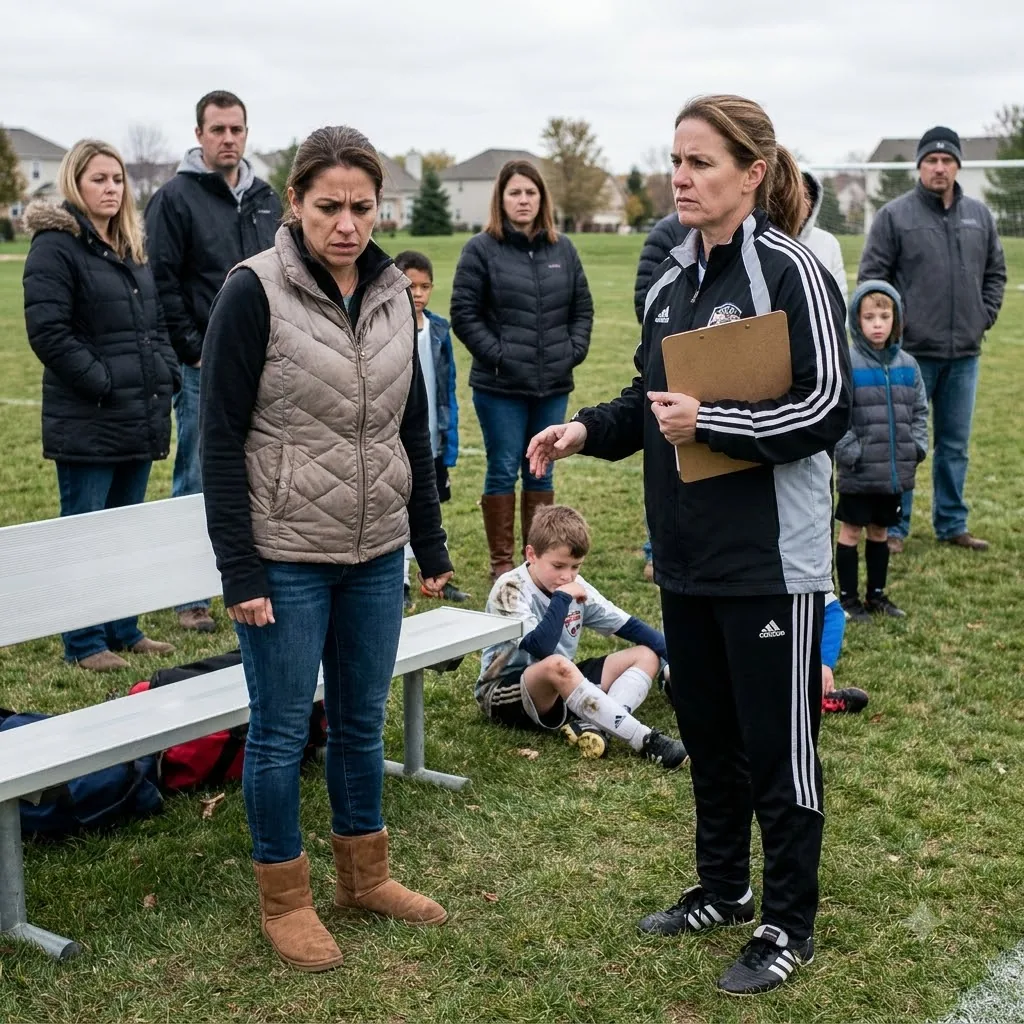
Coach Dana Pike stood at the practice field bench with one hand flat on the lineup clipboard and told Tessa Moreno, in front of waiting parents and half-uniformed kids, that she had never promised Eli a starting spot. Eli was already standing in the warm-up lane with his pinnie rolled in one fist like he had been told where he belonged, and Dana said it loudly enough to make Tessa look like the only person who had imagined the whole thing. By the time the first water bottle hit the bench slat and stopped rolling, the damage was already done, because now the question was not who had been promised what, but whether Tessa could even be trusted to repeat a simple conversation. Mara was two spots down the bench, zipping her daughter’s jacket into a gear bag and watching the little circle tighten around the clipboard. Parents were near enough to hear every third sentence without meaning to listen. Kids shuffled cleats on the concrete lip beside the grass. A mesh bag of practice balls rested against the bench leg. Nobody was pretending not to notice. Tessa kept her voice level. “You told me on Thursday Eli would start at left mid today,” she said. “That’s why we switched the ride and had him here early.” Dana did not move her hand from the clipboard. “No,” she said. “I said I’d look at combinations. Those are different things.” The answer came out quick and trimmed down, like she had used the same tone on other parents before. She tapped the top of the lineup page with one fingernail. “Tessa, I need you not to turn your assumptions into promises I made.” That changed the air around the bench. A father with a folding chair paused while unfolding it. One of the girls on the team stopped lacing a shin guard and looked over, then looked back down. Eli stayed where he was, one cleat toe working at a seam in the turf. Tessa did not raise her voice. “It wasn’t an assumption,” she said. “You said, ‘Tell Eli to be ready to start because I’m putting him there first.’ Those were your words.” Dana gave a small, flat smile that did not stay long. “I did not say that. And I’m not going to have you rewrite normal bench talk because you’re upset with the lineup.” The phrase normal bench talk did a lot of work. It made Tessa sound dramatic just for being specific. Mara could see it happen across the faces nearby: people leaning toward the safer version, the one where this was a misunderstanding and not a public lie. Dana was still holding the object that mattered. The clipboard faced inward toward her chest. The dry-erase page clipped beneath the clear cover showed names and positions in thick black marker, some of them crossed out and rewritten. Tessa pointed, not at Dana, but at the clipboard. “Then why was Eli told to warm up with the starters?” Dana followed her finger with a glance and shrugged once. “Players move around during warm-ups.” “That’s not what happened,” Tessa said. Dana’s chin lifted a fraction. “What happened,” she said, “is you heard what you wanted to hear.” That landed harder than the first denial. It was not just a contradiction now. It was a correction of Tessa as a person, delivered in the same calm tone Dana used to send kids from cones to passing lanes. Tessa’s shoulders went still. She looked toward Eli for half a second, then back to Dana. “Several families arranged around this,” she said. “Marcy moved drop-off because you said Eli was in first group. You told Nate’s dad he’d rotate in after Eli. That was at this same bench.” Marcy Bell had been crouched by a cooler, sorting orange slices into bags. At her name, she stood up slowly, one hand still gripping a plastic container. Dana answered before Marcy could. “No,” Dana said. “I said first group for drills. Not starting. Those are not the same thing either.” Now the phrases were getting narrower. Promise became combinations. Start became first group for drills. Dana kept reducing each earlier statement into something smaller and safer, and every step made Tessa sound more unreasonable for holding on to plain words. Tessa looked down at the lineup sheet again. “If I misunderstood Thursday,” she said, “then explain why Eli’s name was written at left mid before check-in even started.” That made two other parents look at the clipboard at the same time. Dana rotated it an inch toward herself. “It wasn’t,” she said. Mara had seen names on that board while Dana was setting up water bottles ten minutes earlier. She had not memorized the whole page. But she had seen the left side column filled in, then rubbed at, then written again. She watched Dana’s thumb press over one corner of the clear cover now, as if that tiny patch mattered. Tessa did not move closer. That may have been the only reason the moment stayed from turning into a scene. “Eli was in position gear,” she said. “He was told to be in position gear. If you never promised the start, and never wrote him there, and never sent him with the starters, then every single thing around this bench has to mean something else all of a sudden.” Dana gave a short laugh with no sound in it. “Or,” she said, “you are stacking separate moments into a story that helps you.” The line was smooth enough that a few people looked away again. It would have worked too, if not for the clipboard. Dana had to keep guarding it too carefully for someone whose version was simple. Then Marcy set the orange slices down on the bench and said, very carefully, “Dana, before you erase anything, can you turn that page around one time and show us what was written there when we started warm-ups?” Dana’s grip tightened on the.
Coach Dana Pike stood at the practice field bench with one hand flat on the lineup clipboard and told Tessa Moreno, in front of waiting parents and half-uniformed kids, that she had never promised Eli a starting spot. Eli was already standing in the warm-up lane with his pinnie rolled in one fist like he had been told where he belonged, and Dana said it loudly enough to make Tessa look like the only person who had imagined the whole thing. By the time the first water bottle hit the bench slat and stopped rolling, the damage was already done, because now the question was not who had been promised what, but whether Tessa could even be trusted to repeat a simple conversation. Mara was two spots down the bench, zipping her daughter’s jacket into a gear bag and watching the little circle tighten around the clipboard. Parents were near enough to hear every third sentence without meaning to listen. Kids shuffled cleats on the concrete lip beside the grass. A mesh bag of practice balls rested against the bench leg. Nobody was pretending not to notice. Tessa kept her voice level. “You told me on Thursday Eli would start at left mid today,” she said. “That’s why we switched the ride and had him here early.” Dana did not move her hand from the clipboard. “No,” she said. “I said I’d look at combinations. Those are different things.” The answer came out quick and trimmed down, like she had used the same tone on other parents before. She tapped the top of the lineup page with one fingernail. “Tessa, I need you not to turn your assumptions into promises I made.” That changed the air around the bench. A father with a folding chair paused while unfolding it. One of the girls on the team stopped lacing a shin guard and looked over, then looked back down. Eli stayed where he was, one cleat toe working at a seam in the turf. Tessa did not raise her voice. “It wasn’t an assumption,” she said. “You said, ‘Tell Eli to be ready to start because I’m putting him there first.’ Those were your words.” Dana gave a small, flat smile that did not stay long. “I did not say that. And I’m not going to have you rewrite normal bench talk because you’re upset with the lineup.” The phrase normal bench talk did a lot of work. It made Tessa sound dramatic just for being specific. Mara could see it happen across the faces nearby: people leaning toward the safer version, the one where this was a misunderstanding and not a public lie. Dana was still holding the object that mattered. The clipboard faced inward toward her chest. The dry-erase page clipped beneath the clear cover showed names and positions in thick black marker, some of them crossed out and rewritten. Tessa pointed, not at Dana, but at the clipboard. “Then why was Eli told to warm up with the starters?” Dana followed her finger with a glance and shrugged once. “Players move around during warm-ups.” “That’s not what happened,” Tessa said. Dana’s chin lifted a fraction. “What happened,” she said, “is you heard what you wanted to hear.” That landed harder than the first denial. It was not just a contradiction now. It was a correction of Tessa as a person, delivered in the same calm tone Dana used to send kids from cones to passing lanes. Tessa’s shoulders went still. She looked toward Eli for half a second, then back to Dana. “Several families arranged around this,” she said. “Marcy moved drop-off because you said Eli was in first group. You told Nate’s dad he’d rotate in after Eli. That was at this same bench.” Marcy Bell had been crouched by a cooler, sorting orange slices into bags. At her name, she stood up slowly, one hand still gripping a plastic container. Dana answered before Marcy could. “No,” Dana said. “I said first group for drills. Not starting. Those are not the same thing either.” Now the phrases were getting narrower. Promise became combinations. Start became first group for drills. Dana kept reducing each earlier statement into something smaller and safer, and every step made Tessa sound more unreasonable for holding on to plain words. Tessa looked down at the lineup sheet again. “If I misunderstood Thursday,” she said, “then explain why Eli’s name was written at left mid before check-in even started.” That made two other parents look at the clipboard at the same time. Dana rotated it an inch toward herself. “It wasn’t,” she said. Mara had seen names on that board while Dana was setting up water bottles ten minutes earlier. She had not memorized the whole page. But she had seen the left side column filled in, then rubbed at, then written again. She watched Dana’s thumb press over one corner of the clear cover now, as if that tiny patch mattered. Tessa did not move closer. That may have been the only reason the moment stayed from turning into a scene. “Eli was in position gear,” she said. “He was told to be in position gear. If you never promised the start, and never wrote him there, and never sent him with the starters, then every single thing around this bench has to mean something else all of a sudden.” Dana gave a short laugh with no sound in it. “Or,” she said, “you are stacking separate moments into a story that helps you.” The line was smooth enough that a few people looked away again. It would have worked too, if not for the clipboard. Dana had to keep guarding it too carefully for someone whose version was simple. Then Marcy set the orange slices down on the bench and said, very carefully, “Dana, before you erase anything, can you turn that page around one time and show us what was written there when we started warm-ups?” Dana’s grip tightened on the.