Story code: ST-001879
Part 1: The Drill and the Debt
The automated lockdown siren finally clipped off, leaving a ringing silence that felt heavier than the alarm itself. I stayed huddled under my particle-board desk for a full minute, waiting for my violently shaking hands to steady enough to grip the laminate edge and pull myself up. My cotton blouse clung to my spine with cold sweat, the sour smell of adolescent panic and industrial floor wax still thick in the stifling air of Room 204.
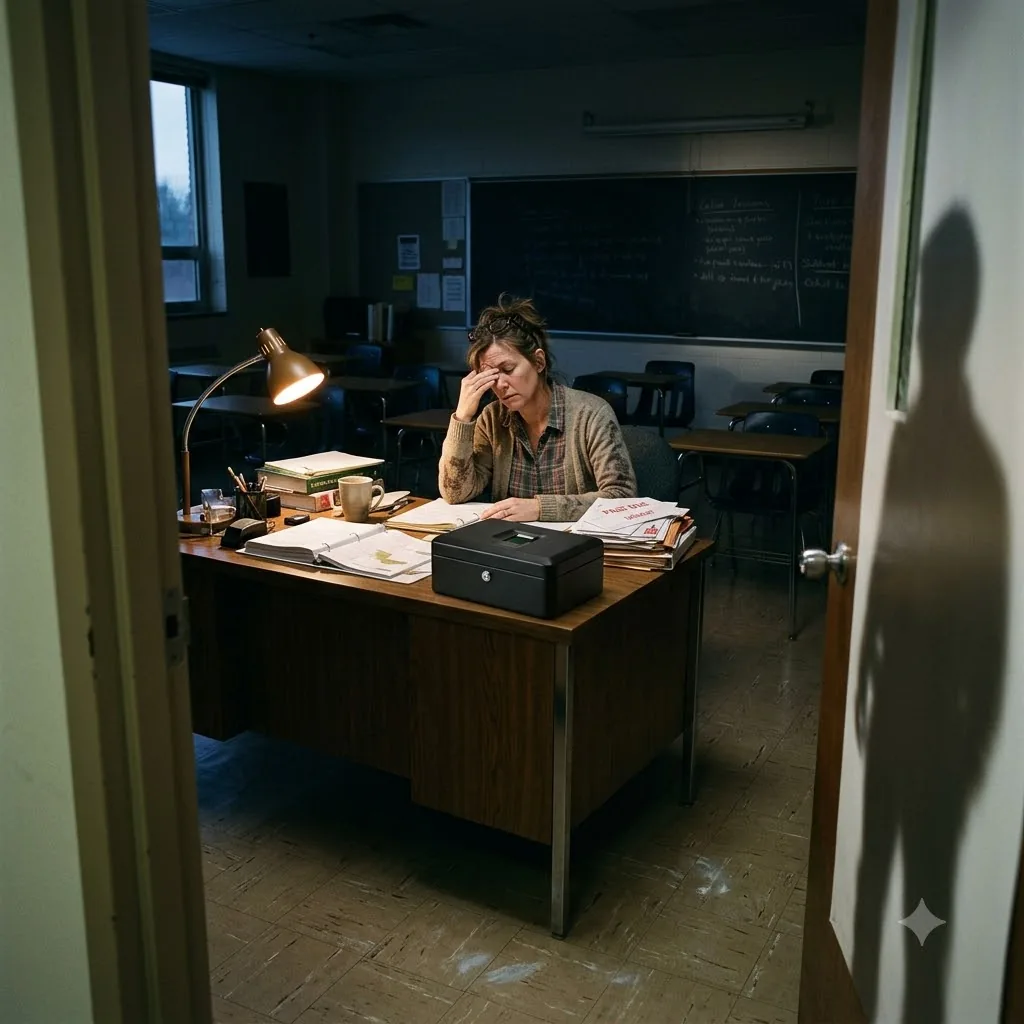
I crawled out and hauled myself into my creaking rolling chair. The drill was officially over, but my heart battered against my ribs with a frantic, punishing rhythm. I wiped my palms on my faded corduroy pants and dragged my laptop closer to the center of the desk. The screen had gone to sleep. I tapped the spacebar, illuminating the bank portal I had minimized right before the alarm sounded. A merciless twelve dollars and forty cents stared back at me in bold red font. I squeezed my eyes shut and ran the brutal arithmetic through my head for the twentieth time today. Rent was due in exactly four days, a staggering fourteen hundred dollars that I absolutely did not have. The collection agency handling my husband’s emergency appendectomy had left two more automated voicemails during first period. That was another nine hundred dollars in immediate arrears. The electric bill was a hundred and eighty. The math was impossible. If I missed one more hospital payment, the agency was going to move forward with wage garnishment.
I opened my eyes and looked at the heavy, black biometric steel box sitting on the far corner of my desk.
It was an ugly, utilitarian block of dense metal, completely out of place next to the cheerful mason jar of colored pencils and the neat stacks of ungraded history essays. The fingerprint scanner embedded in the reinforced lid blinked with a slow, steady green pulse. I reached out and traced the cold, sharp edge of the steel, making certain not to brush the biometric pad itself. Signing the multi-page legal addendum to keep that exact box in my classroom had been a non-negotiable condition of employment for this academic year. I despised looking at it. I hated knowing what it represented, but my survival instinct and my desperate financial reality dictated my complete compliance. If I refused the box, I lost the job. If I lost the job, we lost the apartment, the medical insurance, and the remaining shreds of our stability.
I swallowed the thick lump of anxiety in my throat and forced myself to take a slow, deep breath. The school corridors outside my door were dead quiet. The administration consistently scheduled these active shooter drills for the final period of the Friday schedule, releasing the traumatized students directly to the waiting buses immediately after the all-clear sounded. It was a highly effective tactic to avoid dealing with the crying, the hyperventilation, and the panicked phone calls to parents that inevitably followed. Now, the building was deserted. It was just me, the crushing weight of my impending bankruptcy, and the blinking green light on the heavy steel box.
A sharp, rhythmic clicking echoed down the empty hallway.
It was the unmistakable sound of expensive leather heels striking the polished linoleum. The footsteps completely bypassed the main office, rounded the corner of the science wing without slowing, and stopped abruptly outside my open door. A long, dark shadow fell across the threshold, slicing through the late afternoon sunlight pooling on the dusty floor.
I looked up as Valerie Kensington stepped into my classroom.
She wore a tailored ivory cashmere coat that cost more than my car, her perfectly maintained blonde hair catching the harsh fluorescent light above. Valerie was the mother of a bright seventh-grader in my homeroom and the most prolific, influential donor to the district’s enrichment fund. She carried an air of absolute, unquestioned authority, projecting the kind of effortless confidence purchased with generational wealth and an army of retained lawyers.
Her eyes darted around my messy, cramped classroom before locking onto me with undisguised contempt. She did not offer a polite greeting or acknowledge the drill we had just endured. She simply walked directly to the center of the room, her designer purse clutched tightly in one manicured hand.
She told me she knew all about the rumor. She said it was making the rounds at the country club, whispered among the prominent parents on the curriculum committee and the booster club. Her voice was sharp, flat, and devoid of any empathy, echoing aggressively off the painted cinderblock walls. She stated clearly that my continued presence in this building was a moral outrage, a direct threat to the safety of her child, and an insult to the community’s values.
I sat frozen in my cheap chair, my hands still trembling slightly from the adrenaline of the lockdown. I told her the district administration had cleared my file, that I had signed all the required state documentation, and that I was simply doing the job I was hired to do.
Valerie took another aggressive step forward, her piercing gaze dropping to the corner of my desk. She stared at the black steel box. The green light pulsed against the polished metal surface, reflecting in her narrowed eyes. She demanded my immediate resignation, stating she would personally have the school board revoke my contract by tomorrow morning if I did not clear out my desk right now. She leaned over my workspace, her shadow swallowing the box completely, and slammed her bare hand flat onto the biometric scanner.
The automated lockdown siren finally clipped off, leaving a ringing silence that felt heavier than the alarm itself. I stayed huddled under my particle-board desk for a full minute, waiting for my violently shaking hands to steady enough to grip the laminate edge and pull myself up. My cotton blouse clung to my spine with cold sweat, the sour smell of adolescent panic and industrial floor wax still thick in the stifling air of Room 204.
I crawled out and hauled myself into my creaking rolling chair. The drill was officially over, but my heart battered against my ribs with a frantic, punishing rhythm. I wiped my palms on my faded corduroy pants and dragged my laptop closer to the center of the desk. The screen had gone to sleep. I tapped the spacebar, illuminating the bank portal I had minimized right before the alarm sounded. A merciless twelve dollars and forty cents stared back at me in bold red font. I squeezed my eyes shut and ran the brutal arithmetic through my head for the twentieth time today. Rent was due in exactly four days, a staggering fourteen hundred dollars that I absolutely did not have. The collection agency handling my husband’s emergency appendectomy had left two more automated voicemails during first period. That was another nine hundred dollars in immediate arrears. The electric bill was a hundred and eighty. The math was impossible. If I missed one more hospital payment, the agency was going to move forward with wage garnishment.
I opened my eyes and looked at the heavy, black biometric steel box sitting on the far corner of my desk.
It was an ugly, utilitarian block of dense metal, completely out of place next to the cheerful mason jar of colored pencils and the neat stacks of ungraded history essays. The fingerprint scanner embedded in the reinforced lid blinked with a slow, steady green pulse. I reached out and traced the cold, sharp edge of the steel, making certain not to brush the biometric pad itself. Signing the multi-page legal addendum to keep that exact box in my classroom had been a non-negotiable condition of employment for this academic year. I despised looking at it. I hated knowing what it represented, but my survival instinct and my desperate financial reality dictated my complete compliance. If I refused the box, I lost the job. If I lost the job, we lost the apartment, the medical insurance, and the remaining shreds of our stability.
I swallowed the thick lump of anxiety in my throat and forced myself to take a slow, deep breath. The school corridors outside my door were dead quiet. The administration consistently scheduled these active shooter drills for the final period of the Friday schedule, releasing the traumatized students directly to the waiting buses immediately after the all-clear sounded. It was a highly effective tactic to avoid dealing with the crying, the hyperventilation, and the panicked phone calls to parents that inevitably followed. Now, the building was deserted. It was just me, the crushing weight of my impending bankruptcy, and the blinking green light on the heavy steel box.
A sharp, rhythmic clicking echoed down the empty hallway.
It was the unmistakable sound of expensive leather heels striking the polished linoleum. The footsteps completely bypassed the main office, rounded the corner of the science wing without slowing, and stopped abruptly outside my open door. A long, dark shadow fell across the threshold, slicing through the late afternoon sunlight pooling on the dusty floor.
I looked up as Valerie Kensington stepped into my classroom.
She wore a tailored ivory cashmere coat that cost more than my car, her perfectly maintained blonde hair catching the harsh fluorescent light above. Valerie was the mother of a bright seventh-grader in my homeroom and the most prolific, influential donor to the district’s enrichment fund. She carried an air of absolute, unquestioned authority, projecting the kind of effortless confidence purchased with generational wealth and an army of retained lawyers.
Her eyes darted around my messy, cramped classroom before locking onto me with undisguised contempt. She did not offer a polite greeting or acknowledge the drill we had just endured. She simply walked directly to the center of the room, her designer purse clutched tightly in one manicured hand.
She told me she knew all about the rumor. She said it was making the rounds at the country club, whispered among the prominent parents on the curriculum committee and the booster club. Her voice was sharp, flat, and devoid of any empathy, echoing aggressively off the painted cinderblock walls. She stated clearly that my continued presence in this building was a moral outrage, a direct threat to the safety of her child, and an insult to the community’s values.
I sat frozen in my cheap chair, my hands still trembling slightly from the adrenaline of the lockdown. I told her the district administration had cleared my file, that I had signed all the required state documentation, and that I was simply doing the job I was hired to do.
Valerie took another aggressive step forward, her piercing gaze dropping to the corner of my desk. She stared at the black steel box. The green light pulsed against the polished metal surface, reflecting in her narrowed eyes. She demanded my immediate resignation, stating she would personally have the school board revoke my contract by tomorrow morning if I did not clear out my desk right now. She leaned over my workspace, her shadow swallowing the box completely, and slammed her bare hand flat onto the biometric scanner.