Story code: ST-000432
Part 1: The Intercept
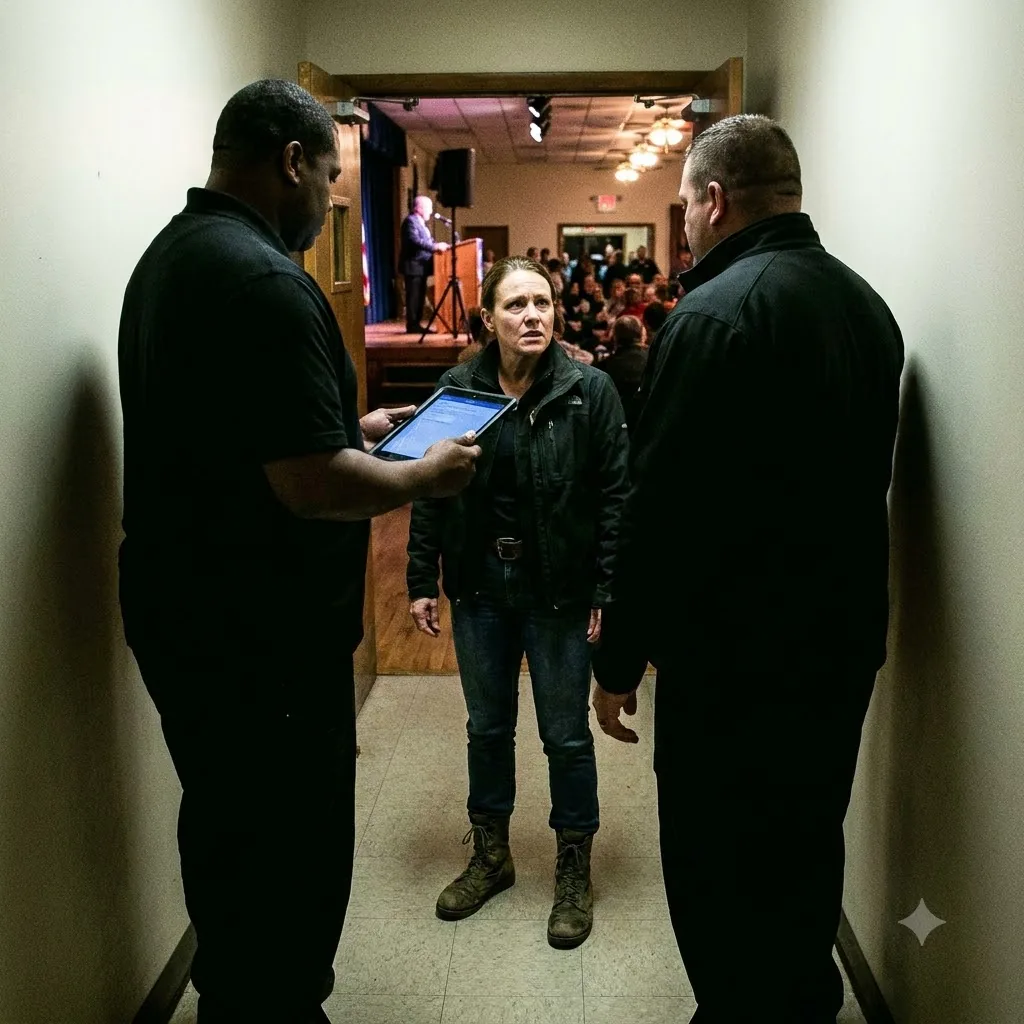
Kel angled her shoulder to slip past a group of cheering retirees, her eyes fixed on the illuminated sign for the women’s restroom, when two broad-shouldered men in navy blazers stepped simultaneously into the narrow corridor, completely blocking her path. The sudden, forced halt made the heavy, foil-wrapped blister packs swing forward against the inner lining of her tailored dress jacket. She instantly clamped her left arm tight against her ribs, using the pressure to muffle the distinctive crinkle of the packaging before the sound could betray her.
A brass band struck up a lively march in the main gymnasium behind her, momentarily drowning out the ambient chatter of the Hometown Heroes rally. The mayor’s amplified voice boomed through the overhead speakers, echoing off the cinderblock walls as he praised the unwavering dedication and sacrifice of the community’s decorated veterans. Kel had just stepped off that very stage ten minutes ago, a shiny commemorative pin newly fastened to her lapel. Now, trapped in the narrow, brightly lit tiled hallway between the gymnasium doors and the restroom, the festive atmosphere rapidly curdled into a suffocating trap.
The man on the left shifted his stance, planting his polished dress shoes squarely on the center tiles. His blazer fell open just enough for Kel to spot the coiled earpiece wire disappearing behind his stiff collar. He did not look up at her face. Instead, his intense gaze remained glued to the sleek black tablet cradled in his thick palms.
Kel forced a polite, bewildered smile and stepped to the right, attempting a casual bypass. The second man mirrored her movement immediately, cutting off the angle. This was not a clumsy, accidental collision. It was a calculated, physical barricade.
She pressed her arm harder against the concealed foil strips. Her client was waiting in the third stall of the women’s room, terrified, trembling, and running out of time. The handoff was supposed to take less than thirty seconds. Kel had navigated hostile checkpoints in actual warzones, relying on her finely tuned ability to read a shifting perimeter. This perimeter had materialized out of thin air, inside a public high school hallway festooned with patriotic bunting and hand-painted banners.
“Excuse me, gentlemen,” Kel said, keeping her voice light and entirely unbothered, playing the part of the honored guest merely trying to freshen up. “I need to get through.”
The first man tapped the glass screen of his tablet. Kel glanced down at the device. The screen displayed a stark, high-contrast map of the high school’s floor plan, completely overlaid with a pulsing radar grid. A massive cluster of green dots represented the cheering crowd in the gymnasium. In the hallway, detached from the main cluster, a single crimson circle pulsed rapidly. Every time it flared on the screen, a tiny, localized vibration hummed in the air, a digital heartbeat synchronizing with something hidden on Kel’s person.
Her mind raced, systematically cataloging everything she carried. Her keys, her wallet, the encrypted burner phone she used exclusively to coordinate these high-risk handoffs, and the foil packs she had so carefully taped inside the jacket’s custom tear-away seam. The state investigators had brought a sophisticated digital dragnet to a civilian rally, and the invisible net had just snapped shut around her.
“We need to keep this area clear for a few moments, ma’am,” the man with the tablet said. His tone was utterly devoid of the civic warmth radiating from the gymnasium. He still did not make eye contact. He was waiting for the red dot on his screen to confirm what his peripheral vision was already telling him.
“The mayor is giving his speech right now,” Kel replied, projecting an air of mild, upper-middle-class irritation. “I just want to use the restroom before the reception begins in the cafeteria.”
“State security protocol,” the second man stated, folding his arms across his chest to widen his footprint in the hall. “We are isolating an unregistered signal in this quadrant. It will only take a minute to clear.”
They were pinpointing the burner device. Kel knew with absolute certainty that if they patted her down to find the phone, their hands would inevitably brush against the rigid, unmistakable shape of the blister packs. The state government had recently elevated the possession and distribution of those specific items to a severe felony, with mandatory minimums expressly designed to destroy lives and set public examples. If they found the cargo, her commendations and flawless service record would instantly transform from a protective shield into a sensational headline about a fallen, disgraced hero. Worse, the desperate young woman waiting in the third stall would be completely abandoned to the same merciless system.
The tablet hummed louder, the crimson circle on the screen shrinking, tightening its radius directly over Kel’s exact coordinates. The investigator swiped a thick finger across the glass, bringing up a diagnostic readout that scrolled rapid lines of raw, intercepted data. The tracking technology was invasive, military-grade, and totally out of place among the folding chairs, bake sale tables, and crepe paper streamers of a local community pageant.
Kel took a slow, deliberate breath, letting her right hand drop casually toward her hip, hovering inches from the heavy lining of her jacket. She calculated the distance to the heavy wooden restroom door. Ten feet. Two hostile operatives. No viable cover.
“Signal is locked,” the first man said. He finally lifted his eyes from the glowing screen to meet hers. His stare was cold, entirely professional, and completely devoid of the patriotic respect the town had just showered upon her. “I need you to hand over your bag and step back against the cinderblock wall.”
Kel did not reach for her bag. She shifted her weight to the balls of her feet, her muscles coiling as the second man stepped forward and reached out to grab her shoulder.
Kel angled her shoulder to slip past a group of cheering retirees, her eyes fixed on the illuminated sign for the women’s restroom, when two broad-shouldered men in navy blazers stepped simultaneously into the narrow corridor, completely blocking her path. The sudden, forced halt made the heavy, foil-wrapped blister packs swing forward against the inner lining of her tailored dress jacket. She instantly clamped her left arm tight against her ribs, using the pressure to muffle the distinctive crinkle of the packaging before the sound could betray her.
A brass band struck up a lively march in the main gymnasium behind her, momentarily drowning out the ambient chatter of the Hometown Heroes rally. The mayor’s amplified voice boomed through the overhead speakers, echoing off the cinderblock walls as he praised the unwavering dedication and sacrifice of the community’s decorated veterans. Kel had just stepped off that very stage ten minutes ago, a shiny commemorative pin newly fastened to her lapel. Now, trapped in the narrow, brightly lit tiled hallway between the gymnasium doors and the restroom, the festive atmosphere rapidly curdled into a suffocating trap.
The man on the left shifted his stance, planting his polished dress shoes squarely on the center tiles. His blazer fell open just enough for Kel to spot the coiled earpiece wire disappearing behind his stiff collar. He did not look up at her face. Instead, his intense gaze remained glued to the sleek black tablet cradled in his thick palms.
Kel forced a polite, bewildered smile and stepped to the right, attempting a casual bypass. The second man mirrored her movement immediately, cutting off the angle. This was not a clumsy, accidental collision. It was a calculated, physical barricade.
She pressed her arm harder against the concealed foil strips. Her client was waiting in the third stall of the women’s room, terrified, trembling, and running out of time. The handoff was supposed to take less than thirty seconds. Kel had navigated hostile checkpoints in actual warzones, relying on her finely tuned ability to read a shifting perimeter. This perimeter had materialized out of thin air, inside a public high school hallway festooned with patriotic bunting and hand-painted banners.
“Excuse me, gentlemen,” Kel said, keeping her voice light and entirely unbothered, playing the part of the honored guest merely trying to freshen up. “I need to get through.”
The first man tapped the glass screen of his tablet. Kel glanced down at the device. The screen displayed a stark, high-contrast map of the high school’s floor plan, completely overlaid with a pulsing radar grid. A massive cluster of green dots represented the cheering crowd in the gymnasium. In the hallway, detached from the main cluster, a single crimson circle pulsed rapidly. Every time it flared on the screen, a tiny, localized vibration hummed in the air, a digital heartbeat synchronizing with something hidden on Kel’s person.
Her mind raced, systematically cataloging everything she carried. Her keys, her wallet, the encrypted burner phone she used exclusively to coordinate these high-risk handoffs, and the foil packs she had so carefully taped inside the jacket’s custom tear-away seam. The state investigators had brought a sophisticated digital dragnet to a civilian rally, and the invisible net had just snapped shut around her.
“We need to keep this area clear for a few moments, ma’am,” the man with the tablet said. His tone was utterly devoid of the civic warmth radiating from the gymnasium. He still did not make eye contact. He was waiting for the red dot on his screen to confirm what his peripheral vision was already telling him.
“The mayor is giving his speech right now,” Kel replied, projecting an air of mild, upper-middle-class irritation. “I just want to use the restroom before the reception begins in the cafeteria.”
“State security protocol,” the second man stated, folding his arms across his chest to widen his footprint in the hall. “We are isolating an unregistered signal in this quadrant. It will only take a minute to clear.”
They were pinpointing the burner device. Kel knew with absolute certainty that if they patted her down to find the phone, their hands would inevitably brush against the rigid, unmistakable shape of the blister packs. The state government had recently elevated the possession and distribution of those specific items to a severe felony, with mandatory minimums expressly designed to destroy lives and set public examples. If they found the cargo, her commendations and flawless service record would instantly transform from a protective shield into a sensational headline about a fallen, disgraced hero. Worse, the desperate young woman waiting in the third stall would be completely abandoned to the same merciless system.
The tablet hummed louder, the crimson circle on the screen shrinking, tightening its radius directly over Kel’s exact coordinates. The investigator swiped a thick finger across the glass, bringing up a diagnostic readout that scrolled rapid lines of raw, intercepted data. The tracking technology was invasive, military-grade, and totally out of place among the folding chairs, bake sale tables, and crepe paper streamers of a local community pageant.
Kel took a slow, deliberate breath, letting her right hand drop casually toward her hip, hovering inches from the heavy lining of her jacket. She calculated the distance to the heavy wooden restroom door. Ten feet. Two hostile operatives. No viable cover.
“Signal is locked,” the first man said. He finally lifted his eyes from the glowing screen to meet hers. His stare was cold, entirely professional, and completely devoid of the patriotic respect the town had just showered upon her. “I need you to hand over your bag and step back against the cinderblock wall.”
Kel did not reach for her bag. She shifted her weight to the balls of her feet, her muscles coiling as the second man stepped forward and reached out to grab her shoulder.