Story code: ST-001178
Part 1: The Glass Facade
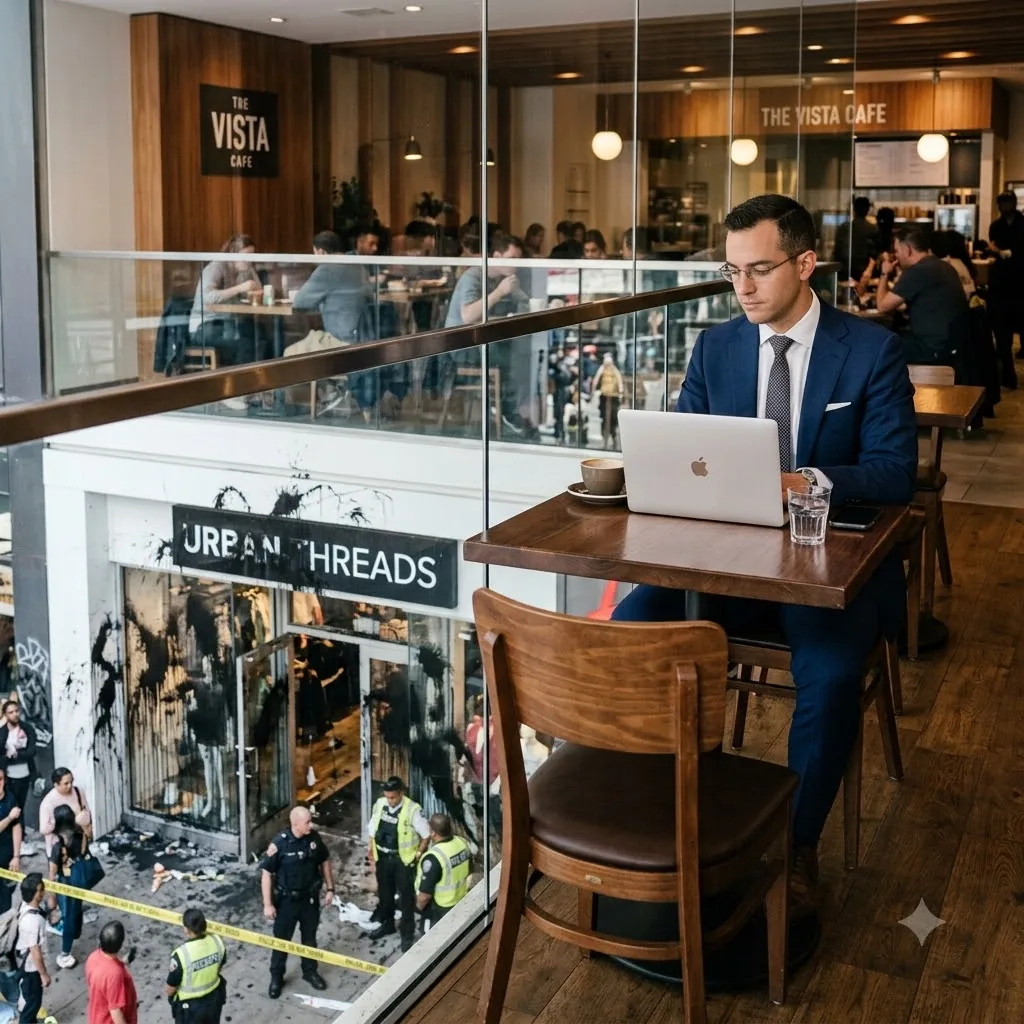
Elias sat at the mezzanine railing, an untouched espresso cooling beside his silver laptop. Directly below his vantage point, a man in a heavy olive utility jacket swung a modified steel cylinder toward the flagship store’s two-story glass facade. A thick, viscous stream of toxic black sludge erupted from the pressurized nozzle, splattering violently across the illuminated corporate logo. Elias watched the dark liquid run down the pristine glass. Shoppers in the lower atrium scattered, their frantic movements completely silent behind the thick acoustic barriers of the upper dining terrace.
This was exactly the kind of predictable, highly visual stunt Elias handled before lunch. He felt no panic. He was the Senior Director of Global Communications, and public outrage was just another metric to manage. He flipped open his laptop to access the Sentinel crisis dashboard. The screen glowed to life, displaying the familiar minimalist login portal. He rested his fingers on the keys, already composing the spin in his head.
First, he would trigger the automated local authority dispatch. Second, he would push the pre-approved vandalism and community safety release to the major news syndicates, framing the company as the victim of unprovoked radical violence. Third, he would activate the geo-fenced social media saturation protocols to drown out the inevitable shaky smartphone videos with corporate philanthropy ads. It was a flawless, highly tested playbook.
He typed his master credentials and hit enter. The browser loaded for a fraction of a second. A harsh red banner dropped down from the top margin of the screen. *Credentials Expired.*
Elias exhaled a slow, measured breath. He assumed it was a routine security cycle, perhaps an aggressive two-factor authentication reset triggered by the physical proximity alarms going off downstairs. Down in the plaza, the activist kept spraying. The heavy black dye coated the expensive window displays, dripping off the mannequins like venom. Elias typed his backup administrator sequence. This was a hardcoded emergency override, a sequence reserved strictly for the executive suite.
He struck the enter key with a definitive tap. The red banner flashed a second time. *Credentials Expired.*
A tight knot formed in his chest. He tapped the spacebar, forced a hard cache refresh on the browser, and reached for his corporate phone to attempt a biometric override. The phone screen displayed a spinning gray loading wheel. He pressed his thumb to the sensor. The device rejected the biometric signature with a sharp haptic buzz. The screen flashed a new, far more severe warning. *Account Disabled. Network Access Revoked.*
Elias shifted his weight in the uncomfortable metal cafe chair. His casual, clinical detachment began to evaporate. His security clearance superseded the regional vice presidents. A total administrative lockout during an active physical assault on the flagship property went against every automated security protocol in the corporate mainframe. The system was designed to grant emergency access during a crisis, not sever it.
He opened his direct messaging client to ping the IT operations desk on the secure offshore server. The application hung on a connecting screen before bouncing his request entirely. The server status field turned gray. He was completely severed from the company intranet. He was a ghost in the machine.
Down in the atrium, the activist tossed the empty steel cylinder aside. It clattered against the marble floor. The man pulled a heavy iron pry bar from his coat and started hammering at the weakened, sludge-covered glass. The rhythmic, heavy thud resonated all the way up the structural pillars to Elias’s table. Elias stared at the red letters on his screen. The error message felt deliberate. It felt like a heavy steel door slamming shut in his face.
He grabbed his phone again, bypassing the corporate applications entirely. He dialed the direct cellular number for the CEO’s executive assistant. The line did not even connect to a ringing tone. An automated carrier voice informed him that his outbound corporate calling privileges were restricted.
The flagship store’s reinforced glass finally shattered. The deafening crash echoed through the entire shopping complex. The activist stepped through the jagged opening, tracking muddy black footprints straight across the showroom floor. Elias watched the total destruction of his company’s most valuable physical asset, his fingers hovering uselessly over a dead keyboard.
His phone screen suddenly lit up with a push notification from an external news aggregator. It was a syndicated company-wide press release, distributed globally just seconds ago. The headline featured Elias’s full name and title in bold, unyielding text. Elias stared at the screen, his thumb freezing an inch above the glass as a heavy hand clamped down on his right shoulder from behind.
Elias sat at the mezzanine railing, an untouched espresso cooling beside his silver laptop. Directly below his vantage point, a man in a heavy olive utility jacket swung a modified steel cylinder toward the flagship store’s two-story glass facade. A thick, viscous stream of toxic black sludge erupted from the pressurized nozzle, splattering violently across the illuminated corporate logo. Elias watched the dark liquid run down the pristine glass. Shoppers in the lower atrium scattered, their frantic movements completely silent behind the thick acoustic barriers of the upper dining terrace.
This was exactly the kind of predictable, highly visual stunt Elias handled before lunch. He felt no panic. He was the Senior Director of Global Communications, and public outrage was just another metric to manage. He flipped open his laptop to access the Sentinel crisis dashboard. The screen glowed to life, displaying the familiar minimalist login portal. He rested his fingers on the keys, already composing the spin in his head.
First, he would trigger the automated local authority dispatch. Second, he would push the pre-approved vandalism and community safety release to the major news syndicates, framing the company as the victim of unprovoked radical violence. Third, he would activate the geo-fenced social media saturation protocols to drown out the inevitable shaky smartphone videos with corporate philanthropy ads. It was a flawless, highly tested playbook.
He typed his master credentials and hit enter. The browser loaded for a fraction of a second. A harsh red banner dropped down from the top margin of the screen. *Credentials Expired.*
Elias exhaled a slow, measured breath. He assumed it was a routine security cycle, perhaps an aggressive two-factor authentication reset triggered by the physical proximity alarms going off downstairs. Down in the plaza, the activist kept spraying. The heavy black dye coated the expensive window displays, dripping off the mannequins like venom. Elias typed his backup administrator sequence. This was a hardcoded emergency override, a sequence reserved strictly for the executive suite.
He struck the enter key with a definitive tap. The red banner flashed a second time. *Credentials Expired.*
A tight knot formed in his chest. He tapped the spacebar, forced a hard cache refresh on the browser, and reached for his corporate phone to attempt a biometric override. The phone screen displayed a spinning gray loading wheel. He pressed his thumb to the sensor. The device rejected the biometric signature with a sharp haptic buzz. The screen flashed a new, far more severe warning. *Account Disabled. Network Access Revoked.*
Elias shifted his weight in the uncomfortable metal cafe chair. His casual, clinical detachment began to evaporate. His security clearance superseded the regional vice presidents. A total administrative lockout during an active physical assault on the flagship property went against every automated security protocol in the corporate mainframe. The system was designed to grant emergency access during a crisis, not sever it.
He opened his direct messaging client to ping the IT operations desk on the secure offshore server. The application hung on a connecting screen before bouncing his request entirely. The server status field turned gray. He was completely severed from the company intranet. He was a ghost in the machine.
Down in the atrium, the activist tossed the empty steel cylinder aside. It clattered against the marble floor. The man pulled a heavy iron pry bar from his coat and started hammering at the weakened, sludge-covered glass. The rhythmic, heavy thud resonated all the way up the structural pillars to Elias’s table. Elias stared at the red letters on his screen. The error message felt deliberate. It felt like a heavy steel door slamming shut in his face.
He grabbed his phone again, bypassing the corporate applications entirely. He dialed the direct cellular number for the CEO’s executive assistant. The line did not even connect to a ringing tone. An automated carrier voice informed him that his outbound corporate calling privileges were restricted.
The flagship store’s reinforced glass finally shattered. The deafening crash echoed through the entire shopping complex. The activist stepped through the jagged opening, tracking muddy black footprints straight across the showroom floor. Elias watched the total destruction of his company’s most valuable physical asset, his fingers hovering uselessly over a dead keyboard.
His phone screen suddenly lit up with a push notification from an external news aggregator. It was a syndicated company-wide press release, distributed globally just seconds ago. The headline featured Elias’s full name and title in bold, unyielding text. Elias stared at the screen, his thumb freezing an inch above the glass as a heavy hand clamped down on his right shoulder from behind.