Story code: ST-000641
Part 1: The Culture Fit
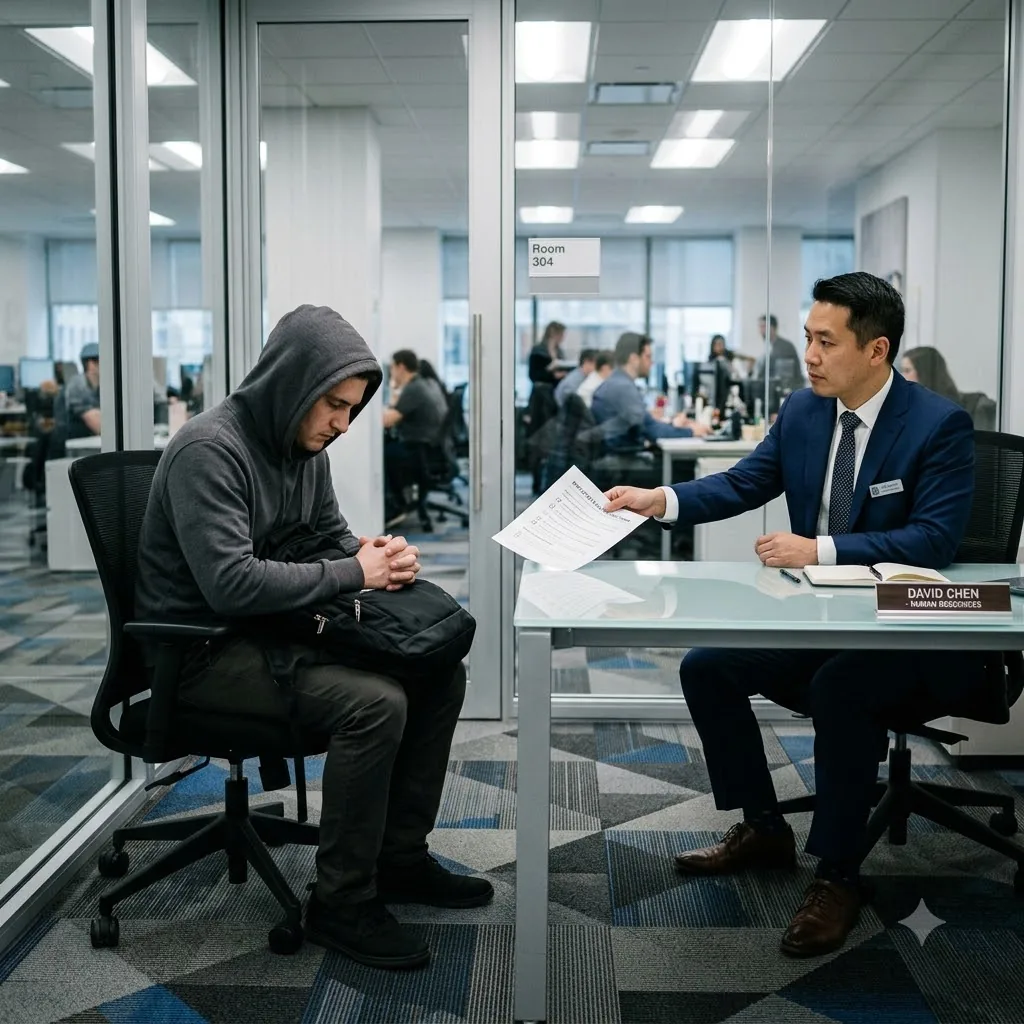
The fluorescent panel directly above Greg’s desk emitted a constant sixty-hertz whine that felt like a physical needle pressing into Marcus’s right temple. Marcus focused his vision on the carpet. It was a repeating pattern of teal hexagons and slate-grey lines, slightly misaligned near the baseboard. Looking at the floor was much safer than looking at Greg. The entire Human Resources office was a glass fishbowl, suffocatingly bright, designed to project absolute transparency while trapping all the sterile air inside. People walked past the glass walls out in the corridor, clutching coffee mugs and laughing, completely oblivious to the slow execution happening at the circular table. The air in the room smelled faintly of dry-erase markers and aggressively neutral cologne.
Greg leaned back in his mesh ergonomic chair, steepling his manicured fingers together. “It is about alignment, Marcus. We need leadership that demonstrates collaborative synergy.”
Marcus gripped the strap of his backpack, resting the heavy canvas on his knees. His palms were sweating against the coarse material. He forced his gaze up, aiming strictly for the bridge of Greg’s nose. It was the masking trick he had learned in high school, but maintaining the illusion of eye contact still made his chest tighten with an acute, suffocating panic. The fluorescent light reflected sharply off Greg’s rimless glasses, obscuring his eyes.
Greg let out a heavy, theatrical sigh. “The promotion to Lead Systems Architect requires a certain degree of interpersonal fluidity. A culture fit. You have been observed isolating yourself in the server room. You do not participate in the mandatory Friday afternoon social hours. And, to be perfectly frank, several cross-functional team members report that your consistent lack of eye contact makes them feel deeply unsupported.”
Marcus swallowed hard against a throat that felt like dry paper. He thought about the previous thirty-six hours. He had not slept a single minute since Tuesday morning. The core servers in the basement had nearly melted down due to a cascading failure in the primary transaction database. Marcus had written the emergency patch from scratch, deployed the failover container, and stabilized the entire payment grid while the rest of the company attended a mandatory mixology workshop in the cafeteria. He had saved the firm from a catastrophic, public data blackout.
“We value your technical proficiency,” Greg said, tapping a silver pen against his pristine desk pad in a steady, maddening rhythm. “But soft skills are the bedrock of the executive tier. We need someone who can read the room. Someone who leans in. I am afraid we are passing on your elevation to Lead Architect. Instead, we are placing you on a Performance Improvement Plan to help you integrate better into our dynamic ecosystem.”
A Performance Improvement Plan. It was a corporate death sentence. They were going to fire him. The plan was nothing but a sixty-day paper trail to justify his termination. Marcus traced the rough edge of his backpack zipper with his thumb. The whine of the overhead light seemed to pitch higher, drilling deeper into his skull. The geometric carpet pattern vibrated slightly in his peripheral vision, a side effect of his profound exhaustion. He shifted his weight, and the faux-leather of the guest chair squeaked loudly.
“This is not a punishment,” Greg said smoothly, offering a tight, patronizing smile that did not reach the rest of his face. “Think of it as an opportunity for growth. We just need you to be more present. More visible. We need you to demonstrate that you can be a team player, rather than a rogue operator who bypasses protocol.”
Marcus let his eyes drop back to the teal hexagons. The phrase bypassing protocol echoed loudly in his head. He realized with sudden, chilling clarity that this was not a standard performance review. It was a surgical strike. Yesterday’s database failure was not an accident, and his emergency fix was not being celebrated because it had interrupted a very specific, deliberate operation. The anomalous code he had found buried in the transaction processing loop possessed a distinct, manual signature. Someone had deliberately routed a massive fraction of the quarterly revenue out of the main ledger. Marcus had stopped the bleed. More importantly, he had printed the raw system logs before the automated wipe command erased all digital traces of the diversion.
Greg was not talking about soft skills or synergy. Greg was the cleaner. HR was paving the road to terminate the only person who had seen the raw data. The complaints about his neurodivergence, the poor culture fit, the lack of eye contact-they were just the weapons of choice. It was the absolute easiest way to push an isolated employee out the door without raising an alarm. They knew he struggled to defend himself in verbal confrontations. They were counting on his silence. They expected him to lower his head, accept the humiliating critique, and quietly fade away.
The thick stack of dot-matrix paper was incredibly heavy inside Marcus’s bag. The ink was still fresh, detailing the exact routing numbers and the specific executive login that had initiated the drain.
Greg kept talking, weaving an endless net of corporate jargon about emotional intelligence, proactive team building, and the necessity of wearing the company fleece. Marcus stopped listening to the buzzwords. The humming in his ears was no longer just the lights. It was a rising, cold fury. He reached down and gripped the brass tab of his backpack zipper. He pulled it open, the sharp metallic teeth ripping loudly through the quiet, sterile air of the room.
The fluorescent panel directly above Greg’s desk emitted a constant sixty-hertz whine that felt like a physical needle pressing into Marcus’s right temple. Marcus focused his vision on the carpet. It was a repeating pattern of teal hexagons and slate-grey lines, slightly misaligned near the baseboard. Looking at the floor was much safer than looking at Greg. The entire Human Resources office was a glass fishbowl, suffocatingly bright, designed to project absolute transparency while trapping all the sterile air inside. People walked past the glass walls out in the corridor, clutching coffee mugs and laughing, completely oblivious to the slow execution happening at the circular table. The air in the room smelled faintly of dry-erase markers and aggressively neutral cologne.
Greg leaned back in his mesh ergonomic chair, steepling his manicured fingers together. “It is about alignment, Marcus. We need leadership that demonstrates collaborative synergy.”
Marcus gripped the strap of his backpack, resting the heavy canvas on his knees. His palms were sweating against the coarse material. He forced his gaze up, aiming strictly for the bridge of Greg’s nose. It was the masking trick he had learned in high school, but maintaining the illusion of eye contact still made his chest tighten with an acute, suffocating panic. The fluorescent light reflected sharply off Greg’s rimless glasses, obscuring his eyes.
Greg let out a heavy, theatrical sigh. “The promotion to Lead Systems Architect requires a certain degree of interpersonal fluidity. A culture fit. You have been observed isolating yourself in the server room. You do not participate in the mandatory Friday afternoon social hours. And, to be perfectly frank, several cross-functional team members report that your consistent lack of eye contact makes them feel deeply unsupported.”
Marcus swallowed hard against a throat that felt like dry paper. He thought about the previous thirty-six hours. He had not slept a single minute since Tuesday morning. The core servers in the basement had nearly melted down due to a cascading failure in the primary transaction database. Marcus had written the emergency patch from scratch, deployed the failover container, and stabilized the entire payment grid while the rest of the company attended a mandatory mixology workshop in the cafeteria. He had saved the firm from a catastrophic, public data blackout.
“We value your technical proficiency,” Greg said, tapping a silver pen against his pristine desk pad in a steady, maddening rhythm. “But soft skills are the bedrock of the executive tier. We need someone who can read the room. Someone who leans in. I am afraid we are passing on your elevation to Lead Architect. Instead, we are placing you on a Performance Improvement Plan to help you integrate better into our dynamic ecosystem.”
A Performance Improvement Plan. It was a corporate death sentence. They were going to fire him. The plan was nothing but a sixty-day paper trail to justify his termination. Marcus traced the rough edge of his backpack zipper with his thumb. The whine of the overhead light seemed to pitch higher, drilling deeper into his skull. The geometric carpet pattern vibrated slightly in his peripheral vision, a side effect of his profound exhaustion. He shifted his weight, and the faux-leather of the guest chair squeaked loudly.
“This is not a punishment,” Greg said smoothly, offering a tight, patronizing smile that did not reach the rest of his face. “Think of it as an opportunity for growth. We just need you to be more present. More visible. We need you to demonstrate that you can be a team player, rather than a rogue operator who bypasses protocol.”
Marcus let his eyes drop back to the teal hexagons. The phrase bypassing protocol echoed loudly in his head. He realized with sudden, chilling clarity that this was not a standard performance review. It was a surgical strike. Yesterday’s database failure was not an accident, and his emergency fix was not being celebrated because it had interrupted a very specific, deliberate operation. The anomalous code he had found buried in the transaction processing loop possessed a distinct, manual signature. Someone had deliberately routed a massive fraction of the quarterly revenue out of the main ledger. Marcus had stopped the bleed. More importantly, he had printed the raw system logs before the automated wipe command erased all digital traces of the diversion.
Greg was not talking about soft skills or synergy. Greg was the cleaner. HR was paving the road to terminate the only person who had seen the raw data. The complaints about his neurodivergence, the poor culture fit, the lack of eye contact-they were just the weapons of choice. It was the absolute easiest way to push an isolated employee out the door without raising an alarm. They knew he struggled to defend himself in verbal confrontations. They were counting on his silence. They expected him to lower his head, accept the humiliating critique, and quietly fade away.
The thick stack of dot-matrix paper was incredibly heavy inside Marcus’s bag. The ink was still fresh, detailing the exact routing numbers and the specific executive login that had initiated the drain.
Greg kept talking, weaving an endless net of corporate jargon about emotional intelligence, proactive team building, and the necessity of wearing the company fleece. Marcus stopped listening to the buzzwords. The humming in his ears was no longer just the lights. It was a rising, cold fury. He reached down and gripped the brass tab of his backpack zipper. He pulled it open, the sharp metallic teeth ripping loudly through the quiet, sterile air of the room.