Story code: ST-000420
Part 1: The Abandoned Post
The suffocating quiet hanging over the East Side blocks was a specific kind of stillness, the heavy, practiced silence of a rust-belt neighborhood entirely numb to the distant wail of ambulance sirens. Bex rounded the chain-link fence at the corner of Oakhaven and Ninth, his heavy boots grinding over loose gravel, and stopped dead. The blue plastic milk crate tucked behind the rusted clothing donation bin sat completely empty. Sixteen-year-old Leo had abandoned his lookout post.
Bex stepped into the shadows of the alleyway, his eyes scanning the cracked asphalt for any sign of a struggle. The kid was a rookie, but he knew the rigid rules of the block, and leaving a designated corner exposed was a fast track to severe discipline. Bex was a block lieutenant, an aging shot-caller who had survived two decades on these streets by anticipating trouble before it boiled over. A missing lookout meant a dangerous blind spot, and a blind spot meant someone was making an unauthorized play.
He knelt by the abandoned milk crate to inspect the ground. The dirt around the plastic mesh was heavily scuffed, disturbed by the erratic pacing of Leo’s oversized sneakers. Sitting right in the center of a fresh heel print was a crumpled piece of glossy paper. Bex picked it up, smoothing the edges with his calloused thumb. It was a tri-fold brochure, the cheap, brightly colored kind handed out in sterile waiting rooms. The front panel advertised a local urgent care and family planning clinic down on Fourth Street. Bex turned it over in his rough hand. The paper was slightly damp with sweat, squeezed tight and discarded in a frantic hurry. He folded it, shoved it into the pocket of his heavy denim jacket, and stood back up. The sudden, reckless departure made no strategic sense.
He needed to find the boy before the rest of the crew realized the corner was wide open. Bex moved down the alley, his posture rigid, sticking close to the brick walls of the boarded-up rowhouses. The air smelled of ozone and rotting lumber. He kept his head on a swivel, tracing the perimeter of Leo’s usual patrol route. The kid had been jittery all week, wound up tight like a loaded spring, but abandoning a post required a specific kind of dangerous nerve.
At the end of the alley, where the dirt met the crumbling curb of a narrow access street, Bex found the next physical sign. Fresh tire marks painted the pavement. The black rubber was stark against the faded gray concrete, a sharp acceleration skid curving violently away from the curb. The tracks tore straight down a dead-end street lined with gutted sedans and overgrown, razor-edged weeds.
Bex broke into a rapid, silent jog. He kept his breathing shallow, his footsteps remarkably light despite his imposing frame. The Heights was a labyrinth of forgotten service roads and collapsed garages, a perfect place for an impulsive teenager to get himself killed. Whatever was driving Leo’s sudden escalation, Bex had to shut it down before the first gunshot echoed through the ward. A single stolen gun and a panicked kid were all it took to spark a full-scale neighborhood war.
He tracked the fresh rubber streaks past a row of derelict townhouses. The tire marks faded where the asphalt gave way to broken cobblestones, but the acrid scent of burned rubber lingered in the stagnant air. Bex followed the smell, slipping rapidly through a narrow gap between two leaning wooden fences. He navigated the backyard debris with practiced precision, his eyes darting between the rusted husks of washing machines and collapsed porch roofs.
His mind worked through the logistics of the kid’s trajectory. Leo was moving deeper into territory that did not belong to their crew. The urgency in the boy’s actions pointed to a highly volatile escalation, an unknown variable that Bex could not afford to let play out. He gripped the heavy steel of the pistol tucked into his waistband, reassuring himself of its presence without drawing the weapon.
The gap between the fences deposited Bex onto the edge of Miller Avenue, a notoriously violent stretch of neglected concrete. The streetlights here had been systematically shot out months ago, leaving the intersection bathed only in the shallow, orange glow of a distant liquor store sign. Bex paused behind the cover of a rusted municipal dumpster, listening hard to the suffocating quiet.
The low, rhythmic idle of a modified engine vibrated through the soles of his boots. It was a mechanical purr, steady and predatory, rolling over the broken glass. Bex peered around the jagged edge of the dumpster.
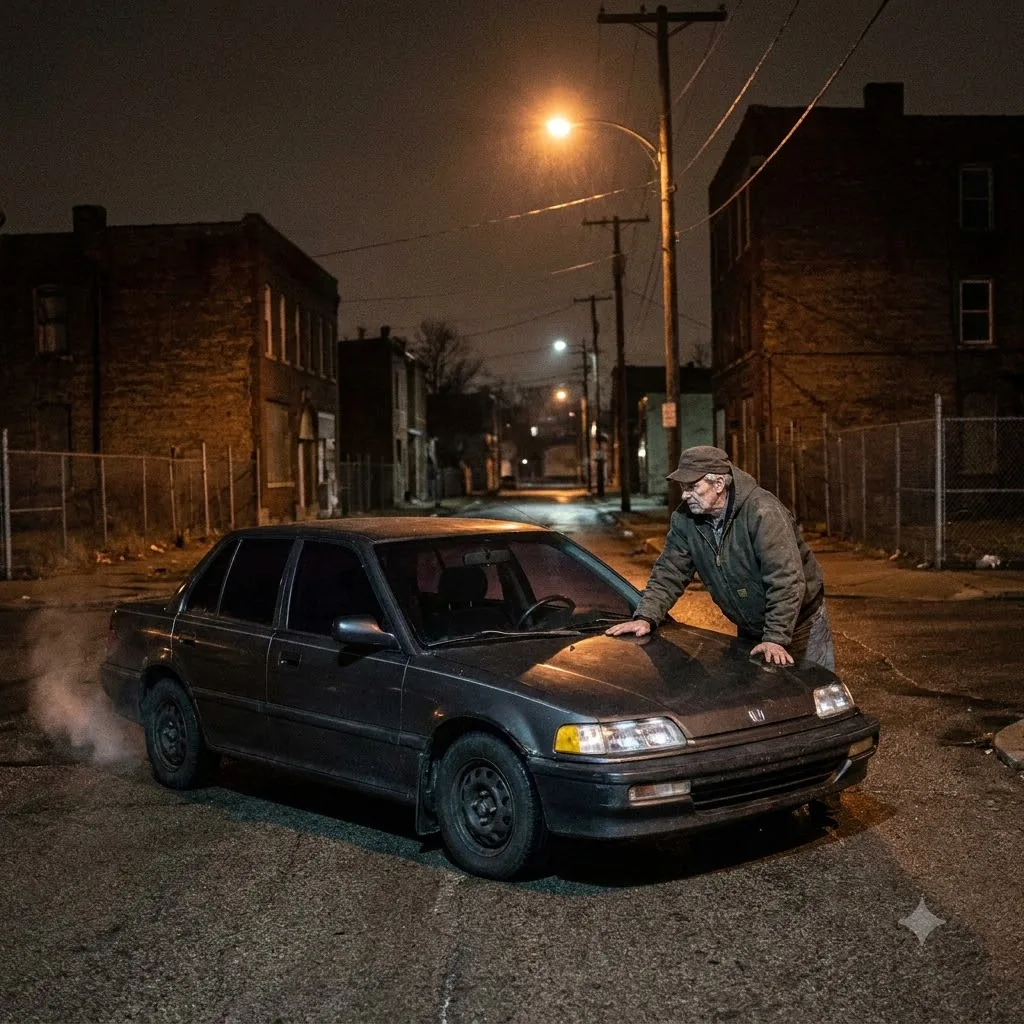
A dark vehicle was rolling slowly down the cross street. The car had no license plates. Bex recognized the dented front quarter panel immediately. It was one of the crew’s burner cars, a vehicle kept stashed in a lockup specifically for making aggressive runs into hostile territory.
The car crept closer to the intersection, moving at a tense walking pace. The driver was a stiff silhouette behind heavily tinted glass, but the hunched, rigid posture gripping the steering wheel high and tight was unmistakable. It was Leo. The teenager was seconds away from turning onto the main avenue, crossing a hard boundary line that would guarantee an immediate, bloody retaliation from the rival block.
Bex had no time to signal the boy or wave him down. He stepped out from behind the rusted steel of the dumpster and walked directly into the intersection, physically planting himself in the path of a creeping stolen Civic with its headlights cut.
The suffocating quiet hanging over the East Side blocks was a specific kind of stillness, the heavy, practiced silence of a rust-belt neighborhood entirely numb to the distant wail of ambulance sirens. Bex rounded the chain-link fence at the corner of Oakhaven and Ninth, his heavy boots grinding over loose gravel, and stopped dead. The blue plastic milk crate tucked behind the rusted clothing donation bin sat completely empty. Sixteen-year-old Leo had abandoned his lookout post.
Bex stepped into the shadows of the alleyway, his eyes scanning the cracked asphalt for any sign of a struggle. The kid was a rookie, but he knew the rigid rules of the block, and leaving a designated corner exposed was a fast track to severe discipline. Bex was a block lieutenant, an aging shot-caller who had survived two decades on these streets by anticipating trouble before it boiled over. A missing lookout meant a dangerous blind spot, and a blind spot meant someone was making an unauthorized play.
He knelt by the abandoned milk crate to inspect the ground. The dirt around the plastic mesh was heavily scuffed, disturbed by the erratic pacing of Leo’s oversized sneakers. Sitting right in the center of a fresh heel print was a crumpled piece of glossy paper. Bex picked it up, smoothing the edges with his calloused thumb. It was a tri-fold brochure, the cheap, brightly colored kind handed out in sterile waiting rooms. The front panel advertised a local urgent care and family planning clinic down on Fourth Street. Bex turned it over in his rough hand. The paper was slightly damp with sweat, squeezed tight and discarded in a frantic hurry. He folded it, shoved it into the pocket of his heavy denim jacket, and stood back up. The sudden, reckless departure made no strategic sense.
He needed to find the boy before the rest of the crew realized the corner was wide open. Bex moved down the alley, his posture rigid, sticking close to the brick walls of the boarded-up rowhouses. The air smelled of ozone and rotting lumber. He kept his head on a swivel, tracing the perimeter of Leo’s usual patrol route. The kid had been jittery all week, wound up tight like a loaded spring, but abandoning a post required a specific kind of dangerous nerve.
At the end of the alley, where the dirt met the crumbling curb of a narrow access street, Bex found the next physical sign. Fresh tire marks painted the pavement. The black rubber was stark against the faded gray concrete, a sharp acceleration skid curving violently away from the curb. The tracks tore straight down a dead-end street lined with gutted sedans and overgrown, razor-edged weeds.
Bex broke into a rapid, silent jog. He kept his breathing shallow, his footsteps remarkably light despite his imposing frame. The Heights was a labyrinth of forgotten service roads and collapsed garages, a perfect place for an impulsive teenager to get himself killed. Whatever was driving Leo’s sudden escalation, Bex had to shut it down before the first gunshot echoed through the ward. A single stolen gun and a panicked kid were all it took to spark a full-scale neighborhood war.
He tracked the fresh rubber streaks past a row of derelict townhouses. The tire marks faded where the asphalt gave way to broken cobblestones, but the acrid scent of burned rubber lingered in the stagnant air. Bex followed the smell, slipping rapidly through a narrow gap between two leaning wooden fences. He navigated the backyard debris with practiced precision, his eyes darting between the rusted husks of washing machines and collapsed porch roofs.
His mind worked through the logistics of the kid’s trajectory. Leo was moving deeper into territory that did not belong to their crew. The urgency in the boy’s actions pointed to a highly volatile escalation, an unknown variable that Bex could not afford to let play out. He gripped the heavy steel of the pistol tucked into his waistband, reassuring himself of its presence without drawing the weapon.
The gap between the fences deposited Bex onto the edge of Miller Avenue, a notoriously violent stretch of neglected concrete. The streetlights here had been systematically shot out months ago, leaving the intersection bathed only in the shallow, orange glow of a distant liquor store sign. Bex paused behind the cover of a rusted municipal dumpster, listening hard to the suffocating quiet.
The low, rhythmic idle of a modified engine vibrated through the soles of his boots. It was a mechanical purr, steady and predatory, rolling over the broken glass. Bex peered around the jagged edge of the dumpster.
A dark vehicle was rolling slowly down the cross street. The car had no license plates. Bex recognized the dented front quarter panel immediately. It was one of the crew’s burner cars, a vehicle kept stashed in a lockup specifically for making aggressive runs into hostile territory.
The car crept closer to the intersection, moving at a tense walking pace. The driver was a stiff silhouette behind heavily tinted glass, but the hunched, rigid posture gripping the steering wheel high and tight was unmistakable. It was Leo. The teenager was seconds away from turning onto the main avenue, crossing a hard boundary line that would guarantee an immediate, bloody retaliation from the rival block.
Bex had no time to signal the boy or wave him down. He stepped out from behind the rusted steel of the dumpster and walked directly into the intersection, physically planting himself in the path of a creeping stolen Civic with its headlights cut.