Story code: ST-000519
Part 1: The Technicality
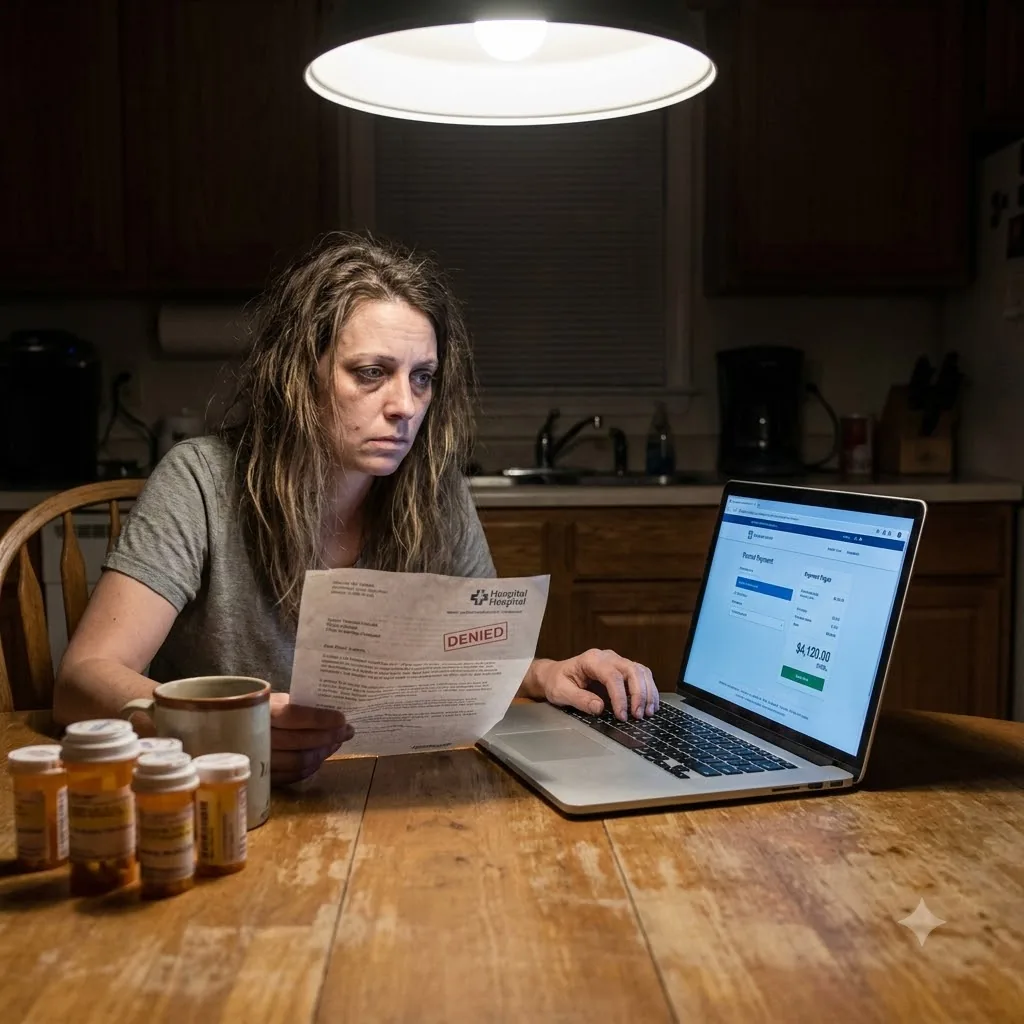
The rip of the envelope tore through the dead silence of the kitchen. Sarah stared at the heavy cream paper bearing the hospital’s crest, her eyes dropping immediately to the bolded paragraph in the center. Her husband’s leukemia treatment hinged entirely on this charity care approval. Instead, the word DENIED sat stamped in severe black ink. Below it, a single line cited the reason.
Excess third-party assets.
She traced her finger over the dollar amount listed on the hospital’s ledger. Four thousand, one hundred and twenty dollars and zero cents.
She picked up her phone with her other hand and woke the screen. Her husband’s GoFundMe page stared back at her. The total raised by friends and family to keep them from getting evicted while he went through chemo sat at exactly $4,120.00. Not a penny more, not a penny less.
A cold weight dropped into her stomach. The hospital’s automated system had scraped an external crowdfunding site and locked her husband out of a half-million-dollar medical protocol over a technicality meant to pay their rent.
Sarah set the letter down next to her cold cup of coffee. She reached into her jeans pocket and pulled out a crumpled yellow sticky note. A rogue night-shift nurse had pressed it into Sarah’s palm two days ago. They will reject you, the nurse had whispered. When they do, bypass the main switchboard and dial this extension. Tell Marcus you need a review.
She punched in the numbers. Her hands shook, but she forced her breathing to slow down. The line rang twice before a sharp click signaled a connection.
“Financial Services, Marcus speaking,” a flat voice said.
Sarah gripped the edge of the kitchen counter. “My husband’s file was just locked. You denied his leukemia protocol over a GoFundMe page.”
A long pause stretched over the line. “I need a patient ID.”
She read off the nine-digit number from the top of the denial letter. The sound of rapid keyboard clicking echoed through the receiver.
“I see the file,” Marcus said. His voice carried the practiced, detached rhythm of someone who delivered bad news for a living. “The automated system flagged an unreported liquid asset. The charity care parameters are strictly coded. Any outside funds must be exhausted before hospital subsidies apply.”
“Those funds are for our mortgage.” Sarah pressed the phone harder against her ear. “The treatment costs four hundred thousand dollars. Four grand will not even cover a fraction of the first round of chemo. You need to unlock the file.”
“My hands are tied.” Marcus sighed. It sounded rehearsed. “The system locked your file. I have no authorization to override an algorithmic denial based on excess capital.”
The rapid clicking of his keyboard continued. It sounded heavy, deliberate, as if he were tabbing through screens he did not want her to know about. He stopped abruptly. The sudden silence over the line felt thick and heavy.
“I need you to look at the file again,” Sarah said.
“There is nothing more to look at.” Marcus’s voice dropped an octave, losing its customer-service sheen. He sounded suddenly tense. “I am closing the ticket.”
“Do not close that ticket. That algorithm is making a mistake.”
“The system does not make mistakes.” He shifted in his chair. The leather creaked loudly. “Your file will remain closed for a mandatory ninety-day review period. I have to terminate this call now.”
Ninety days. Her husband did not have ninety days. His oncologist had given him six weeks without the protocol.
“I am walking out to my car right now,” Sarah said, grabbing her keys from the hook by the door. “I am driving to the hospital. I will come up to the second-floor billing department and you will explain this to me in person.”
“The billing wing is restricted.” Marcus spoke faster now. The steady rhythm of his typing returned, sharp and frantic. “If you attempt to enter this floor, I will have no choice but to alert hospital security.”
“Alert them.” Sarah grabbed her coat. “I will sit in your lobby until someone explains how a hospital algorithm knows the exact penny in a private account.”
“You are making a mistake,” Marcus said. “I am instructing you to stay away from the administrative offices.”
“I am five minutes away.” Sarah slammed the front door behind her. “Have the file open when I get there.”
Marcus let out a sharp breath. The typing stopped again, replaced by the faint sound of a secondary alert chiming on his computer. It was a distinct, high-pitched double beep that he quickly muted.
“I am disconnecting,” Marcus said, his voice dropping to a near-whisper. “Do not come to this office.”
The line went dead.
Sarah drove to the hospital in a blur of terrifying focus. She knew the second-floor layout from wandering the halls during her husband’s initial biopsies. She knew exactly where the heavy double doors of the billing department sat behind a frosted glass partition.
She ignored the parking attendant, leaving her car in a loading zone, and marched straight through the sliding glass doors of the main entrance. The smell of industrial bleach hit her instantly. She bypassed the main reception desk and aimed for the B-wing stairwell. The sign on the heavy metal door read Authorized Personnel Only Beyond This Point.
Sarah yanked it open, her boots echoing on the concrete stairs as she climbed. She reached the second-floor landing and pushed through the next set of doors.
The administrative corridor was silent, lined with opaque glass windows. A small digital directory on the wall listed M. Vance, Patient Financial Services, Room 214.
She marched down the hall, the denial letter crushed in her fist. Room 214 stood at the very end of the corridor. The door was slightly ajar.
She pushed it open without knocking.
Marcus sat behind a dual-monitor setup, his hand frozen over his mouse. A man in a dark grey security uniform stood directly behind him, leaning over the desk to point at the glowing screens. Both men snapped their heads toward the door as Sarah stepped into the room, her eyes locking onto the bright red text flashing across Marcus’s primary monitor.
The rip of the envelope tore through the dead silence of the kitchen. Sarah stared at the heavy cream paper bearing the hospital’s crest, her eyes dropping immediately to the bolded paragraph in the center. Her husband’s leukemia treatment hinged entirely on this charity care approval. Instead, the word DENIED sat stamped in severe black ink. Below it, a single line cited the reason.
Excess third-party assets.
She traced her finger over the dollar amount listed on the hospital’s ledger. Four thousand, one hundred and twenty dollars and zero cents.
She picked up her phone with her other hand and woke the screen. Her husband’s GoFundMe page stared back at her. The total raised by friends and family to keep them from getting evicted while he went through chemo sat at exactly $4,120.00. Not a penny more, not a penny less.
A cold weight dropped into her stomach. The hospital’s automated system had scraped an external crowdfunding site and locked her husband out of a half-million-dollar medical protocol over a technicality meant to pay their rent.
Sarah set the letter down next to her cold cup of coffee. She reached into her jeans pocket and pulled out a crumpled yellow sticky note. A rogue night-shift nurse had pressed it into Sarah’s palm two days ago. They will reject you, the nurse had whispered. When they do, bypass the main switchboard and dial this extension. Tell Marcus you need a review.
She punched in the numbers. Her hands shook, but she forced her breathing to slow down. The line rang twice before a sharp click signaled a connection.
“Financial Services, Marcus speaking,” a flat voice said.
Sarah gripped the edge of the kitchen counter. “My husband’s file was just locked. You denied his leukemia protocol over a GoFundMe page.”
A long pause stretched over the line. “I need a patient ID.”
She read off the nine-digit number from the top of the denial letter. The sound of rapid keyboard clicking echoed through the receiver.
“I see the file,” Marcus said. His voice carried the practiced, detached rhythm of someone who delivered bad news for a living. “The automated system flagged an unreported liquid asset. The charity care parameters are strictly coded. Any outside funds must be exhausted before hospital subsidies apply.”
“Those funds are for our mortgage.” Sarah pressed the phone harder against her ear. “The treatment costs four hundred thousand dollars. Four grand will not even cover a fraction of the first round of chemo. You need to unlock the file.”
“My hands are tied.” Marcus sighed. It sounded rehearsed. “The system locked your file. I have no authorization to override an algorithmic denial based on excess capital.”
The rapid clicking of his keyboard continued. It sounded heavy, deliberate, as if he were tabbing through screens he did not want her to know about. He stopped abruptly. The sudden silence over the line felt thick and heavy.
“I need you to look at the file again,” Sarah said.
“There is nothing more to look at.” Marcus’s voice dropped an octave, losing its customer-service sheen. He sounded suddenly tense. “I am closing the ticket.”
“Do not close that ticket. That algorithm is making a mistake.”
“The system does not make mistakes.” He shifted in his chair. The leather creaked loudly. “Your file will remain closed for a mandatory ninety-day review period. I have to terminate this call now.”
Ninety days. Her husband did not have ninety days. His oncologist had given him six weeks without the protocol.
“I am walking out to my car right now,” Sarah said, grabbing her keys from the hook by the door. “I am driving to the hospital. I will come up to the second-floor billing department and you will explain this to me in person.”
“The billing wing is restricted.” Marcus spoke faster now. The steady rhythm of his typing returned, sharp and frantic. “If you attempt to enter this floor, I will have no choice but to alert hospital security.”
“Alert them.” Sarah grabbed her coat. “I will sit in your lobby until someone explains how a hospital algorithm knows the exact penny in a private account.”
“You are making a mistake,” Marcus said. “I am instructing you to stay away from the administrative offices.”
“I am five minutes away.” Sarah slammed the front door behind her. “Have the file open when I get there.”
Marcus let out a sharp breath. The typing stopped again, replaced by the faint sound of a secondary alert chiming on his computer. It was a distinct, high-pitched double beep that he quickly muted.
“I am disconnecting,” Marcus said, his voice dropping to a near-whisper. “Do not come to this office.”
The line went dead.
Sarah drove to the hospital in a blur of terrifying focus. She knew the second-floor layout from wandering the halls during her husband’s initial biopsies. She knew exactly where the heavy double doors of the billing department sat behind a frosted glass partition.
She ignored the parking attendant, leaving her car in a loading zone, and marched straight through the sliding glass doors of the main entrance. The smell of industrial bleach hit her instantly. She bypassed the main reception desk and aimed for the B-wing stairwell. The sign on the heavy metal door read Authorized Personnel Only Beyond This Point.
Sarah yanked it open, her boots echoing on the concrete stairs as she climbed. She reached the second-floor landing and pushed through the next set of doors.
The administrative corridor was silent, lined with opaque glass windows. A small digital directory on the wall listed M. Vance, Patient Financial Services, Room 214.
She marched down the hall, the denial letter crushed in her fist. Room 214 stood at the very end of the corridor. The door was slightly ajar.
She pushed it open without knocking.
Marcus sat behind a dual-monitor setup, his hand frozen over his mouse. A man in a dark grey security uniform stood directly behind him, leaning over the desk to point at the glowing screens. Both men snapped their heads toward the door as Sarah stepped into the room, her eyes locking onto the bright red text flashing across Marcus’s primary monitor.